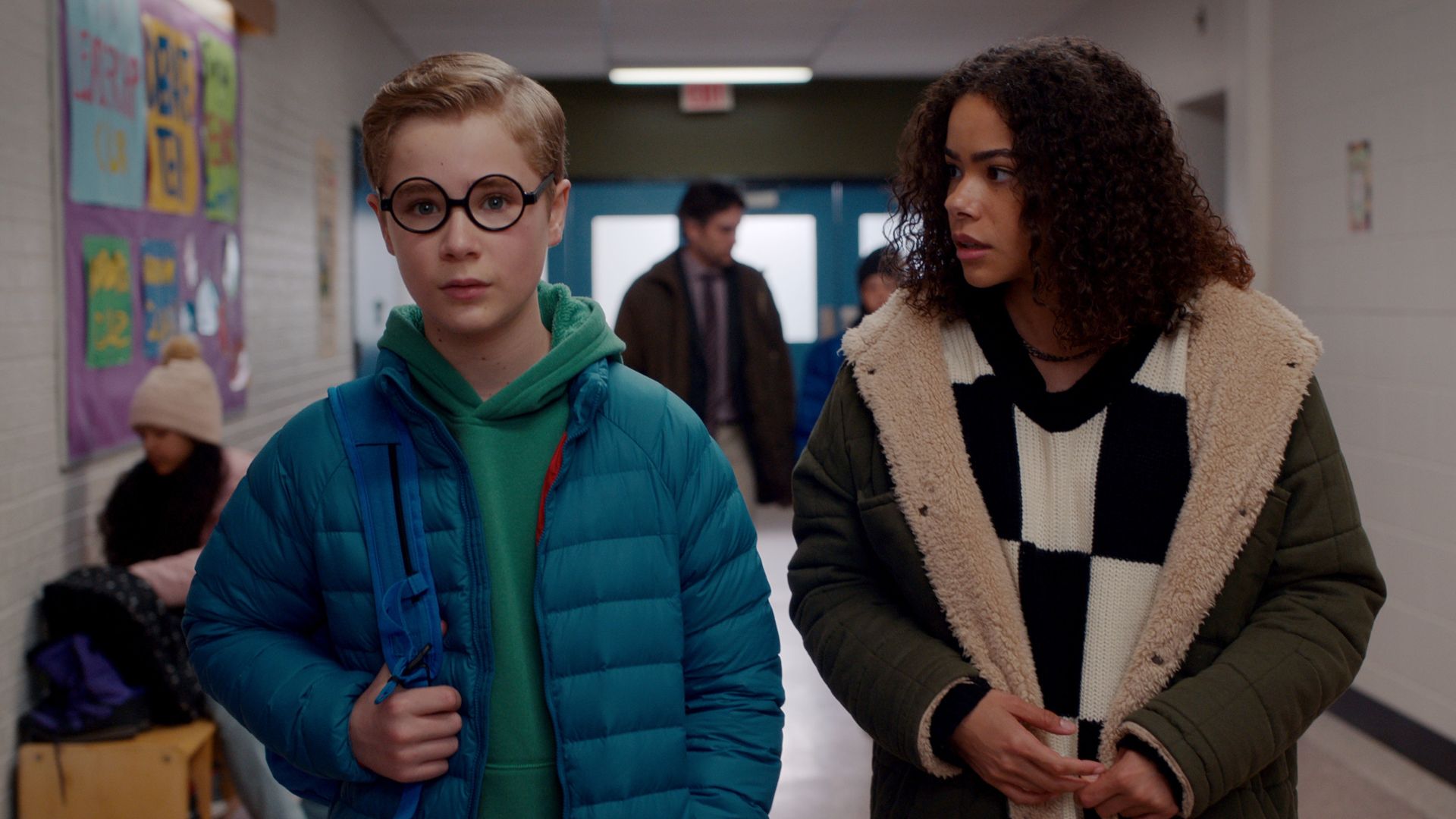
If you’re a chronically online Ginny & Georgia stan, first of all, I respect and admire you. Second, chances are you’ve stumbled upon that viral fan theory claiming the entire show is actually the origin story of how Austin becomes a serial killer. It sounds unhinged… until you remember he has an abusive father, literally watched his mom kill someone, and was then forced to lie about it in court. Needless to say, it’s a dark time for the little guy (who is, frankly, not little at all anymore).
Show creator Sarah Lampert saw that origin story theory and accidentally added fuel to the fire. “I favorited it,” she tells Betches. “And then the creator noticed I favorited it, and they were like, ‘They’re going to do it.’ I was like, ‘Oh no. Oh dear. This has escalated.’”
To be clear: No, that was not a confirmation that Austin’s a future serial killer. “I don’t think we’ve cemented his future yet,” Lampert says. “He is Georgia’s son. He is Gil’s son. We’ve seen that violence lives inside him. So, I don’t think that fan theory is out of nowhere by any means. But I’d hate to label him so quickly. He’s still so young.”
“He’s so young but also so old,” she adds with a laugh, alluding to actor Diesel La Torraca’s extremely noticeable growth spurt.
In an exclusive interview with Betches, Lampert unpacks the complexity of Georgia, Max and Marcus’ mental health spirals, Ginny’s powerful abortion storyline, and what it means to tell women’s stories in a male-dominated industry. And yes, we obviously got the Ginny & Georgia season 4 scoop! Everyone say thank you, Sarah Lampert, for gifting us one of the best shows ever made.
Ginny & Georgia Creator Sarah Lampert On Telling Women’s Stories, Season 4
 Image Credit: Sarah Lampert
ADVERTISEMENT
BETCHES: Okay, I feel like I always find myself rooting for Georgia, even though she is literally a murderer. How do you approach creating characters like that — you want them to win even though they’ve done horrible things?
Lampert: In her own way, she’s a superhero, maybe as much as she’s a villain. But she’s a superhero because if you give her one piece of information, she’s a character who can then take that one piece of information and find a way always to twist it to her benefit. So when you have a character that has that level of intelligence, that level of resourcefulness, and you apply that rule to her, that nothing is safe near her that she won’t use as a tool — she’s a really fun character to write.
My favorite thing about Georgia is Brianne Howey’s performance of Georgia. She needs to be a scary murderer, a loving mother, a politician’s wife. She just needs to wear all these different hats and flip them so flawlessly that in one moment, we’re crying with her, and in another, we’re watching her spray reporters with a hose and believe it. And so, that is a testament to Brianne.
BETCHES: We also need to talk about Max because that storyline was super intense this season. It kind of reminded me of 13 Reasons Why.
Lampert: Yeah, people are saying that. For Max, the plan was always to dive deeper into her mental health in season 3. I think with Max, it’s important to show that depression doesn’t always look like Marcus. Sometimes, it’s in the person who really looks like they’re doing okay, the friendliest one, the one who is always there for everybody else. And Marcus and Max are two different sides of the same coin. That’s what we wanted to show in season 3. I love Max. Of all the characters, Max is most based on me, I guess.
BETCHES: Oh, I love that.
Lampert: So I have a special place in my heart for her. And then it’s just really fun to write for Waisglass because you know she’s going to make everything really funny.
BETCHES: Yeah. Oh, my gosh, I love Max. And I love that Max and Marcus are both depressed, but they just present differently. That’s so important to show.
Lampert: Yeah. All of these characters always start with a grain of truth based on just a person I know or an emotion I’ve had, just a grain of truth, and then expand beyond it. But I think that’s why people relate to the characters so much because they always start somewhere really true.
BETCHES: Is there any hope of mending those MANG friendships, or will Max be a little more isolated or find new friends going forward?
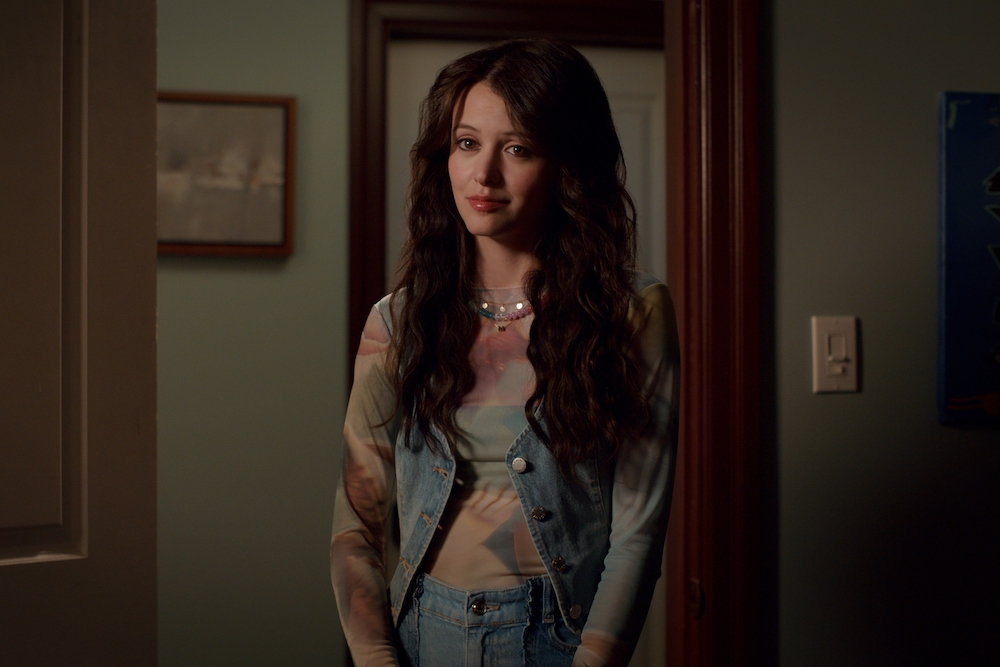 Image Credit: Netflix
Lampert: There’s always hope! I think my favorite part about the MANG dynamic is how messy and realistic it is. I just remember being in high school, and it was brutal with your friends. But if you take a step back, they never purposefully excluded Max — it was mostly circumstance. But if I were Max, I would’ve been devastated. And we’ve all been Max. Usually, it does come from a place where they’re just not thinking about you in that moment. They’re not purposefully trying to leave you out. And so that is why I think we’re all so devastated watching it because we’ve all been through that.
ADVERTISEMENT
BETCHES: I’m seeing everybody saying Felix needs to win an Emmy for that scene where he’s like, “I hate myself.”
Lampert: “I hate me! I hate me!”
BETCHES: That was so awful but so powerful. What is it that brings him to that total rock bottom, and what was it like filming that scene?
Lampert: For that character, a lot of that is based in truth and personal experiences. I knew exactly what I wanted that scene to be. Felix worked really closely with Darnell, our director. And my directive to them was like, “I want him to be almost feral. It’s horrifying, it’s a moment you can’t come back from, it’ll shift the family forever.” So, they worked together to really get to the emotional core of how to do that. And they obviously nailed it.
I don’t know how Felix accesses that level of depth and sadness… I agree, he should win an Emmy, for sure. I just knew that that moment would change the family forever. Once Max sees it, once Ellen sees it, once Clint sees it, they’re forced to acknowledge how deep of a problem Marcus has. It’s the kind of scene that changes everything for that family forever. They’ll never be the same as they were before.
BETCHES: Was Ginny’s abortion storyline influenced by the current political climate around reproductive rights? Or was that something that you always had planned for the character?
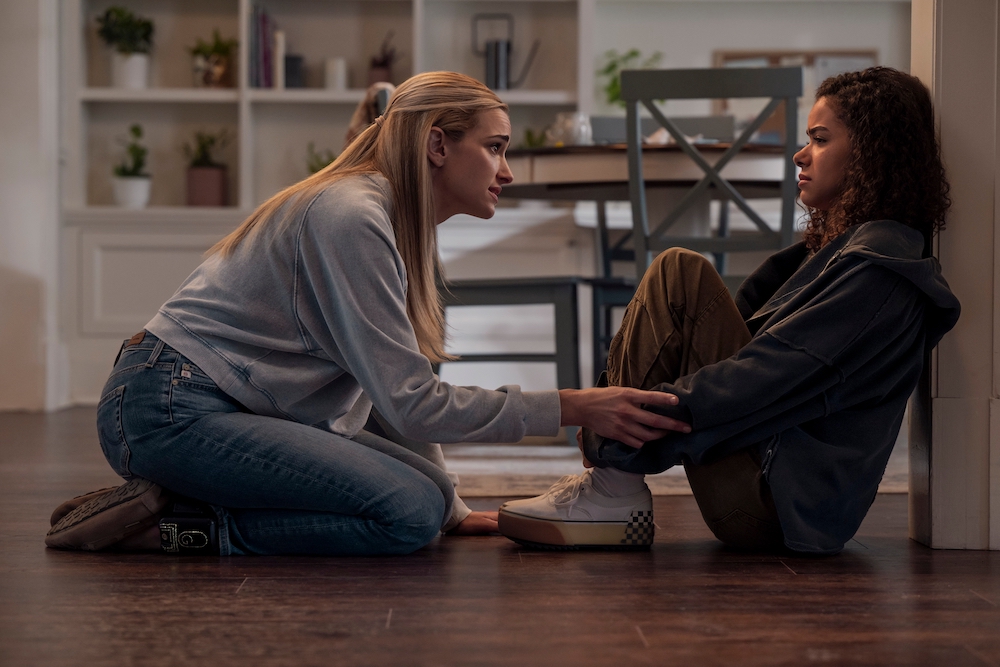 Image Credit: Netflix
Lampert: I think because the show really tries to highlight what young people and specifically young women go through, that’s something that young women go through and have been going through for as long as we’ve all been alive. So I think that, for me, it’s such a story that’s already embedded in these characters. Georgia was a teen mom and the idea of cycles and cycles repeating. And giving Ginny and Georgia the opportunity to be put in the same situation but make different choices, I think that’s really powerful for the characters, and I think that’s really powerful for us in life, too. So I knew that it was a storyline that was going to come up on the show.
BETCHES: Speaking of telling women’s stories… Women make up about 33% of TV writers and 19% of TV directors. What does it mean to you to create, write, and direct a show about a complex mother-daughter duo as a woman in this male-dominated space?
Lampert: Wow, what a fantastic question. It’s the content I want to watch, and you don’t get a more loyal audience than young women, you just don’t. Those fan bases are the most passionate. I know that because I am it. There have certainly been instances in making this show that I have found very challenging. I think people are less willing to listen to young female voices sometimes.
We have a really diverse writers room. We’ve always had a majority of female directors. And I think that’s a powerful thing to be able to do, but I also think that it inherently makes people take your show less seriously when the audience is geared toward young women. I don’t think that’s fair.
Growing up, what made me want to be a TV writer was watching shows like Buffy, Veronica Mars, or Gilmore Girls that had these superhero female characters. They were strong and smart, and they didn’t wait for things to happen to them. They made things happen. It’s powerful to see yourself represented on screen in a way that feels strong and authentic. That’s what we try to do on the show.
BETCHES: Where are you now in the season 4 process, and is there anything at all that you can tease about season 4?
Lampert: We are really in the middle of the season 4 process. Today, we’re starting to discuss episode 7 of Season 4. The beauty of having a two-season pickup was that you got to start stories in season 3 that would continue on in season 4. So, for me, episode 10 was a bridge episode.
That episode establishes how our characters are changed and what the new dynamics are with everyone. So, really, the biggest clue for season 4 is how everyone’s doing at the end of season 3. We’re going to keep going in that direction. Certainly, each season has its own feel, and we really try to make it not exactly like the season before it. So, I guess that is the hint that I can tease.
News

BREAKING NEWS: Friends of James “Weston” Higginbotham have spoken out after weeks of speculation. They say a rumor circulating online is completely false — and they want people to remember the 20-year-old for who he really is
The heartbreaking case of 20-year-old James “Weston” Higginbotham has taken yet another deeply personal turn as his mother, Nancy Higginbotham, has publicly pushed back against medical conclusions labeling her son as mentally ill, insisting that the doctor’s final assessment was…
🚨 “That’s NOT the Weston we know.” Friends of James “Weston” Higginbotham are refuting assumptions circulating online after the Auburn student was found dead outside Kyoto, and a detail from his psychiatric appointments is now drawing renewed attention…
The tragic death of 20-year-old James “Weston” Higginbotham continues to spark intense debate and emotional responses as friends and loved ones push back strongly against online assumptions about his final hours, insisting that certain details emerging from his psychiatric appointments…
BREAKING: James “Weston” Higginbotham’s family says the story being told about his final days is not the full story. Now, one emotional statement from those closest to him is reigniting debate about what people may have misunderstood from the beginning…
The Untold Narrative of the Yamashina Woods The peaceful mountains bordering Kyoto are globally famous for their quiet bamboo groves, historic wooden temples, and tranquil shrines. Every year, millions of travelers journey to Japan’s ancient capital to experience this calm…
“I still can’t picture him being there…” Friends of James “Weston” Higginbotham say the hardest thing isn’t that he was found after eight days — but where he was found
The Hidden Dangers of the Ancient Capital The ancient capital of Kyoto is famous for its quiet bamboo groves, historic wooden temples, and peaceful shrines. Millions of travelers come every year to experience this calm atmosphere and capture lasting family…
🚨 HE WAS SUPPOSED TO BE TAKING FAMILY PHOTOS IN KYOTO… NOT BE FOUND 8 DAYS LATER IN THE MOUNTAINS. The death of James “Weston” Higginbotham is leaving friends struggling to understand how a family vacation turned into a search spanning miles of rugged terrain
The ancient capital of Kyoto is famous for its quiet bamboo groves, historic wooden temples, and peaceful shrines. Millions of travelers come every year to experience this calm atmosphere and capture lasting family memories. For the Higginbotham family from Hoover,…

“He had mental health issues…” A close friend of the Joseph Chavez family and Greysen Chavez has just revealed the husband’s health problems that everyone had overlooked, until the wife confessed, at which point things took a completely new turn
The narrative surrounding the heartbreaking double-murder-suicide of ten-year-old twins Joseph and Greysen Chavez in Canoga Park has shifted from a focus on legal disputes to an intimate look at a severe mental health crisis. In the immediate aftermath of the…
End of content
No more pages to load