Final Descent or Final Betrayal? Air India Flight 171’s Black Box Revelations and the Leaked Transcript
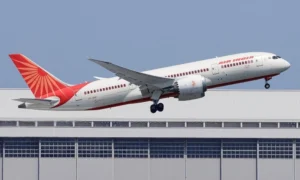
On June 12, 2025, Air India Flight 171, a Boeing 787-8 Dreamliner en route from Ahmedabad to London Gatwick, crashed 32 seconds after takeoff, killing 260 people—241 onboard and 19 on the ground. The sole survivor, a passenger seated by an emergency exit, escaped the inferno that consumed the aircraft after it plummeted into a medical college hostel. A preliminary report by India’s Aircraft Accident Investigation Bureau (AAIB) revealed that the aircraft’s fuel-control switches were moved to the “cutoff” position seconds after takeoff, starving both General Electric GEnx-1B70 engines of fuel. A leaked cockpit voice recorder (CVR) transcript, recently circulated on aviation forums and partially reported by international media, has intensified scrutiny on the captain’s actions, with a chilling phrase—“It’s your turn”—uttered just before the fuel cutoff. This article examines the transcript, the pilots’ exchange, and the systemic issues that may have contributed to this tragedy, questioning whether it was a catastrophic error or something more sinister.
The Leaked Transcript: A Haunting Exchange
The leaked CVR transcript, though unverified by the AAIB, has been cited by sources like The Wall Street Journal and Corriere della Sera, claiming it captures the final 32 seconds of Flight 171. The transcript reportedly begins with Captain Sumeet Sabharwal, a 56-year-old veteran with 15,600 flight hours, saying to First Officer Clive Kunder, “The plane is in your hands,” a standard handoff for takeoff, with Kunder, 32, with 3,400 hours, responding, “I have control.” At 13:38:39 IST, as the aircraft lifts off at 155 knots, Sabharwal allegedly says, “It’s your turn,” followed by a click sound, identified as the fuel-control switches moving to “cutoff” one second apart.
Kunder, the pilot flying, exclaims, “Why did you shut it off?” to which Sabharwal responds, “I didn’t do it.” The transcript notes Kunder’s voice breaking with panic, while Sabharwal remains calm. Ten seconds later, the switches are flipped back to “run,” triggering an automatic engine relight. One engine begins spooling up, but the second fails to recover thrust in time. At 13:39:05, Kunder issues a “Mayday” call, reporting a loss of thrust, but no response is received before the CVR cuts off at 13:39:11, when the aircraft crashes at 1.7 kilometers from the runway.
The phrase “It’s your turn” has fueled speculation. Some interpret it as a routine delegation of control, while others, citing U.S. sources, suggest it could imply intent or distraction, with Sabharwal possibly manipulating the switches while Kunder was occupied with the climb-out. The Indian Commercial Pilots’ Association (ICPA) and Federation of Indian Pilots (FIP) have condemned these claims as “reckless,” arguing that the transcript’s selective release lacks context and that the pilots’ experience—8,600 hours for Sabharwal and 1,100 for Kunder on the 787—makes intentional sabotage unlikely.
The Cockpit Dynamics: Error or Intent?
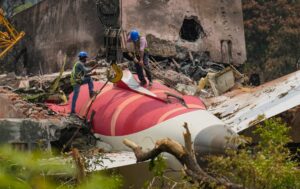
The transcript raises critical questions about the pilots’ actions. The fuel-control switches, located on the center console, require deliberate action to bypass a stop-lock mechanism, making accidental movement improbable. U.S. investigators, quoted by The Wall Street Journal, suggest Sabharwal, as the monitoring pilot, likely moved the switches, as Kunder’s hands were occupied with flying. However, Sabharwal’s denial—“I didn’t do it”—complicates the narrative. Aviation expert Mary Schiavo argues that a software glitch, such as a misinterpretation by the Full Authority Digital Engine Control (FADEC) system, could have triggered an automatic shutdown, as seen in prior incidents where aircraft systems falsely detected ground mode.
The CVR’s lack of voice identification hinders definitive conclusions. Peter Goelz, former NTSB managing director, emphasizes the need for a full, time-stamped transcript and cockpit video recorders to clarify who acted and why. The rapid sequence—32 seconds from takeoff to impact—left little time for the pilots to diagnose and recover, underscoring the urgency of their response. The transcript’s leak, criticized by the AAIB and NTSB’s Jennifer Homendy as “premature and speculative,” has fueled public distrust and demands for transparency from victims’ families.
Systemic Failures: Beyond the Pilots

While the transcript points to cockpit actions, systemic issues may share the blame:
Mechanical and Software Reliability: A 2018 FAA Special Airworthiness Information Bulletin (SAIB) noted issues with Boeing 737 fuel-control switches installed with disengaged locking mechanisms, raising questions about similar vulnerabilities in the 787. Air India’s post-crash inspections of its 787 fleet found no issues, but former AAIB investigator Capt. Kishore Chinta suggests a FADEC glitch could have misinterpreted sensor data, triggering a cutoff. The aircraft, with 41,868 hours, had recent engine installations, but maintenance records showed no prior fuel-switch defects.
Cockpit Resource Management (CRM): The panicked tone of Kunder versus Sabharwal’s calm demeanor suggests a potential CRM breakdown. Standard protocols require clear callouts and verification before critical actions like fuel cutoff, which appear absent here. Training records for both pilots, who passed pre-flight health checks, are under review to assess their handling of high-stress scenarios.
Regulatory Oversight: The AAIB’s delay in releasing a full transcript, coupled with tensions between Indian and U.S. investigators, highlights challenges in international probes. Recent scrutiny of Air India Express for falsified maintenance records raises broader concerns about oversight within India’s aviation sector.
Safety Culture and Design: The crash, the first fatal 787 incident, has renewed calls for cockpit video recorders, opposed by pilots’ unions citing privacy concerns. The 787’s fuel-switch design, with metal guards and stop-locks, is intended to prevent accidental activation, yet this incident suggests vulnerabilities.
The Human Cost and Public Response
The crash’s toll was staggering: 241 onboard deaths, including former Gujarat Chief Minister Vijay Rupani, and 19 ground victims, primarily medical students. The sole survivor, Vishwash Kumar Ramesh, escaped with injuries, leveraging his emergency exit seat. The intense fire, reaching 1,500°C, delayed DNA identification, with only 35 bodies identified by June 15. Families, frustrated by the lack of a full CVR transcript, demand transparency, with one relative stating, “Until the airline provides the cockpit recording, I’m not going to believe it.”
Social media, particularly posts on X, reflects polarized sentiment. Some, like @yashar and @PopCrave, cite U.S. sources claiming Sabharwal deliberately cut the fuel, while others, including @naomi2009, question the selective leaks and media narrative. ALPA India and the FIP have slammed the investigation’s secrecy and premature blame on pilots, calling for union involvement to ensure fairness.
Conclusion: Unanswered Questions and a Path Forward

The leaked CVR transcript of Air India Flight 171, with the captain’s enigmatic “It’s your turn” followed by the fuel cutoff, deepens the mystery of this tragedy. Was it a catastrophic error, a mechanical failure, or an intentional act? The transcript, while revealing, lacks context without voice identification and a comprehensive analysis of flight data. Systemic issues—potential software glitches, CRM lapses, and regulatory gaps—suggest the blame extends beyond the cockpit. As the AAIB prepares its final report, due by June 2026, the aviation industry must prioritize transparency, enhanced training, and technological safeguards like cockpit video to prevent another “final betrayal” at 3,000 feet.
News

BREAKING: NEW DEVELOPMENTS EMERGE IN THE HENRY NOWAK CASE
BREAKING: NEW DEVELOPMENTS EMERGE IN THE HENRY NOWAK CASE The investigation surrounding Henry Nowak has taken another significant turn after authorities announced additional charges. The latest legal development is being described as a major shift in the case, with many…
UNBEARABL — HENRY NOWAK’S FATHER SPEAKS OUT AFTER THE SENTENCING
UNBEARABL — HENRY NOWAK’S FATHER SPEAKS OUT AFTER THE SENTENCING In an emotional public statement, Henry Nowak’s father has strongly criticized the way authorities handled his son’s final hours, describing the experience as “unbearable.” As the person responsible was sentenced,…
“THE DNA DIDN’T MATCH HIM.” 😳🚢 A major twist has emerged in the Anna Kepner case after investigators revealed DNA from an unknown teenage male was found during the cruise ship investigation 👀 👇 But it’s the single unidentified fingerprint that reportedly still doesn’t belong to anyone in the case that is now raising even more questions
New questions raised over Anna Kepner’s Carnival cruise murder after DNA from unknown male minor found Anna Kepner, 18, allegedly had sex with an unknown male juvenile aboard a Carnival cruise ship shortly before her shocking death, federal prosecutors revealed….
He’s changed: Ryan Willis McFarland, the son of the man accused of killing six family members before committing suicide, leaving his only son grieving the loss of his entire family, has officially spoken out to recount everything that happened, revealing his motives
Son loses entire family after father kills 6 before turning gun on himself, police say Six people were killed in an Iowa town before the gunman fatally shot himself, according to local police. Muscatine police said 52-year-old Ryan Willis McFarland…
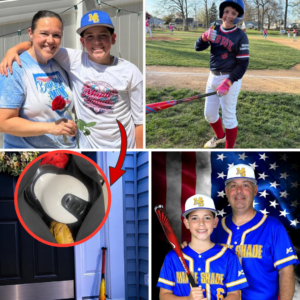
“If only I had looked back one more time…”: The father of 12-year-old Xavier Taylor says there’s a small detail hidden in the last family photo taken that afternoon, and now he can’t stop staring at it
In the dim glow of a hospital room at University Hospital in San Antonio, where the rhythmic beeps of life-support machines formed a constant backdrop to whispered prayers, the father of 12-year-old Xavier Taylor found himself trapped in an endless…
THEY DIDN’T REALIZE IT UNTIL LATER…: Following the latest update on Xavier Taylor’s health, his best friend revealed a problem with the protective gear—and the reason why left everyone speechless
In the hushed atmosphere of Xavier Taylor’s hospital room at University Hospital in San Antonio, where the faint glow of monitors cast long shadows across the walls lined with children’s drawings, the latest medical update delivered another layer of uncertainty…
End of content
No more pages to load