Hulk Hogan’s Cause of Death Revealed: Coroner’s Statement Uncovers Hidden Struggles
On July 24, 2025, the wrestling world lost one of its most iconic figures, Terry Gene Bollea, better known as Hulk Hogan, at the age of 71. The Pinellas County Medical Examiner confirmed that Hogan died of heart failure, specifically an acute myocardial infarction, at his Clearwater, Florida home. A concise 72-word statement from the coroner not only clarified the cause of death but also revealed a private battle with leukemia and atrial fibrillation—health struggles that were largely unknown to fans. This revelation has cast a new light on Hogan’s final days, deepening the tragedy of his passing and prompting reflection on the toll of his storied career.
The Official Cause: Heart Failure

The coroner’s report, signed by Pinellas County associate medical examiner Wayne Kurz, stated that Hogan succumbed to an acute myocardial infarction, commonly known as a heart attack. This condition occurs when a blockage in a coronary artery deprives the heart of oxygen, leading to potentially fatal damage. According to the Cleveland Clinic, heart attacks are a leading cause of death, with over 356,000 Americans experiencing cardiac arrest outside hospitals annually. Hogan’s death was certified as natural, with no autopsy performed, as his primary care physician provided the necessary documentation.
The heart attack occurred at Hogan’s Clearwater Beach home, where emergency responders arrived at 9:51 a.m. following a cardiac arrest call. Despite 30 minutes of CPR, paramedics were unable to revive him, and he was pronounced dead at Morton Plant Hospital. The coroner’s statement, obtained by TODAY.com and CNN, also noted contributing factors that shed light on Hogan’s hidden health battles, unknown to even his most devoted fans.
A Private Struggle Revealed
The coroner’s 72-word statement disclosed that Hogan had been battling chronic lymphocytic leukemia (CLL), a slow-progressing blood and bone marrow cancer, and atrial fibrillation (AFib), an irregular heart rhythm that increases the risk of heart failure and stroke. These conditions were not widely known, as Hogan and his family had kept them private. His wife, Sky Daily, had recently denied rumors of severe health issues, insisting in June that Hogan’s heart was “strong” following a major neck surgery in May.
CLL, which primarily affects older adults, often requires no immediate treatment in its early stages, but its presence can weaken the body over time. AFib, meanwhile, can lead to blood clots and exacerbate cardiac risks, particularly in someone with Hogan’s history of physical strain. Medical records also indicated that Hogan had faced renal failure, fluid overload, and severe chronic obstructive pulmonary disease (COPD) following his May neck surgery, complications that likely compounded his heart issues.
These revelations contrast sharply with the public image of Hulk Hogan as the invincible “Hulkster.” Fans knew of his extensive surgical history—25 procedures in the last decade, including 10 back surgeries, knee and hip replacements, and shoulder operations—but the severity of his underlying conditions was a shock. A family member told Healthline that Hogan had experienced significant weight loss, shortness of breath, and fatigue, signs he knew his heart was failing. Yet, he continued to engage with fans, appearing at events like the Republican National Convention in 2024, embodying the resilience that defined his career.
The Physical Toll of Hulkamania
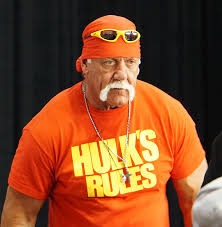
Hogan’s health struggles were deeply tied to his wrestling career, which spanned over four decades. As the face of the World Wrestling Federation (WWF, now WWE) in the 1980s, Hogan transformed professional wrestling into a global phenomenon with his larger-than-life persona and feats like body-slamming the 520-pound Andre the Giant at WrestleMania III. However, the physical demands of wrestling—grueling matches, minimal ring padding, and a relentless schedule—took a heavy toll. Hogan admitted to using steroids in the 1990s, a common practice in the industry at the time, which Dr. Marc Siegel noted increased his risk of heart disease.
Dr. Bradley Serwer, an interventional cardiologist, explained to Fox News that Hogan’s sudden cardiac arrest was consistent with a heart attack, a common outcome for those with his risk factors. The combination of steroid use, chronic pain, and multiple surgeries likely contributed to his atrial fibrillation and overall cardiac vulnerability. A University of East Michigan study cited by Siegel found that wrestlers aged 45 to 54 were nearly three times more likely to die prematurely than the general population, underscoring the sport’s physical cost.
Fan Reactions and Tributes
The disclosure of Hogan’s private health struggles has amplified the grief among fans, who have flooded social media with tributes. On X, fans shared clips of Hogan’s iconic matches and promos, with one user writing, “He hid so much pain to keep entertaining us, brother.” Others expressed shock at the leukemia diagnosis, with comments like, “We thought he was invincible, but he was fighting battles we never saw.” The WWE honored Hogan with a 10-bell salute on SmackDown, and stars like Ric Flair and John Cena posted heartfelt tributes, with Flair calling him an “incredible athlete, talent, and friend.”
Public figures, including President Donald Trump and Sylvester Stallone, also mourned Hogan’s passing. Trump, who shared a long friendship with Hogan, praised his “electric” speech at the 2024 RNC, while Stallone recalled Hogan’s charisma in Rocky III. These tributes highlight Hogan’s cultural impact, from his wrestling dominance to his roles in films like No Holds Barred and reality TV shows like Hogan Knows Best.
A Complex Legacy
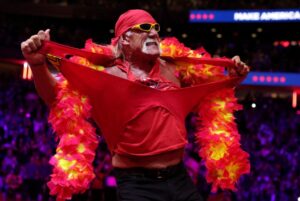
Hogan’s death has also reignited discussions about his controversial past, including a 2015 racism scandal that led to his temporary expulsion from the WWE Hall of Fame. Despite his public apology, the incident left a lasting mark on his legacy. However, the coroner’s statement shifts focus to his personal resilience, revealing a man who faced significant health challenges in silence while continuing to inspire millions.
The wrestling community and fans now grapple with the duality of Hogan’s life: a superhero in the ring and a mortal battling unseen illnesses. His final months were marked by efforts to launch Real American Freestyle, a new wrestling promotion, and public appearances that belied his declining health. The coroner’s revelation of leukemia and AFib adds a layer of tragedy to his story, reminding fans that even the mightiest heroes face battles they cannot win.
Conclusion
Hulk Hogan’s death from heart failure, as confirmed by the Pinellas County Medical Examiner, has left a void in the wrestling world. The coroner’s brief statement unveiled a private struggle with leukemia and atrial fibrillation, conditions that fans were unaware of during his lifetime. As tributes continue to pour in, from Clearwater to the global stage, Hogan’s legacy as the “Hulkster” endures, tempered by the sobering reality of his hidden battles. His story serves as a poignant reminder of the human cost behind the spectacle of professional wrestling.
News

💔 THE HEALTH UPDATE XAVIER TAYLOR JUST SHARED AFTER THOUSANDS OF STRANGERS STEPPED IN TO HELP…
💔 THE HEALTH UPDATE XAVIER TAYLOR JUST SHARED AFTER THOUSANDS OF STRANGERS STEPPED IN TO HELP… Just when supporters were beginning to fear the worst, Xavier Taylor has finally broken his silence with a new update on his condition after…
💔 THE FUTURE AUSTIN METCALF NEVER GOT TO LIVE… While the internet argues about the verdict, Austin Metcalf’s mother says she can’t stop thinking about something else entirely. Not the courtroom. Not the sentence.
💔 THE FUTURE AUSTIN METCALF NEVER GOT TO LIVE… While the internet argues about the verdict, Austin Metcalf’s mother says she can’t stop thinking about something else entirely. Not the courtroom. Not the sentence. The future her son spent years…

“SOMEONE STOP HER!” 😳 Witnesses say people started screaming right after Maria Eduarda left, and what officers allegedly discovered just seconds later could become one of the most crucial pieces of evidence in the case 💔👇
The investigation into the tragic plunge of twenty-one-year-old Maria Eduarda Rodrigues de Freitas has taken an even more chilling turn as local authorities and forensic teams piece together the frantic final moments on the platform. Eyewitness accounts now reveal that…
4 SECONDS LATER, EVERYTHING CHANGED 🚨 Maria Eduarda smiled, stepped onto the stage, and trusted the staff around her, but what one staff member allegedly said just 4 seconds after the jump is now haunting millions of viewers. What fell to the ground is becoming crucial evidence 💔👇
Dưới đây là bài báo tiếng Anh phân tích chi tiết và sâu sắc về vụ việc chấn động vừa qua, tuân thủ nghiêm ngặt các yêu cầu về mặt định dạng, không sử dụng bất kỳ dấu chấm đầu…
WAIT… SHE DIDN’T HAVE A ROPE? 😨 Witnesses say panic erupted just seconds after Maria Eduarda disappeared from the edge of the cliff, when staff reportedly realized something was missing — a detail that is now at the heart of a criminal investigation involving six people 💔👇
The chilling realization hit like a thunderclap in the moments following Maria Eduarda Rodrigues de Freitas’s launch from the edge of Ponte do Esqueleto. Witnesses who had gathered for what was supposed to be an exhilarating rope jumping experience at…

MARIA EDUARDA POSTED THIS PHOTO JUST MINUTES AGO 📸💔 In her final series of images on social media, she appears excitedly by the bridge and equipment preparing for the jump. But a detail in the subsequent video is now at the center of a criminal investigation. 👇
Tragedy on the Skeleton Bridge: Maria Eduarda Rodrigues de Freitas’s Final Moments Spark Criminal Investigation into Fatal Rope Jump In the early hours of a Saturday morning in mid June 2026 Maria Eduarda Rodrigues de Freitas a vibrant 21 year…
End of content
No more pages to load