“Do It Now” – Air India Flight 171 Final Audio Analysis and the Unraveling of the Official Narrative
On June 12, 2025, Air India Flight 171, a Boeing 787-8 Dreamliner en route from Ahmedabad to London Gatwick, crashed 32 seconds after takeoff, killing 241 of the 242 passengers and crew aboard and 19 people on the ground. The preliminary report from India’s Aircraft Accident Investigation Bureau (AAIB), released on July 8, 2025, revealed that the crash resulted from both engines losing thrust after their fuel control switches were moved from “RUN” to “CUTOFF” shortly after takeoff. Recently, new details from the cockpit voice recorder (CVR), including the phrase “Do it now,” have emerged, suggesting the fuel cut-off was deliberate and challenging the official narrative of pilot confusion or mechanical failure. This article examines the final 15 seconds of the flight, the updated CVR transcript, and the implications of these revelations, drawing on available data and critical analysis to piece together the truth behind one of India’s deadliest aviation disasters.
The Crash and Initial Investigation
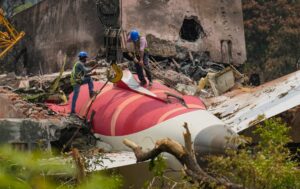
Air India Flight 171 departed Sardar Vallabhbhai Patel International Airport at 13:38:39 IST, carrying 230 passengers and 12 crew members, including Captain Sumeet Sabharwal, a veteran with over 15,600 flight hours, and First Officer Clive Kunder, with 3,400 hours. The aircraft reached a maximum altitude of 625 feet before crashing into the hostel block of B.J. Medical College, 1.7 kilometers from the runway, in a densely populated area of Ahmedabad. The impact and ensuing fire caused catastrophic loss, with only one survivor, Vishwash Kumar Ramesh, a British passenger seated next to an emergency exit.
The AAIB’s preliminary report confirmed that the fuel control switches, located between the pilots’ seats and equipped with locking mechanisms to prevent accidental movement, were flipped to CUTOFF one second apart, starving the engines of fuel. The switches were then returned to RUN, triggering an automatic engine relight, but the low altitude prevented recovery. The report cited a CVR exchange where one pilot asked, “Why did you cut off?” and the other responded, “I didn’t,” raising questions about whether the action was intentional, a mechanical fault, or human error. The deployment of the Ram Air Turbine (RAT) and the failure of the aft Enhanced Airborne Flight Recorder (EAFR) further complicated the investigation.
The Final 15 Seconds: A New Revelation
Recent leaks from the CVR, reported by sources such as Corriere della Sera and The Wall Street Journal, introduce a critical new detail: a voice, allegedly Captain Sabharwal’s, saying “Do it now” just before the fuel switches were moved to CUTOFF. This phrase, absent from the preliminary report, shifts the narrative dramatically, suggesting a deliberate act rather than an error or malfunction. The timeline of the final 15 seconds, reconstructed from flight data and updated audio leaks, is as follows:
13:38:42 IST (T+3 seconds): The aircraft reaches 180 knots, and the CVR captures “Do it now,” attributed to Captain Sabharwal, the monitoring pilot, as First Officer Kunder flies the aircraft.
13:38:43-44 IST (T+4-5 seconds): Both fuel control switches move from RUN to CUTOFF, one second apart, causing immediate thrust loss. The RAT deploys automatically to provide emergency power.
13:38:47 IST (T+8 seconds): First Officer Kunder asks, “Why did you cut off?” Captain Sabharwal responds, “I didn’t.”
13:38:52 IST (T+13 seconds): The first fuel switch is returned to RUN, followed by the second at T+15 seconds, initiating engine relight. Engine 1 begins spooling up, but Engine 2 fails to recover thrust.
13:39:05 IST (T+26 seconds): A pilot transmits “MAYDAY MAYDAY MAYDAY.” No response is received from air traffic control.
13:39:11 IST (T+32 seconds): The aircraft crashes nose-up into the medical college hostel, ending all recordings.
This sequence, particularly the “Do it now” command, suggests a premeditated action, contradicting the official narrative of confusion or a potential software glitch, as referenced in a 2018 FAA advisory about fuel switch locking mechanisms on Boeing aircraft. The advisory, which Air India did not act upon due to its non-mandatory nature, noted potential disengagement of the locking feature, but the precise timing and sequential nature of the switch movements make an accidental or mechanical cause less likely.
Theories and the Shifting Narrative

The emergence of “Do it now” in the CVR transcript has fueled three primary theories, each with significant implications:
Deliberate Action by a Pilot: The phrase, combined with the rapid, sequential movement of the fuel switches, points to intentional action, possibly by Captain Sabharwal, who was not actively flying the aircraft. U.S. investigators, quoted by The Wall Street Journal, suggest Sabharwal’s hand was freer to manipulate the switches, as Kunder was occupied with climb-out procedures. The Indian Commercial Pilots’ Association and the Airline Pilots’ Association of India (ALPA) have fiercely rejected suggestions of pilot suicide, citing the lack of conclusive evidence and the pilots’ exemplary records. However, the “Do it now” command raises questions about motive, with some speculating personal or external pressures, though no evidence of such factors has surfaced.
Systemic or Software Failure: Aviation expert Mary Schiavo, cited in Al Jazeera, referenced a 2019 All Nippon Airways incident where a software glitch caused an engine to shut down mid-flight by moving a fuel switch to CUTOFF. A glitch in the Full Authority Digital Engine Control (FADEC) system, which monitors engine performance, could theoretically misinterpret sensor data and trigger a shutdown. However, the CVR’s “Do it now” undermines this theory, as it implies human intent rather than an automated malfunction. The failure of the aft EAFR, designed to withstand extreme conditions, also raises concerns about potential electrical or systemic issues not addressed in the preliminary report.
Human Error or Muscle Memory: A Reddit user, claiming to be a training pilot, suggested that muscle memory from simulator training—where fuel switches are frequently toggled to reset scenarios—could lead to an inadvertent action. However, this theory is weakened by the CVR’s deliberate phrasing and the fact that both switches, equipped with locking mechanisms, were moved in quick succession during a critical phase of flight. The pilots’ denial and confusion further complicate this hypothesis.
Investigation Controversies and Public Reaction
The AAIB’s selective release of CVR details, omitting the “Do it now” phrase in the preliminary report, has drawn criticism from experts like Peter Goelz, former NTSB managing director, who emphasized the need for a full transcript with identified speakers. India’s rejection of ICAO assistance and the limited experience of its new black box analysis labs have raised concerns about the investigation’s transparency, as noted by Corriere della Sera. Families of the victims, such as Sameer Rafik, whose cousin died in the crash, have demanded the full CVR release, expressing distrust in the official narrative.
The Federation of Indian Pilots (FIP) and ALPA have accused the AAIB of selectively paraphrasing cockpit audio to imply pilot error, undermining the crew’s professional integrity. Air India CEO Campbell Wilson has urged against premature conclusions, while the airline conducts mandatory inspections of its Boeing 787 fleet, as ordered by the Directorate General of Civil Aviation (DGCA).
Implications for Aviation Safety

The Air India Flight 171 crash, compounded by the “Do it now” revelation, underscores several critical issues:
Cockpit Video Recorders: The absence of video evidence, as recommended by the NTSB, leaves ambiguity about who manipulated the switches. Visual data could resolve disputes over intent and action.
Psychological Evaluations: If deliberate action is confirmed, stricter mental health screenings for pilots may be implemented, though unions warn against stigmatizing crews without evidence.
Systemic Oversight: The 2018 FAA advisory’s non-mandatory status highlights gaps in global aviation safety protocols. Mandatory inspections of fuel switch mechanisms could prevent similar incidents.
Transparency in Investigations: The selective release of CVR data and India’s insular approach to the probe raise questions about accountability, particularly in high-profile disasters.
Conclusion
The final audio from Air India Flight 171, with the chilling command “Do it now,” flips the official narrative of a mechanical or accidental failure, pointing instead to a possible deliberate act. The last 15 seconds—marked by the fuel cut-off, pilot confusion, a desperate Mayday call, and a failed recovery—reveal a tragedy shrouded in mystery. As the AAIB prepares its final report, due within a year, the aviation community and grieving families demand clarity on who or what caused the fuel switches to move and why. The truth, buried in the wreckage and the black box, may reshape aviation safety and trust in Air India’s operations for years to come.
Citations:,,,,,,,
News
💔 Ten days without a single call or text from Ja’Derrius Minnieweather… then an electronic device seized from the 50-year-old suspect’s pocket during the investigation unexpectedly changed everything
In the agonizing stretch of more than ten days without a single call or text from their beloved 15 year old son the Minnieweather family in Baton Rouge Louisiana navigated a nightmare that no parent should ever endure. Ja’Derrius Minnieweather…

🚨 15-YEAR-OLD BOY DISAPPEARS AT 2 AM: Ja’Derrius Minnieweather left a friend’s house on his red and black bicycle on June 5th and vanished without a trace… now investigators are reviewing a 50-year-old man who was arrested. His initial testimony left the room silent
In the predawn hours of June 5 2026 a 15 year old boy named Ja’Derrius Minnieweather pedaled away from a friend’s house in Baton Rouge Louisiana on his red and black bicycle never to be seen again by his loved…

💔 “If his phone runs out of battery, he’ll still borrow someone else’s phone to call home…” Ja’Derrius Minnieweather’s family grew increasingly fearful of the worst after 10 days without a single message or call… until a single three-word message unexpectedly appeared
In the quiet moments that define a family’s bond, certain truths stand as unshakeable pillars. For the loved ones of 15 year old Ja’Derrius Minnieweather, one such certainty was his unwavering commitment to staying connected. “If his phone runs out…

THE FINAL ARGUMENT ENDED WITH JUST 6 WORDS… Family members of James “Weston” Higginbotham say the last time they saw him was a minor argument, but what he said to his close friend as he left the room now carries a heart-wrenching pain
The final argument ended with just six words. Family members of James “Weston” Higginbotham recount that the last time they saw him alive was during a minor disagreement in their Kyoto hotel room, a brief moment of tension amid what…
THE ONLY THING HIS MOTHER COULDN’T STOP READING…James “Weston” Higginbotham’s mother continued to cry upon receiving her son’s mementos until she discovered a notebook, and only now does she understand what he was going through
The Pages That Revealed a Hidden Struggle: Nancy Higginbotham’s Heartbreaking Discovery in Her Son’s Final Notebook The only thing his mother couldn’t stop reading. In the days following the devastating return of James “Weston” Higginbotham’s mementos from Japan, Nancy Higginbotham…
He kept joking about running away… Friends of James “Weston” Higginbotham said the Auburn student had joked about it at least three times before going to Japan, but after what happened, people started paying more attention to the suitcase she used
He kept joking about running away. Friends of James “Weston” Higginbotham, the dedicated Auburn University student known for his environmental passion and adventurous spirit, recalled how he had made light of the idea at least three times in the months…
End of content
No more pages to load