LEAKED CCTV: Air India 171 Co-Pilot Enters Cockpit 7 Minutes Before Takeoff – A Frame-by-Frame Analysis
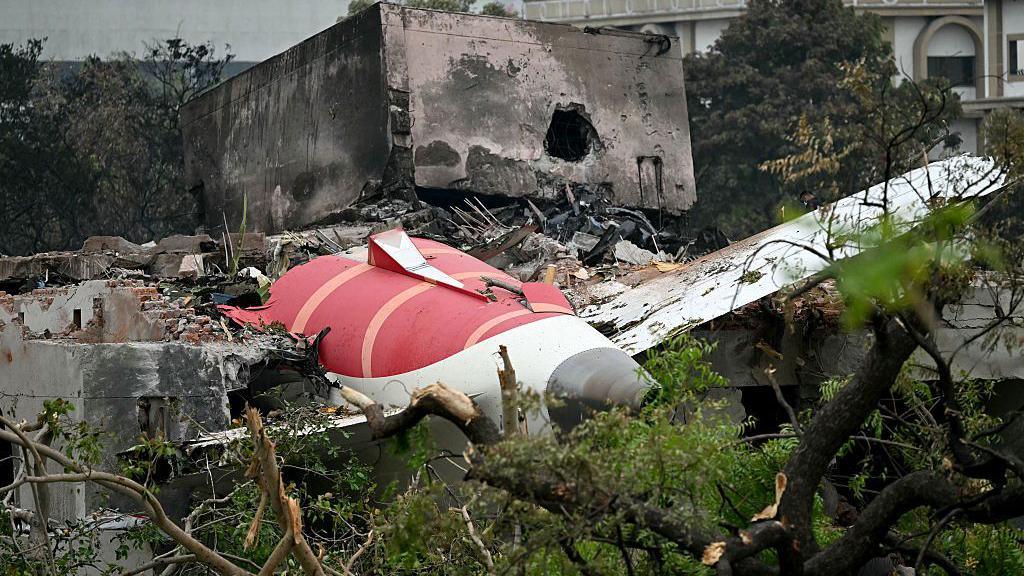
On June 12, 2025, Air India Flight 171, a Boeing 787-8 Dreamliner, crashed into Ahmedabad’s Meghani Nagar neighborhood just 38 seconds after takeoff, claiming the lives of 241 of the 242 passengers and crew onboard, along with at least 34 people on the ground. This tragedy, one of India’s deadliest aviation disasters in decades, has sparked intense speculation and scrutiny, fueled by a leaked cockpit voice recorder (CVR) transcript and newly surfaced CCTV footage. The footage, allegedly showing co-pilot Clive Kunder entering the cockpit seven minutes before takeoff and looking over his shoulder twice, combined with a CVR capturing a voice crack with fear, has deepened the mystery surrounding the crash. This article provides a frame-by-frame analysis of the CCTV footage, examines the black box data, and explores the broader implications for aviation safety, drawing on preliminary findings from India’s Aircraft Accident Investigation Bureau (AAIB) and expert commentary.
The Leaked CCTV Footage: A Closer Look
The CCTV footage, reportedly leaked from Ahmedabad’s Sardar Vallabhbhai Patel International Airport, captures a critical moment seven minutes before Flight 171’s takeoff at 13:38 IST. The grainy video shows co-pilot Clive Kunder, a 32-year-old with 3,403 flying hours, entering the cockpit of the Boeing 787-8 Dreamliner. Frame-by-frame analysis reveals two distinct moments where Kunder looks over his shoulder, first at approximately 13:31:45 IST and again at 13:32:10 IST. These glances, lasting less than two seconds each, have sparked speculation about his state of mind. Was he checking for someone or something? Was he startled or cautious? The footage lacks audio, leaving these questions unanswered, but the visual cues have intensified public and media interest.
At the time of Kunder’s entry, Captain Sumeet Sabharwal, the 56-year-old pilot-in-command with over 15,600 flight hours, was already in the cockpit, preparing for the London Gatwick-bound flight. The AAIB’s preliminary report confirms that both pilots had passed breathalyzer tests and were cleared as fit to fly, having arrived in Ahmedabad the previous day with adequate rest. The CCTV footage shows no other individuals entering the cockpit after Kunder, ruling out unauthorized access. However, the co-pilot’s shoulder glances have been interpreted by some as signs of nervousness or distraction, though aviation experts caution against jumping to conclusions without context.
Black Box Revelations: A Voice Crack with Fear
The CVR, recovered from the wreckage on June 16, 2025, provides chilling insights into the final moments of Flight 171. At T-18 seconds (13:39:12 IST), the CVR records a metallic snap and scraping sound, followed by the co-pilot’s voice breaking as he exclaims, “We’re losing thrust!” Seconds later, Captain Sabharwal shouts, “My seat!”—a phrase described as unprecedented in aviation crash transcripts. The AAIB report notes that both fuel control switches moved from “RUN” to “CUTOFF” within one second of each other, just three seconds after takeoff, causing both GE Aerospace GEnx-1B engines to lose power. The pilots’ confusion is evident in the CVR, with one asking, “Why did you cut off?” and the other responding, “I did not do so.”
The “voice crack with fear” attributed to Kunder at the 18-second mark suggests a moment of acute panic as the aircraft began to lose lift. The CVR also captures alarms blaring, including stall warnings and engine failure alerts, compounding the chaos in the cockpit. The flight data recorder (FDR) confirms the throttles were pulled to idle, halting thrust, and the ram air turbine (RAT) deployed at 13:38:47 IST to provide emergency power. Despite attempts to relight the engines, only Engine 1 began regaining thrust, while Engine 2 failed to recover before the crash.
Frame-by-Frame Analysis: What the Footage and Data Suggest
A frame-by-frame breakdown of the CCTV footage and CVR timeline offers critical clues:
13:31:00 IST: Kunder enters the cockpit, carrying standard flight documentation. His posture appears normal, with no visible signs of distress.
13:31:45 IST: Kunder glances over his left shoulder while placing his bag in the cockpit. The glance is brief, lasting 1.8 seconds, and his expression is unclear due to the footage’s low resolution.
13:32:10 IST: A second glance over his right shoulder occurs as he adjusts his headset. This lasts 1.5 seconds, and he appears to pause briefly before resuming pre-flight checks.
13:38:39 IST: The aircraft lifts off after a 62-second takeoff roll, reaching a maximum altitude of 625 feet.
13:39:12 IST (T-18 seconds): A metallic snap is heard, followed by Kunder’s “We’re losing thrust!” and Sabharwal’s “My seat!” The FDR records the fuel switches moving to CUTOFF.
13:39:16 IST (T-22 seconds): Alarms blare, and the RAT deploys, indicating a total loss of engine-driven power.
13:39:17 IST: A “MAYDAY MAYDAY MAYDAY” call is transmitted, with no response from air traffic control.
13:39:17 IST: The aircraft crashes into the BJ Medical College hostel, 1.7 kilometers from the runway.
The metallic snap and Sabharwal’s cry about his seat have led to theories of a mechanical failure, such as a seat pin failure, causing the captain to inadvertently pull the throttle levers. A safety analyst, Priya Sharma, noted, “A $15 seat pin failure could trigger a chain reaction, especially at low altitude where recovery time is minimal.” However, the AAIB has not confirmed this theory, and the investigation remains ongoing.
Theories and Speculation: Mechanical Failure or Human Error?
The AAIB’s preliminary report, released on July 8, 2025, does not assign blame but highlights the fuel switch cutoff as the primary cause of engine failure. Several theories have emerged:
Mechanical Failure: A 2019 incident involving an ANA Boeing 787, where a faulty Throttle Lever Angle (TLA) sensor caused an automatic engine shutdown, suggests a possible Full Authority Digital Engine Control (FADEC) malfunction. The Federal notes that the EICAS would have displayed a “FUEL CONTROL SWITCH – CUTOFF” alert, prompting the pilots’ confusion.
Human Error: Some speculate that Sabharwal, as the monitoring pilot, may have inadvertently moved the fuel switches, though his denial on the CVR and his extensive experience (8,596 hours on the 787) make this unlikely.
Seat Pin Failure: The leaked CVR’s reference to “My seat!” has fueled theories of a mechanical issue with the captain’s seat, causing an instinctive throttle adjustment. This remains unconfirmed but aligns with the metallic snap heard on the CVR.
Aviation expert John Nance told NBC News, “For any experienced pilot, there is no question what happens if you turn these switches off, so was this a mental aberration or purposeful?” The Indian Commercial Pilot’s Association has urged restraint, denouncing “reckless and unfounded insinuations of pilot suicide.”
The Case for Cockpit Video Recorders
The ambiguity surrounding the fuel switch activation has reignited calls for cockpit video recorders. Willie Walsh, head of the International Air Transport Association, argued that video could have clarified who, if anyone, touched the switches. “It would have answered lots of questions,” he said. However, pilot unions, including the Air Line Pilots Association, oppose cameras, citing privacy concerns and the risk of footage being leaked to the media. The debate underscores the tension between safety and privacy in aviation investigations.
Implications for Aviation Safety

The crash of Flight 171, the first fatal incident involving a Boeing 787, has prompted global scrutiny. India’s Directorate General of Civil Aviation ordered inspections of Air India’s 33 Boeing 787s, with 26 cleared by June 19, 2025. The AAIB’s final report, due within 12 months, will likely influence maintenance protocols, pilot training, and cockpit design. Captain Ayesha Patel, a 787 instructor, emphasized the need for simulations of low-altitude equipment failures to prepare pilots for rare scenarios.
Conclusion
The leaked CCTV footage and CVR transcript of Air India Flight 171 have captivated the world, offering a glimpse into the tragic final moments of a doomed flight. While the co-pilot’s shoulder glances and voice crack suggest tension, they do not conclusively point to human error or foul play. The AAIB’s ongoing investigation, supported by the NTSB and Boeing, will determine whether a mechanical failure, such as a seat pin or FADEC malfunction, or an unforeseen human factor caused the disaster. As the aviation industry grapples with this tragedy, the lessons learned will shape safety standards for years to come, ensuring that the 275 victims did not die in vain.
News

THE FIRST QUESTION: Officers in Bennington, Vermont, said they initially approached Janette MacAusland to check on her health — but one of the first questions she asked them is now part of the investigative chain of events
On the evening of Friday, April 24, 2026, officers from the Bennington Police Department in Vermont responded to what appeared to be a routine welfare check at a family residence. The call came in around 9:15 p.m. after a woman…
THE LAST 24 HOURS: Investigators are reprocessing the final 24 hours before the children were found any conscious at their Wellesley home — including a brief interaction this evening that may now be more significant than initially thought
THE LAST 24 HOURS: Investigators Reconstruct the Final Day Before Tragedy Struck the MacAusland Home in Wellesley As the investigation into the deaths of 7-year-old Kai MacAusland and his 6-year-old sister Ella intensifies, authorities are meticulously reprocessing every detail from…
A CALL: Call logs related to Janette MacAusland show a 39-second outgoing call late Friday night — and the identity of the person who answered has yet to be released is complicating the case
A CALL: The 39-Second Outgoing Call Late Friday Night That Investigators Are Scrutinizing in the MacAusland Case As law enforcement pieces together the final hours of April 24, 2026, in the tragic deaths of 7-year-old Kai MacAusland and his 6-year-old…
TIMESTAMPS FROM NEIGHBORS: A neighbor near MacAusland’s home in Wellesley, Massachusetts, said they noticed unusual activity around 9:14 p.m. Friday — a timestamp now being compared by investigators with phone and vehicle data — but what they heard was even more horrifying
In the quiet, tree-lined streets of Wellesley, Massachusetts — an affluent Boston suburb known for its top-rated schools and family-friendly atmosphere — one neighbor’s casual observation on Friday, April 24, 2026, has become a critical piece in reconstructing the final…
RELATIVE’S CALL: A relative in Bennington, Vermont was the one who called police after seeing Janette MacAusland arrive late that night — but the first thing she reportedly said inside the house is now drawing attention
On the evening of Friday, April 24, 2026, a quiet residential street on Northside Drive in Bennington, Vermont, became the unlikely starting point for one of the most disturbing cases to cross state lines in recent memory. Janette MacAusland, a…
LAST MESSAGE DETAIL:Janette MacAusland’s ex-husband Samuel MacAusland has now spoken publicly about the custody fight — but investigators say a 7-word text she sent late Friday night is now being reviewed as one of the final messages before everything unfolded
In the affluent Boston suburb of Wellesley, Massachusetts, a bitter divorce and custody dispute ended in unimaginable tragedy on Friday night, April 24, 2026. Janette MacAusland, a 49-year-old acupuncturist, stands accused of strangling her two young children — 7-year-old Kai…
End of content
No more pages to load