Mysterious Untagged Suitcase on Air India Flight 171: A New Layer to the Tragedy
On June 12, 2025, Air India Flight AI-171, a Boeing 787-8 Dreamliner en route from Ahmedabad to London Gatwick, crashed just 32 seconds after takeoff, killing 260 people, including 241 of the 242 passengers and crew onboard and 19 on the ground. The disaster, one of India’s worst aviation tragedies in decades, has been shrouded in mystery, with a preliminary report pointing to the inexplicable movement of fuel-control switches to the “cutoff” position as the cause of the crash. Now, a new development has emerged: baggage handlers at Ahmedabad’s Sardar Vallabhbhai Patel International Airport claim an untagged suitcase was rushed onto the aircraft moments before boarding closed. Surveillance footage reportedly shows two staff members exchanging glances, but the bag was never logged, raising questions about security protocols, potential sabotage, and whether this mysterious luggage played a role in the catastrophe. This article explores the implications of this revelation, the context of the crash, and the ongoing investigation.

The Crash of Air India Flight 171
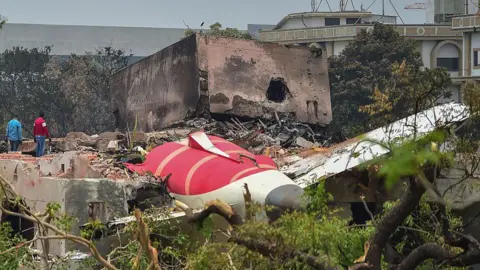
Air India Flight 171 departed Ahmedabad at 13:38 IST (08:08 UTC) with 230 passengers and 12 crew members, piloted by Captain Sumeet Sabharwal and First Officer Clive Kunder. The aircraft reached a peak altitude of 625 feet before both engines lost thrust, leading to a crash into the hostel block of B.J. Medical College, 1.7 kilometers from the runway. The sole survivor, Vishwaskumar Ramesh, walked away from the wreckage, while the crash caused significant ground casualties and damage. The Aircraft Accident Investigation Bureau (AAIB) reported that the fuel-control switches were moved to the “cutoff” position seconds after takeoff, an action typically performed only after landing. A leaked ATC audio revealed a faint alarm tone and a desperate mayday call from the pilots, cut off by static, deepening the mystery surrounding the incident.
The Untagged Suitcase Revelation
According to sources close to the investigation, baggage handlers at Ahmedabad airport have reported that an untagged suitcase was loaded onto Flight 171 just before boarding closed. Unlike standard procedure, which requires all luggage to be tagged, scanned, and logged, this suitcase bypassed normal protocols. Surveillance footage from the tarmac allegedly shows two baggage handlers exchanging glances as the bag was placed in the cargo hold, but no record of it appears in the flight’s baggage manifest. The handlers, whose identities remain undisclosed, have not been publicly named, and it is unclear whether they are under investigation.
This revelation draws parallels to the 1985 Air India Flight 182 bombing, where a suitcase containing a bomb was checked in without proper verification and transferred to the flight, leading to the deadliest aviation terrorist attack before 9/11. In that case, a passenger, identified as “M. Singh,” checked in a bag at Vancouver International Airport without boarding, and lax security allowed it to be loaded onto the aircraft. The bomb detonated mid-flight, killing all 329 onboard. The untagged suitcase on Flight 171 has sparked speculation about whether a similar security breach occurred, potentially involving an explosive device or other hazardous material that could have contributed to the crash.
Security Protocols and Surveillance Footage

Ahmedabad’s Sardar Vallabhbhai Patel International Airport follows standard aviation security protocols, including X-ray screening and, when necessary, manual checks of luggage. In the case of Air India Flight 182, a malfunctioning X-ray machine and inadequate training on an explosive sniffer device allowed a bomb-laden suitcase to pass through security. While modern security systems are more advanced, the claim of an untagged suitcase on Flight 171 suggests a possible lapse. The surveillance footage showing the baggage handlers’ exchange of glances has not been publicly released, but sources describe it as “suspicious” and indicative of either negligence or deliberate intent.
The AAIB has not commented on the suitcase specifically, but investigators are reportedly reviewing all ground operations, including baggage handling logs, security footage, and staff interviews. The absence of a log for the suitcase raises questions about oversight, as every piece of luggage should be traceable to a passenger or crew member. If the bag was unaccompanied, it could point to a security breach akin to past incidents. Alternatively, it may have been an oversight by overworked staff, though the handlers’ reported behavior suggests otherwise.
Theories and Speculation
The untagged suitcase has fueled several theories about the crash. The leading hypothesis, based on the AAIB’s preliminary report, remains that the fuel-control switches’ movement to the “cutoff” position caused the engines to lose thrust. However, the suitcase introduces new possibilities:
Sabotage or Terrorism: The most alarming theory is that the suitcase contained an explosive or incendiary device that triggered a cockpit malfunction or distracted the pilots. The faint alarm tone heard in the leaked ATC audio could indicate a fire, electrical failure, or other anomaly caused by such a device. The precedent of Air India Flight 182 makes this theory particularly resonant, though no evidence of an explosion has been confirmed in the wreckage.
Mechanical Interference: The suitcase could have contained materials that interfered with the aircraft’s systems, such as a lithium-ion battery or chemical agent, though this is less likely given the cargo hold’s separation from critical systems. The Boeing 787’s advanced design includes safeguards against such risks, but investigators are exploring all possibilities.
Human Error or Oversight: The suitcase may be unrelated to the crash, with the handlers’ actions reflecting a procedural lapse rather than malicious intent. Overworked or undertrained staff could have failed to log the bag, and the glance exchange might indicate confusion or concern rather than conspiracy.
Distraction in the Cockpit: If the pilots were alerted to an issue with the luggage—perhaps via a warning from ground crew—it could have diverted their attention during the critical takeoff phase, contributing to the fuel switch error. The CVR’s recording of one pilot questioning the other about the cutoff suggests confusion in the cockpit, which could align with an external distraction.
Investigation Challenges and Next Steps
The AAIB, with support from Boeing, GE Aerospace, the U.S. National Transportation Safety Board (NTSB), and British investigators, is analyzing the flight data recorder (FDR) and cockpit voice recorder (CVR), both recovered from the crash site. The investigation is now expanding to include ground operations, with a focus on baggage handling and security footage. The lack of cockpit video recorders, a long-standing issue in aviation, complicates efforts to confirm pilot actions or external influences.
The untagged suitcase’s origin remains a critical question. Investigators are likely cross-referencing passenger manifests, security logs, and employee records to determine who placed the bag and why it went unlogged. If the suitcase contained hazardous materials, trace evidence in the wreckage could provide clues, though the fire and explosion may have destroyed key evidence. The AAIB’s final report, expected within a year, will address these issues, but a preliminary update may be released sooner given public interest.
Broader Implications
The untagged suitcase revelation has intensified scrutiny of aviation security in India and globally. Airports worldwide rely on layered security—X-ray scanners, explosive detection systems, and manual checks—but human error or deliberate circumvention can undermine these measures. The 1985 Air India bombing led to sweeping changes in baggage screening and interline transfer protocols, yet the Flight 171 incident suggests vulnerabilities persist.
Families of the victims, including Trupti Soni, who is pursuing legal action in the U.S. for potential product liability, are demanding transparency. The sole survivor, Vishwaskumar Ramesh, has not publicly commented on the suitcase, but his account of a “loud noise” 30 seconds after takeoff could align with a baggage-related incident. Public sentiment on X reflects concern over airport security, with some users sharing anecdotes of lost or mishandled luggage, though none directly corroborate the Flight 171 claims.
Conclusion
The mysterious untagged suitcase on Air India Flight 171 adds a troubling dimension to an already baffling tragedy. Whether it was a security breach, a procedural error, or a factor in the crash remains unclear, but the implications are profound. As investigators piece together the wreckage, analyze black box data, and review surveillance footage, the suitcase’s story may hold the key to understanding why 260 lives were lost. For now, the aviation community and grieving families await answers, hoping to prevent such a disaster from happening again.
News

WELFARE CHECK TRIGGER: A relative in Bennington, Vermont called authorities requesting a welfare check after noticing something unusual about Janette MacAusland — a call that would soon lead police to a discovery inside the family’s Wellesley home
Mass. Mom Accused of Strangling Her Kids Allegedly Made Horrifying Admission to Aunt: Police Janette MacAusland was arrested last Friday night in connection with the deaths of her two young children, Kai, 7, and Ella, 6 Janette MacAusland.Credit : Bennington Police…
A WELFARE INSPECTION TRIGGERED BY A BRIEF INTERACTION: Vermont authorities were contacted following a brief encounter involving Janette MacAusland… and initial reports included a 12-second note from the coordination center that remains partially obscured
Retired judge says warning signs may have been missed before Wellesley child murders Vermont hearing Monday cleared path for extradition to Massachusetts A retired juvenile court judge said signs may have been present before a mother allegedly killed her two…
A seven-month-long dispute ended with just 72 hours remaining: Samuel MacAusland and Janette MacAusland had been battling over child custody for months… but the most significant development in the case reportedly occurred in the three days leading up to the final settlement
Acupuncturist’s 2 kids were ordered taken away from her 1 day before she ‘strangled them’ to death A Massachusetts acupuncturist’s two young children were ordered to be removed from her and put into the custody of a court-appointed legal guardian just one…

A SURPRISING CASE WITHIN 48 HOURS — Authorities in Wilmer, Alabama, confirmed William Graham Oliver has been arrested in connection with the deaths of Lisa Gail Fields, Keziah Luker, and Thomas Cordelle Jr. … and the arrest report notes Oliver’s name appeared in the phone contacts stored on one of the victims’ devices
Wilmer family murders update: Suspect charged with 8 counts of capital murder Mobile County Sheriff Paul Burch has released more details surrounding the arrest of a man in connection with a family homicide in Wilmer. According to Sheriff Burch,…
2 minutes ago: Police announced that the suspect in Lisa Gail Fields’ case is William Graham Oliver, but his motive was to target only one person,…
The arrest of William Graham Oliver in the Wilmer triple homicide case has shifted the focus of this tragic investigation from a wide-reaching search for suspects to a concentrated effort to understand a singular, targeted motive. According to the Mobile…

THE TEXAS RECORD ENTRY — Court documents tied to Nathan Leon Fields reference a $2 million valuation case dating back to 2018… and detectives reviewing the Wilmer residence later logged a printed page from that same case stapled to a family document folder
The narrative of Nathan Leon Fields and the enigmatic two million dollar valuation case of 2018 represents a complex intersection of verified law enforcement records and the speculative shadows of a deeper legal mystery. According to historical law enforcement records…
End of content
No more pages to load