Air India Flight 171’s Unexplained Turn: An Eerie Echo of MH370’s Mysterious Detour
On June 12, 2025, Air India Flight 171, a Boeing 787-8 Dreamliner, crashed just 32 seconds after takeoff from Ahmedabad’s Sardar Vallabhbhai Patel International Airport, en route to London Gatwick. The tragedy, which claimed 241 of the 242 people on board and 19 on the ground, has drawn chilling comparisons to the 2014 disappearance of Malaysia Airlines Flight 370 (MH370). A key similarity lies in the radar data: Flight 171 abruptly banked 12 degrees off its intended course before disappearing from air traffic control (ATC) screens, mirroring MH370’s mysterious mid-air detour that stunned the aviation world. This article explores the radar evidence, the parallels to MH370, and the ongoing investigation into one of India’s deadliest aviation disasters, delving into possible causes and the broader implications for aviation safety.

The Crash of Air India Flight 171
Air India Flight 171 departed Ahmedabad at 13:38:44 IST (08:08:44 UTC), carrying 230 passengers and 12 crew members. According to the preliminary report by India’s Aircraft Accident Investigation Bureau (AAIB), released on July 8, 2025, the aircraft climbed to a maximum altitude of 625 feet above ground level before both fuel control switches moved from “RUN” to “CUTOFF,” starving the engines of fuel and causing a loss of thrust. The cockpit voice recorder (CVR) captured a brief exchange where one pilot—likely Captain Sumeet Sabharwal, 56, the pilot monitoring—asked, “Why did you cut off?” The other pilot, presumably First Officer Clive Kunder, 32, who was flying, replied, “I didn’t do it.” A mayday call followed at 13:39:05 IST, and the aircraft crashed into B.J. Medical College’s hostel block at 13:39:11 IST, 1.7 kilometers from the runway.
Crucially, radar data from Flightradar24 revealed an unexplained 12-degree bank to the left just seconds after takeoff, deviating from the planned departure path. This turn, recorded at 08:08:46 UTC, occurred as the aircraft reached its peak altitude before losing height. The last data point received by Flightradar24 was at 08:08:51 UTC, marking the aircraft’s disappearance from secondary radar. The sudden deviation, coupled with the fuel switch movement, has deepened the mystery surrounding the crash.
MH370’s Mysterious Mid-Air Detour
Malaysia Airlines Flight 370, a Boeing 777-200ER, vanished on March 8, 2014, while flying from Kuala Lumpur to Beijing with 239 people on board. The last voice transmission from Captain Zaharie Ahmad Shah, “Good night, Malaysian three seven zero,” came at 01:19 MYT, 39 minutes after takeoff, as the plane approached Vietnamese airspace. Seconds later, at 01:21 MYT, the transponder was turned off, and the aircraft disappeared from secondary radar. Military radar later revealed a sharp westward turn over the South China Sea, with the plane banking approximately 10–15 degrees to cross the Malay Peninsula and head northwest over the Strait of Malacca before turning south into the Indian Ocean. This detour, undetected by civilian ATC for hours, suggested deliberate action, as the aircraft flew for nearly seven hours before presumably crashing.
The lack of a recovered black box has left MH370’s cause undetermined, with theories ranging from pilot suicide to mechanical failure or hijacking. The Australian Transport Safety Bureau (ATSB) noted in 2017 that the turn was manually executed, supported by Captain Shah’s home flight simulator data, which showed a similar route. Debris, including a flaperon found on Réunion Island in 2015, confirmed the crash in the southern Indian Ocean, but the wreckage remains elusive despite a $150 million search.
Radar Parallels: A 12-Degree Bank and Unanswered Questions
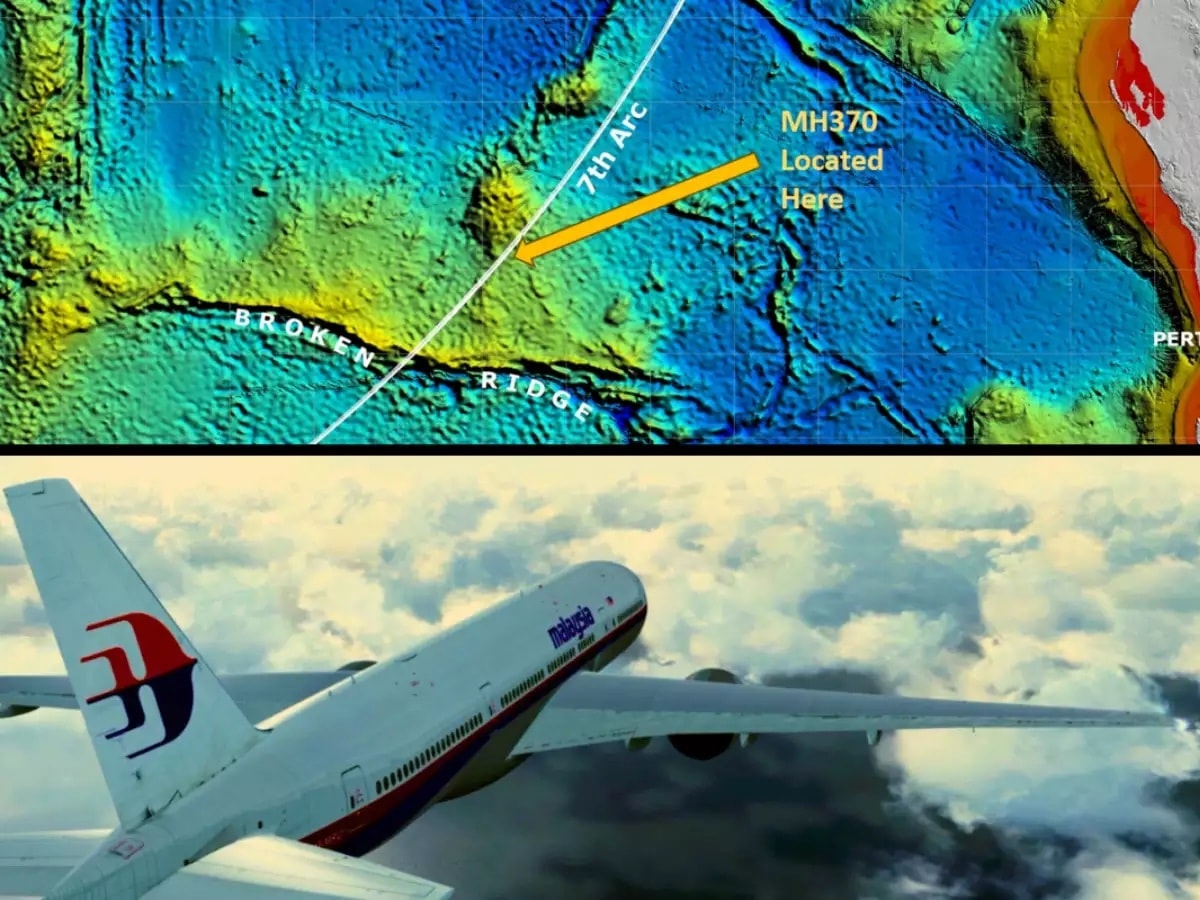
The 12-degree bank of Air India Flight 171, captured by Flightradar24, eerily echoes MH370’s initial westward turn. Both aircraft deviated unexpectedly from their flight paths shortly after reaching a critical phase—MH370 after transitioning airspace, and Flight 171 immediately after takeoff. For MH370, the turn occurred at a cruising altitude of 35,000 feet, with the transponder deliberately disabled, suggesting intentional action. Flight 171’s bank, at just 625 feet, coincided with the fuel switch cutoff, which aviation experts like Captain Mohan Ranganathan argue requires deliberate manual action due to the switches’ locking mechanism. The similarity lies in the abrupt, unexplained nature of the deviations, both of which preceded the aircrafts’ disappearances from radar.
Flightradar24’s data for Flight 171 shows the aircraft’s path diverging from previous departures, which followed a consistent trajectory. The 12-degree bank, though brief, was significant for an aircraft at such low altitude and airspeed (180 knots). Unlike MH370, which continued flying for hours, Flight 171’s deviation lasted seconds before the crash. However, the radar anomaly has sparked speculation about whether a similar deliberate act—or an undetected malfunction—caused the deviation.
Possible Explanations for Flight 171’s Turn
The AAIB report notes no mechanical faults in the aircraft’s maintenance records, and simulator tests confirmed the Boeing 787 could climb on one engine at low altitude. Several hypotheses have emerged:
Pilot Action: The CVR’s exchange suggests confusion over the fuel switch movement. If Captain Sabharwal or First Officer Kunder intentionally moved the switches, the bank could reflect a manual attempt to maneuver the aircraft, possibly to avoid a perceived obstacle or return to the runway. However, Kunder’s denial and subsequent six-minute silence, as noted in prior reports, raise questions about intent or incapacitation.
Electrical Fault: Aerospace engineer Richard Godfrey, cited in a 42kft.com report, hypothesized that water ingress into the Electronic Equipment (E/E) bay during rotation caused an electrical disruption, potentially affecting the fuel switches and triggering the Ram Air Turbine (RAT) deployment. This could have induced an uncommanded bank if the flight control system malfunctioned.
Software Glitch: A 2018 FAA Airworthiness Directive (AD 2018-20-03) noted issues with Boeing 787 autothrottle and radio altimeter systems, potentially causing false air/ground mode readings. If the aircraft’s systems misread the low altitude as ground mode, it could have triggered a throttle rollback, contributing to the bank and power loss. However, the AAIB found no evidence of such a glitch.
External Interference: Though less likely, some X posts and media speculation have raised the possibility of a cyberattack or external interference, similar to theories about MH370. No evidence supports this for Flight 171, but the unexplained switch movement keeps the door open to such theories.
Contrasts and Context

While the radar deviations align, key differences set the crashes apart. MH370’s turn was part of a prolonged, deliberate flight path change, with the aircraft flying for hours undetected. Flight 171’s bank occurred at low altitude and lasted seconds, with both pilots actively responding to the crisis, as evidenced by the RAT deployment and engine relight attempt. MH370’s black box was never recovered, leaving its cause speculative, whereas Flight 171’s intact CVR and flight data recorder (FDR) offer hope for clarity.
The human element also differs. MH370’s Captain Shah faced scrutiny over personal issues and simulator data, though no conclusive evidence of foul play emerged. For Flight 171, Captain Sabharwal’s alleged history of depression has been debated, but Air India clarified his last leave was for bereavement in 2022. First Officer Kunder’s silence, like Germanwings co-pilot Andreas Lubitz’s, adds intrigue but lacks the clear intent seen in the 2015 crash.
Implications for Aviation Safety
The parallels to MH370 highlight persistent gaps in aviation safety. MH370 prompted changes like extended beacon battery life and longer CVR recordings, but Flight 171’s crash underscores the need for real-time data streaming and cockpit video recorders. The unexplained bank and switch movement suggest potential vulnerabilities in the Boeing 787’s systems, particularly the fuel control module. The FAA’s 2025-09-12 directive, addressing E/E bay water ingress, may prove critical if Godfrey’s hypothesis is confirmed.
Public and industry reactions mirror MH370’s aftermath. Families of Flight 171 victims, like MH370’s, demand answers, with protests echoing the “Give us back our loved ones!” chants in Beijing. The Tata Group’s establishment of the AI-171 Memorial and Welfare Trust reflects a commitment to support, but the lack of clarity fuels conspiracy theories, from pilot suicide to software sabotage, much like MH370’s alien abduction and Russian hijacking narratives.
A Path to Answers
The AAIB, with support from the U.S. National Transportation Safety Board and the UK’s Air Accidents Investigation Branch, continues to analyze Flight 171’s black box data. Unlike MH370, where a new search by Ocean Infinity was approved in March 2025, Flight 171’s wreckage is accessible, offering a clearer path to resolution. The 12-degree bank, like MH370’s turn, may hold the key to understanding whether human error, mechanical failure, or an external factor caused the tragedy.
The eerie echo of MH370’s mid-air detour in Flight 171’s radar data serves as a stark reminder of aviation’s unresolved mysteries. As investigators probe the cause—be it a pilot’s action, a system failure, or an unforeseen anomaly—the world watches, hoping for answers that might prevent another such tragedy and provide closure to those left behind.
News

WELFARE CHECK TRIGGER: A relative in Bennington, Vermont called authorities requesting a welfare check after noticing something unusual about Janette MacAusland — a call that would soon lead police to a discovery inside the family’s Wellesley home
Mass. Mom Accused of Strangling Her Kids Allegedly Made Horrifying Admission to Aunt: Police Janette MacAusland was arrested last Friday night in connection with the deaths of her two young children, Kai, 7, and Ella, 6 Janette MacAusland.Credit : Bennington Police…
A WELFARE INSPECTION TRIGGERED BY A BRIEF INTERACTION: Vermont authorities were contacted following a brief encounter involving Janette MacAusland… and initial reports included a 12-second note from the coordination center that remains partially obscured
Retired judge says warning signs may have been missed before Wellesley child murders Vermont hearing Monday cleared path for extradition to Massachusetts A retired juvenile court judge said signs may have been present before a mother allegedly killed her two…
A seven-month-long dispute ended with just 72 hours remaining: Samuel MacAusland and Janette MacAusland had been battling over child custody for months… but the most significant development in the case reportedly occurred in the three days leading up to the final settlement
Acupuncturist’s 2 kids were ordered taken away from her 1 day before she ‘strangled them’ to death A Massachusetts acupuncturist’s two young children were ordered to be removed from her and put into the custody of a court-appointed legal guardian just one…

A SURPRISING CASE WITHIN 48 HOURS — Authorities in Wilmer, Alabama, confirmed William Graham Oliver has been arrested in connection with the deaths of Lisa Gail Fields, Keziah Luker, and Thomas Cordelle Jr. … and the arrest report notes Oliver’s name appeared in the phone contacts stored on one of the victims’ devices
Wilmer family murders update: Suspect charged with 8 counts of capital murder Mobile County Sheriff Paul Burch has released more details surrounding the arrest of a man in connection with a family homicide in Wilmer. According to Sheriff Burch,…
2 minutes ago: Police announced that the suspect in Lisa Gail Fields’ case is William Graham Oliver, but his motive was to target only one person,…
The arrest of William Graham Oliver in the Wilmer triple homicide case has shifted the focus of this tragic investigation from a wide-reaching search for suspects to a concentrated effort to understand a singular, targeted motive. According to the Mobile…

THE TEXAS RECORD ENTRY — Court documents tied to Nathan Leon Fields reference a $2 million valuation case dating back to 2018… and detectives reviewing the Wilmer residence later logged a printed page from that same case stapled to a family document folder
The narrative of Nathan Leon Fields and the enigmatic two million dollar valuation case of 2018 represents a complex intersection of verified law enforcement records and the speculative shadows of a deeper legal mystery. According to historical law enforcement records…
End of content
No more pages to load