WARNING: Survivors Heard a Loud “Crack” as Glória Cable Car’s Cable Snapped — Records Reveal Problem Detected Weeks Earlier ⚠️
On September 3, 2025, at approximately 6:05 p.m. local time, Lisbon’s iconic Glória funicular, known as Elevador da Glória, plummeted into tragedy when one of its cars derailed, killing at least 15 people and injuring 21 others, five critically. The bright yellow funicular, a national monument since 2002 connecting Restauradores Square to the Bairro Alto district, is a cherished symbol of the Portuguese capital. Survivors described hearing a chilling “crack” as the traction cable snapped, sending the car hurtling down the steep Calçada da Glória. But the most shocking revelation has now emerged: maintenance records indicate that issues with the cable were detected during inspections weeks earlier, raising serious questions about why the problem was not addressed.
The Moment of Horror
The Glória funicular, operational since 1885, is a vital part of Lisbon’s transport network, carrying around three million passengers annually, including tourists and locals. Its two cars, each capable of holding 43 passengers, operate in tandem, connected by a haulage cable powered by electric motors. On the evening of the crash, during the bustling rush hour, the descending car suddenly accelerated uncontrollably, derailed at a bend, and smashed into a building with what witnesses described to SIC Notícias as “brutal force.” The car crumpled “like a cardboard box,” leaving a trail of twisted metal and debris.
Survivors recounted a terrifying sequence: a loud “crack” echoed through the car moments before it lost control. One passenger, quoted by CNN Portugal, described the sound as “like a whip snapping,” followed by screams as the car careened down the 265-meter track. The second car at the bottom jolted violently, prompting passengers to leap from its windows in panic. Among the deceased was André Jorge Gonçalves Marques, the brake guard, whose desperate attempts to stop the car were in vain. The crash left a scene of devastation, with 62 rescue workers and 22 ambulances rushing to the site, where responders were moved to tears by the sight of trapped families, including a three-year-old German boy whose father died and whose pregnant mother remains in critical condition.
A Known Problem Ignored?
The most damning revelation comes from maintenance records uncovered by investigators, as reported by ABC News and corroborated by posts on X from @TheIndeWire. Weeks before the crash, inspections had flagged potential issues with the funicular’s traction cable, including signs of fraying and improper tension. These findings were part of routine checks conducted by MAIN – Maintenance Engineering, the contractor responsible for the funicular’s upkeep since 2022. Despite these warnings, the funicular continued to operate, a decision that has stunned investigators and the public alike.
Carris, Lisbon’s municipal transport operator, has insisted that all maintenance protocols were followed, with general maintenance last performed in 2022, interim repairs in 2024, and daily inspections. However, a Portuguese transport union official, Manuel Leal, told Lusa news agency that workers had filed “successive complaints” about inadequate maintenance, particularly since outsourcing began in 2011. Leal highlighted that employees had repeatedly warned about cable tension issues that made braking difficult, a concern echoed by a 2018 derailment caused by neglected wheel maintenance, which fortunately caused no injuries.
Adding to the controversy, ABC News reported that a maintenance tender for Lisbon’s funiculars was canceled just days before the crash on September 1, 2025, because the bids were deemed “too expensive.” This decision, made despite known concerns about the cable, has fueled accusations of negligence. Engineering expert Fernando Nunes da Silva, speaking to SIC Notícias, noted that a snapped cable should have triggered the funicular’s emergency brakes, but their failure suggests a broader systemic collapse, possibly due to corrosion or miscalibration undetected during inspections.
A Devastating Human Toll
The crash claimed a diverse group of victims, including five Portuguese nationals, two South Koreans, one Swiss, one American, one German, one Ukrainian, and one Canadian, reflecting the funicular’s global appeal. The injured, treated at hospitals like São José, Santa Maria, and São Francisco Xavier, included citizens from 10 nationalities. The tragedy struck a chord across Lisbon, with a makeshift memorial of flowers and candles forming at the crash site on Rua da Glória. Portugal declared September 4, 2025, a national day of mourning, while Lisbon observed three days of mourning. Prime Minister Luís Montenegro called it “one of the greatest human tragedies in our recent history,” and Mayor Carlos Moedas demanded answers, stating, “The city needs to know why this happened.”
Global leaders, including Ursula von der Leyen and Pedro Sánchez, expressed condolences, with the European Parliament lowering its flags to half-mast. The U.S. Embassy confirmed one American among the deceased, and Global Affairs Canada reported two Canadians missing and one injured. The emotional weight of the disaster was palpable, with rescuers describing the scene as “heart-wrenching” to Al Jazeera, particularly the sight of families torn apart.
Investigation and Accountability
The ongoing investigation, led by Portugal’s judicial police, public prosecutors, and the Office for the Prevention and Investigation of Accidents in Civil Aviation and Rail, is now focusing on why a known cable issue was not addressed. Key questions include:
Why Were Warnings Ignored? Why did Carris and its contractor fail to act on inspection reports flagging cable issues weeks earlier?
Brake System Failure: Why did the emergency and mechanical brakes fail to engage, despite the operator’s three attempts to stop the car?
Outsourcing Risks: Did the 2011 decision to outsource maintenance compromise safety standards, as alleged by unions?
Canceled Tender: Was the decision to scrap a maintenance tender due to cost a factor in the tragedy?
All funicular lines in Lisbon—Bica, Lavra, and Graça—have been suspended for urgent safety inspections. Carris has launched an internal investigation, but public trust is shaken, especially given the company’s claim that a morning inspection on September 3 found “no faults,” as stated by CEO Pedro Bogas to Reuters.
A City’s Trust Shattered
The Glória funicular tragedy has exposed vulnerabilities in Lisbon’s historic transport infrastructure, which struggles to balance cultural heritage with modern safety demands. The “crack” heard by survivors marked not only the moment the cable snapped but also a breaking point in public confidence. As investigations continue, the failure to address a known problem weeks earlier stands as a stark warning of the consequences of oversight. Lisbon now mourns its lost lives while grappling with the urgent need for reform to prevent another such disaster.
Sources: ABC News, The New York Times, BBC, CNN Portugal, Al Jazeera, Observador, Reuters, @TheIndeWire.
News

⚠️ CALL LOG DETAILS: Detectives confirm Ryan Hosselton held the call for less than a minute — but device data shows the screen was activated for 4 seconds immediately after the call was disconnected… 👇 No one has yet explained what triggered it
Husband kills high school sweetheart wife, commits suicide in woods less than 2 years into their marriage A young Pennsylvania couple who were high school sweethearts are dead in a murder-suicide carried out by the husband less than two years…
🚨 BREAKING NEWS: After Ryan Hosselton called his parents to confess, investigators say one detail changed everything — call logs show the conversation ended abruptly, but the device recorded a final interaction 28 seconds later that has yet to be publicly explained
Pennsylvania man called parents to confess wife’s murder before turning gun on himself: police The Brief A 26-year-old man fatally shot his 25-year-old wife inside their Pennsylvania home early Tuesday morning before killing himself in the nearby woods, police say….
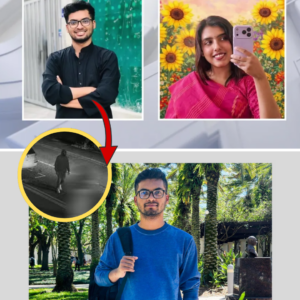
🚨 BREAKING NEWS: After a b.0…dy wearing clothing matching Nahida Bristy was found, investigators say one detail changed everything — a relative revealed she always wore a specific ring on her right hand, but the affidavit noted that the ring was not found at the scene
Murder Suspect Allegedly Asked ChatGPT How to Dump Bodies in Zamil Limon, Nahida Bristy Case Investigators found evidence of blood inside the apartment Hisham Abugharbieh shared with Zamil Limon and suspicious items belonging to the missing students Nahida Bristy and…
⚠️ FRIENDS REVEAL: A close friend of Nahida Bristy said she received a message “that didn’t sound like hers” hours before she disappeared – and detectives confirmed the message was sent exactly 12 minutes after Zamil Limon was last seen alive
Murder Suspect Allegedly Asked ChatGPT How to Dump Bodies in Zamil Limon, Nahida Bristy Case Investigators found evidence of blood inside the apartment Hisham Abugharbieh shared with Zamil Limon and suspicious items belonging to the missing students Nahida Bristy and…
🚨 BREAKING NEWS: “His voice sounded completely different that morning.” A family member said Zamil Limon made a brief phone call before disappearing — but investigators now say a 23-second gap in that call log completely changed how they viewed Hisham Saleh Abugharbieh
Hillsborough County sheriff to give update on USF student murders | How to stream live Hillsborough County Sheriff Chad Chronister will give an update at 11 a.m. Friday on the investigation into the murders of Zamil Limon and Nahida Bristy….
⚠️ CHANGE IN INVESTIGATION DIRECTION: Detectives confirm the discovery of Nahida Bristy has changed the direction of the investigation — after analysts identified a repeating two-digit code appearing in recovered data, which also appeared in files related to Hisham Saleh Abugharbieh
The University of South Florida community is coming together to honor the lives of two students, Zamil Limon and Nahida Bristy, with a series of tributes and memorial events. From 4-7 p.m. Friday, a vigil will be held at Crescent…
End of content
No more pages to load