King Charles BREAKS Royal Tradition To Follow Duchess Of Kent THIS Wish At Funeral Arrangements

In the shadowed spires of Westminster Cathedral, where Byzantine domes pierce London’s gray September sky, King Charles III etched a historic rupture in the tapestry of British monarchy on September 16, 2025. Amid the incense curls and Gregorian chants of a Requiem Mass for Katharine, Duchess of Kent—his late cousin’s wife of 64 years—the sovereign, as Supreme Governor of the Protestant Church of England, became the first reigning monarch in nearly four centuries to attend a Roman Catholic funeral. This wasn’t mere protocol; it was a deliberate break from royal tradition, honoring the duchess’s fervent wish for a Catholic rite at the very heart of her adopted faith. As her coffin, draped in white silk and borne by Royal Dragoon Guards, processed through the nave, Charles’s presence—flanked by Prince William, Catherine, Princess of Wales, and a somber array of Windsors—signaled not just farewell, but a profound evolution in the Crown’s religious stance. “In fulfilling her wish, he reshaped ours,” a palace insider reflected to The Times, capturing the moment’s quiet revolution.
Katharine Worsley, born in 1933 to a Yorkshire baronetcy and thrust into royal orbit by her 1961 marriage to Prince Edward, Duke of Kent—Queen Elizabeth II’s first cousin—lived a life of understated grace. At 92, she passed peacefully on September 4 at Kensington Palace, her home since the wedding that blended aristocratic roots with Windsor duty. A music teacher by vocation, she shunned the spotlight for charity: volunteering in soup kitchens at The Passage homeless shelter, bestowing Wimbledon trophies with empathetic poise (famously consoling a tearful Jana Novotna in 1993), and championing Catholic causes after her 1994 conversion—the first by a senior royal in over 300 years, defying the 1701 Act of Settlement’s Protestant strictures. Her faith, deepened by personal trials including the stillbirth of a son in 1977, became her anchor. “She entered wholeheartedly into serving people,” Cardinal Vincent Nichols, who led the Mass, told the BBC, recalling her kitchen shifts next door to the cathedral. It was this devotion that birthed her singular wish: a Catholic funeral at Westminster Cathedral, the mother church of England’s Catholics since 1903.
Royal funerals, steeped in Anglican pomp at St. George’s Chapel or Westminster Abbey, have long mirrored the monarchy’s Protestant primacy. Queen Elizabeth II’s 2022 service, with its piper’s lament and state hearse, set the template; even Diana’s 1997 rites bowed to Church of England norms. Katharine’s, however, demanded divergence. Buckingham Palace confirmed her desire for the Requiem Mass—a two-day Catholic vigil culminating in the Eucharist—prompting Charles to act. “It was her explicit wish, supported by the Duke and the Household,” a statement read, underscoring the king’s deference. By attending, Charles shattered precedent: no sovereign since James II (a Catholic convert deposed in 1688) had crossed this ecumenical Rubicon. Queen Elizabeth II ventured to a 1993 Catholic Mass in Brussels for King Baudouin, but never on home soil for family. Charles’s move, insiders say, embodied his long-avowed “defender of faith” pluralism—rephrasing Elizabeth’s “Defender of the Faith” to embrace all creeds, a pledge reiterated in his 1994 BBC interview and echoed in visits to mosques and synagogues.

The arrangements unfolded with meticulous reverence. On September 15, Katharine’s oak coffin—adorned with a floral tribute of rosemary for remembrance, oak leaves for strength, and yew sprigs from her childhood Hovingham Hall gardens—arrived at the cathedral via royal hearse from Kensington Palace’s private chapel. There, in the Lady Chapel, the Rite of Reception and Vespers unfolded: prayers, hymns like “Ave Maria,” and a message from Pope Leo XIV invoking her “gentle service.” Soldiers from the Royal Dragoon Guards—her husband’s regiment—mounted vigil, their scarlet tunics a vivid counterpoint to the cathedral’s marble coolness. The next afternoon, as crowds gathered outside the Byzantine edifice, the family processed in: Charles, somber in black morning coat; William and Catherine, her hand steady on his arm; Princess Anne with Sir Tim Laurence; even Prince Andrew arm-in-arm with Sarah Ferguson, their reconciliation a subplot to the grief. Queen Camilla, sidelined by acute sinusitis, sent regrets and prayers, her absence noted but not diminishing the turnout.

Inside, the Mass—presided by Nichols in cope and mitre—wove Catholic liturgy with royal echoes. A Scottish piper led the cortege with “Sleep Dearie Sleep,” the tune from Elizabeth’s funeral; readings from Corinthians on eternal life drew from Katharine’s charitable ethos. The Duke of Kent, 89 and now the family’s eldest, bowed over the casket, his three children—Earl of St Andrews, Lady Marina, and Lady Helen—nearby. A message from the Pope, read aloud, lauded her as a “bridge of compassion.” Charles, seated prominently, joined the responses, his Latin fluid from scholarly pursuits. “It was a family funeral first,” Nichols emphasized, “but historic nonetheless.” Post-Mass, the coffin journeyed to Frogmore’s Royal Cemetery—Queen Victoria’s resting place—for private burial, flags at half-mast across residences signaling a mourning period until September 20.
The gesture’s ripples extended beyond liturgy. Coming days before Trump’s state visit—Windsor primed for banquets and guards of honor—it underscored Charles’s interfaith commitment, honed by audiences with Pope Francis (one of his last before the pontiff’s April death). Social media, ever vigilant, lit up: X posts hailed “Charles’s bold step for unity,” one viral clip of his arrival garnering 18,000 likes. Critics, a whisper among republicans, decried it as “ecumenical overreach,” but most saw symbolism: in a fractured Britain, post-Brexit and amid global faiths’ clashes, it modeled tolerance. Royal historian Dr. Anna Keay told Sky News, “By honoring her Catholic wish, Charles honors his own vision—a monarchy for all faiths.”
For the Windsors, the day layered personal with profound. William and Catherine, who paid tribute to Katharine’s “warmth and wisdom” in a Kensington post, arrived post their own health odysseys—Catherine’s remission a quiet parallel to the duchess’s resilience. Andrew and Fergie’s presence, amid her recent Epstein email leaks and heartbreaking social media elegy, hinted at mending fractures. Ferguson’s Instagram tribute—”Her grace was our anchor”—drew 47,000 engagements, her words a prelude to the cathedral’s solemnity. As the family departed, Charles lingered, touching the casket—a gesture unscripted, intimate.
This break, born of one woman’s wish, may redefine royal rites. No longer bound solely to Anglican altars, future farewells could embrace diversity, mirroring Charles’s pluralist reign. As the cathedral bells tolled, echoing over a city abuzz with Trump’s impending arrival, Katharine’s legacy gleamed: faith as bridge, not barrier. In death, as in life, she taught the Crown to bend toward light. “Her wish wasn’t just honored,” an X user poignanted, “it was exalted.” For a king who whispers to trees and dialogues with deities, it was fitting poetry
News
⚠️ CALL LOG DETAILS: Detectives confirm Ryan Hosselton held the call for less than a minute — but device data shows the screen was activated for 4 seconds immediately after the call was disconnected… 👇 No one has yet explained what triggered it
Husband kills high school sweetheart wife, commits suicide in woods less than 2 years into their marriage A young Pennsylvania couple who were high school sweethearts are dead in a murder-suicide carried out by the husband less than two years…
🚨 BREAKING NEWS: After Ryan Hosselton called his parents to confess, investigators say one detail changed everything — call logs show the conversation ended abruptly, but the device recorded a final interaction 28 seconds later that has yet to be publicly explained
Pennsylvania man called parents to confess wife’s murder before turning gun on himself: police The Brief A 26-year-old man fatally shot his 25-year-old wife inside their Pennsylvania home early Tuesday morning before killing himself in the nearby woods, police say….
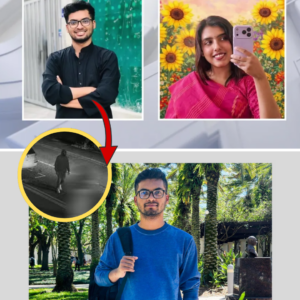
🚨 BREAKING NEWS: After a b.0…dy wearing clothing matching Nahida Bristy was found, investigators say one detail changed everything — a relative revealed she always wore a specific ring on her right hand, but the affidavit noted that the ring was not found at the scene
Murder Suspect Allegedly Asked ChatGPT How to Dump Bodies in Zamil Limon, Nahida Bristy Case Investigators found evidence of blood inside the apartment Hisham Abugharbieh shared with Zamil Limon and suspicious items belonging to the missing students Nahida Bristy and…
⚠️ FRIENDS REVEAL: A close friend of Nahida Bristy said she received a message “that didn’t sound like hers” hours before she disappeared – and detectives confirmed the message was sent exactly 12 minutes after Zamil Limon was last seen alive
Murder Suspect Allegedly Asked ChatGPT How to Dump Bodies in Zamil Limon, Nahida Bristy Case Investigators found evidence of blood inside the apartment Hisham Abugharbieh shared with Zamil Limon and suspicious items belonging to the missing students Nahida Bristy and…
🚨 BREAKING NEWS: “His voice sounded completely different that morning.” A family member said Zamil Limon made a brief phone call before disappearing — but investigators now say a 23-second gap in that call log completely changed how they viewed Hisham Saleh Abugharbieh
Hillsborough County sheriff to give update on USF student murders | How to stream live Hillsborough County Sheriff Chad Chronister will give an update at 11 a.m. Friday on the investigation into the murders of Zamil Limon and Nahida Bristy….
⚠️ CHANGE IN INVESTIGATION DIRECTION: Detectives confirm the discovery of Nahida Bristy has changed the direction of the investigation — after analysts identified a repeating two-digit code appearing in recovered data, which also appeared in files related to Hisham Saleh Abugharbieh
The University of South Florida community is coming together to honor the lives of two students, Zamil Limon and Nahida Bristy, with a series of tributes and memorial events. From 4-7 p.m. Friday, a vigil will be held at Crescent…
End of content
No more pages to load