OVER 100 HOURS OF FOOTAGE: The Invisible Trail That Defies Bristol’s Eyes

In the labyrinthine underbelly of Bristol’s Cumberland Basin, where concrete arteries pulse with midnight traffic and the Avon River coils like a forgotten vein, technology’s unblinking gaze has captured everything—except the one thing that matters. Avon and Somerset Police have now confirmed a staggering feat: over 100 hours of CCTV footage meticulously reviewed from every conceivable angle across Hotwells, Brunel Lock Road, and the iconic Plimsoll Swing Bridge. Dozens of cameras, from council-operated traffic monitors to private doorbells and dashcams submitted by the public, form a digital net cast wide on the night of March 2, 2024. Yet, Jack O’Sullivan, the 23-year-old law graduate last seen striding purposefully at 3:15 a.m., never reemerges on any frame. It’s as if he stepped off the map, evaporating into the sodium-lit void, leaving investigators grappling with a riddle wrapped in pixels and shadows.
This exhaustive video autopsy, detailed in a September 2025 update from Detective Superintendent Mark Runacres, underscores the operation’s scale—and its frustrations. “We’ve scrutinized 31 separate CCTV sources, frame by frame, enhancing for clarity and cross-referencing timestamps,” Runacres stated at a press briefing outside Bridewell Police Station. “From the party house on Hotwells Road to the flyovers spanning Brunel Way, we’ve mapped his path until 3:39 a.m. on Bennett Way. After that? Nothing. No exit, no anomaly, no trace.” The admission, coming amid mounting criticism from Jack’s family, highlights a paradox: in an era of ubiquitous surveillance, one man’s final steps remain unseen, deepening the enigma of what befell the Flax Bourton native after a routine night out.
Jack’s journey that fateful evening began innocuously enough. A bus ride from his family home at 8:20 p.m. led to drinks at a Wetherspoons, then the birthday gathering in Hotwells. Friends recall him as upbeat, networking ambitions alight despite a minor stair fall that left him bruised but coherent. He departed alone around 2:57 a.m., phone in hand, crossing the Junction Swing Bridge by 3:08 a.m. as per mobile data. CCTV snippets stitch a fragmented narrative: passing a car park on McAdam Way, doubling back under the Brunel Way flyover—perhaps disoriented by the basin’s maze of roundabouts and dead ends. At 3:15 a.m., the pivotal clip on Brunel Lock Road shows him on a grassy verge, jacket flapping in the breeze, before he veers toward Bennett Way. A final shadowy figure at 3:39 a.m., identified by his mother Catherine from gait alone, heads north. Then, the feed goes cold.

The reviewed footage spans a 5-mile radius, encompassing 50+ cameras: high-res traffic cams on the A370, grainy private systems from warehouses along the Avon, and even a Plimsoll Bridge operator’s lens that logs vessel passages but caught no pedestrian anomalies. Police appealed for 1,000+ dashcams from vehicles crossing the bridge around 3:38 a.m.—a convoy of 15 cars whose drivers were traced and interviewed. “We enhanced for reflections, shadows, even infrared where available,” explained a force spokesperson. Yet, no Jack. No struggle, no vehicle interaction visible beyond speculation. This black hole in the visuals fuels theories: Did he slip into an unsearched alley off Granby Hill, where recent phone pings placed his device hours later? Or enter a blind spot, one of the basin’s notorious “dead zones” where CCTV coverage thins amid industrial sprawl?
Compounding the mystery, thermal drone sweeps of the Avon River—12 flights in total, deploying FLIR cameras sensitive to body heat—have yielded zilch. Launched within days of the disappearance and repeated in April and July 2024, these operations scanned riverbanks, mudflats, and submerged debris from the Cumberland Basin to Avonmouth. “We covered 10 kilometers of waterway, diving 200 hours with sonar and cadaver dogs,” Runacres noted. Divers from the Underwater Search Unit probed lock gates and eddies, where currents could conceal a mishap. Thermal imaging, capable of detecting a form even in frigid waters, registered wildlife—foxes, rats, gulls—but no human signature. “If he’d entered the river accidentally, post-fall disorientation perhaps, we’d expect debris: a shoe, fabric from his Barbour jacket,” said search coordinator Sgt. Laura Henshaw. “Nothing. It’s as if the Avon swallowed the evidence whole.”
The family’s anguish over this invisible trail is palpable. Catherine O’Sullivan, who has pored over redacted clips provided by police, insists missed angles exist. “They showed us 100 hours, but what about the substation on Granby Hill? Or doorbells we found ourselves?” she demanded in a January 2025 podcast appearance. Their private investigators, funded by crowdfunding that topped £50,000, uncovered additional footage: a Merchants Road doorbell clip from 3:45 a.m. showing a sedan interaction, overlooked in initial sweeps. This led to their IOPC complaint, alleging “systemic oversights” like a two-month delay in national database entry and dismissal of the 6:44 a.m. Wi-Fi ping on Granby Hill—less than a mile from the last sighting, where the phone lingered for three unexplained hours.
Critics point to Bristol’s surveillance gaps: The basin, a regeneration hotspot with derelict lots, has patchy coverage. A 2023 audit revealed 20% of council cameras offline for maintenance that week. Community forums on Reddit and the “Find Jack” Facebook group (now 18,000 strong) buzz with armchair analysis: “He walked into a construction site—those cranes block views,” one post theorizes, garnering 500 upvotes. Others suggest abduction into a vehicle unseen by static cams, aligning with the sedan’s emergence in new evidence.
The £100,000-plus investigation—encompassing 40 land searches, mounted patrols, and national expert consultations—has strained resources without breakthrough. An anonymous £100,000 reward in September 2025, verified after hoax scares, has flooded tip lines: 200 leads, mostly dead ends like “sightings” in London or psychic visions. Brother Ben O’Sullivan, 28, coordinates from a wall of maps in the family home, frustration etching his features. “100 hours of footage, drones over the river—it’s impressive, but where’s Jack? If he’s not on camera or in the water, he’s somewhere else. With someone.”
As winter looms, renewed appeals target Plimsoll Bridge regulars: boat owners, night fishermen, joggers. Thermal tech evolves—new drones with AI anomaly detection are slated for November sweeps. Yet the riddle endures: In a watched city, how does a 5’10” man in distinctive attire vanish? Catherine clings to hope, lighting candles on his would-be 24th birthday. “The cameras saw him leave, but not arrive anywhere. That means he’s still out there—off the map, but not off our hearts.” Police vow to re-review with fresh eyes, but for now, Jack’s final steps echo in absence, a ghost in the machine of modern detection.
The search, bolstered by community vigils and viral X threads (#JackOSullivanCCTV amassing 2 million views), presses on. One overlooked frame, one thermal blip—could shatter the silence. Until then, Bristol’s eyes keep watching, haunted by what they failed to see.
News
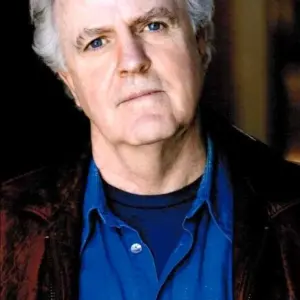
THE LAST THING THE COORDINATOR HEARD… Before police arrived at the house, a James Handy caller allegedly uttered a chilling confession — and detectives are now reviewing every second of nearby surveillance video. The suspect’s MOTIVE was not simply love
The fatal stabbing of 81-year-old character actor James Handy on June 3, 2026, has evolved from a tragic domestic response into one of the most structurally complex homicide investigations in recent Los Angeles history. While initial media reports highlighted the…
A HOLLYWOOD MYSTERY: James Handy’s final moments may have begun with a family argument, but it was security footage of a man walking away that sparked widespread discussion…
The Shadows of Erwin Street The investigation into the tragic death of 81-year-old character actor James Handy has taken a complex turn as detectives from the Los Angeles Police Department piece together the hours leading up to the fatal incident….
HORROR IN HOLLYWOOD: The man accused of stabbing Top Gun: Maverick actor James Handy allegedly called 911 himself — but the seven chilling 5 words he said are what investigators can’t forget…
The suburban neighborhood of Tarzana, California, is known for its wide streets, beautifully manicured lawns, and a tranquil atmosphere that usually isolates it from the darker undercurrents of Los Angeles. Located in the San Fernando Valley, it is the kind…
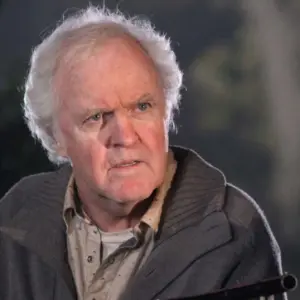
A CONTROVERSY CHANGED EVERYTHING.” 😳 Top Gun: Maverick actor James Handy was stabbed to death, and police subsequently arrested his girlfriend’s son 👀 👇 But it was the unfinished 911 call from inside the new house that EXPOSED her motives
Top Gun: Maverick actor James Handy stabbed to death in L.A.; girlfriend’s son is arrested Handy appeared in a number of films including Top Gun: Maverick, Jumanji and Arachnophobia. James Handy appeared in a number of movies and TV shows…
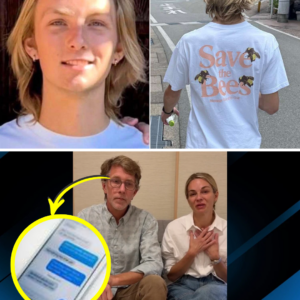
FAMILY JUST REVEALED NEW INFORMATION… While the search for James “Weston” Higginbotham continues, relatives say there’s a small detail about his mental health reminders before his 30-day trip that can now be ignored
FAMILY JUST REVEALED NEW INFORMATION… While the search for James “Weston” Higginbotham continues, relatives say there’s a small detail about his mental health reminders before his 30-day trip that can now be ignored. This latest disclosure from the Higginbotham family…
“That’s nothing like Weston at all…” A close friend of missing Auburn student James “Weston” Higginbotham reportedly had a heated argument with a female classmate just 30 minutes before disappearing. Now her identity and testimony are silencing everyone
A close friend of missing Auburn student James “Weston” Higginbotham reportedly had a heated argument with a female classmate just 30 minutes before disappearing. Now her identity and testimony are silencing everyone. The phrase captures the profound disbelief rippling through…
End of content
No more pages to load