NEW ON NETFLIX — The WWII Survival Drama Everyone’s Talking About
Based on a true story, this harrowing new film follows 13-year-old Sara, whose life is shattered after her family’s brutal murder. To survive, she must hide her identity — living each day under a false name, in a world where a single mistake means death.
Set against humanity’s darkest hour, Netflix’s latest historical drama is being hailed as “unshakable,” “gut-wrenching,” and “the most powerful story of the year.”
💔 Her childhood stolen. Her identity erased. Her courage — unforgettable.
⚡ Now streaming — experience the story that will stay with you long after the credits roll.
In the shadowed valleys of Nazi-occupied Ukraine, where the line between ally and executioner blurred into a nightmare of suspicion and slaughter, one girl’s audacious gamble against annihilation unfolds like a pulse-pounding thriller. My Name Is Sara, a devastating 2022 biographical drama now streaming on Netflix, plunges viewers into the unimaginable ordeal of 13-year-old Sara Góralnik, a Polish-Jewish teenager who, after witnessing the brutal murder of her family, erases her identity to survive two years of unrelenting peril. Directed by Steven Oritt with a script by David Himmelstein, this film—backed by Steven Spielberg’s USC Shoah Foundation—transforms a real-life testament of resilience into a taut, emotionally wrenching narrative that feels less like historical recreation and more like a visceral descent into humanity’s abyss. Her childhood stolen in an instant, Sara’s only lifeline becomes a fabricated Christian persona, navigating betrayal, buried marital secrets, and the ever-looming specter of death. As one viewer on IMDb proclaimed, it’s “unshakable,” a story so raw it lingers like the chill of an Eastern European winter—arguably Netflix’s most potent Holocaust drama in years.

The film opens in September 1942, amid the chaos of the Holocaust’s early escalations in Koretz, a Ukrainian town annexed by the Nazis after the invasion of Poland. Sara (portrayed with heartbreaking authenticity by newcomer Zuzanna Surowy) is thrust into horror when German forces liquidate the Jewish ghetto, gunning down her parents and siblings in a frenzy of gunfire and screams. Her father, a tailor who once dreamed of her studying literature, presses a wad of cash into her hand—payment for a fleeting chance at refuge. Separated from her older brother, who urges her to flee because her fair features make her less “identifiably Jewish,” Sara stumbles through forests and fields, her body battered by thorns and terror. Malnourished and delirious, she collapses at the doorstep of Pavlo (Konrad Cichon), a stern Ukrainian farmer, and his volatile young wife, Nadya (Michalina Olszańska). Desperate, Sara invokes the name of her Christian schoolmate, Manya Romanchuk, reciting Orthodox prayers memorized from stolen study sessions—a deception born of sheer survival instinct.
What follows is no sanitized tale of quiet endurance. Oritt, drawing from survivor testimonies including those archived by the Shoah Foundation, crafts a narrative that pulses with thriller-like tension, where every creak of floorboards or suspicious glance could unravel Sara’s fragile facade. Posing as a pious helper on the farm, Sara tends livestock, cooks meager meals of potatoes and cabbage, and learns the rhythms of rural Orthodox life—crossing herself before icons, whispering Hail Marys to blend in. But the real peril simmers within the household itself. Pavlo and Nadya’s marriage is a powder keg of resentment and infidelity; he, a domineering brute haunted by wartime drafts; she, a fiery beauty trapped in isolation, her affections wandering to a local partisan. Sara, privy to their explosive arguments and clandestine trysts, becomes an unwitting keeper of secrets—hers the deadliest of all.
Surowy’s performance is the film’s beating heart, a revelation that captures the vertigo of adolescence amplified by atrocity. At 13, Sara teeters between childlike wonder—clutching a tattered book of poetry her father gifted her—and the cold pragmatism of a fugitive, her wide eyes flickering with calculation as she deflects questions about her past. “I am Manya now,” she whispers to herself in moments of doubt, a mantra against the ghosts of her siblings’ laughter. Roger Ebert’s review lauds how the film immerses us in her psyche: “It excels at putting the audience in the position of its teenage heroine, who’s lost and alone in hostile terrain, making things up as she goes.” Olszańska’s Nadya adds layers of complexity, her maternal overtures toward Sara laced with jealousy and unspoken longing, while Cichon’s Pavlo embodies the moral ambiguity of collaborators—neither fully villain nor savior, just a man scraping by in occupation’s grip.

Shot on location in Poland and Ukraine, My Name Is Sara eschews grand battle sequences for intimate, claustrophobic realism. Cinematographer Michal Łuczak employs tight frames and muted palettes of grays and browns, mirroring the suffocating dread of hiding in plain sight. Sound design amplifies the unease: distant artillery rumbles like thunder, farm animals bleat in ominous counterpoint to human whispers, and Sara’s ragged breaths underscore her isolation. The script, informed by the real Sara’s late-life revelations—she concealed her wartime trauma from her own children until her 80s—weaves in poignant ironies, like Sara teaching Nadya to read from that forbidden poetry book, a quiet act of defiance against erasure. Executive produced by Sara’s son, Mickey Shapiro, the film honors her not as a victim, but as a “resourcefully defiant” force, her cunning forging bonds amid betrayal.
The true story behind My Name Is Sara is as harrowing as the screen version. Born Sara Góralnik in 1929, she endured the ghetto’s horrors until the 1942 massacre claimed her family of eight. Fleeced by false rescuers, she bartered her way to the farm, surviving on wits and willpower until liberation in 1944. Post-war, she emigrated to the U.S., married, and raised a family in Florida, but the weight of her silence nearly crushed her. It was only after her husband’s death, prompted by Shoah Foundation interviews, that she shared her odyssey—details that infuse the film with unflinching accuracy, from the tactile grit of farm labor to the psychological toll of perpetual vigilance. As the St. Louis Jewish Light notes, the setting’s timeliness amid modern Ukraine’s strife underscores its resonance: “Many Jews tried to survive the Shoah by adopting Christian identities… but My Name Is Sara is exceptional.”
Critics have hailed it as a masterclass in understated power. IMDb users praise its “poignant, true story” that evolves Sara from “frightened young girl” to empowered survivor, with a 6.7/10 rating reflecting its emotional heft over crowd-pleasing spectacle. Punch Drunk Critics calls it a “softer tone of WWII,” focusing on “the tempestuous web” of human flaws emboldened by war, while We Are Movie Geeks deems it “worthy… told with a striking thriller vibe.” On X, posts ripple with fervor: “This film wrecked me—Sara’s strength is everything,” one user shared, echoing semantic searches for “unshakable WWII survival” that spike with phrases like “powerful reminder of resilience.” Though not a blockbuster—its limited theatrical run in 2022 yielded modest box office—Netflix’s algorithm has propelled it to viral whispers, amassing streams amid the platform’s WWII catalog boom post-All the Light We Cannot See.

Yet My Name Is Sara transcends entertainment, serving as a stark mirror to unspeakable evil. It probes the banality of survival: the ethical tightrope of gratitude toward flawed hosts, the guilt of outliving loved ones, the erasure of self in a world demanding conformity. Sara’s arc—from reciting prayers to shield her Judaism, to forging a surrogate family amid Nadya’s miscarriages and Pavlo’s rages—illuminates the Holocaust’s ripple effects on the psyche. As Himmelstein explained in interviews, the film honors “the human drama in the everyday lives of those who tried to survive the atrocities,” avoiding glorification for gritty truth.
In an era of polished prestige dramas, My Name Is Sara stands raw and resolute, a haunting elegy to the 1.5 million Ukrainian Jews lost to the Shoah. For Sara Góralnik, who passed in 2017 at 88, it immortalizes her erasure and reclamation. Viewers emerge shaken, pondering: In humanity’s darkest hour, what secrets would you bury to see dawn? Netflix’s drop of this gem isn’t just a release—it’s a reckoning, proving that some stories, forged in fire, burn eternal.
News
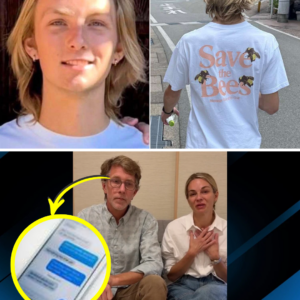
He never took those headphones off…:A close friend of James “Weston” Higginbotham said investigators recently questioned him about the white wireless headphones he always carried, after a witness reported seeing one near the bridge and then,…
The focus of the international investigation into the disappearance of James “Weston” Higginbotham has narrowed significantly onto a distinct personal item that may hold the definitive answer to his final movements. In the weeks since the twenty-year-old Auburn University student…
“He couldn’t live without it…” While the search for James “Weston” Higginbotham continues, relatives say investigators have questioned them about a sedative they initially dismissed as unimportant — but which may now help explain his final actions
The ongoing investigation into the disappearance of James “Weston” Higginbotham has taken a sharp, unexpected turn as authorities shift their attention from the rugged geography of Kyoto’s mountain trails to a minor detail found within the young man’s personal belongings….
“I still can’t forget those 4 words…” A close friend of James “Weston” Higginbotham is expected to speak publicly, and investigators are reportedly reviewing one final message that may help rebuild the timeline
The sudden silence surrounding the disappearance of James “Weston” Higginbotham has left a community suspended in a state of collective grief and unanswered questions. For weeks, the small-town backdrop of this unfolding tragedy has been dominated by a singular, frustrating…
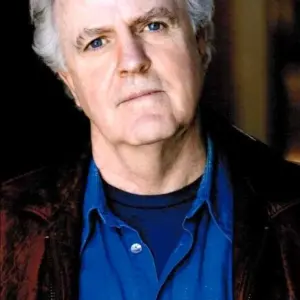
Just now: Los Angeles police arrested the son of the victim’s girlfriend in the stabbing death of actor James Handy, but his testimony is shocking; his relationship was rejected, driving him insane, and the truth is even more shocking…
LAPD arrest girlfriend’s son in stabbing death of actor James Handy This image made from video provided by KABC shows the scene at a home where authorities were investigating the fatal stabbing of actor James Handy on Wednesday, June 3,…
NEIGHBORS CAN’T FORGET ONE IMAGE: Just moments after James Handy was discovered, a camera allegedly captured an image of a figure silently walking down the street… as if a scream of just four words mentioning a name had terrified the neighbors to this day
The quiet, tree-lined sidewalks of Erwin Street in Tarzana, California, are designed for peaceful morning walks, dog walking, and neighborly pleasantries. However, for the residents who looked out their windows or checked their security applications on the morning of June…
THE LAST THING THE COORDINATOR HEARD… Before police arrived at the house, a James Handy caller allegedly uttered a chilling confession — and detectives are now reviewing every second of nearby surveillance video. The suspect’s MOTIVE was not simply love
The fatal stabbing of 81-year-old character actor James Handy on June 3, 2026, has evolved from a tragic domestic response into one of the most structurally complex homicide investigations in recent Los Angeles history. While initial media reports highlighted the…
End of content
No more pages to load