On this day, 28 years ago—August 21, 1997—Princess Diana and her eldest son, Prince William, stepped out of a modest Italian restaurant in Chelsea, London, unaware that the moment would become etched in history as their final public appearance together. The photographs, taken by a lone paparazzo outside La Famiglia on Langton Street, capture a mother and son in a rare bubble of normalcy: Diana, radiant in a tailored light grey suit, her blonde hair swept back, laughing as she walks beside 15-year-old William, who wears a navy jumper over a white shirt, blue jeans, and white trainers. His hands are casually tucked into his pockets; hers rest gently by her side. They are smiling—genuinely, unguardedly—at each other.
Ten days later, on August 31, 1997, Diana would be gone. Killed in a car crash in Paris alongside Dodi Fayed and driver Henri Paul, her death at age 36 sent shockwaves around the world. William, just two months past his 15th birthday, would never again be photographed in public with his mother.
The images from that August afternoon—first published in British tabloids days after her death—have since taken on a near-sacred quality among royal watchers and Diana devotees. They are not staged portraits or red-carpet poses, but candid, fleeting seconds of intimacy amid the relentless glare of fame. In one frame, Diana turns slightly toward William, her eyes bright with affection. In another, he glances down, a shy half-smile breaking through the awkwardness of adolescence. There is no security in sight, no protocol, no performance—just a mother and her boy, sharing a quiet lunch before parting ways.
The choice of La Famiglia was deliberate. A tucked-away Tuscan trattoria favored by locals and low-key celebrities, it offered Diana a brief escape from the media circus that shadowed her every move. She had dined there often, sometimes with William and Harry, sometimes alone. On this occasion, it was just the two of them. Staff later recalled Diana ordering her usual—grilled sole and salad—while William opted for pasta. They spoke softly, heads close, occasionally laughing. “She was relaxed,” one waiter told The Telegraph years later. “No entourage, no fuss. Just a mum and her son.”
What makes the photographs all the more poignant is what they don’t show: the turmoil beneath the surface. Diana was in the final chapter of a summer that had been both liberating and lonely. Fresh from a humanitarian trip to Bosnia to campaign against landmines, she had just ended her relationship with heart surgeon Hasnat Khan and begun seeing Dodi Fayed. The press hounded her relentlessly; paparazzi motorbikes trailed her even on private holidays. William, meanwhile, was navigating the emotional turbulence of boarding school at Eton, the weight of his mother’s fame, and the slow unraveling of his parents’ already fractured marriage.
Yet in those frames, none of that exists. There is only connection.
Royal historian Robert Lacey, in his book Battle of Brothers, notes that by 1997, Diana had made a conscious effort to carve out one-on-one time with each of her sons. With William, those moments often revolved around simple rituals—lunch in London, walks in Kensington Gardens, or drives to the cinema. “She wanted him to remember her not as ‘Princess Diana,’” Lacey writes, “but as Mum.” William later echoed this in a 2017 ITV documentary, Diana, Our Mother: “She was very informal and really enjoyed the laughter and the fun… She understood that there was a real life outside of Palace walls.”
No further public photographs of Diana and William together exist after August 21. She spent the following week in the South of France with Dodi Fayed, while William and Harry remained at Balmoral with their father, then-Prince Charles, and the Queen. It is believed they spoke by phone—William has recalled his mother calling to check in, her voice warm and teasing—but no images survive of those final days. The last private moments remain locked in memory.
In the years since, William has spoken sparingly but deeply about his mother. On the 20th anniversary of her death in 2017, he told GQ, “I still feel the love she gave us… Time makes it easier, but I still have that love, and I’m trying to give it to my own children.” He and Catherine have named their daughter Charlotte Elizabeth Diana, and their charity work—particularly in mental health—bears the clear imprint of Diana’s empathy and hands-on compassion.
The La Famiglia photographs have never been officially released by the Royal Family, but they circulate widely online and in memorial exhibitions. In 2021, a set of the original prints sold at auction for £18,000, with proceeds donated to Centrepoint, a homelessness charity Diana championed and William now patronizes. Each year on August 21, fans lay flowers outside Kensington Palace and share the images with captions like “The last lunch” or “Forever in their hearts.”
Today, as William approaches his 43rd birthday and carries the future of the monarchy on his shoulders, those grainy photos from 1997 remain a touchstone—a reminder of a bond that death could not sever. They are proof, in the midst of tragedy, that love leaves footprints no camera can fully capture.
In William’s own words from a 2021 foreword to a mental health anthology: “My mother instilled in me that everyone has the potential to give something back… and that love is the most powerful force we have.”
On August 21, 1997, outside a quiet London restaurant, that love was simply walking down the street—smiling, side by side, for the very last time.
News
‘He had psychological issues, fearing that everything was over,…’ Family Auburn University student James “Weston” Higginbotham, who went missing in Japan, has just revealed his last known health condition, along with a 3-WORD message that still haunts us
Auburn student goes missing in Japan; family fears he’s ‘emotionally distressed’ James “Weston” Higginbotham, a junior studying biosystems engineering at the Alabama college, was last seen in Kyoto. Auburn University in Auburn, Ala. Jake Crandall / USA Today Network via Reuters …
The machines continued to beep… the family members continued to pray… but there were 3 doctor’s conclusions just minutes before the baseball struck Xavier Taylor that his father said he couldn’t stop looking at
The rhythmic, sterile beeping of the life-support machines continued to echo through the intensive care unit, a persistent, artificial pulse filling the heavy silence of the room. Around the bed, family members remained huddled together, their voices reduced to a…
Doctors have just released another heartbreaking update about 12-year-old Xavier Taylor, but what haunts his father even more is that the baseball bag was still unopened, and what was inside was completely intact, shocking everyone
The latest medical update from the doctors monitoring twelve-year-old Xavier Taylor has cast an even heavier shadow over a situation already defined by profound grief and national sorrow. As the medical team shared the heartbreaking reality of the young athlete’s…
The collision lasted less than a second… but investigators say there was a detail on the field that some parents noticed immediately afterward. Now, as Xavier Taylor fights for his life, his father says he thinks about it every night.
The collision lasted less than a second, a fleeting fragment of time that changed everything on a youth baseball field that was supposed to be filled only with the joy of summer sports. In that microscopic window, a routine play…
“You’ll wake up, won’t you…?”: As America continues praying for 12-year-old Xavier Taylor, his father has revealed a devastating update about the freak baseball accident that changed everything — but it’s the four words his son said before slipping away that he can never forget.
The story of twelve-year-old Xavier Taylor has gripped the heart of a nation, serving as a stark, devastating reminder of how quickly a joyful afternoon can transform into an unimaginable nightmare. Across America, millions of people have joined their voices…
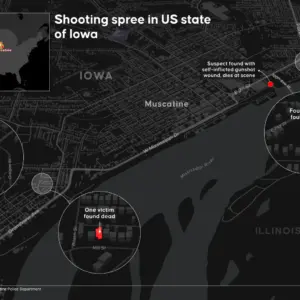
“YOU WON’T BELIEVE WHAT HE SAID LAST…” The final words of the gunm@n behind one of the most horrifying family massacres are being revisited — and investigators say the scene inside the home was frozen in time 👀 👇 A half-eaten meal and 6 untouched chairs were reportedly still sitting around the table when officers walked in
HORROR CRIME Chilling final words of crazed gunman who shot dead six members of same family in brutal rampage A GUNMAN screamed chilling words about death and money moments before slaughtering six of his own relatives in a horrific rampage,…
End of content
No more pages to load