In the quiet suburbs of Jefferson County, Alabama, where Friday night lights flicker over football fields and bonfires crackle under starlit skies, a single social media post has etched itself into the collective memory of a grieving community. Hours before the early morning of October 19, 2025, 18-year-old Kimber Mills uploaded a photo to her Instagram: a beaming snapshot of herself draped in her Cleveland High School senior jacket, the fabric embroidered with her name and the spirit of a girl on the cusp of everything. The caption read simply, “Can’t wait to see what happens next.”
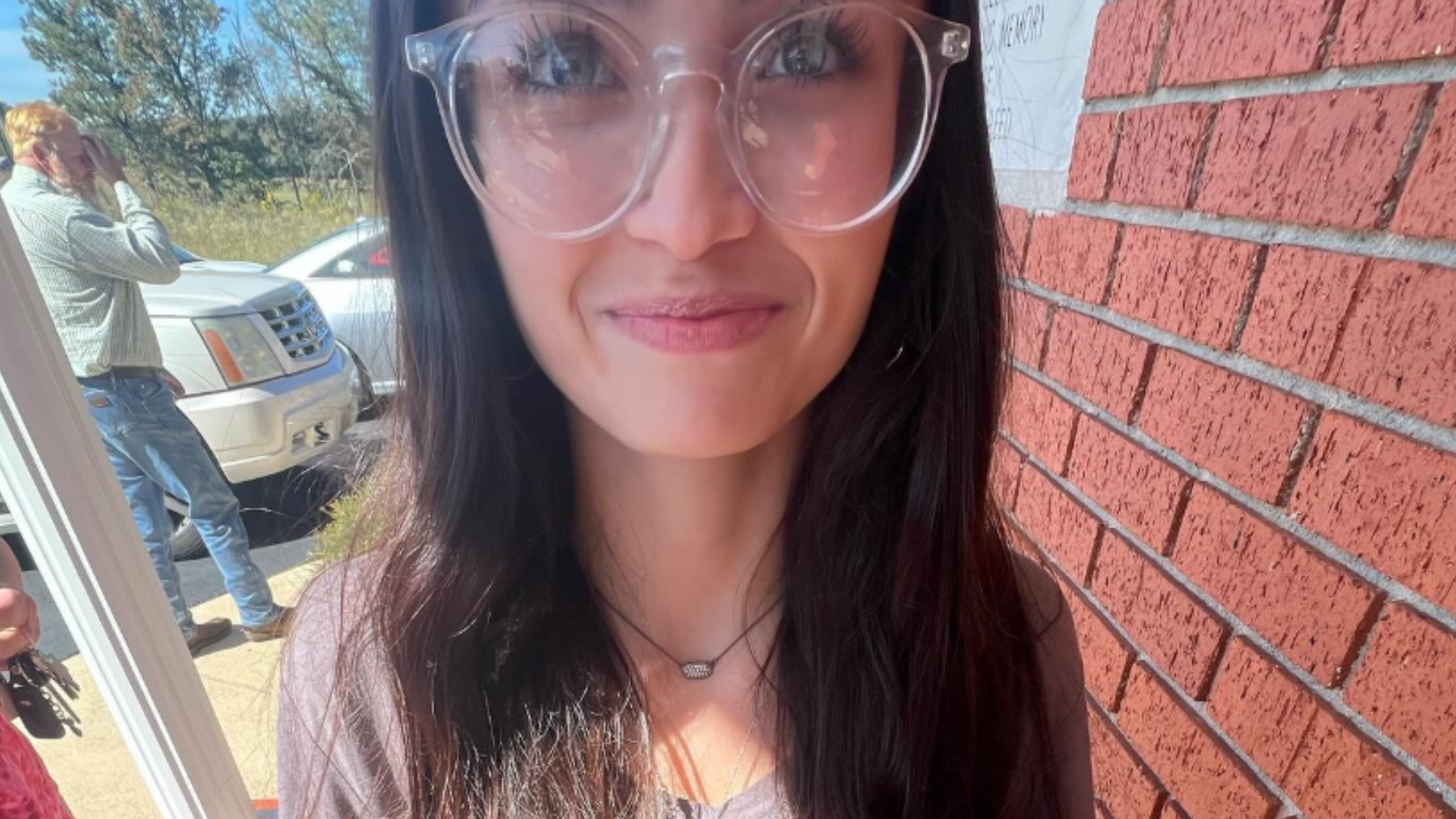
What happened next was unimaginable—a hail of gunfire at a remote gathering spot known as The Pit, where Kimber’s life was cut short in a senseless act of violence. Today, that post has transcended its digital origins, becoming a poignant emblem of lost potential and youthful optimism shattered by tragedy. Across Jefferson County, from the hallways of Cleveland High School to the pews of local churches, Kimber’s words echo like a whisper from the grave, sending “shivers down the spines” of those who knew her, as one friend put it in a viral tribute. As the investigation unfolds with new arrests and mounting questions, the story of Kimber Mills serves as a stark reminder of vulnerability in America’s heartland, where a night of innocent revelry can turn deadly in an instant.
Kimber Elizabeth Mills was the epitome of small-town radiance. Born and raised in Blount County, the youngest of three siblings in a tight-knit family, she was a senior at Cleveland High School, where her infectious energy lit up the cheerleading squad and the track team. Friends described her as having “a little spunk to her step,” a phrase her sister Ashley Mills used in interviews to capture Kimber’s unyielding zest for life. With her blonde hair often tied in a ponytail and a smile that could disarm the grumpiest coach, Kimber dreamed big: acceptance to the University of Alabama in the fall of 2026, followed by nursing school. “She wanted to help people,” Ashley told reporters outside UAB Hospital, where Kimber fought for her life in the days after the shooting. “That’s who she was—always putting others first.”
The night of October 18 began like so many others in Pinson, a working-class enclave in eastern Jefferson County. The Pit—a sprawling, wooded clearing off Clay-Palmerdale Road near Highway 75—has long been a rite of passage for local teens. State-owned land dotted with pine trees and gravel paths, it’s the kind of place where bonfires draw crowds for line dancing, storytelling, and the simple thrill of being young. Dozens gathered that Saturday evening: high schoolers in hoodies and jeans, blasting country tunes from portable speakers, roasting marshmallows under a harvest moon. Kimber arrived with a group of girlfriends, including her sister, ready to unwind after a grueling week of cheer practice and classes. Videos from the previous month, shared widely on social media, show her in the center of it all—laughing, twirling in a pink shirt, her senior jacket slung over her shoulders like a cape of invincibility.
But The Pit, for all its nostalgic allure, is no stranger to peril. Remote and unlit, it’s a magnet for uninvited guests, and on this night, trouble arrived in the form of Steven Tyler Whitehead, a 27-year-old from Brookwood with a history of brushes with the law. According to witness accounts and court testimony, Whitehead crashed the party around midnight, his intentions clear and unwelcome. He approached a teenage girl in Kimber’s circle, attempting to flirt and allegedly slipping something into her drink—a spiked offering that sparked immediate alarm. When she rebuffed him and alerted her boyfriend, a verbal spat ignited. It escalated quickly into a physical brawl. Silas McCay, a 21-year-old attendee who would later be hailed as a hero by some, intervened. “My ex-girlfriend came up to me and said they were trying to do stuff to this girl named Kimber,” McCay recounted in a statement to investigators. He and a friend tackled Whitehead, pinning him to the ground in a desperate bid to neutralize the threat.
In the chaos, Whitehead broke free. Witnesses, including Autumn Houser—a friend who captured video from the scene—described the horror unfolding in seconds. “I saw him pull out a gun and start shooting,” Houser told ABC 33/40, her voice trembling in the retelling. Anonymous cellphone footage, leaked and circulating on platforms like X (formerly Twitter), shows the moments just before the barrage: shadows dancing around the fire, laughter fading into shouts, then the crack of 12 rounds echoing through the trees. The first bullet struck Kimber in the leg as she tried to flee; the next pierced her head. She collapsed amid the stampede, her body crumpling like a discarded cheer pom-pom. Three others—McCay, who took multiple hits while shielding victims; Levi Sanders, 18; and Joshua Hunter McCulloch, 19—were wounded but survived with non-life-threatening injuries.
Trussville police officers, first on the scene at 12:24 a.m., found Kimber bleeding profusely. Chief Eric Rush knelt beside her, applying pressure to her wounds as firefighters loaded her onto a stretcher. “She was fighting,” Rush later said, his voice thick with emotion. Rushed to the University of Alabama at Birmingham (UAB) Hospital, Kimber clung to life for three agonizing days. Machines hummed in the ICU, her family by her side—mother weeping, father stoic, siblings rotating shifts of whispered prayers. A GoFundMe surged past $50,000 in hours, fueled by messages like “Kimber’s light will never dim.”
By October 21, the prognosis was grim. “No surgery would give her a life worth living,” the doctors explained to the Mills family. In a decision that blended profound grief with profound grace, they chose organ donation. Kimber, ever the helper, would give the ultimate gift. At 4 p.m. that Tuesday, UAB’s corridors transformed into a sea of blue and gold—Cleveland High colors. Hundreds lined the halls for the “Honor Walk,” a ceremonial procession reserved for donors. Students in letterman jackets, teachers with tear-streaked faces, even strangers drawn by news reports stood in silent vigil. As nurses wheeled Kimber’s bed toward the operating room, her sister Ashley captured the moment on Facebook: “Our sweet baby sister went to be with the Lord at 7:08 p.m. last night! She has had the biggest gathering for honor walk the doc has ever seen! She was and is so loved by so many. We will miss you Kimber!” Her heart, it was later revealed, saved a 7-year-old boy; her kidneys, liver, and other organs extended life to strangers across the state.
The ripple effects reached far beyond the hospital. At Cleveland High, Principal Brannon Smith canceled classes for a day of counseling, where students shared stories of Kimber’s pranks in the locker room and her unwavering support at track meets. The cheer squad dedicated their senior night on October 24 to her memory, performing under a banner that read “Forever a Panther.” U.S. Senator Tommy Tuberville, an Alabama native, posted on X: “My heart breaks for the entire Mills family… Please join Suzanne and I in praying for her friends, family, and loved ones.” Blount County Superintendent Rodney Green echoed the sentiment: “Kimber’s smile and infectious personality will certainly be missed, but she will always be remembered.”
Yet amid the mourning, Kimber’s Instagram post has taken on a spectral quality. Shared and reshared thousands of times, the image—her eyes sparkling with anticipation—contrasts brutally with the violence that followed. “That caption… it’s like she knew,” one X user lamented in a thread garnering over 10,000 likes. Friends like Rylie Cirbo, who knew Kimber from cheer competitions, told Fox News: “I’d much rather her be known for her sunshine personality and big smile rather than the tragedy.” But the post’s eerie prescience has fueled vigils, where candles flicker beside printed copies, and online forums dissect its symbolism. “It’s a quiet symbol across Jefferson County,” as local reporter Carol Robinson wrote for AL.com, capturing how it embodies the fragility of youth.
The legal aftermath has added layers of complexity. Whitehead, arrested within hours, was initially charged with three counts of attempted murder. Upgraded to include capital murder after Kimber’s death, he faces a $330,000 bond and a trial that could bring the death penalty. In a preliminary hearing on October 24, a Jefferson County deputy testified that Whitehead fired indiscriminately after the fight, his rage unchecked. Cellphone videos, though grainy, have become pivotal evidence, showing the scuffle and the gunfire’s eruption. Attorneys like those consulted by WVTM 13 warn that the footage could sway a jury, painting Whitehead as a predator whose rejection turned lethal.
Complicating the narrative, two more arrests emerged on October 30. McCay—the man who tackled Whitehead—and McCulloch face third-degree assault charges for their role in the initial beatdown. Each posted $6,000 bonds, but the move has divided the community. A Change.org petition with over 1,000 signatures calls McCay a “hero” for protecting the girls, arguing the charges ignore context. “He was shot ten times trying to save her,” one supporter posted on X. Critics, however, point to videos from prior gatherings showing aggressive behavior among the group, questioning if the fight was inevitable. District Attorney Danny Carr has vowed a “thorough investigation,” emphasizing justice for all victims.
As November dawns, Jefferson County grapples with broader wounds. The Pit, once a haven, now evokes dread; locals whisper of closing it off, though enforcement in such rural expanses is tricky. Gun violence statistics from the CDC paint a grim backdrop: Alabama ranks high in firearm deaths among youth, with rural areas seeing spikes in party-related incidents. Community leaders, including Senator Tuberville, have called for mental health resources and stricter access to remote sites. Vigils continue—balloons released at The Pit, purple ribbons (Kimber’s favorite color) tied to fences at Cleveland High. A memorial fund for scholarships in her name has raised $20,000, ensuring her “what happens next” inspires futures she never saw.
Kimber Mills’ story is one of stolen tomorrows, but also enduring light. Her final post, that jacket-clad grin, isn’t just a symbol of sorrow—it’s a call to cherish the unpredictable journey. In Jefferson County, as autumn leaves fall, her words linger: a shiver, yes, but also a spark. Can’t wait to see what happens next? For those she touched, the answer is clear: They will make it happen, in her honor.
News
‘He had psychological issues, fearing that everything was over,…’ Family Auburn University student James “Weston” Higginbotham, who went missing in Japan, has just revealed his last known health condition, along with a 3-WORD message that still haunts us
Auburn student goes missing in Japan; family fears he’s ‘emotionally distressed’ James “Weston” Higginbotham, a junior studying biosystems engineering at the Alabama college, was last seen in Kyoto. Auburn University in Auburn, Ala. Jake Crandall / USA Today Network via Reuters …

The machines continued to beep… the family members continued to pray… but there were 3 doctor’s conclusions just minutes before the baseball struck Xavier Taylor that his father said he couldn’t stop looking at
The rhythmic, sterile beeping of the life-support machines continued to echo through the intensive care unit, a persistent, artificial pulse filling the heavy silence of the room. Around the bed, family members remained huddled together, their voices reduced to a…
Doctors have just released another heartbreaking update about 12-year-old Xavier Taylor, but what haunts his father even more is that the baseball bag was still unopened, and what was inside was completely intact, shocking everyone
The latest medical update from the doctors monitoring twelve-year-old Xavier Taylor has cast an even heavier shadow over a situation already defined by profound grief and national sorrow. As the medical team shared the heartbreaking reality of the young athlete’s…
The collision lasted less than a second… but investigators say there was a detail on the field that some parents noticed immediately afterward. Now, as Xavier Taylor fights for his life, his father says he thinks about it every night.
The collision lasted less than a second, a fleeting fragment of time that changed everything on a youth baseball field that was supposed to be filled only with the joy of summer sports. In that microscopic window, a routine play…
“You’ll wake up, won’t you…?”: As America continues praying for 12-year-old Xavier Taylor, his father has revealed a devastating update about the freak baseball accident that changed everything — but it’s the four words his son said before slipping away that he can never forget.
The story of twelve-year-old Xavier Taylor has gripped the heart of a nation, serving as a stark, devastating reminder of how quickly a joyful afternoon can transform into an unimaginable nightmare. Across America, millions of people have joined their voices…
“YOU WON’T BELIEVE WHAT HE SAID LAST…” The final words of the gunm@n behind one of the most horrifying family massacres are being revisited — and investigators say the scene inside the home was frozen in time 👀 👇 A half-eaten meal and 6 untouched chairs were reportedly still sitting around the table when officers walked in
HORROR CRIME Chilling final words of crazed gunman who shot dead six members of same family in brutal rampage A GUNMAN screamed chilling words about death and money moments before slaughtering six of his own relatives in a horrific rampage,…
End of content
No more pages to load