Two additional arrests have been made in connection with a Jefferson County shooting that led to the death of Cleveland High School cheerleader Kimber Mills and left three others injured.
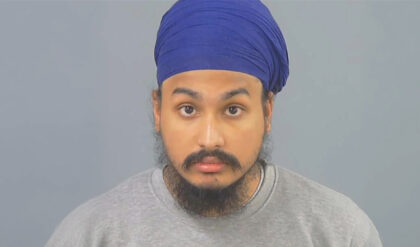
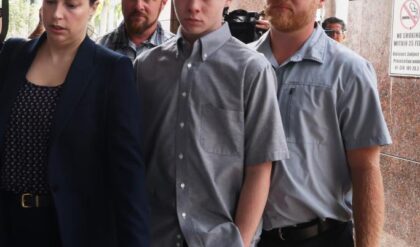
Silas McCay, 21, and Hunter McCulloch, 19, were booked into the Jefferson County Jail Thursday on a third-degree assault charge. Witnesses say that McCay was struck several times when shots were fired during a bonfire party in a wooded area of Pinson commonly known as “The Pit” on Oct. 19.
Both McCulloch and McCay have since been released from jail on a $6,000 bond.
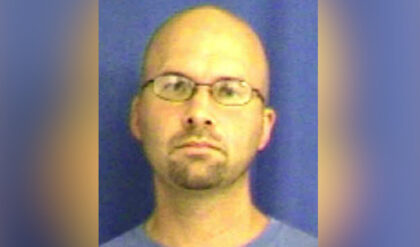
The suspect arrested for the shooting, 27-year-old Steven Tyler Whitehead, was initially charged with 3 counts of attempted murder. A murder charge was added days later following Mills’ death and organ donation. He remains behind bars.
A petition on Change.org has urged prosecutors to file charges against McCay, claiming that videos of the shooting show McCay antagonizing and jumping Whitehead. McCay has stated he was protecting Kimber Mills.

Many members of Mills’ family, along with hundreds of others, have signed the petition. Some have commented that the shooting might not have occurred if McCay had not fought with Whitehead.
In the flickering glow of a bonfire deep in the Alabama woods, where laughter once drowned out the rustle of pine needles, 21-year-old Silas McCay became more than a bystander—he became a shield. On the night of October 18, 2025, as gunfire shattered the carefree rhythm of a teen gathering at The Pit, McCay threw himself into the fray, taking 10 bullets in a desperate bid to protect his friends. Among them was 18-year-old Kimber Mills, the vibrant Cleveland High School cheerleader whose life ended just days later. “I tried everything I could,” McCay later told reporters from his hospital bed, his voice cracking with the weight of survival and survivor’s guilt. “I look at her like a little sister to me. I wish there was more I could’ve done.”
Today, as Jefferson County mourns and the legal battle intensifies, McCay’s story emerges as a raw testament to instinctual bravery—and the tangled aftermath of violence. Hailed by some as a hero, charged by others with assault, his actions that night have ignited debates about protection, proportionality, and the blurred lines between savior and aggressor. In a community still reeling from Kimber’s loss, McCay’s wounds—both physical and emotional—serve as a stark reminder that heroism often comes at a price no one should have to pay.
The Pit, a secluded clearing off Clay-Palmerdale Road near Highway 75, has been a neutral ground for generations of Jefferson County youth. Owned by the state and shrouded in dense forest, it’s a place for bonfires, country music, and the unhurried escape from homework and part-time jobs. On that crisp autumn Saturday, dozens of teens converged: high schoolers in flannel and boots, portable speakers thumping Luke Bryan tracks, the air thick with the scent of burning oak and teenage possibility. Kimber Mills arrived with her sister and girlfriends, her senior jacket—a badge of impending freedom—draped over her shoulders. The 18-year-old, known for her ponytail flips during cheer routines and her easy empathy on the track team, was the heart of the group, dreaming aloud of University of Alabama sorority life and nursing school.
Silas McCay, a 21-year-old from Remlap with a lanky build and a quiet demeanor, wasn’t there for the festivities at first. A local who knew the crowd peripherally through mutual friends, he showed up later, blending into the shadows around the fire. Friends describe him as steady, the kind of guy who’d fix your flat tire without asking for gas money. He worked odd jobs in construction and automotive repair, his hands calloused from wrenches and his evenings often spent at family barbecues. That night, though, his routine shattered when his ex-girlfriend pulled him aside, her face pale in the firelight. “They were trying to do stuff to this girl named Kimber,” she whispered, nodding toward a stranger who’d crashed the party.
The intruder was Steven Tyler Whitehead, a 27-year-old from Brookwood with a rap sheet including minor drug charges and a restraining order from a past relationship. Witnesses say Whitehead arrived uninvited around midnight, his pickup truck crunching gravel as he parked on the periphery. Tall and broad-shouldered, he zeroed in on a cluster of girls, including one in Kimber’s circle, offering flirtatious banter laced with aggression. Accounts vary: Some say he slipped something into a drink; others describe overt advances rebuffed with sharp words. Whatever the spark, it ignited when the targeted teen alerted her boyfriend, Levi Sanders, 18, who confronted Whitehead verbally. Tensions simmered, then boiled over into shoves.
That’s when McCay stepped in. “Me and my buddy found him, and we started fighting him,” he recounted to WBRC from UAB Hospital, where tubes snaked from his arms and bandages wrapped his torso. With adrenaline as his only armor, McCay charged, tackling Whitehead to the pine-strewn ground. He hoisted the larger man over his shoulder in a fireman’s carry, slamming him down amid shouts and scrambling feet. Joshua Hunter McCulloch, 19, joined the melee, landing punches to subdue the threat. For a fleeting moment, it worked—the crowd surged back, believing the danger neutralized. But Whitehead twisted free, his hand dipping into his waistband. “My buddy pulled me off him, and that’s when he pulled his gun out and started shooting,” McCay said, the memory etching lines on his young face.
What followed was pandemonium captured in grainy cellphone videos now circulating on X and TikTok. Twelve shots rang out in under 30 seconds, the muzzle flashes illuminating wide-eyed faces frozen in terror. Kimber, caught in the chaos while fleeing, took rounds to the leg and head, collapsing 20 feet from the fire pit. McCay, still lunging toward the group, absorbed the brunt: bullets tore through his leg, hip, ribcage, stomach, finger, pelvis, and thigh—10 in all, a hailstorm that should have felled him instantly. Sanders was hit twice in the arm; McCulloch grazed in the shoulder. A fourth victim, a 20-year-old woman, sustained minor wounds and fled in a private vehicle. “I was screaming for everyone to get down,” McCay whispered to his brother Shane later, as surgeons pieced him back together. “She was telling me she loved me by squeezing my hand” in the ambulance, he added, recalling Kimber’s faint grip en route to UAB.
First responders arrived at 12:24 a.m., their sirens slicing through the night. Trussville officers found Kimber unresponsive, McCay slumped against a tree, blood pooling beneath him. Firefighters from Palmerdale and Center Point loaded them into rigs, racing against the clock on rain-slicked roads. At UAB, trauma teams swarmed: Kimber to the ICU, her skull fracture and brain trauma deemed unsurvivable; McCay to the OR, where doctors marveled at his resilience. “He got shot ten times and he’s already up out of bed walking,” Shane McCay told CBS, pride mingling with disbelief. Against odds, McCay stabilized, his body a map of scars but his spirit unbroken.
Kimber fought for three days, her family huddled in vigil. On October 21, they made the heart-wrenching choice for organ donation, transforming her tragedy into hope for others. Her heart saved a 7-year-old boy; her kidneys and liver reached recipients across Alabama. The Honor Walk that afternoon drew hundreds—students in blue-and-gold jerseys, nurses in scrubs, even McCay himself, hobbling on crutches to line the corridor. “It was emotional,” Shane recalled. “As soon as she turned that corner, the whole hallway crying. You could tell she was really loved.” McCay, tears streaming, placed a hand on her gurney: a final, silent farewell to the “little sister” he’d failed to save.
In the weeks since, McCay’s heroism has been both celebrated and scrutinized. GoFundMe campaigns for him and Sanders raised over $75,000, flooded with notes like “True guardian angel” from strangers moved by his story. On X, posts lionize him: One viral thread from @NetAxisGroup garnered 12 million views, recounting his sacrifice with a photo of McCay’s bandaged form. A Change.org petition, amassing 1,500 signatures, decries any blame on him: “He was shot ten times trying to save her—heroes don’t deserve charges.” Local pastors invoked his name in sermons, framing the shooting as a call to community vigilance.
Yet on October 30, the narrative fractured. Jefferson County authorities arrested McCay and McCulloch on third-degree assault charges for their role in subduing Whitehead. Each posted $6,000 bond, their mugshots splashed across news feeds—McCay’s eyes hollowed by pain and confusion. Prosecutors, led by District Attorney Danny Carr, cite videos showing the initial scuffle as excessive, arguing it escalated an avoidable confrontation. “A thorough investigation ensures justice for all victims,” Carr stated, emphasizing that Whitehead’s response doesn’t absolve prior actions. Whitehead, upgraded to capital murder, remains jailed on $330,000 bond, his preliminary hearing set for November 14. Leaked footage, grainy but damning, depicts the takedown: McCay’s hoist, McCulloch’s strikes, Whitehead’s writhe. Critics on X, like @AbbyLynn0715, blasted the arrests: “Their decision to resort to violence led to her death.” Supporters counter that in the moment, with a predator cornered, restraint was a luxury they couldn’t afford.
McCay, out on bond and undergoing physical therapy, has stayed largely silent since his initial interviews. From his family’s modest home in Remlap, he shared a brief statement via his brother: “I don’t regret stepping in. If I could go back, I’d do it again—for Kimber, for any of them.” Friends rally around him, organizing car washes and benefit runs under purple banners—Kimber’s favorite color. At Cleveland High, where grief counseling lingers, students wear “McCay Strong” pins alongside “Forever a Panther” ribbons for Kimber. Senator Tommy Tuberville, in a floor speech, praised “everyday Alabamians like Silas who run toward danger,” calling for gun safety reforms tailored to rural hotspots like The Pit.
The broader ripple effects unsettle Jefferson County. The Pit, once a sanctuary, now stands cordoned with warning tape, locals debating patrols or outright closure. CDC data underscores the peril: Alabama’s youth firearm mortality rate hovers at 15 per 100,000, with rural party shootings up 20% since 2020. Mental health hotlines report a surge in calls from teens haunted by the “what ifs.” For McCay, therapy sessions unpack the nightmares: the crack of bullets, Kimber’s hand going limp. “He replays it every night,” Shane confides. “But he’s fighting to heal, inside and out.”
Silas McCay’s story isn’t one of tidy redemption. It’s messy, human—a young man propelled by fury and fear into a maelstrom he couldn’t outrun. In protecting Kimber Mills, he lost pieces of himself: fragments of bone, innocence, perhaps freedom if convictions stick. Yet in the quiet hours, as he rebuilds, his words endure: “I tried everything I could.” In Jefferson County’s fractured heart, that’s the heroism that binds them—flawed, fierce, and forever altered. As winter approaches, with leaves carpeting The Pit like forgotten confetti, McCay’s courage whispers a challenge: What would you do, when the fire goes out?
News
BREAKING: NEW DEVELOPMENTS EMERGE IN THE HENRY NOWAK CASE
BREAKING: NEW DEVELOPMENTS EMERGE IN THE HENRY NOWAK CASE The investigation surrounding Henry Nowak has taken another significant turn after authorities announced additional charges. The latest legal development is being described as a major shift in the case, with many…
UNBEARABL — HENRY NOWAK’S FATHER SPEAKS OUT AFTER THE SENTENCING
UNBEARABL — HENRY NOWAK’S FATHER SPEAKS OUT AFTER THE SENTENCING In an emotional public statement, Henry Nowak’s father has strongly criticized the way authorities handled his son’s final hours, describing the experience as “unbearable.” As the person responsible was sentenced,…
“THE DNA DIDN’T MATCH HIM.” 😳🚢 A major twist has emerged in the Anna Kepner case after investigators revealed DNA from an unknown teenage male was found during the cruise ship investigation 👀 👇 But it’s the single unidentified fingerprint that reportedly still doesn’t belong to anyone in the case that is now raising even more questions
New questions raised over Anna Kepner’s Carnival cruise murder after DNA from unknown male minor found Anna Kepner, 18, allegedly had sex with an unknown male juvenile aboard a Carnival cruise ship shortly before her shocking death, federal prosecutors revealed….
He’s changed: Ryan Willis McFarland, the son of the man accused of killing six family members before committing suicide, leaving his only son grieving the loss of his entire family, has officially spoken out to recount everything that happened, revealing his motives
Son loses entire family after father kills 6 before turning gun on himself, police say Six people were killed in an Iowa town before the gunman fatally shot himself, according to local police. Muscatine police said 52-year-old Ryan Willis McFarland…
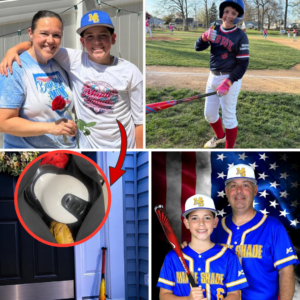
“If only I had looked back one more time…”: The father of 12-year-old Xavier Taylor says there’s a small detail hidden in the last family photo taken that afternoon, and now he can’t stop staring at it
In the dim glow of a hospital room at University Hospital in San Antonio, where the rhythmic beeps of life-support machines formed a constant backdrop to whispered prayers, the father of 12-year-old Xavier Taylor found himself trapped in an endless…
THEY DIDN’T REALIZE IT UNTIL LATER…: Following the latest update on Xavier Taylor’s health, his best friend revealed a problem with the protective gear—and the reason why left everyone speechless
In the hushed atmosphere of Xavier Taylor’s hospital room at University Hospital in San Antonio, where the faint glow of monitors cast long shadows across the walls lined with children’s drawings, the latest medical update delivered another layer of uncertainty…
End of content
No more pages to load