Shadows Over the Balcony: The Unresolved Mystery of Brianna Aguilera’s Fatal Fall

In the heart of Austin’s vibrant West Campus, where the thrum of college life collides with the neon glow of high-rise apartments, a tragedy unfolded that has shattered a family and ignited a firestorm of doubt. Brianna Marie Aguilera, a 19-year-old sophomore at Texas A&M University, plummeted 17 stories from the balcony of the upscale 21 Rio apartment complex in the early hours of November 29, 2025. Her body was discovered at 12:46 a.m., mere hours after she had cheered amid the raucous energy of a Texas A&M versus University of Texas football tailgate. What should have been a night of youthful exuberance ended in unimaginable loss, leaving behind a grieving mother, a divided community, and a timeline riddled with questions that refuse to fade.
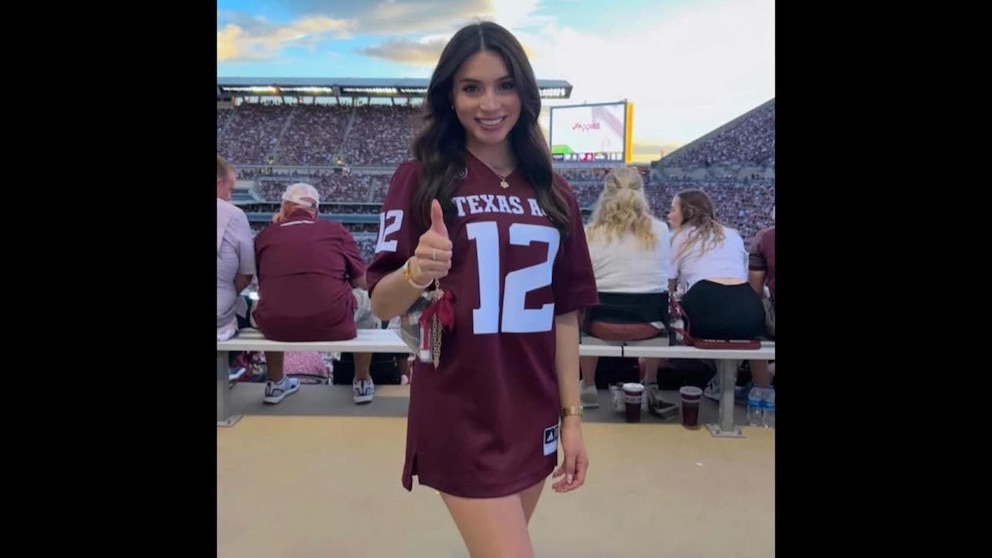
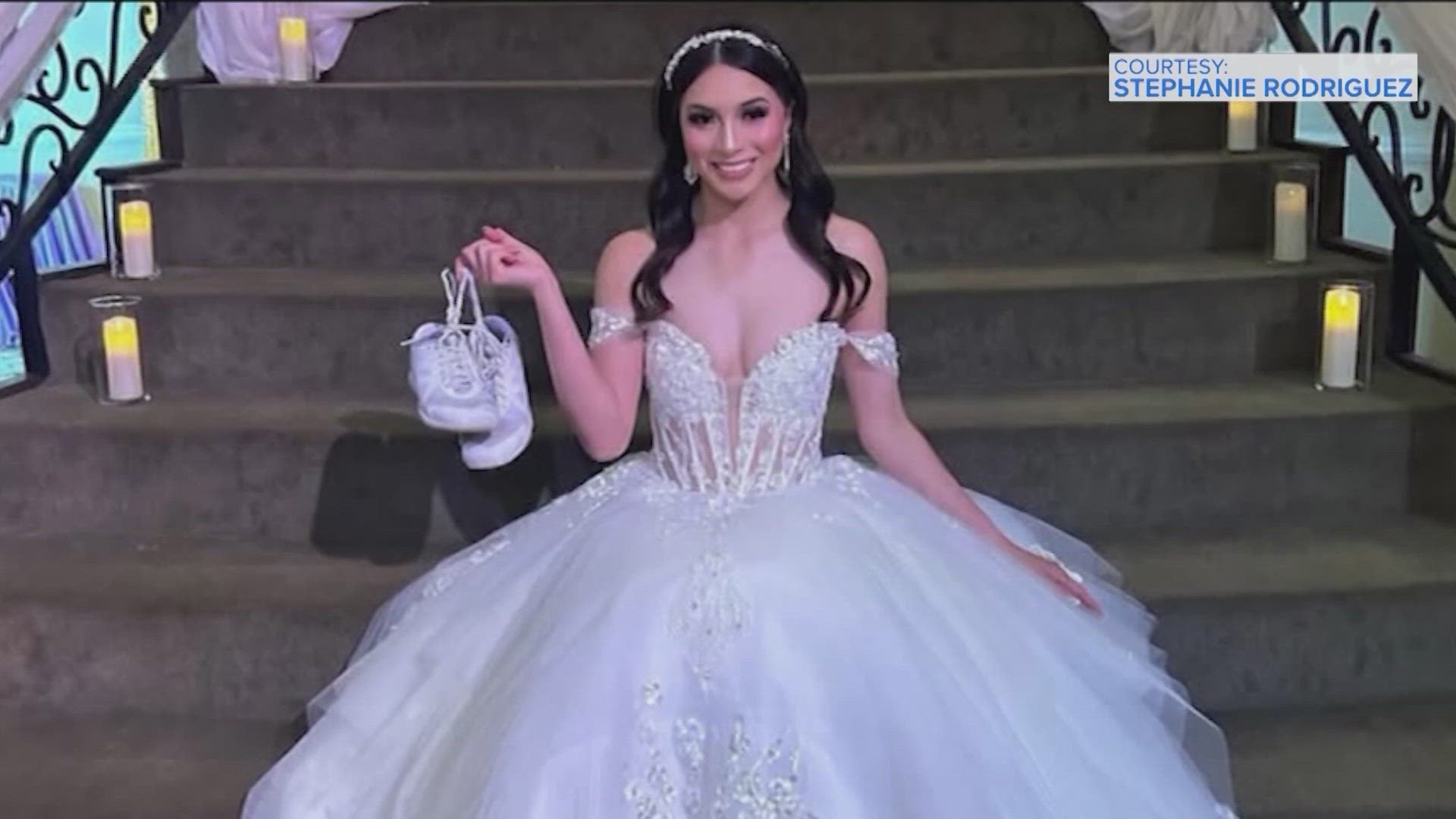
Brianna was the epitome of promise—a political science major at the prestigious Bush School of Government and Public Service, with dreams of becoming a lawyer etched into her future. Hailing from Laredo, Texas, she had been a standout cheerleader at United High School, her infectious smile and unyielding determination lighting up stadiums and classrooms alike. Friends described her as “the glue” of any group, always organizing study sessions or impromptu dance parties. “She had this fire,” said her high school best friend, Sofia Ramirez, in an emotional interview. “Brianna wasn’t just surviving college; she was conquering it. Law school applications were her next big thing. Suicide? That word doesn’t even fit.”
The evening began innocently enough, steeped in the electric rivalry of the annual Lone Star Showdown. Texas A&M’s Aggies fell to their arch-rivals, the Longhorns, 27-17, but the sting of defeat was softened by the pre-game tailgate at the Austin Rugby Club. Brianna arrived between 4 and 5 p.m., her maroon-and-white spirit gear drawing cheers from fellow Aggies. Witnesses, including several teammates, recall her laughing, sipping drinks, and snapping selfies against the backdrop of food trucks and booming music. “She was the life of the party,” recounted one attendee, who spoke on condition of anonymity due to the ongoing sensitivity. “No one saw anything off. She seemed happy, maybe a little buzzed, but nothing extreme.”
By 10 p.m., however, the mood shifted. Brianna, having consumed more alcohol than intended, was politely asked to leave the tailgate by organizers concerned for her well-being. She wandered into a nearby wooded area, where she believed she lost her phone—a detail that would later haunt investigators. Undeterred, she hitched a ride with a group of friends to the 21 Rio Apartments, a sleek 21-story tower just blocks from the University of Texas campus, known for its luxury amenities and student-friendly vibe. Around 11 p.m., she arrived on the 17th floor with a boisterous crowd of about 15 people, spilling into a shared apartment for what was meant to be a casual wind-down.
What happened in those final, fateful minutes remains the crux of the controversy. Austin Police Department (APD) Detective Robert Marshall, during a tense press conference on December 4, laid out a meticulous timeline that paints a picture of isolation and despair. At 12:30 a.m., a large group of friends departed the apartment, leaving Brianna behind with just three other young women. Two minutes later, at 12:43 a.m., she borrowed a friend’s phone to call her boyfriend. The conversation, lasting a single minute, escalated into a heated argument—witnesses overheard raised voices about relationship strains, confirmed later by the boyfriend himself. Then, at 12:46 a.m., a 911 call reported a woman on the ground below, her body crumpled from the unimaginable height. She was pronounced dead at 12:56 a.m., the cause preliminarily ruled as blunt force trauma from the fall.
Marshall’s revelation of digital evidence has become the linchpin of the official narrative. Upon recovering Brianna’s lost phone on December 1 near Walnut Creek—a field adjacent to the rugby club—forensic analysis uncovered a deleted suicide note dated November 25, just four days before her death. The note, addressed to specific loved ones, expressed profound emotional turmoil. “It was raw, personal,” Marshall stated somberly. “Brianna had confided suicidal ideations to friends as early as October. On the night itself, she exhibited self-harming behaviors earlier in the evening and sent a text to another friend hinting at ending it all.” Video footage from the apartment’s hallways and balconies, reviewed extensively, showed no signs of foul play—no altercations, no intruders, no forced entry. “Between witness statements, video, and digital forensics,” Marshall emphasized, “nothing points to criminality. This was a heartbreaking suicide.”
APD Chief Lisa Davis, her voice cracking with empathy, addressed the family’s anguish directly. “Our hearts ache for Brianna’s parents. We don’t take these conclusions lightly. But the evidence is unequivocal.” The department’s unusual public disclosure, she explained, was prompted by rampant online speculation and misinformation, including viral posts accusing police of a cover-up. Resources for suicide prevention were prominently displayed: the National Suicide Prevention Lifeline at 988, a beacon for those in crisis.
Yet, for Stephanie Rodriguez, Brianna’s fiercely protective mother, these findings ring hollow—a “lazy investigation” that ignores glaring inconsistencies. In a barrage of Facebook posts that have amassed thousands of shares, Rodriguez has dismantled the official story with the precision of a grieving prosecutor. “My daughter would NEVER jump 17 stories,” she wrote in a December 4 update, viewed over 50,000 times. “She was murdered, and the cops gave everyone time to align their lies.” Rodriguez points to a chilling “two-minute blackout” in the surveillance footage: between 12:44 a.m.—immediately after the boyfriend call—and 12:46 a.m., every camera in the hallways and on the balconies captured nothing. “Mysteriously blank,” she fumed. “How does that happen in a high-tech building? And why did her phone suddenly switch to Do Not Disturb mode around 6 p.m., something she never did?”
The timeline, in Rodriguez’s view, is a house of cards. Friends reported Brianna missing at 12:14 p.m. on Saturday, yet police didn’t access the apartment’s camera system until 10 a.m. that day—hours after her body had been removed to the morgue. Rodriguez claims she wasn’t notified of her daughter’s death until 4 p.m. the following day, and identification was made via fingerprints, not visuals, raising questions about the initial response. “There were 15 people in that apartment,” she alleged. “A fight broke out between Brianna and another girl—witnesses heard it. But no one was interviewed until Sunday. Her phone kept pinging near a creek; why didn’t they search sooner?” Compounding the frustration, Rodriguez says detectives rebuffed her pleas for a new lead investigator, and the fall’s height was “eye-balled” rather than precisely measured.
The family’s skepticism has mobilized high-powered allies. On December 3, Houston attorney Tony Buzbee—fresh off high-profile cases involving Diddy’s victims and a Texas A&M alumnus himself—announced his firm, alongside San Antonio’s Gamez Law Firm, would represent Manuel Aguilera and Stephanie Rodriguez. “Brianna had her whole life ahead,” Buzbee declared in a statement. “The circumstances are suspicious; APD’s handling raises more questions than answers. We’re demanding full transparency—every video, every statement.” A joint press conference is slated for December 5 afternoon, where the family vows to unveil additional evidence. Buzbee’s involvement has amplified the debate, drawing parallels to other contested campus deaths where initial rulings clashed with familial instincts.
Online, the schism is palpable. X (formerly Twitter) threads explode with #JusticeForBrianna, blending heartfelt tributes—photos of Brianna in her cheer uniform, captioned “Forever an Aggie”—with conspiracy theories. “Cameras ‘glitch’ for two minutes? In 2025? This screams cover-up,” tweeted @DesireeAmerica4, whose viral video summarizing the case garnered over a million views. Others defend the police: “Suicide notes don’t lie. Stop harassing her friends,” posted @NYMetsfan11279. Former prosecutors, like one quoted in Fox News, urge a “closer look,” citing the emotional volatility of alcohol-fueled nights and the prevalence of hidden mental health struggles among college students. The National Alliance on Mental Illness reports that suicide rates among 18-24-year-olds spiked 52% from 2000 to 2021, often masked by outward success.
Brianna’s father, Manuel, a stoic figure in family photos, has been quieter but no less resolute. In a rare statement to KSAT News, he said, “We lost our light. But we’ll fight for her truth.” Funeral arrangements, released December 4, reflect the depth of their bond: services at Laredo’s Cristo Rey Catholic Church on December 7, followed by burial at Calvary Catholic Cemetery. Donations are pouring into a GoFundMe for mental health advocacy in her name, surpassing $75,000.
As Austin’s December chill settles, the 21 Rio stands as a silent sentinel, its balconies now cordoned off. For Rodriguez, each unanswered query is a dagger: Was the argument a trigger, or a red herring? Did the intoxication cloud judgment, or conceal coercion? The two-minute void in the footage looms largest—a digital abyss mirroring the void in a mother’s heart. APD maintains its stance, but with Buzbee’s scrutiny and public pressure mounting, whispers of an independent review grow louder.
Brianna Aguilera’s story transcends one family’s sorrow; it’s a stark reminder of the fragility of young lives in the pressure cooker of college. Was it a solitary leap into darkness, or a push from unseen hands? The debate intensifies, timelines unravel, and in the gaps, truth flickers like a faulty camera feed. Until the full reel plays out, Brianna’s memory demands we watch closely.
News
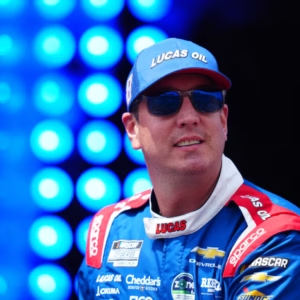
THERE WERE 6 WORDS INSIDE THE FINAL CARD LEFT ON THE TABLE… People close to Kyle Busch’s family are now discussing one personal item reportedly discovered later that night — and fans say the specific message inside is becoming difficult to stop thinking about 👇
The racing community is currently processing the incredibly sudden and heartbreaking news of two-time NASCAR Cup Series champion Kyle Busch passing away at the young age of forty-one. In the immediate aftermath of this shocking tragedy, the internet has become…
If there’s a next life, I want to be your father: Kyle Busch’s 11-year-old son delivered a touching three-word tribute to his father… but it brought his wife to tears in the hospital while NASCAR revealed his iconic gesture on his legendary number 8 car and the truth about the cause of death was revealed
Kyle Busch’s son, 11, pays heartbreaking tribute to his dad… as NASCAR reveals symbolic gesture over legend’s iconic No 8 Kyle Busch’s son made a touching gesture to remember his late father following the racing legend’s sudden death this week….

🚨 “OUR HEARTS ARE SHATTERED” 💔 A community is mourning after a week-long search for a missing 14-year-old schoolboy ended in tragedy
🚨 “OUR HEARTS ARE SHATTERED” 💔 A community is mourning after a week-long search for a missing 14-year-old schoolboy ended in tragedy. Authorities confirmed the teenager was found in a wooded area near a local cemetery, leaving residents devastated. We…
THE 911 AUDIO CHANGED EVERYTHING… 🏁😳 New details involving Kyle Busch are spreading online after reports about a frightening medical scare during training — and people are now focusing on one chilling moment heard before the call suddenly changed tone 👇
911 call reveals Kyle Busch was coughing up blood, short of breath day before death The 41-year-old, two-time NASCAR Cup Series champion died Thursday after being hospitalized with a severe illness, his family said. Racing legend Kyle Busch was coughing…
“HE NEVER TAKES HIS HELMET OFF.” 🏁💔😳 Kyle Busch was reportedly found unconscious inside a racing simulator at age 41 — and investigators are now focusing on a chilling detail from the dashboard that shows the final minutes before everything suddenly went silent 👀👇
Kyle Busch was found unresponsive in racing simulator before shocking death at 41 NASCAR star Kyle Busch became unresponsive while testing a racing simulator in Concord, N.C., the day before his death and had to be hospitalized, sources told the Associated…
Kyle Busch’s wife reportedly listened to the same 14-second voicemail message seven times… Those close to the matter say an audio message has become the subject of emotional discussion among fans tonight — because many believe a small, hidden detail near the end changed everything 👇
Those close to the matter say an audio message has become the subject of emotional discussion among fans tonight — because many believe a small, hidden detail near the end changed everything. 👇 In the emotionally charged days following Kyle…
End of content
No more pages to load