Shadows on the Balcony: Surveillance Footage and the Shaken Railing in Brianna Aguilera’s Final Moments
In the dim glow of a 17th-floor apartment at the 21 Rio complex, where the hum of Austin’s West Campus nightlife fades into a deceptive quiet, the last seconds of Brianna Marie Aguilera’s life flicker across grainy surveillance footage like a nightmare scripted for true crime. On November 29, 2025, at precisely 12:45 a.m., the 19-year-old Texas A&M sophomore—her silhouette blurred by intoxication and turmoil—rushes toward the balcony’s edge, her movements erratic, almost involuntary. Just as she nears the railing, her form jerks sharply, a sudden spasm captured in stark black-and-white pixels. Moments later, a jarring sound—a metallic scrape or thud, depending on the witness—echoes through the night, followed by the unmistakable finality of impact below. By dawn, investigators would note something profoundly amiss: the balcony’s railing, a sturdy barrier designed to withstand far more than youthful folly, had inexplicably shifted from its mounts. This anomaly, which building codes deem impossible without deliberate force, has cracked open the chasm between the Austin Police Department’s (APD) suicide ruling and the Aguilera family’s cries of foul play. As of December 10, 2025, with the Travis County Medical Examiner’s full report still pending, this footage and its implications have propelled #JusticeForBrianna into a viral maelstrom, forcing a reckoning with the blurred lines between accident, despair, and deception.
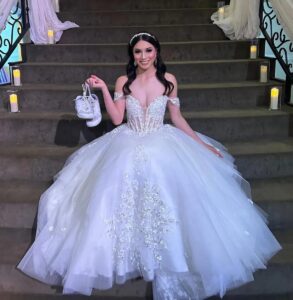
Brianna’s evening had unraveled long before that fateful dash to the balcony. What started as a spirited tailgate at the Austin Rugby Club—maroon jerseys clashing against burnt orange in the ritualistic fervor of the Lone Star Showdown—spiraled into disarray by 10 p.m. Heavily intoxicated, the aspiring lawyer from Laredo was escorted out after punching a friend attempting to steady her. Stumbling into adjacent woods, she shed her phone, wallet, and inhibitions, items later recovered by APD in a damp field near Walnut Creek. Surveillance from the 21 Rio Apartments, a glossy high-rise catering to UT’s transient student elite, caught her weaving through the lobby at 11:02 p.m., buoyed by a throng of about 15 Texas A&M compatriots spilling into Unit 1704 for an afterparty. The space, a typical millennial’s aerie with floor-to-ceiling views of the city skyline, thrummed with bass-heavy playlists and clinking bottles—a microcosm of college excess where boundaries blur as easily as judgment.
By 12:30 a.m., the crowd thinned, exodus-style, bound for Sixth Street’s neon chaos. Four remained: Brianna and three female friends, the unit’s residents and overnight guests. In the haze of her inebriation—blood alcohol levels later estimated at twice the legal limit—Brianna borrowed a phone for a desperate 12:43 a.m. call to her boyfriend, Aldo Sanchez, another Aggie from Laredo. The one-minute exchange, overheard by the room, devolved into a heated argument, voices rising over the night’s indignities and unspoken fractures. Friends later recounted to detectives a tender prelude: Brianna, tears streaming, pulling one into a prolonged hug, murmuring apologies for the tailgate scuffle. She returned the phone at 12:44 a.m., her demeanor a volatile cocktail of remorse and rage, before vanishing toward the balcony.
The surveillance camera, positioned in the living room with a partial view of the outdoor perch, immortalized the horror in fragments. At 12:45:17 a.m., Brianna’s silhouette materializes on screen, lurching forward in a blur of motion—rushing, not strolling, toward the glass door that led outside. Her path is unsteady, knees buckling slightly, arms flailing for balance. The footage, timestamped and unedited, shows her shoving the door ajar and stepping onto the narrow balcony, a 5-foot-2 frame dwarfed by the 44-inch railing that encircled it like a reluctant sentinel. Then, the jerk: a violent twist of her torso, as if yanked by an invisible force or recoiling from vertigo. Her outline blurs against the night sky, and the frame cuts to static— the camera’s angle obscured by the door’s swing. Seconds later, at 12:45:42 a.m., a neighbor’s dashcam across the street picks up the jarring sound: a screeching grind, like metal protesting against its moorings, punctuated by a fleshy impact 170 feet below. A 911 call floods the lines at 12:46 a.m., a frantic voice reporting a body on the pavement, trauma etched in every syllable.
APD’s December 4 press conference painted this sequence as the tragic crescendo of self-inflicted despair. Lead Detective Robert Marshall, flanked by Chief Lisa Davis, detailed how forensics unearthed a deleted suicide note from Brianna’s recovered phone, penned November 25 and laced with farewells to named loved ones. Text messages that night echoed her October confessions of ideation, shared casually with friends over coffee-fueled cram sessions. “The video aligns with witness accounts of her emotional state post-call,” Marshall asserted, emphasizing full cooperation from the trio inside, who claimed to have dozed off unaware. Toxicology confirmed acute alcohol poisoning, a catalyst for impulsive acts amid a national youth suicide epidemic that claims 6,000 lives annually, per CDC data—a 30% spike since 2018. Yet, the balcony’s post-fall inspection introduced the first fissure: the railing, bolted to withstand 200 pounds of lateral force per code, bore scrape marks and a subtle shift—approximately two inches askew at the point of presumed contact. “Routine wear,” APD dismissed, citing engineering consultations that deemed it incidental to the impact.

This explanation crumbled under the scrutiny of Tony Buzbee, the Houston litigator whose Rolodex reads like a scandal ledger—from Astroworld to Paxton. Retained by Brianna’s parents on December 3, Buzbee unleashed a December 5 broadside from his firm’s marbled boardroom, labeling APD’s probe “sloppy malpractice.” Flashing architectural blueprints and a tape measure’s verdict, he highlighted the railing’s height: 44 inches to Brianna’s 62-inch stature, but requiring a boost to clear without vaulting—yet no furniture marred the balcony’s pristine concrete, per crime scene photos. “She couldn’t have climbed it alone,” Buzbee thundered, pivoting to the footage: “That jerk? Not voluntary. And the railing’s shift? That’s sabotage, not suicide—bolts sheared like they were pried.” Private experts, he claimed, detected tampering: micro-fractures inconsistent with a solo leap, echoing forensic debates in cases like the 2016 “defenestration” mysteries in Eastern Europe.
The family’s dossier, a 40-page indictment submitted to Governor Greg Abbott on December 6, weaves these threads into a tapestry of negligence. Stephanie Rodriguez, Brianna’s mother and a Laredo school administrator, recounted daily calls brimming with ambition—law school applications, cheer tryouts—not despair. “She feared heights like the devil; balconies were her kryptonite,” Rodriguez wept, her Facebook pleas amassing 50,000 shares. Buzbee lambasted APD’s delayed scene access—detectives didn’t canvas the balcony until 10 a.m., hours after first responders trampled potential prints—and their dismissal of auditory clues: the jarring sound, neighbors’ “Get off me!” shrieks, and running footsteps prelude. A GoFundMe eclipsed $200,000 by December 10, bankrolling drone recreations of the fall trajectory, which suggest an external shove vector—her body’s arc too parabolic for a self-initiated vault.
APD’s retort, issued December 9, was a bulwark of empathy laced with steel. Chief Davis, eyes glistening, reaffirmed the suicide call: “No footage shows a second party; the jerk aligns with disorientation, the sound with railing flex under weight.” They debunked railing “tampering” as vibrational settling from the 170-foot drop, corroborated by structural engineers, and released redacted footage snippets—Brianna alone on the balcony, no shadows lurking. Toxicology, preliminary at press time, revealed no foreign substances, just ethanol’s cruel amplifier. Yet, whispers persist: Why the 12:14 a.m. missing persons ping if all was accounted? And the friends’ “sleep”—convenient amnesia or coordinated?
As the Rangers weigh intervention—Abbott’s office mum since December 8—the balcony becomes a metaphor for frayed safeguards in collegiate crucibles. Texas A&M’s Bush School, Brianna’s academic home, mourns with purple vigils, her favorite hue now a beacon for mental health drives. Peers, haunted by red flags they waved off—her October whispers dismissed as “party talk”—rally for bystander training, echoing national pushes post-2023’s campus suicide surges. On Reddit’s r/aggies, threads dissect the footage: “That jerk screams struggle; railing shift seals it—push, not plunge.” X erupts in memes of shaky railings, a digital dirge demanding transparency.
Brianna’s silhouette, frozen in that fatal frame, isn’t mere evidence—it’s an indictment of ignored instincts. The jarring sound, the shifted barrier: harbingers of a truth teetering on exposure. In a city where tailgates toast tomorrow’s promise, her story warns that some falls echo louder than others. Until the full autopsy drops—expected mid-January—the frenzy builds, a collective gasp held for answers. For the Aguilera clan, justice isn’t closure; it’s the key to a balcony door left ajar, revealing shadows we dare not ignore.
News
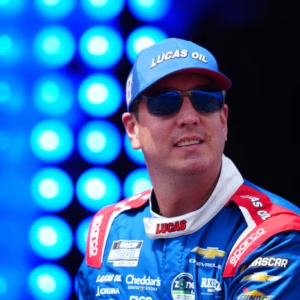
THERE WERE 6 WORDS INSIDE THE FINAL CARD LEFT ON THE TABLE… People close to Kyle Busch’s family are now discussing one personal item reportedly discovered later that night — and fans say the specific message inside is becoming difficult to stop thinking about 👇
The racing community is currently processing the incredibly sudden and heartbreaking news of two-time NASCAR Cup Series champion Kyle Busch passing away at the young age of forty-one. In the immediate aftermath of this shocking tragedy, the internet has become…
If there’s a next life, I want to be your father: Kyle Busch’s 11-year-old son delivered a touching three-word tribute to his father… but it brought his wife to tears in the hospital while NASCAR revealed his iconic gesture on his legendary number 8 car and the truth about the cause of death was revealed
Kyle Busch’s son, 11, pays heartbreaking tribute to his dad… as NASCAR reveals symbolic gesture over legend’s iconic No 8 Kyle Busch’s son made a touching gesture to remember his late father following the racing legend’s sudden death this week….
🚨 “OUR HEARTS ARE SHATTERED” 💔 A community is mourning after a week-long search for a missing 14-year-old schoolboy ended in tragedy
🚨 “OUR HEARTS ARE SHATTERED” 💔 A community is mourning after a week-long search for a missing 14-year-old schoolboy ended in tragedy. Authorities confirmed the teenager was found in a wooded area near a local cemetery, leaving residents devastated. We…
THE 911 AUDIO CHANGED EVERYTHING… 🏁😳 New details involving Kyle Busch are spreading online after reports about a frightening medical scare during training — and people are now focusing on one chilling moment heard before the call suddenly changed tone 👇
911 call reveals Kyle Busch was coughing up blood, short of breath day before death The 41-year-old, two-time NASCAR Cup Series champion died Thursday after being hospitalized with a severe illness, his family said. Racing legend Kyle Busch was coughing…
“HE NEVER TAKES HIS HELMET OFF.” 🏁💔😳 Kyle Busch was reportedly found unconscious inside a racing simulator at age 41 — and investigators are now focusing on a chilling detail from the dashboard that shows the final minutes before everything suddenly went silent 👀👇
Kyle Busch was found unresponsive in racing simulator before shocking death at 41 NASCAR star Kyle Busch became unresponsive while testing a racing simulator in Concord, N.C., the day before his death and had to be hospitalized, sources told the Associated…
Kyle Busch’s wife reportedly listened to the same 14-second voicemail message seven times… Those close to the matter say an audio message has become the subject of emotional discussion among fans tonight — because many believe a small, hidden detail near the end changed everything 👇
Those close to the matter say an audio message has become the subject of emotional discussion among fans tonight — because many believe a small, hidden detail near the end changed everything. 👇 In the emotionally charged days following Kyle…
End of content
No more pages to load