The Heartbreaking Rescue: Princess Diana’s Final Moments in the Pont de l’Alma Tunnel
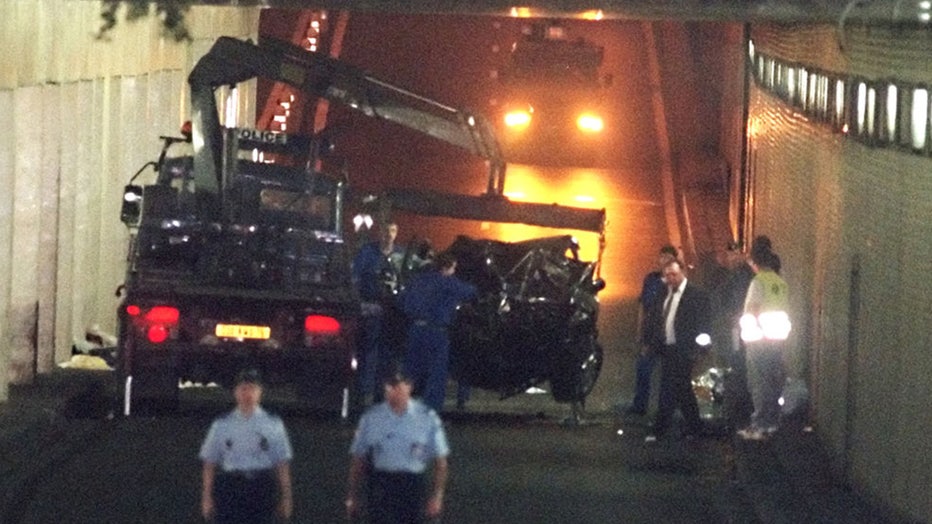
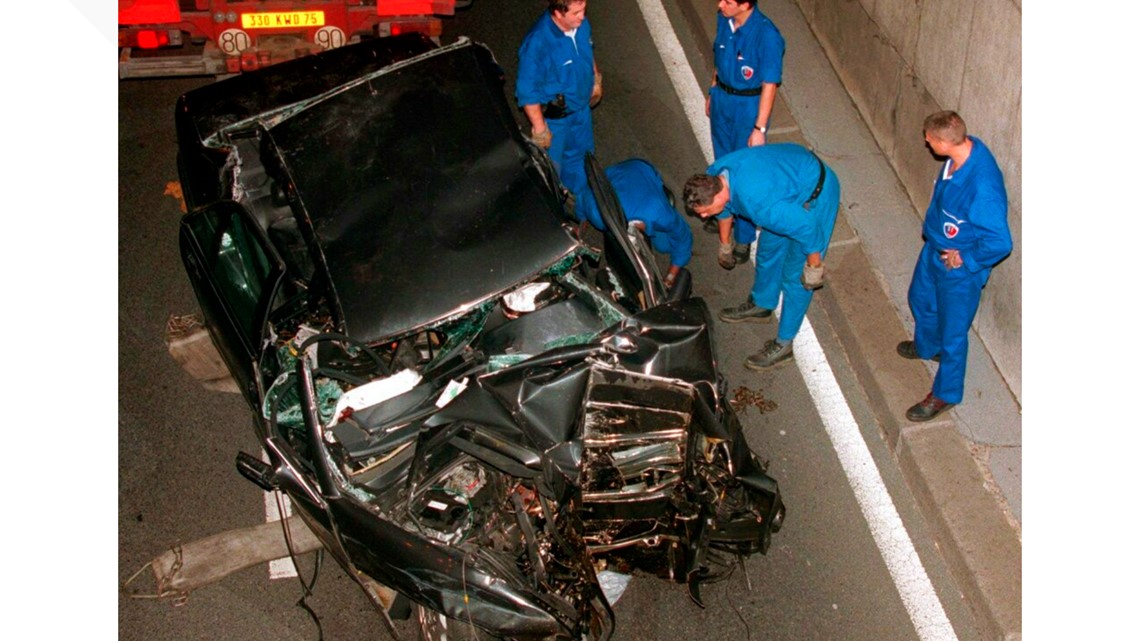
In the early hours of August 31, 1997, emergency responders raced to the Pont de l’Alma tunnel in Paris after the devastating crash of the Mercedes carrying Princess Diana. What transpired in those chaotic minutes—amid twisted metal and flashing paparazzi cameras—has been documented through official testimonies, with one firefighter’s account standing out for its poignant detail.

courant.com

thesun.co.uk
fox5dc.com
The first to arrive was off-duty doctor Frédéric Mailliez, driving through the tunnel when he spotted the smoking wreckage around 12:25 a.m. He stopped, called emergency services, and provided initial aid, administering oxygen to Diana, who was slumped in the rear footwell, conscious but in shock.

huffingtonpost.co.uk
kvue.com
theledger.com
Firefighters and paramedics arrived minutes later. Sergeant Xavier Gourmelon, a duty officer from the nearby Malar fire station, led the extraction efforts. He did not initially recognize the severely injured woman in the back seat as the Princess of Wales. Gourmelon held her hand, calmed her, and gave her oxygen. She was moving slightly, her eyes open, appearing agitated but not in severe distress externally.

telegrafi.com

thesun.co.uk

youtube.com
As Gourmelon and his team carefully removed Diana from the wreckage onto a stretcher, she spoke. In a calm voice, she murmured in English, “My God, what’s happened?” These were her last documented words. Gourmelon later described her as composed, not panicked, and believed she would survive given her initial responsiveness.
thesun.co.uk

thesun.co.uk

dailymail.co.uk

thesun.co.uk
Moments after being placed on the ground outside the vehicle, Diana suffered a cardiac arrest. Gourmelon administered CPR, massaging her heart, and she briefly resumed breathing. He thought he had saved her. Paramedics then loaded her into an ambulance for the slow journey to Pitié-Salpêtrière Hospital, where surgeons fought for hours but could not repair the severe internal bleeding from a torn pulmonary vein. She was pronounced dead at 4:07 a.m.
Gourmelon first spoke publicly about the incident in 2017, on the 20th anniversary, after retiring from service. His account has remained consistent across interviews: Diana spoke calmly, asking “My God, what’s happened?” No other words from her are recorded in his testimony or those of other rescuers.
The specific claim of a firefighter noting that Diana said, “I think I’m going to be fine” calmly, only for the sentence to be crossed out in the typed report the next morning, could not be corroborated in any credible sources. Extensive reviews of official French and British investigations, including the 1999 French judicial inquiry, the 2006 Operation Paget report, and the 2008 UK inquest, contain no reference to such a statement or any allegation of altered firefighter reports. Rescuer testimonies, including Gourmelon’s detailed recollections published in outlets like The Sun and Daily Mail, align solely on the verified words.
Conspiracy theories surrounding Diana’s death—ranging from alleged cover-ups to claims of pregnancy or assassination—have persisted, often amplified by Mohamed Al-Fayed’s assertions. However, both inquiries conclusively attributed the crash to Henri Paul’s impaired driving and paparazzi pursuit, rejecting tampering or suppression of evidence.
The rescue efforts highlight the bravery of first responders who treated the victims as ordinary accident casualties, unaware initially of Diana’s identity. Gourmelon later expressed lasting impact from the night, noting the memories “stay with him forever.”
Nearly three decades later, Diana’s composure in her final conscious moments reflects the grace for which she was known. Her death prompted global mourning and reforms in media ethics, while her humanitarian legacy continues through her sons and foundations.
News
THERE WERE 2 NAMES SHE REFUSED TO SAY OUT LOUD…: Katie Price has opened up about the period Lee Andrews allegedly worked around “dangerous people” — and one late-night detail from that time is now getting attention👇
Katie Price’s husband worked with ‘dangerous people’ before disappearance The Dubai-based businessman has been missing for more than a week. Lee Andrews reportedly boasted about being an international arms dealer (Image: Instagram/Katie Price) Katie Price’s husband Lee Andrews reportedly “boasted” about…
7 STEPS FROM THE CORNER… THEN SHE WAS GONE: 56-year-old Donike Gocaj was walking to work before disappearing into a NYC manhole — and people are now focusing on one chilling detail: the orange safety cone reportedly sitting near the area that morning 👀👇
Woman Who Died After Falling In Uncovered NYC Manhole Identified As 56-Year-Old Grandma A witness who saw Donike Gocaj fall into the hole told WABC-TV she kept screaming, “I’m dying” over and over. Officials in New York City have announced…
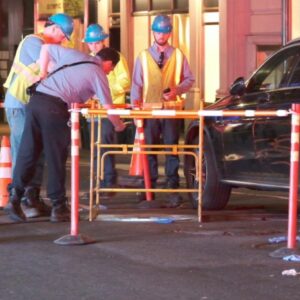
SHE WAS JUST GOING TO WORK: Donike Gocaj, 56, was reportedly walking to her cleaning job when she suddenly disappeared into a New York City sewer
SHE WAS JUST GOING TO WORK Donike Gocaj, 56, was reportedly walking to her cleaning job when she suddenly disappeared into a New York City sewer. But what was found on her phone was what really shocked everyone… 👇 Beloved…

47 MINUTES UNDERWATER… Elite technical divers have returned to the Maldives cave system in the mission linked to the deaths of 5 Italian tourists
47 MINUTES UNDERWATER… Elite technical divers have returned to the Maldives cave system in the mission linked to the deaths of 5 Italian tourists — and attention is now shifting to one narrow section of the route crews reportedly spent…
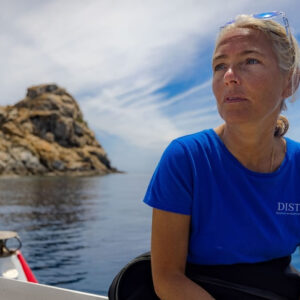
“I SWEAR I’LL HELP BRING THEM BACK…” — A video is spreading online showing the final known moments of a rescue diver who later died during recovery efforts in the Maldives. The experienced diver had joined the mission to retrieve victims from an underwater cave area and was seen calm just before entering the water for the last time. Loved ones now say the footage feels like an unexpected goodbye. Watch below👇
In the crystal-clear turquoise waters of the Maldives, where paradise often masks peril, a rescue mission turned into a double tragedy that has gripped the world. Staff Sergeant Mohamed Mahdhee (also spelled Mahudhee or Mahdi in reports), a dedicated member…
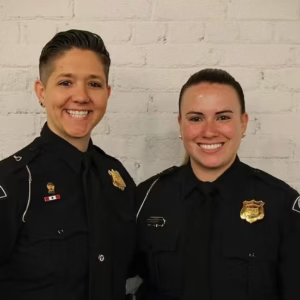
2 SERGEANTS. 1 FAMILY. 1 NIGHT THAT CHANGED EVERYTHING… Ashley Munoz never made it back after the Highway 101 tr@g3dy… and now, what teammates are saying about their final meal together is leaving many emotional
Two sergeants. One family. One ordinary night that turned into a tragedy no one in Greenville can forget. The head-on collision on Highway 101 shortly after 12:45 a.m. on May 15, 2026, claimed five lives and left Sergeant Diana Munoz…
End of content
No more pages to load