CCTV WAS ON — SO WHY DO THE MOST IMPORTANT SECONDS FEEL INVISIBLE?
Authorities in the Junior King case and the DJ Warras investigation have both confirmed reviews of surveillance footage. Yet what’s drawing attention isn’t what cameras captured — it’s what they didn’t clearly show.
Blind spots. Missing angles. Time windows that raise more questions than answers. Families are still waiting for clarity while online observers compare how both cases hinge on moments caught — or not caught — on camera.
Sometimes the truth isn’t hidden.
It’s just outside the frame.
👇 Full breakdown of the CCTV questions in the comments.
The Invisible Moments: CCTV Footage and Lingering Questions in the Junior King and DJ Warras Cases
In the wake of two high-profile tragedies that rocked South Africa’s entertainment industry in December 2025, surveillance cameras have emerged as both a crucial tool and a source of frustration. Authorities confirmed that CCTV footage was reviewed in both the fatal car crash of TikTok star Junior King and the brazen murder of radio icon DJ Warras. Yet, public discourse—fueled by online commentators—centers not on what the cameras clearly captured, but on the gaps: blind spots, limited angles, and critical seconds that seem frustratingly absent from the frame.
dailyvoice.co.za
businesstech.co.za
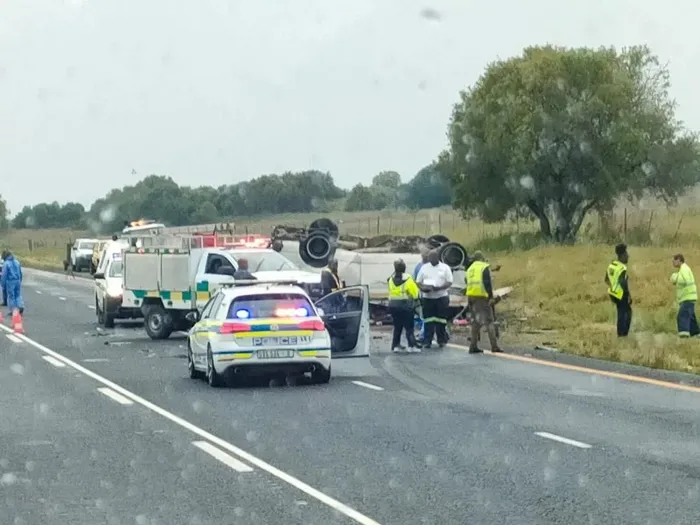
Junior King, born Dugulth Ferreira, died on December 11 in a head-on collision on the N1 highway near Verkeerdevlei in the Free State. The 29-year-old rapper and dancer, beloved for his energetic TikTok videos and recent album My Revenge, was declared dead at the scene after his sedan collided with a light truck. Graphic bystander videos circulated widely online, showing the mangled wreckage and intensifying national grief.

satrucker.co.za

youtube.com
iol.co.za

sabcnews.com
South African Police Service (SAPS) opened a culpable homicide investigation, standard for fatal road incidents. While emergency responders and police arrived promptly, no reports mention official CCTV footage capturing the crash itself. South Africa’s national highways, managed by SANRAL, do feature CCTV cameras primarily in urban and high-traffic zones like Gauteng and the Western Cape for incident detection and traffic monitoring. However, coverage on rural stretches of the N1 in the Free State is limited or nonexistent for real-time accident recording. The “most important seconds”—the moments leading to the head-on impact—remain unseen by surveillance, leaving investigators reliant on witness statements, vehicle examinations, and scene reconstruction.
This absence highlights a broader issue in South Africa’s road safety crisis, where over 12,000 lives are lost annually. Rural highways often lack comprehensive camera networks, creating “invisible” zones where causes like driver error, fatigue, or mechanical failure go unrecorded. Families and online observers question whether better coverage could clarify fault or even prevent such tragedies through earlier alerts. Junior King’s loved ones, focused on healing and celebrating his legacy, await investigative clarity amid these gaps.
Just five days later, on December 16, DJ Warras (Warrick Stock) was assassinated in broad daylight outside Zambezi House in Johannesburg’s CBD. The 40-year-old media personality, known for his radio stints, podcast The Shady PHodcast, and activism against urban decay, was shot multiple times as he exited the building. His security company, Imperium Ops, had been contracted to reclaim the hijacked property from illegal occupants—a dangerous endeavor amid syndicates profiting from extortion and crime.

maghrebi.org

centralnews.co.za
facebook.com
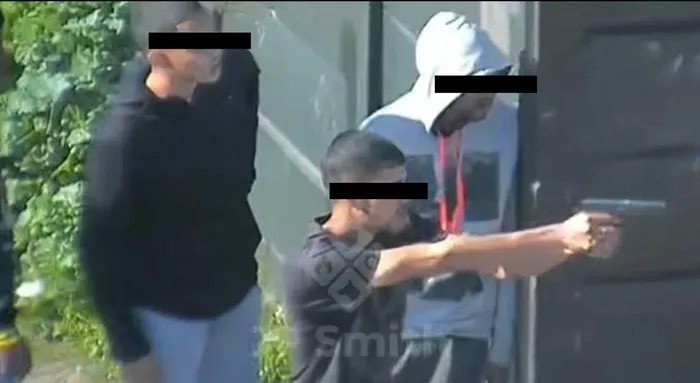
Unlike the highway incident, CCTV played a pivotal role here. Footage from cameras in the area captured key elements: a short man with dreadlocks approaching Warras and opening fire, another suspect in a security uniform nearby, and the group fleeing on foot. Police described three assailants, with the dreadlocked shooter as the primary suspect. This evidence aided swift progress—two men were arrested on December 22, charged with murder, and appeared in court on December 24. One, Victor Mthethwa Majola, faced premeditated murder charges; charges against the second were provisionally withdrawn as investigations continue for accomplices.
Yet, even with footage, questions persist about what’s “outside the frame.” Reports note potential blind spots in Johannesburg’s CBD surveillance network, exacerbated by hijacked buildings where cameras may be disabled, vandalized, or absent. Warras had reportedly installed new CCTV and biometric systems at Zambezi House shortly before his death, but it’s unclear if those captured the full ambush or if angles missed approach paths. Online sleuths and commentators highlight “time windows” before the visible shooting—suspicious movements or lurking figures—that raise speculation about planning and execution.
The CBD’s hijacked building crisis amplifies these issues. Over 500 properties are illegally occupied, fueling organized crime. Warras’s anti-hijacking efforts, including five prior protection orders, likely made him a target. CCTV in such volatile areas often suffers from poor maintenance, power outages, or deliberate sabotage by syndicates. As one expert noted, corruption and bribery further complicate enforcement, leaving gaps that criminals exploit.
Both cases underscore a national challenge: South Africa’s reliance on CCTV for justice amid infrastructural shortcomings. In urban crime hotspots like the CBD, dense but flawed networks create partial visibility—capturing acts but missing precursors. On highways, sparse coverage renders entire incidents “invisible.” Families endure prolonged uncertainty while police piece together incomplete puzzles.
As 2025 draws to a close, these tragedies prompt calls for investment: expanded rural highway cameras, tamper-proof urban systems, and integrated networks. Junior King’s crash reminds us of preventable road deaths; DJ Warras’s murder exposes the lethal risks of reclaiming decayed cities. Sometimes, as observers poignantly note, the truth isn’t deliberately hidden—it’s simply outside the frame, in blind spots we haven’t yet illuminated.
In memory of two vibrant lives cut short, may clearer vision—literal and figurative—emerge to prevent future losses.
News
THERE WERE 2 NAMES SHE REFUSED TO SAY OUT LOUD…: Katie Price has opened up about the period Lee Andrews allegedly worked around “dangerous people” — and one late-night detail from that time is now getting attention👇
Katie Price’s husband worked with ‘dangerous people’ before disappearance The Dubai-based businessman has been missing for more than a week. Lee Andrews reportedly boasted about being an international arms dealer (Image: Instagram/Katie Price) Katie Price’s husband Lee Andrews reportedly “boasted” about…
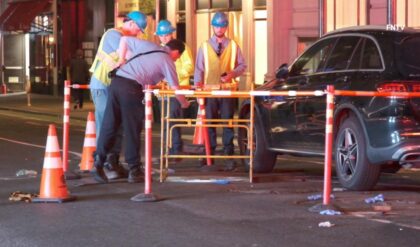
7 STEPS FROM THE CORNER… THEN SHE WAS GONE: 56-year-old Donike Gocaj was walking to work before disappearing into a NYC manhole — and people are now focusing on one chilling detail: the orange safety cone reportedly sitting near the area that morning 👀👇
Woman Who Died After Falling In Uncovered NYC Manhole Identified As 56-Year-Old Grandma A witness who saw Donike Gocaj fall into the hole told WABC-TV she kept screaming, “I’m dying” over and over. Officials in New York City have announced…
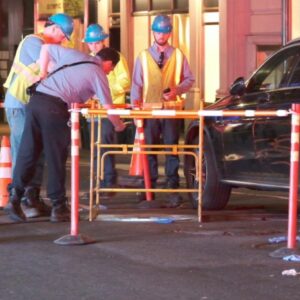
SHE WAS JUST GOING TO WORK: Donike Gocaj, 56, was reportedly walking to her cleaning job when she suddenly disappeared into a New York City sewer
SHE WAS JUST GOING TO WORK Donike Gocaj, 56, was reportedly walking to her cleaning job when she suddenly disappeared into a New York City sewer. But what was found on her phone was what really shocked everyone… 👇 Beloved…

47 MINUTES UNDERWATER… Elite technical divers have returned to the Maldives cave system in the mission linked to the deaths of 5 Italian tourists
47 MINUTES UNDERWATER… Elite technical divers have returned to the Maldives cave system in the mission linked to the deaths of 5 Italian tourists — and attention is now shifting to one narrow section of the route crews reportedly spent…
“I SWEAR I’LL HELP BRING THEM BACK…” — A video is spreading online showing the final known moments of a rescue diver who later died during recovery efforts in the Maldives. The experienced diver had joined the mission to retrieve victims from an underwater cave area and was seen calm just before entering the water for the last time. Loved ones now say the footage feels like an unexpected goodbye. Watch below👇
In the crystal-clear turquoise waters of the Maldives, where paradise often masks peril, a rescue mission turned into a double tragedy that has gripped the world. Staff Sergeant Mohamed Mahdhee (also spelled Mahudhee or Mahdi in reports), a dedicated member…
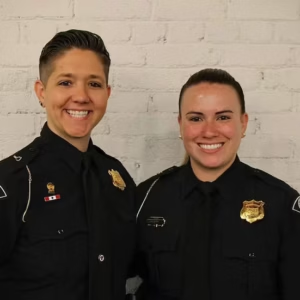
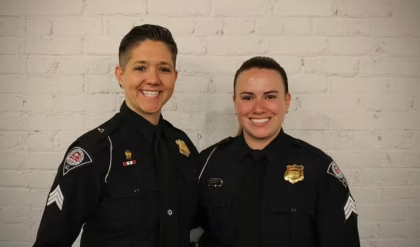
2 SERGEANTS. 1 FAMILY. 1 NIGHT THAT CHANGED EVERYTHING… Ashley Munoz never made it back after the Highway 101 tr@g3dy… and now, what teammates are saying about their final meal together is leaving many emotional
Two sergeants. One family. One ordinary night that turned into a tragedy no one in Greenville can forget. The head-on collision on Highway 101 shortly after 12:45 a.m. on May 15, 2026, claimed five lives and left Sergeant Diana Munoz…
End of content
No more pages to load