The New Year’s Eve Inferno at Le Constellation Bar: Tragedy, Negligence, and the Deadly Role of Toxic Smoke in Crans-Montana, Switzerland.
On the night of December 31, 2025, transitioning into January 1, 2026, the ski resort town of Crans-Montana in Switzerland’s Valais canton became the scene of one of the country’s deadliest peacetime disasters. A massive fire ripped through Le Constellation, a popular basement bar packed with young revelers celebrating the New Year. The blaze claimed 40 lives and injured 119 others, many of them teenagers and young adults. What began as a festive night of champagne toasts and sparklers quickly turned into a scene of chaos and horror, with survivors describing walls of flame, thick black smoke, and desperate attempts to escape a single narrow exit.

Initial reports pointed to a seemingly accidental ignition: sparklers or Bengal lights attached to champagne bottles, raised too high in the low-ceilinged basement, igniting highly flammable soundproofing foam on the ceiling. But as investigations deepened—including toxicology analyses of victims—the tragedy revealed layers of negligence, rapid fire spread, and the lethal toxicity of combustion byproducts. Far from a simple fire, the incident exposed how inadequate safety measures turned a celebration into a mass casualty event. Claims circulating on social media and some online posts suggesting a premeditated “execution plan” involving a deliberate toxic gas leak in gas ducts 14 minutes prior appear unfounded and sensationalized, with no credible evidence from official sources supporting arson, intentional release, or pre-fire gas duct sabotage.
The Night of the Fire
Le Constellation, located in the glitzy alpine resort of Crans-Montana, was a favored spot for après-ski crowds and New Year’s parties. The bar’s basement venue featured low ceilings lined with black polyurethane acoustic foam for soundproofing—a material common in nightlife venues but notoriously dangerous if untreated with flame retardants. On that fateful night, the bar was overcrowded, with estimates suggesting far more than the safe occupancy limit, many patrons underage.
Around 1:30 a.m., video footage captured the moment: a staff member or reveler held a champagne bottle topped with a sparkler, lifting it close to the ceiling. The sparkler ignited the foam almost instantly. Polyurethane foam, when untreated, burns extremely rapidly, spreading flames across the ceiling in seconds and producing dense, toxic smoke. Eyewitnesses described a “wall of heat” and black smoke that filled the space, causing immediate panic. Most victims succumbed not to burns but to smoke inhalation in the confined basement, where escape was limited to a single main staircase. Reports later emerged that a service door, which could have served as a secondary exit, was locked.

The fire spread so fast that many had little time to react. Panic led to a crush at the exit, exacerbating the toll. Emergency services arrived quickly, but the basement’s layout and the speed of the blaze hindered rescue efforts. Forty people perished—eight initially identified as Swiss nationals, with others from various countries—and over 100 were hospitalized, many with severe smoke inhalation injuries.
(An image of the aftermath at Le Constellation bar in Crans-Montana, showing emergency responders and the damaged building exterior.)
The Cause: Sparklers, Foam, and Rapid Ignition
Prosecutors in Valais canton, led by Beatrice Pilloud, quickly identified the likely trigger: sparklers on champagne bottles igniting the ceiling’s soundproofing foam. Court-appointed fire experts confirmed that untreated polyurethane foam—cheap and effective for acoustics—spreads fire rapidly and releases highly toxic fumes in confined spaces.
This pattern echoes infamous nightclub tragedies worldwide, such as The Station nightclub fire in Rhode Island (2003), where pyrotechnics ignited foam, killing 100; Cromañón in Argentina (2004); Kiss in Brazil (2013); Colectiv in Romania (2015); and a recent incident in North Macedonia. In each case, flammable foam and pyrotechnics combined disastrously in overcrowded venues.
In Crans-Montana, the foam’s role was central. Experts noted it produced thick smoke containing hydrogen cyanide (HCN) and other irritants, incapacitating victims quickly. No evidence supports claims of a separate “toxic gas leak” from gas ducts 14 minutes before the fire. Official hypotheses focus on accidental ignition, not premeditation.
Toxicology Insights: The Hidden Killer – Smoke and Gases
Toxicology reports and medical findings revealed that many deaths resulted from smoke inhalation rather than direct flames. Victims who escaped the building but died en route to or at hospitals likely succumbed to poisonous combustion byproducts. Burning polyurethane foam releases carbon monoxide (CO), hydrogen cyanide, and other volatiles that cause rapid asphyxiation and internal suffocation.
HCN, in particular, is notorious in such fires: it inhibits cellular respiration, leading to unconsciousness and death even in low concentrations. CO binds to hemoglobin, preventing oxygen transport. In a packed basement with poor ventilation, these gases accumulated swiftly, explaining why some victims “escaped the flames but not the poison.”
No official reports mention strychnine, ancient Egyptian toxins, or deliberate gas releases in ducts. Such claims, seen in unverified social media and Facebook posts, lack substantiation from prosecutors, forensic experts, or health authorities. The “14 minutes before” detail and “execution plan” narrative appear to stem from misinformation or sensationalized content, possibly amplified online for engagement. Real toxicology centers on fire-induced toxins, not external poisons.
(Image illustrating the rapid spread of fire on acoustic foam in a similar venue, with thick toxic smoke filling the space.)
Negligence and Regulatory Failures

The tragedy’s scale prompted scrutiny of safety lapses. Fire safety inspections at Le Constellation had not occurred since 2019, despite required periodic checks. Modifications requested in earlier inspections (2016–2019) were not followed up during the 2020–2025 period, possibly due to pandemic disruptions or oversight failures.
The foam installation itself raised questions: one manager reportedly bought and installed it personally from a hardware store, without professional assessment for fire compliance. Swiss fire codes (e.g., VKF standards) emphasize non-combustible materials like mineral wool in such venues, but cheap polyurethane was used.
Prosecutors opened a criminal case against the bar’s managers—a French couple—for negligent homicide, negligent bodily harm, and negligently causing a conflagration. Debates ensued over lax regulations in ski resorts, overcrowded venues accepting minors, and single-exit designs.
Mayor Nicolas Féraud acknowledged the inspection gap, but questions remain about municipal responsibility. The incident has sparked calls for reforms: stricter foam regulations, mandatory annual inspections, pyrotechnic bans in indoor venues, and better occupancy enforcement.
Aftermath and Lessons
The Crans-Montana fire left a community in mourning and Switzerland confronting preventable failures. Survivors recounted terror, with some hiding from heat or struggling through smoke. Families demand accountability, and the investigation continues into foam compliance, exit adequacy, and training.
This disaster underscores recurring risks: flammable materials + pyrotechnics + overcrowding = catastrophe. It highlights the need for robust fire safety in nightlife, especially in confined spaces.
While social media sensationalism suggested conspiracy—like premeditated gas releases—no evidence supports this. The truth is tragically mundane: negligence turned sparkler fun into mass death via toxic smoke.
Switzerland, known for precision, must now apply it to prevent future horrors.
News
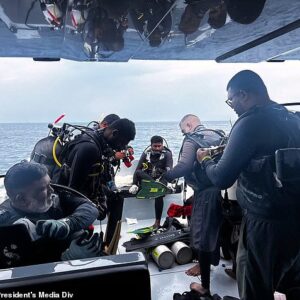
“THEY MAY HAVE GONE TOO DEEP: Investigators are now reviewing what happened inside the Maldives cave after five Italian divers never resurfaced — and attention is suddenly shifting to one number from the dive data 👀 But it’s the final depth reached before contact was lost that people are now desperately trying to understand… 👇
Maldives investigates if Italian divers went too deep in fatal cave dive A speed boat moves in the waters of the Indian Ocean near Male, after a specialist team located the bodies of four missing Italian scuba divers who died…
THIS WAS HER FINAL MESSAGE: Monica Montefalcone’s fiancé has now shared a heartbreaking love letter after the Maldives scuba tragedy — and everyone is focusing on one photo attached to the post that appears to show the couple just days before the dive👇
Italian diver’s fiancé wrote heartbreaking love letter after she died in Maldives scuba tragedy The fiancé of one of the five Italian divers who died in an underwater cave in the Maldives declared his everlasting love for her in a…
“THAT WAS THE LAST TIME HE WAS SEEN.” 🌊😳 The video is believed to have captured the last images of a diver during the search operation in the Maldives — and everyone is now focusing on a strange detail on his oxygen tank that appeared just seconds before the footage ends 👀👇
Eerie video captures final image of military diver killed in Maldives scuba dive recovery mission An eerie video captures the final hours of the Maldivian Coast Guard diver who died Saturday during a dangerous mission to recover the bodies of the Italian tourists trapped…

The Mackenzie Shirilla case has just taken a new turn 🚨 Just days after The Crash premiered on Netflix, Mackenzie’s father was suspended from his job… but now viewers are constantly replaying that 7-second moment when his eyes drop to the table before he finishes his sentence
In the whirlwind days following the May 15, 2026, release of Netflix’s The Crash, the Mackenzie Shirilla saga has once again captivated true crime audiences. What was already a polarizing story of a deadly 2022 high-speed crash has now layered…

PEOPLE AREN’T ARGUING ABOUT THE CRASH ANYMORE 😳 Nearly 4 years after the 100-mph collision that killed Dominic Russo and Davion Flanagan, attention suddenly shifted to a single family interview clip and the folded tissue sitting beside Mackenzie Shirilla’s mother
In the spring of 2026, a Netflix documentary titled The Crash dropped onto screens worldwide, reigniting a case that had largely faded from headlines. What began as a horrific 2022 car accident in Strongsville, Ohio, had already been adjudicated as…

THE DRIVER-SIDE IMPACT IN ASHLIN KNUTH’S CASE IS WHAT HAS EVERYONE TALKING TONIGHT 🚨 Authorities released basic crash details, but the unanswered question surrounding the final 5 seconds before impact is becoming harder to ignore…
Authorities released basic crash details, but the unanswered question surrounding the final 5 seconds before impact is becoming harder to ignore… The devastating driver-side collision that claimed the life of 18-year-old Ashlin Jade Knuth mere hours after her high school…
End of content
No more pages to load