The case of Christopher Palmer, the 39-year-old Arkansas man who vanished during what was intended as a solo camping adventure, has taken yet another poignant and unsettling turn. On January 24, 2026, his family—through a statement shared by his father, Bren Palmer, and amplified by groups like the United Cajun Navy and A Voice For The Voiceless—officially requested the cessation of all active search operations. They cited a newly uncovered fact: Christopher had been privately dealing with a terminal illness (believed to be cancer, kept secret for around 18 months), which provided context for his apparent decision to end his life on his own terms in the natural environment he cherished.
The family’s message was clear and heartfelt:
“With heavy hearts and profound sorrow, we, the family of Christopher Palmer, have made the difficult decision to request that all active search efforts for our son cease. We recently learned that Christopher was facing a terminal illness. Knowing this has helped us understand the choices he made. Christopher loved the outdoors and valued his independence. The treatments ahead would have taken much of that away, and he did not want that future for himself.”
They added that personal belongings washing up along the coastline near Cape Hatteras National Seashore supported their belief that he perished at sea, likely after launching his kayak from the beach where his red 2017 Ford F-250 truck was found stuck and abandoned on January 12, 2026. His German Shepherd, Zoey, was recovered safe nearby and has since received care.
Despite the family’s plea to stand down, authorities—respecting the request but conducting a final, thorough walkthrough of the scene—made a chilling discovery that has reignited speculation and shifted perceptions of the case. In the soft sand near the truck’s location, searchers identified a thin trail measuring exactly 2.3 meters long. The trail appeared to lead directly toward the shallow water’s edge before vanishing abruptly, as if whatever or whoever made it simply stopped—or was taken—there.
This single, precise detail has dramatically altered the narrative for many following the story. Up until this point, the prevailing theory aligned with the family’s understanding: a deliberate, solitary act by a man facing an unbearable future of dependency and pain. The trail’s abrupt end in shallow water raises haunting questions. Was it the drag mark of a kayak being pulled to the surf? A footprint path erased by incoming tide? Or something more sinister—an indication of foul play, an assisted exit, or an unexpected mishap that contradicted the “chosen departure” scenario?
Investigators have not publicly released official interpretations, and the family has not commented on this latest find, likely prioritizing privacy amid their grief. No body has been recovered, and no additional evidence (such as a note or explicit medical records in the vehicle) has been confirmed to alter the suicide-by-drowning hypothesis. The truck contained other items like a shotgun, safe, and camping gear, but the kayak itself was absent from the scene, consistent with it being taken into the water.
The discovery of the trail—mere days after the family’s announcement—has circulated rapidly in online missing-persons communities, forums like Websleuths, and social media threads. Some observers point out that winter beach conditions, including wind, tide cycles, and an approaching ice storm during the initial search period, could easily obscure or create partial tracks. Others note the measurement’s specificity (2.3 meters) as oddly clinical, wondering if it suggests forensic analysis or simply an estimate from ground teams.
Christopher’s background as an experienced outdoorsman—whitewater rafter, solo camper, and meticulous planner who regularly shared updates—makes the abrupt end of the trail particularly eerie. He last communicated on January 9, sending his father a calm video of scenic views with no hint of distress, before his route inexplicably diverted hundreds of miles to the Outer Banks instead of Monongahela National Forest.
Bren Palmer has previously shared raw emotions, including the line that has echoed widely: “My son didn’t want anyone to worry,” reflecting Christopher’s protective silence about his illness. Another sentiment—“My son… if there’s a next life, I still hope you’ll choose me as your father”—captures the depth of paternal love persisting through uncertainty.
The trail’s discovery does not necessarily upend the family’s closure. It could represent the final steps of a man walking into the sea, kayak in tow, or the last vestige of a tragic accident amplified by rough conditions. Yet its sudden disappearance at the waterline chills investigators and onlookers alike, leaving room for doubt in what was beginning to feel like a resolved, if heartbreaking, story.
As the active phase fully concludes, the Palmers seek healing away from the spotlight. They have expressed profound thanks to the volunteers, first responders, and strangers who rallied—often emphasizing the humbling kindness shown to someone they never knew. The case continues to highlight the silent struggles of terminal illness, the weight of unspoken burdens, and the complexities of end-of-life autonomy.
Whether the 2.3-meter trail marks a deliberate farewell or conceals unanswered elements, it serves as a stark, lingering reminder: even in presumed closure, nature—and human choice—can leave traces that refuse to fully wash away.
News
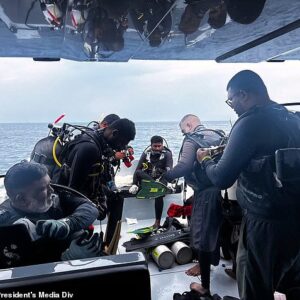
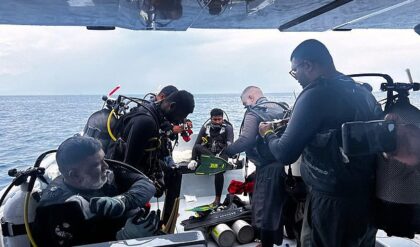
Something Must Have Happened”: Husband’s Defiant Stand Challenges ‘Recklessness’ Narrative in Maldives Cave Tragedy
Something Must Have Happened”: Husband’s Defiant Stand Challenges ‘Recklessness’ Narrative in Maldives Cave Tragedy The international diving community remains gripped by the Maldives cave disaster as new voices challenge the emerging official emphasis on rule-breaking and poor planning. While Maldivian…
ONE DETAIL MADE EVERYONE STOP IN THE MIDDLE OF THE SURFING… Ashley Munoz’s community continues to show support after the tragic accident at 12:45 AM… and now, what their teammates have revealed about their last meal is truly touching
The digital landscape is often characterized by a relentless, fast-paced stream of information where users mindlessly scroll through endless updates, global crises, and brief glimpses of human lives. However, every so pool of data contains a moment so profoundly moving…
QUESTIONS REMAIN UNCHANGED… Ashley Munoz never returned home after the tragedy on Highway 101, an accident that changed the lives of many families forever… and tonight, it is said that what was at the scene was even more shocking,…
The unpredictable vulnerability of life is a sobering reality that communities across the nation hope they never have to confront, yet it is the exact nightmare that has shattered the peace of the Upstate region in South Carolina. On a…
SHE DID IT!!💔 Those were the words Ashlin Knuth’s mother posted under graduation photos showing the 18-year-old smiling in her blue gown… now people can’t stop talking about the boyfriend who survived the crash and what he may remember from those final moments…
The transition from the highest peak of youthful celebration to the absolute lowest depths of human tragedy is a vulnerability that communities hope they never have to witness, yet it is precisely the reality that has shattered the town of…
JUST HOURS BEFORE THE CRASH, ASHLIN KNUTH WAS SMILING IN HER GRADUATION GOWN 😢🎓 Her mom had just posted, “She did it!! So proud of you Ashlin!!” — but the detail people are now asking about is what happened inside that car with her 18-year-old boyfriend just hours later…
On Sunday, May 17, 2026, Ashlin Jade Knuth walked across the stage at Ottumwa High School in Iowa as part of the Class of 2026. Smiling brightly in her graduation gown, she celebrated a major milestone surrounded by family, friends,…

HE DISAPPEARED IN SECONDS: Search teams are racing to find missing rower Jeremiah Gamble on Lake Guntersville after he is believed to have fallen into the water and never resurfaced 👀 But there’s a worrying detail from the search area: a life vest was found…👇
On Sunday, May 17, 2026, a routine boating outing on one of Alabama’s most popular lakes turned into a desperate search and recovery operation. Jeremiah Gamble, a 25-year-old from Tallassee, Alabama, entered the waters of Lake Guntersville near Honeycomb Creek…
End of content
No more pages to load