The disappearance of Nancy Guthrie, the 84-year-old mother of NBC’s “Today” show co-host Savannah Guthrie, has captivated national attention since she was reported missing from her home in Tucson, Arizona, in late January 2026. What began as a routine missing person case quickly escalated into a high-profile kidnapping investigation involving the FBI, the Pima County Sheriff’s Department, advanced digital forensics, and emerging questions about surveillance technology and evidence handling.

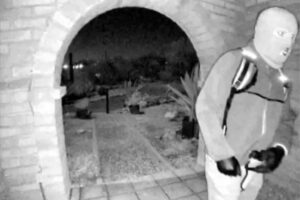
The case gained significant momentum when authorities released chilling surveillance footage from a Google Nest doorbell camera outside Guthrie’s home. The video depicted an armed, masked individual—described by the FBI as approximately 5’9″ to 5’10”, wearing gloves, a backpack, and appearing to tamper with the camera—on the morning of her disappearance. This footage represented a major breakthrough, especially after initial statements from local authorities indicated no usable video was available, partly because Guthrie lacked a paid subscription for cloud storage and local recording.
The recovery of this seemingly inaccessible footage sparked widespread curiosity and privacy concerns. FBI Director Kash Patel explained that the material was retrieved from “residual data located in backend systems,” with assistance from private sector partners, widely understood to include Google. Experts noted that even without an active subscription, fragments of data—such as motion-triggered snapshots or buffered clips—might persist in Google’s infrastructure, allowing forensic recovery under legal warrant. This process highlighted the complexities of cloud-based IoT devices: while convenient for users, they create potential access points for law enforcement with proper authorization, raising broader debates about digital privacy in smart homes.
Amid ongoing searches—including examinations of the home’s septic tank, yard, and neighborhood—the investigation took another intriguing turn with reports of specialized equipment observed at the scene. Independent investigator and on-site reporter Jonathan Lee Riches (known as JLR), who has provided extensive live coverage from Tucson, documented FBI agents handling what appeared to be a professional video capture device during scene processing. Witnesses described agents removing the equipment from inside Nancy Guthrie’s home as a forensic tent was erected over the front porch area, where blood evidence had previously been noted.
The device in question closely resembles the Blackmagic Design UltraStudio 4K Mini, a compact hardware converter and capture tool popular in broadcast and post-production environments. This equipment supports multiple input formats, including HDMI (common in consumer electronics like laptops, monitors, and streaming setups) and SDI (a professional serial digital interface used in high-end video systems for reliable, low-latency transmission). It connects via Thunderbolt 3 or USB-C to computers, enabling real-time capture of video and audio signals with preserved metadata, such as embedded timecodes, frame rates, and source information.
In the context of the Guthrie investigation, such a tool could serve several critical forensic purposes. Investigators might use it to ingest and digitize footage from various sources for detailed analysis:
Playback from a laptop or external monitor displaying recovered Nest camera clips, ensuring frame-accurate review without compression artifacts from screen recording.
Direct capture from mirrored smartphones or tablets that might hold app data or cached videos.
Interception of signals from any remaining DVR systems, security hubs, or intermediary hardware in the home’s setup.
By capturing at the hardware level rather than software screenshots, the device helps preserve original quality and embedded technical metadata—vital for verifying authenticity, detecting tampering, or establishing precise timelines. For instance, timecodes could corroborate or challenge witness statements, geolocation data, or even correlate events across multiple devices in the home. Tech analysts, including cybersecurity experts, have pointed out that this approach is standard in complex digital forensics, especially when dealing with fragmented or “residual” cloud data that requires cross-verification.
The presence of this equipment underscores the FBI’s emphasis on digital evidence in the case. Early challenges included reports of missing or removed recording devices (possibly the doorbell camera itself or related hardware), corrupted files, or inaccessible archives. By deploying broadcast-grade capture tools, investigators can create verifiable forensic copies, apply enhancement techniques, or integrate findings into multi-source timelines. This meticulous process reflects lessons from past high-profile cases where digital artifacts proved decisive.
However, the observation also fueled speculation and online discussion. Some observers questioned whether the device indicated deeper layers of surveillance in the home—perhaps beyond the known Nest system—or suggested efforts to extract data from non-standard sources. JLR’s reporting, including photos and video from the scene, amplified these questions, portraying the removal as part of setting up the crime scene processing area. While no official confirmation tied the device directly to specific footage recovery, its capabilities align perfectly with needs in a case reliant on video evidence.

The investigation has not been without friction. Reports emerged of tensions between the FBI and local authorities, including concerns over evidence sharing and jurisdictional priorities. The Pima County Sheriff’s Office faced scrutiny after initial statements about unavailable video contrasted with the later release, prompting questions about coordination. A man briefly detained (a delivery driver) was released after not matching the footage, and searches extended to family properties, though no arrests have been announced as of mid-February 2026.
The FBI increased the reward to $100,000 for information leading to Guthrie’s location or the conviction of those involved, while releasing further suspect details to generate leads. Thousands of tips flooded in following the video release, illustrating public engagement in the case.
Nancy Guthrie’s disappearance remains unsolved, blending elements of family tragedy, celebrity involvement (through Savannah Guthrie’s public pleas), and cutting-edge tech forensics. The use of specialized video capture equipment like the UltraStudio highlights how modern investigations increasingly depend on precise digital tools to unlock hidden evidence. As searches continue and more details emerge, questions persist: What additional footage or metadata might these devices reveal? And how might it reshape understanding of the events at that quiet Tucson home?
The case serves as a reminder of the double-edged nature of connected home technology—offering potential lifelines in crises while exposing vulnerabilities in privacy and data security. For now, the focus remains on bringing Nancy Guthrie home safely, with every frame and metadata point potentially holding the key.
News
THE LAST THING TUPAC WAS SEEN WEARING BEFORE THE SHOOTING HAS PEOPLE LOOKING CLOSER… 😳💍 Years later, fans believe one piece of jewelry may be tied to one of the biggest mysteries in hip-hop history 👀👇
Years later, fans believe one piece of jewelry may be tied to one of the biggest mysteries in hip-hop history 👀👇 On the evening of September 7, 1996, Tupac Shakur stepped into the passenger seat of a black BMW 750iL…
TUPAC WAS ONLY 25… AND HIS LAST 15 MINUTES STILL FEEL LIKE A MOVIE SCENE 💔👀 A Tyson fight, a red light, a white Cadillac… but it’s one image from inside the car that people can’t stop thinking about 😳👇
TUPAC WAS ONLY 25… AND HIS LAST 15 MINUTES STILL FEEL LIKE A MOVIE SCENE 💔👀 A Tyson fight, a red light, a white Cadillac… but it’s one image from inside the car that people can’t stop thinking about 😳👇…
THE BLACK BMW WAS COVERED IN BULLET HOLES… BUT ONE MARK HAS EVERYONE TALKING AGAIN 🚨 Nearly three decades later, fans say one specific spot inside the car tells a much darker story than they ever realized 😳👇
THE BLACK BMW WAS COVERED IN BULLET HOLES… BUT ONE MARK HAS EVERYONE TALKING AGAIN 🚨 Nearly three decades later, fans say one specific spot inside the car tells a much darker story than they ever realized 😳👇 On the…
THE 7 WORDS TUPAC SAID AFTER BEING SHOT ARE STILL HAUNTING PEOPLE… 😳💔 Witnesses say the rapper was hit 4 times and somehow remained conscious, but it’s the final words he allegedly whispered inside the black BMW that keep pulling fans back into the story👇
Witnesses say the rapper was hit 4 times and somehow remained conscious, but it’s the final words he allegedly whispered inside the black BMW that keep pulling fans back into the story. On the night of September 7, 1996, in…

KING CHARLES JUST MADE A MOVE THAT HAS ROYAL WATCHERS STUNNED 👑😳 Fresh speculation surrounding Archie and Lilibet is once again making headlines, with many questioning what it could mean for the future of the Sussex family. 👇 Fans believe this could be the biggest royal twist yet
In a decision that marks the most definitive break yet in the fractured relationship between King Charles III and his son Prince Harry, the monarch has reportedly ordered the complete removal of Archie and Lilibet Mountbatten-Windsor from all official royal…

MEGHAN MARKLE’S PAST IS BACK IN THE SPOTLIGHT — AND ROYAL FANS CAN’T STOP TALKING 😳👑 Old claims about a little-known chapter of Meghan’s life are resurfacing, and the reaction online has been intense. 👇 Many believe this story is far from over
In yet another explosive revelation shaking the foundations of the Sussex narrative, Meghan Markle’s alleged secret first marriage in Chicago has reportedly been exposed, sending fresh waves of outrage through the British royal family. As the Duchess continues to craft…
End of content
No more pages to load