The recent emergence of details from the revised parenting plan between Tawnia McGeehan and Brad Smith has added another layer of complexity and public scrutiny to the tragic murder-suicide case involving their 11-year-old daughter, Addi Smith. Specifically, Section 4.2 of the document—part of the May 2024 custody modification order—now features an additional handwritten line that has sparked online discussions, speculation, and debate among those following the story on social media and news forums.
Background on the Custody History

The custody saga between McGeehan and Smith stretched nearly a decade, beginning with their 2015 divorce and finalized decree in 2017 in Utah’s 4th District Court. Addi (full name Addilyn Smith) was their only child from the marriage. Early arrangements granted McGeehan primary physical custody with Smith receiving parenting time, reflecting a joint legal custody framework but with McGeehan holding slightly more residential time.
Tensions escalated over the years. Court records from December 2020 show a temporary order shifting sole physical custody to Smith. The judge cited concerns including McGeehan’s alleged behavior “on the spectrum of parental alienation,” an incident of domestic abuse in the child’s presence, and questions about her co-parenting abilities. That ruling even mandated supervised visitation for McGeehan at her expense in some periods, underscoring the high-conflict nature of the case.
By May 2024, the parties reached a mediated resolution: the court approved a modification restoring joint legal and joint physical custody on a week-on, week-off rotation. Exchanges were structured carefully—often at school during the academic year or at the Herriman Police Department during breaks—to minimize direct contact. Communication was restricted to a court-approved app, with escalation paths involving emails, mediation, then court intervention if disputes arose. These provisions aimed to reduce friction in a relationship marked by prior allegations, restraining order filings (including one by McGeehan in 2021 against Smith’s new wife for allegedly recording exchanges), and ongoing disagreements over schooling, activities, and support.
The Revised Parenting Plan and Section 4.2
The 2024 order represented a hard-won compromise after years of litigation. However, recent reviews of the documents (shared via media outlets like KUTV and discussed in public posts) highlight that Section 4.2—likely addressing a specific aspect of the parenting time schedule, exchanges, decision-making, or restrictions—included an additional handwritten notation or amendment.
While the exact wording of the handwritten addition has not been publicly released in full detail (due to privacy protections in family court matters involving minors), its presence has become a focal point in online conversations. Speculation ranges from:
A clarification on exchange logistics (e.g., reinforcing “no direct contact” rules or specifying parking distances, as some older orders detailed parking five spaces apart to allow the child to transfer independently).
An adjustment related to supervision, holidays, or extracurricular activities like cheerleading, given Addi’s involvement in Utah Xtreme Cheer (UXC).
A judge’s or parties’ interlineation to address a last-minute concern raised during finalization.
Handwritten amendments in court-approved parenting plans are not uncommon in Utah family law when parties or the judge make minor tweaks during hearings or signings without retyping the entire document. They must be initialed by both parties and/or the judge to ensure validity. In high-conflict cases, such notes often serve to plug perceived loopholes or emphasize compliance.
Public interest surged as screenshots and partial excerpts circulated on platforms like Facebook and X (formerly Twitter), with users debating whether the addition reflected lingering distrust, a concession by one side, or an overlooked red flag in hindsight. Some posts tie it to broader themes in the case, such as alleged “mean” messages from cheer parents, McGeehan’s reported depression, or the final communications (including the undisclosed three-word text and a lengthy email sent by McGeehan hours before the tragedy).
Why This Detail Matters Now
In the wake of the February 2026 events at the Rio Hotel & Casino—where McGeehan is believed to have shot Addi before taking her own life—the revised plan’s handwritten element has fueled retrospective analysis. Commentators question:
Did unresolved tensions in the plan contribute to McGeehan’s mental state?
Could the addition have signaled ongoing power imbalances or unmet needs?
How do such micro-amendments reflect the emotional toll of prolonged litigation on parents and children?
Experts in family law note that while joint custody aims to promote stability, acrimonious histories can undermine it. The 2024 shift to equal time was seen as progress, yet the case illustrates how external stressors (e.g., competitive youth sports environments) can intersect with domestic history.
No official statement from authorities or the family has confirmed the handwritten line’s content or significance to the investigation. Clark County and Utah officials continue withholding sensitive details, including the room note and final messages, to respect the victims and ongoing processes.
Visual Context: Related Images
To illustrate aspects of the story:
(Example of a typical Utah family court custody document layout, showing where handwritten amendments might appear.)
(Stock representation of a high-conflict custody exchange setup, emphasizing structured, no-contact protocols often mandated in such cases.)
(Photo memorializing Addi Smith from community tributes in West Jordan, Utah, highlighting her cheerleading involvement.)
This detail, though minor on paper, underscores the fragility of agreements born from years of strife. As more court filings surface through media scrutiny, the handwritten line in Section 4.2 serves as a somber reminder of the human cost when co-parenting breaks down irreparably.
News
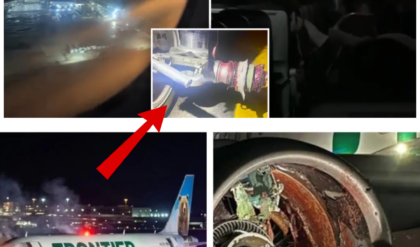
He was only on the runway for less than two minutes 😳 — Investigators now believe the man struck by the Frontier Airlines plane may have entered the Denver airport area just before midnight… but the inexplicable 7-second pause in surveillance footage has AGAIN CHANGED THE ENTIRE CASE
A Frontier Airlines jetliner waits for clearance to take off as high winds strafe Denver International Airport Thursday, March 12, 2026, in Denver. David Zalubowski/AP A Frontier Airlines plane bound for Los Angeles on Friday night struck and killed a…
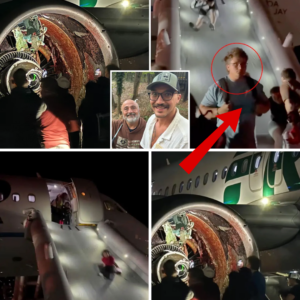
CANCELLED. CANCELLED🚨 — Newly released air traffic control recordings reportedly capture the tense moments after Frontier Airlines pilots realized something catastrophic had happened on the runway in Denver 😳 But a mysterious sound heard shortly afterward is now gaining attention online 👀
‘We just hit somebody’ – Frontier Airlines plane kills runway trespasser at Denver airport Air traffic control audio captured the moments after a Frontier Airlines plane fatally struck a person who had jumped a perimeter fence on to a runway…
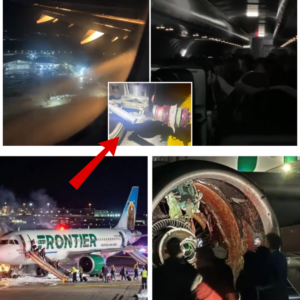
BLACK BOX REPORT COULD CHANGE EVERYTHING 👀 — Investigators reviewing data from the Frontier Airlines Airbus A321 are reportedly focusing on a brief warning sound heard inside the cockpit seconds before the crash 😳
Frontier Airlines Passengers Evacuated After Plane Hit a Person on the Runway During Takeoff at Denver Airport “We are investigating this incident and gathering more information in coordination with the airport and other safety authorities,” Frontier Airlines said in a…
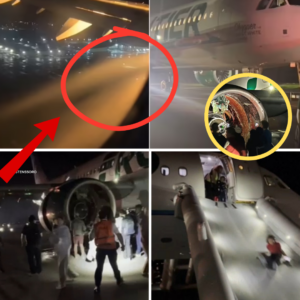
ENGINE FIRE! LET ME OUT! 🚨 — Newly released footage from inside the aircraft cabin reportedly captures the terrifying moment smoke began billowing from a Frontier Airlines plane after a late-night crash on the runway in Denver 😨 But viewers are now noticing a strange detail: passengers were still holding onto their luggage during the evacuation 👀
Terrifying videos show Frontier Airlines passengers fleeing smoke-filled cabin after jet strikes person on Denver runway Terrifying videos show passengers fleeing the Frontier Airlines plane which struck an apparent trespasser at Denver airport – as smoke fills the cabin. Some travelers ignored…

Then everyone went silent — A family on a Frontier Airlines flight said passengers heard a loud bang a few moments before the plane suddenly came to a stop on the runway in Denver 😳 But it was the pilot’s 4-WORD announcement that followed that sparked endless discussion… 👀
LA-bound family on horror flight reveals gruesome moment plane struck person A father and his two sons on a flight to Los Angeles thought they were “going to die” when their Frontier jet struck a pedestrian on the runway —…
VIDEO STOPS 1 SECOND BEFORE COLLISION 😳 — Surveillance video released after the Frontier Airlines runway tragedy shows an intruder walking directly onto the aircraft’s flight path just 5 seconds before the crash… and investigators have DISCOVERED THE MOTIVE
Moment Frontier Airlines plane strikes person on Denver runway seen in horrifying new video An apparent trespasser who was fatally struck by a Frontier Airlines plane at a Colorado airport on Saturday was seen calmly walking across the runway while the aircraft…
End of content
No more pages to load