The community surrounding Mason Creek Middle School in Douglas County, Georgia, remains enveloped in grief over the death of 12-year-old Jada West, with fresh testimony from a classmate adding layers of sorrow and unsettling questions to an already tragic story. According to accounts shared by peers, on the morning of March 5, 2026, as chaos erupted in the classroom—likely tied to escalating tensions from ongoing bullying—Jada attempted to de-escalate the situation by calming a friend amid the uproar. This act of trying to bring peace in a moment of disorder highlights the kind, level-headed nature her family and friends have consistently described, even as the day’s events spiraled toward irreversible harm.
Jada had enrolled at Mason Creek Middle School in January 2026 after her family relocated to Villa Rica, a suburban area west of Atlanta. Relatives portrayed her as vibrant, empathetic, and hopeful about building new connections in a new school environment. Yet reports indicate she encountered persistent bullying soon after arriving, with her mother and extended family members repeatedly raising alarms with school officials. Those efforts, they claim, did not yield adequate protection or resolution, allowing the harassment to persist and intensify.
The classroom incident that morning, as recounted by a classmate, involved heightened emotions and disruption—details that remain part of the broader investigation but underscore how interpersonal conflicts can erupt early in the school day. Jada’s intervention to soothe her friend reflects the caring personality that endeared her to those around her. Tragically, whatever tensions simmered in those early hours carried over, resurfacing dramatically during the afternoon bus ride home.
The confrontation escalated on the bus with another female student from the same school. Witnesses and cellphone footage later shared by family (with calls for sensitive handling) depict a verbal argument that turned physical once students exited at the Ashley Place subdivision stop near Reflective Waters Drive. In the brief altercation, Jada was knocked down but got back up and started walking toward her home. She collapsed shortly afterward in the street, her heart stopping as bystanders and family attempted aid. Emergency responders found her unresponsive; she was rushed to Tanner Medical Center-Villa Rica before transfer to Children’s Healthcare of Atlanta at Scottish Rite, where severe brain trauma led to a coma. Jada passed away on March 8, 2026.
The Villa Rica Police Department, coordinating with the Douglas County District Attorney’s Office, continues its thorough review of evidence, including bystander videos and witness statements. No charges have been announced as of mid-March 2026, awaiting final autopsy confirmation on the cause of death—widely linked to injuries from the fight, potentially compounded by the day’s accumulated stress.
What has intensified public shock and raised disturbing questions is the discovery in the suspect’s notebook—a personal item examined as part of the probe. While police have released limited specifics to protect the integrity of the investigation, sources familiar with the case describe contents that appear to document prior grievances, hostile thoughts, or references connected to Jada and the bullying dynamic. This notebook entry, uncovered during searches or interviews, suggests a pattern of animosity that may have predated the March 5 events, prompting scrutiny over whether earlier signs of intent or fixation were missed or unaddressed. Such findings echo broader concerns about how schools and authorities monitor student behavior, especially when conflicts involve written expressions of anger or threats.
The Douglas County School System has voiced deep sorrow, characterizing Jada as an “upbeat, kind, and vibrant student” whose absence leaves a void in her classrooms and among her peers. Crisis support teams, including counselors and psychologists, were brought in to help students and staff cope in the immediate aftermath. District statements reiterate that the physical incident occurred off-campus and after school dismissal, shifting primary investigative lead to law enforcement, while affirming dedication to fostering secure, supportive learning spaces.
In the wake of Jada’s passing, memorials have continued to expand at the school entrance and near the bus stop—flowers wilting but replaced daily, alongside notes, candles, stuffed animals, and drawings that capture her joyful spirit. Classmates have added personal tributes recalling her efforts to calm others, her laughter, and her quiet strength. That morning attempt to soothe a friend amid classroom chaos now stands in stark contrast to the notebook’s revelations, painting a picture of a girl who sought peace while others harbored unresolved hostility.
This case has fueled renewed urgency around bullying prevention strategies. Middle school years bring heightened social pressures, where verbal taunts can swiftly become physical without swift adult intervention. Experts advocate for comprehensive programs: staff training to identify warning signs, clear reporting mechanisms that prompt real follow-through, mental health support for victims and aggressors alike, and closer oversight of transportation routes to minimize off-campus escalations. Social media monitoring for concerning posts or writings, when feasible and privacy-respecting, could also flag risks earlier.
Jada’s family persists in seeking accountability, sharing heartfelt messages online about the bullying she endured and questioning systemic failures that allowed it to persist. Hashtags such as #JusticeForJada and #EndBullying have gained traction, drawing attention from advocates nationwide who see her story as a call to action against preventable tragedies.
The classmate’s testimony of Jada trying to calm a friend, juxtaposed against the chilling contents of the notebook, serves as a poignant reminder of innocence amid cruelty. Jada West’s brief life was marked by kindness and resilience; her loss demands reflection on how to better shield children from escalating harm. As the investigation proceeds, her memory fuels demands for safer schools, empathetic responses to cries for help, and environments where no student faces isolation or danger alone. In honoring Jada, the community commits to ensuring her story drives meaningful change rather than fading into silence.
News
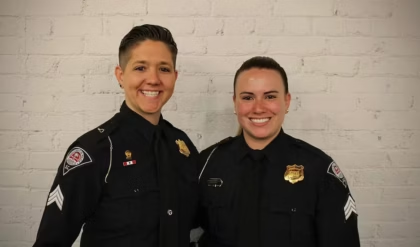
5 LIVES CHANGED IN JUST MINUTES… Ashley Munoz’s story continues moving people across Greenville as support pours in for Diana Munoz… and now, what visitors are saying about a handwritten message left at the memorial is making others stop and read it twice
Five lives were changed — and ended — in just minutes on Highway 101 near the Bellview Road extension in Spartanburg County, South Carolina. The head-on collision at 12:45 a.m. on May 15, 2026, not only claimed the life of…
THAT’S THE PART I CAN’T STOP THINKING ABOUT…🚨 11 years of service came to a devastating end for Ashley Munoz after the Highway 101 tr@g3dy… and now, a former student is sharing a memory that begins with 3 unexpected words
THAT’S THE PART I CAN’T STOP THINKING ABOUT…🚨 11 Years of Service Came to a Devastating End for Ashley Munoz After the Highway 101 Tragedy… and Now, a Former Student Is Sharing a Memory That Begins With 3 Unexpected Words…
HEARTBREAKING: 2 SERGEANTS. 1 FAMILY. 1 NIGHT THAT NO ONE CAN FORGET 💔 Ashley Munoz never made it home while Diana Munoz continues fighting to recover… and now, what a close friend remembered about the last photo they took together is leaving people emotional
HEARTBREAKING: 2 SERGEANTS. 1 FAMILY. 1 NIGHT THAT NO ONE CAN FORGET 💔 Ashley Munoz Never Made It Home While Diana Munoz Continues Fighting to Recover… and Now, What a Close Friend Remembered About the Last Photo They Took Together…
“WAIT… WHAT DID SHE SAY BEFORE THEY LEFT?” 😳 12:45 A.M. changed everything for Ashley Munoz, Diana Munoz, and multiple families after the devastating South Carolina cr@sh… and now, one coworker keeps replaying a 7-word comment Ashley made during their last conversation together
“WAIT… WHAT DID SHE SAY BEFORE THEY LEFT?” 😳 12:45 A.M. Changed Everything for Ashley Munoz, Diana Munoz, and Multiple Families After the Devastating South Carolina Crash… and Now, One Coworker Keeps Replaying a 7-Word Comment Ashley Made During Their…

3 WARNING SIGNS WERE MISSED: A doctor says Kyle Busch’s reported health scare may have been preventable — and one symptom allegedly appeared days earlier👇
Doctor Says Kyle Busch’s Health Warning Signs Were Overlooked: ‘This Shouldn’t Have Happened’ A prominent sports physician is raising major questions about the timeline leading up to the death of NASCAR legend Kyle Busch — and suggested those closest to him might have…

“ SHE’S LOVING EVERY SECOND OF IT.” 😳 The sister of a victim featured in The Crash is speaking out after Mackenzie Shirilla’s sudden surge in attention — and one comment she made is now fueling even more backlash online 👀 But it’s the specific moment from the documentary that reignited the outrage all over again… 👇
Sister of “The Crash” victim infuriated by Mackenzie Shirilla’s newfound fame: ‘She’s loving every second’ “It’s exactly what she’s always wanted,” says Dominic Russo’s sister Christine of his girlfriend and convicted murderer. ‘The Crash’ documentary subject Mackenzie Shirilla Credit: Netflix…
End of content
No more pages to load