BREAKING NEWS: Body Cameras Captured Officers’ Arrival at Richins Home After 3 a.m. 911 Call, Finding Eric Richins Unconscious in Bed — Investigators Highlight One Detail That Immediately Caught Their Attention
In the ongoing murder trial of Kouri Richins in Summit County, Utah, body camera footage from responding officers has become a pivotal piece of evidence, showing the chaotic early-morning scene on March 4, 2022, when 39-year-old Eric Richins was found unresponsive in the couple’s Kamas home. The video, played for the jury during the trial’s opening days in late February 2026, captures Summit County Sheriff’s deputies entering the residence around 3:30 a.m. after Kouri Richins’ 911 call at approximately 3:21 a.m. Eric lies motionless in bed, pale and cold, as paramedics attempt resuscitation while Kouri, still in pajamas, appears distraught and interacts with officers.
Prosecutors and investigators have pointed to a specific detail in the footage that immediately raised red flags: the significant delay between Kouri reportedly discovering her husband unresponsive and placing the 911 call. Phone records show Kouri first accessed her phone around 3:06 a.m.—about 15 minutes before the emergency call—during which time no call was made despite Eric being cold and not breathing. This gap, combined with her statements in the body cam audio (e.g., “He was fine, we were fine!” and suggestions he might have taken a THC gummy or had an allergy shot earlier), has drawn scrutiny. Prosecutors argue the delay reflects a “guilty conscience” or efforts to stage the scene or clean up, rather than immediate panic.
In the footage, officers enter the bedroom to find Eric at the foot of or in the bed, unresponsive. Kouri is heard sobbing and providing CPR instructions from the dispatcher, but deputies noted inconsistencies in her account versus the physical scene. For instance, she told officers Eric had been “fine” earlier, yet the timeline and lack of alcohol (despite a purported cocktail) or other substances initially pointed to something unnatural. No overt signs of struggle or injection were visible, aligning with the later toxicology finding of oral fentanyl ingestion at five times lethal levels.

The body cam also captures Kouri’s emotional state—hunched over, closed off at times, and repeating phrases like “He’s cold”—as EMTs work on Eric. Family members, including Eric’s sister and brother-in-law, arrived soon after and expressed immediate suspicion, with accounts suggesting the scene felt “off” even before toxicology results. Prosecutors played the full 911 call alongside the body cam, highlighting Kouri’s distress mixed with suggestions of benign causes (THC gummy, allergy shot), which they contrast with the eventual fentanyl revelation.
Additional context from the trial includes crime scene technician testimony about searches in the home, including the kitchen where the alleged spiked Moscow mule was prepared, and digital evidence tying Kouri to fentanyl sourcing via her housekeeper Carmen Lauber. The delay in calling 911 has been framed as part of a broader pattern: alleged prior poisoning attempts, financial motives (debt, forged insurance changes), and an affair with handyman Robert “Josh” Grossman, whose “I love you” texts overlapped with drug procurement.

The defense has challenged interpretations of the footage, questioning witness recollections and arguing no direct evidence shows Kouri administered the drug. They suggest possible alternative explanations for Eric’s death, though no strong proof of his illicit drug use surfaced. As testimony wrapped in mid-March 2026, closing arguments neared, with the jury to decide on charges including first-degree aggravated murder (25 years to life if convicted).
The body camera footage, released publicly via trial coverage, has fueled online discussions about behavioral cues, timeline discrepancies, and the scene’s appearance. While open to interpretation, the noted delay and initial scene details remain central to prosecutors’ claim of premeditation in what began as a seemingly sudden overnight death.
News
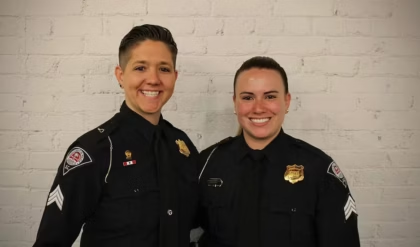
5 LIVES CHANGED IN JUST MINUTES… Ashley Munoz’s story continues moving people across Greenville as support pours in for Diana Munoz… and now, what visitors are saying about a handwritten message left at the memorial is making others stop and read it twice
Five lives were changed — and ended — in just minutes on Highway 101 near the Bellview Road extension in Spartanburg County, South Carolina. The head-on collision at 12:45 a.m. on May 15, 2026, not only claimed the life of…
THAT’S THE PART I CAN’T STOP THINKING ABOUT…🚨 11 years of service came to a devastating end for Ashley Munoz after the Highway 101 tr@g3dy… and now, a former student is sharing a memory that begins with 3 unexpected words
THAT’S THE PART I CAN’T STOP THINKING ABOUT…🚨 11 Years of Service Came to a Devastating End for Ashley Munoz After the Highway 101 Tragedy… and Now, a Former Student Is Sharing a Memory That Begins With 3 Unexpected Words…
HEARTBREAKING: 2 SERGEANTS. 1 FAMILY. 1 NIGHT THAT NO ONE CAN FORGET 💔 Ashley Munoz never made it home while Diana Munoz continues fighting to recover… and now, what a close friend remembered about the last photo they took together is leaving people emotional
HEARTBREAKING: 2 SERGEANTS. 1 FAMILY. 1 NIGHT THAT NO ONE CAN FORGET 💔 Ashley Munoz Never Made It Home While Diana Munoz Continues Fighting to Recover… and Now, What a Close Friend Remembered About the Last Photo They Took Together…
“WAIT… WHAT DID SHE SAY BEFORE THEY LEFT?” 😳 12:45 A.M. changed everything for Ashley Munoz, Diana Munoz, and multiple families after the devastating South Carolina cr@sh… and now, one coworker keeps replaying a 7-word comment Ashley made during their last conversation together
“WAIT… WHAT DID SHE SAY BEFORE THEY LEFT?” 😳 12:45 A.M. Changed Everything for Ashley Munoz, Diana Munoz, and Multiple Families After the Devastating South Carolina Crash… and Now, One Coworker Keeps Replaying a 7-Word Comment Ashley Made During Their…
3 WARNING SIGNS WERE MISSED: A doctor says Kyle Busch’s reported health scare may have been preventable — and one symptom allegedly appeared days earlier👇
Doctor Says Kyle Busch’s Health Warning Signs Were Overlooked: ‘This Shouldn’t Have Happened’ A prominent sports physician is raising major questions about the timeline leading up to the death of NASCAR legend Kyle Busch — and suggested those closest to him might have…

“ SHE’S LOVING EVERY SECOND OF IT.” 😳 The sister of a victim featured in The Crash is speaking out after Mackenzie Shirilla’s sudden surge in attention — and one comment she made is now fueling even more backlash online 👀 But it’s the specific moment from the documentary that reignited the outrage all over again… 👇
Sister of “The Crash” victim infuriated by Mackenzie Shirilla’s newfound fame: ‘She’s loving every second’ “It’s exactly what she’s always wanted,” says Dominic Russo’s sister Christine of his girlfriend and convicted murderer. ‘The Crash’ documentary subject Mackenzie Shirilla Credit: Netflix…
End of content
No more pages to load