MESSAGE SENT HOURS EARLIER — A friend told investigators that Keziah Luker sent a text earlier that evening saying “I’ll explain everything tomorrow.” When detectives examined the phone later, that message was still visible at the top of the thread
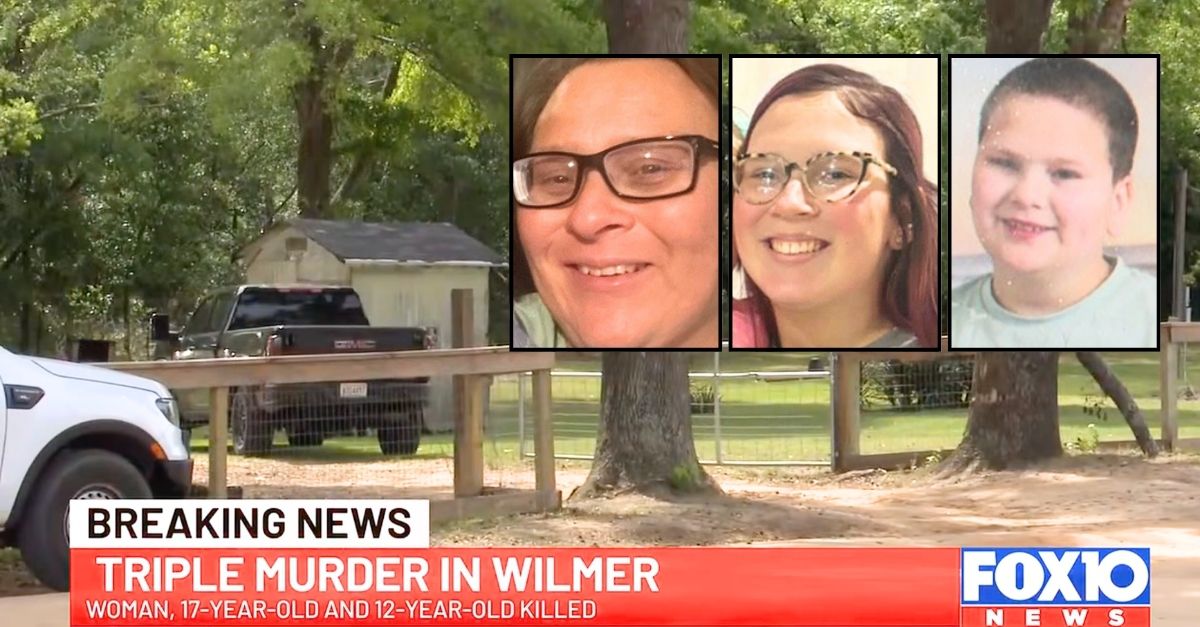
In the rural community of Wilmer, Alabama, the brutal murders of Lisa Gail Fields, her pregnant 17-year-old daughter Keziah Arionna Luker, and 12-year-old Thomas “TJ” Cordelle Jr. have left investigators and residents grappling with a deeply personal and calculated attack. The family was discovered in their home on Auble Moody Road shortly after 2 a.m. on April 20, 2026, with their hands bound behind their backs using zip ties. Lisa was stabbed multiple times with her throat cut, Keziah was shot (killing her and her unborn child), and young TJ suffered a devastating throat wound that nearly decapitated him. Miraculously, Keziah’s 18-month-old toddler was found unharmed amid the horror.
Two pieces of digital evidence have emerged as critical timeline anchors: a debit card transaction using Keziah’s card at 12:41 a.m. at a convenience store 5.8 miles from the home, and a text message Keziah sent hours earlier to a friend saying, “I’ll explain everything tomorrow.” When detectives later examined her phone, that message remained visible at the top of the thread— a poignant, unanswered promise that now carries ominous weight.
A Normal Evening Turns Sinister

Nathan Fields, Lisa’s husband and Keziah’s stepfather, was working when he last communicated with his wife around 6:21 p.m. on April 19. Their conversation was routine. About 20 minutes later, his calls began going straight to voicemail. He sensed immediately that something was wrong. Keziah’s boyfriend, working offshore, grew concerned after noticing unusual movement on the Life360 location-sharing app and inability to reach her. His alarm prompted a welfare check that uncovered the nightmare scene.
Somewhere in those evening hours, before the violence escalated, Keziah sent a text to a friend: “I’ll explain everything tomorrow.” The message was straightforward, suggesting she had something significant on her mind—perhaps a personal matter, family issue, relationship detail, or even a concern she wanted to discuss in person. Detectives learned of the text from the friend and confirmed it on Keziah’s phone, where it still sat prominently at the top of the conversation thread when the device was examined.
This text raises chilling possibilities. Was Keziah planning to reveal information that someone desperately wanted to keep secret? Did it relate to the ransacked state of the home, which suggested the killers were searching for something specific? Or was it simply a teenage girl’s way of postponing a conversation about her pregnancy, school, or daily life? The fact that the message was never followed up—because “tomorrow” never came for Keziah—has become one of the case’s most haunting elements.
The Timeline Tightens: Text, Transaction, and Discovery
Combining the new detail with the previously reported debit card activity creates a narrower and more disturbing timeline:
Evening of April 19: Last known communications from Lisa around 6:21 p.m. Keziah sends the “I’ll explain everything tomorrow” text to her friend at some point during the evening.
12:41 a.m. (April 20): Keziah’s debit card is used at a convenience store 5.8 miles from the family home. Detectives obtained the printed receipt, which captured the transaction time down to the second.
~2:00–2:30 a.m.: Welfare check initiated after concerns from Keziah’s boyfriend and family; the bodies are discovered.
The gap between the evening text and the midnight transaction is several hours. If Keziah sent the message herself, it indicates she was alive and communicating normally well into the evening. The debit card swipe at 12:41 a.m. then becomes pivotal: Did Keziah make a late-night run to the store for pregnant cravings—snacks, a drink, or baby-related items? Or had the attack already begun, with one of the perpetrators using her card shortly after restraining the victims?
The convenience store is in a rural area where late-night customers are infrequent, potentially making the transaction more traceable through clerk recollections, surveillance footage, and vehicle descriptions in the parking lot.
“I’ll Explain Everything Tomorrow”: What Was Keziah Planning to Reveal?
The phrasing of the text is deliberately vague yet loaded with implication. “I’ll explain everything” suggests context that the recipient already partially understood or that Keziah felt needed full clarification. In homicide investigations, such messages often point to:
Personal or relationship matters: Keziah, at 17 and eight months pregnant, may have been navigating complex emotions around her pregnancy, her boyfriend working offshore, or family dynamics.
Potential external conflict: The home was ransacked, and Nathan Fields has publicly stated that the killers “knew us” and had likely been inside the house before. The attack felt targeted rather than random.
Knowledge of a threat: Could Keziah have learned something dangerous—about drugs, money, a dispute, or criminal activity—that she intended to disclose?
Detectives would be examining the full text thread for prior messages that provide context. Phone forensics, including deleted messages, call logs, and app data, are standard in such cases. The fact that the message was still at the top of the thread when her phone was recovered suggests the conversation ended abruptly around the time of the killings.
Digital Evidence in Modern Rural Homicides
This case illustrates how everyday digital traces—texts, debit card swipes, location-sharing apps like Life360—have become indispensable in investigations, even in quiet rural settings like Wilmer, located about 25 miles northwest of Mobile near the Mississippi border.
The debit receipt: Provides an exact timestamp and location, allowing cross-referencing with store CCTV, nearby traffic patterns, and potential suspect vehicles.
The text message: Establishes Keziah’s state of mind and activity level hours before the attack. It also creates a “last known normal communication” benchmark.
Life360 data: Showed Keziah’s phone moving after contact was lost, raising the grim possibility that a perpetrator carried the device away from the scene.
Sheriff Paul Burch has indicated the crime likely involved multiple suspects due to the number of victims, their separation into different rooms, and the binding with zip ties—items that imply premeditation. The combination of knife and gunshot wounds further supports the theory of coordinated action.
Community Grief and the Search for Answers

The Wilmer community remains in shock. Keziah was remembered by her former softball coach as a vibrant young woman with a bright future. Family members have spoken of losing “half our family for nothing,” while funeral services were scheduled for late April. The survival of the 18-month-old toddler has offered a sliver of hope amid profound loss; she is now in the care of relatives.
No arrests have been made as of late April 2026. The Mobile County Sheriff’s Office continues to follow leads, urging anyone with information to come forward. The ransacked home and personal nature of the attack have fueled speculation about motives ranging from robbery to retaliation or an attempt to silence someone.
Unresolved Questions Centered on the Evening Text and Midnight Transaction
Several critical questions persist:
What did Keziah need to “explain”? Full context from the friend and the complete text thread could reveal a motive or person of interest.
Who used the debit card at 12:41 a.m.? Store video, the specific items purchased, and the clerk’s description will be key. If it was Keziah, it places her alive and mobile close to the time of the attack. If not, it points to a killer bold enough to use her card immediately afterward.
How do the text and transaction align with phone movement on Life360? The data could show whether the phone (and possibly the card) left the home before or after the violence.
Was the text related to the killers’ motive? The promise to “explain everything” might have created urgency for someone who did not want the information shared “tomorrow.”
In an era where almost every action leaves a digital footprint, these two clues—the evening text and the midnight debit swipe—form a narrow window into the final hours of three lives. The printed receipt with its second-by-second precision and the undelivered promise in Keziah’s text message now serve as silent witnesses in a case that has devastated a family and a community.
As investigators piece together forensics, witness statements, and additional digital records, the hope is that these seemingly small details will lead to justice for Lisa Gail Fields, Keziah Arionna Luker, Thomas “TJ” Cordelle Jr., and the unborn child who never got the chance to be explained to.
The quiet rural roads of Wilmer may hold the answers, but for now, a young woman’s last text—“I’ll explain everything tomorrow”—hangs unresolved in a murdered family’s phone thread.