Heartbreaking: A relative says Craig Berry mentioned “a place where no one can find me” just days before the incident — a phrase not found in official records, but now being investigated as a possible clue to his hiding place
In the rolling hills and dense woodlands of Stewart County, Tennessee, near the small community of Dover, a family’s private tragedy has unfolded into a sprawling manhunt that has captivated national attention. Craig Berry, a 53-year-old retired U.S. Army Special Forces veteran, remains at large more than five days after authorities say he shot his wife during a domestic altercation in the early morning hours of May 1, 2026. His wife, a respected local teacher, was injured but managed to escape, call for help, and drive herself to safety. As search efforts intensify with assistance from multiple agencies, new insights from those closest to the couple are shedding light on possible clues about Berry’s mindset and whereabouts.
According to a relative who spoke on condition of anonymity due to the sensitivity of the ongoing investigation, Berry made a cryptic remark just days before the shooting. In what friends and family now describe as an offhand yet chilling comment, he allegedly referred to knowing “a place where no one can find me.” The phrase, which has not appeared in any official law enforcement statements or public records released so far, is reportedly now under scrutiny by investigators as they attempt to piece together Berry’s potential plans and knowledge of the local terrain. This revelation adds a layer of heartbreak and intrigue to an already devastating situation for the family involved.
The incident began unfolding around 1:30 a.m. on May 1 when deputies from the Stewart County Sheriff’s Office responded to reports of a shooting at a residence along Old Paris Highway. By the time officers arrived, Berry had fled into the nearby woods. His wife had been shot in the neck after an argument escalated, according to details in the arrest affidavit. Despite her injuries, she demonstrated remarkable resilience by reaching her vehicle and seeking medical attention. She was hospitalized, and while specific updates on her current condition have been limited out of respect for her privacy, sources indicate she is recovering and cooperating with authorities.
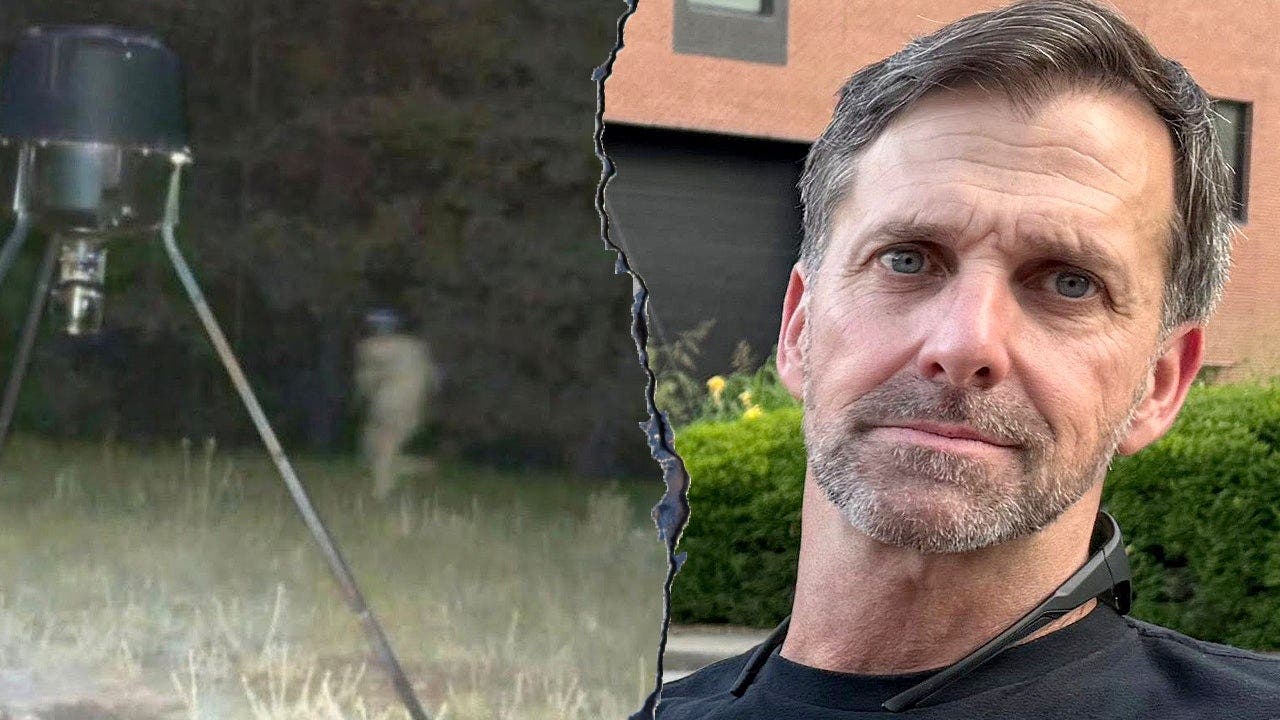
Sheriff Frankie Gray and his team quickly identified Berry as the suspect, issuing a warrant for second-degree attempted murder. Descriptions paint Berry as armed and dangerous, in excellent physical condition, and equipped with survival skills honed through years of elite military training. He is believed to have at least one handgun and extra ammunition. A trail camera image released by authorities shows a figure in camouflage clothing moving through the woods, consistent with Berry’s reported appearance that night.
Berry’s background as a Special Forces veteran is central to why this manhunt has proven so challenging. Trained in evasion tactics, navigation, foraging, and sustained operations in hostile environments, he possesses capabilities that go far beyond those of an average fugitive. Authorities have noted his proficiency as a swimmer and diver, skills that could allow him to cross rivers or lakes in the region without leaving an obvious trail. The Stewart County area, with its thick forests, waterways, and rugged terrain near the Kentucky border, provides ample cover for someone familiar with the land.
The relative’s account of the “place where no one can find me” comment has prompted investigators to re-examine Berry’s known associations, past statements, and any potential caches or hideouts he might have prepared. While law enforcement has not publicly confirmed pursuing this specific lead, sources close to the case suggest it aligns with broader efforts to understand whether Berry had contemplated evasion long before the shooting. In survival-trained individuals, such phrases can sometimes hint at pre-planned locations—perhaps remote cabins, caves, or heavily wooded sections known only to the person involved.
This latest detail comes amid a series of emerging accounts from those who knew the couple. The family has been described as outwardly ordinary, with Berry’s wife dedicated to her role as an educator in the local school system. Colleagues and neighbors express shock at the violence that erupted in their home, noting that while tensions may have existed, nothing prepared them for such an outcome. Domestic incidents involving firearms remain tragically common, yet the involvement of a highly trained veteran adds unique complexities, both in terms of immediate danger and long-term search efforts.
As the manhunt continues, multi-agency teams including the Tennessee Highway Patrol, Tennessee Bureau of Investigation, Homeland Security, and now the U.S. Marshals Service are coordinating ground searches, aerial surveillance, and community outreach. Searches have focused on areas from Gray’s Landing to Highway 232 and River Trace Road, with K-9 units deployed early on. Weather conditions, including periods of rain, have complicated tracking, but officials remain committed to a methodical approach rather than risking unnecessary danger to searchers or residents.
Residents in the affected rural communities have been urged to lock their doors, remain vigilant, and report any suspicious activity immediately without approaching potential sightings. Berry is not believed to have a functioning cellphone or other electronic devices that could be tracked, a factor that further plays into his survivalist profile. Public appeals for trail camera footage and tips have yielded some leads, though none have led to his capture as of May 6.
The psychological toll on the family cannot be overstated. For the wife, recovering from physical wounds while grappling with the emotional trauma of betrayal by a spouse with whom she shared a life and home, the path forward will be long. Relatives speaking privately describe a mix of fear for her safety, grief over the shattered marriage, and concern for Berry himself—hoping he might surrender before further harm occurs. The mention of a hidden “place” has only deepened the family’s anguish, raising questions about how long he might have been mentally preparing for such an escape.
Experts in fugitive behavior note that individuals with military special operations backgrounds often excel at blending into natural environments. They can construct shelters, purify water, procure food, and minimize their footprint in ways that frustrate conventional search methods. In Berry’s case, his deep familiarity with Stewart County—its hills, creeks, and secluded spots—could allow him to remain undetected for an extended period if he chooses isolation over movement. The phrase reported by the relative may point investigators toward specific geographic features or even sites from Berry’s past training exercises or personal explorations.
Law enforcement officials have emphasized that while Berry’s skills are formidable, he is not invincible. Cumulative fatigue, the need for supplies, or attempts to contact known associates could eventually create openings. The U.S. Marshals’ involvement brings additional expertise in tracking and apprehension, often shifting focus to potential support networks or movement patterns outside the immediate search zone. Sheriff Gray has indicated that searches will continue intensively throughout the week, balancing thoroughness with officer safety.
This case has also sparked broader conversations about veteran transitions, mental health support, and domestic violence prevention. While no specific details about Berry’s post-military life or any potential untreated issues have been publicly disclosed, the stresses of reintegration into civilian routines after high-intensity service are well-documented. Advocacy groups stress the importance of accessible resources for veterans and their families, particularly in rural areas where isolation can exacerbate problems. Berry’s wife’s role in the community adds another dimension, as students, fellow teachers, and parents process the news and its impact on the school environment.
Neighbors along Old Paris Highway and surrounding roads describe a normally peaceful area now marked by heightened caution. Some recall Berry as a reserved man who maintained a strong military bearing, while others note the couple’s participation in local activities. The sudden eruption of violence serves as a sobering reminder that personal crises can escalate rapidly, especially with firearms present. Authorities continue to treat the situation as active and dangerous, advising against speculation that could interfere with the investigation.
As days turn into what could become weeks, the “place where no one can find me” comment lingers as a poignant and potentially pivotal element. Investigators are cross-referencing it with known properties, historical maps of the region, and any digital or physical evidence from the Berry residence. Forensic review of the scene, combined with witness statements and the wife’s account, will help construct a fuller timeline. The absence of this phrase from initial records is not unusual in fast-moving cases; family members often provide context in subsequent days as shock subsides and they reflect on prior conversations.
The terrain in northwestern Tennessee presents a formidable challenge. Dense tree cover, seasonal foliage, and natural water sources create ideal conditions for evasion. Moderate May temperatures offer some relief, but nights can still drop, and insects or wildlife add layers of difficulty. For a trained operator, however, these elements represent opportunities rather than obstacles. Berry’s reported camouflage attire and lack of electronic signature align perfectly with protocols for avoiding detection.
Public interest in the manhunt reflects a mix of concern for community safety and fascination with the tactical aspects. Similar cases involving survival-skilled fugitives have sometimes lasted weeks or months, resolved ultimately through persistent intelligence gathering rather than dramatic confrontation. Officials here appear committed to that patient strategy, leveraging technology and inter-agency resources while keeping residents informed through regular updates.
For the Berry family, the coming days hold uncertainty and pain. The relative who shared the comment did so, according to accounts, in hopes it might aid in a safe resolution—bringing Berry into custody without further violence and allowing healing to begin. The wife’s bravery in escaping and seeking help has been highlighted by those close to her as a testament to her strength amid unimaginable circumstances.
As the search presses on, Stewart County remains on alert. The woods that once offered tranquility now harbor an unknown presence, and the phrase “a place where no one can find me” echoes as both a clue and a heartbreaking indicator of fractured lives. Law enforcement urges anyone with information, regardless of how minor it seems, to contact authorities immediately. In time, the full story of that fateful night and the days leading up to it will emerge, but for now, the focus is on resolution, recovery, and safety for all involved.
The integration of family insights like this reported remark underscores how investigations evolve beyond initial police reports. What begins as a domestic call can reveal deeper layers of planning, emotion, and preparation. Whether the “place” refers to a literal location, a metaphorical state of mind, or a combination remains to be determined. Until Berry is located, the community holds its collective breath, hoping for peaceful closure in the Tennessee backcountry that has become the stage for this intense drama.