They were at a depth of 164 feet (approximately 42 meters) when a number suddenly changed 🚨🌊 Five Italian tourists never returned in the Maldives diving tragedy involving Monica Montefalcone and Giorgia Sommacal 💔 Investigators are now reportedly focusing on the last depth reading recorded on a dive computer found before the data suddenly stopped updating… 👇
The deep blue waters of the Maldives are known worldwide as a paradise for marine enthusiasts, drawing thousands of travelers eager to explore its vibrant coral reefs and unique ecosystems. Beneath the serene turquoise surface, however, lies an environment that demands absolute precision and holds no room for error. A tragic underwater expedition recently turned this tropical haven into the scene of the worst single diving accident in the history of the archipelago. Five Italian nationals lost their lives during what was intended to be an exploration of a deep underwater cave system, sending shockwaves through both the international diving community and the academic world in Italy.
The tragedy unfolded in the Devana Kandu channel near Alimathaa island, situated in the northeastern section of the Vaavu Atoll. The group of divers had set off from a luxury liveaboard vessel named the Duke of York, which was carrying more than twenty other Italian tourists on an ocean expedition. While the majority of the passengers remained safely on board, a specialized group of five stepped off the deck into the open ocean for a deep descent. They entered the water during the morning hours, but anxiety began to mount when the team failed to resurface by midday as scheduled, prompting an emergency call to local authorities.
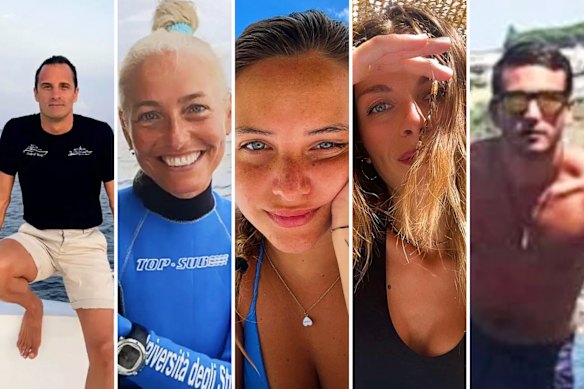
Among the victims was Monica Montefalcone, a highly respected fifty-one-year-old associate professor of ecology at the University of Genoa. She was celebrated internationally as a leading expert on Mediterranean coastal ecosystems, seagrass meadows, and coral health. Her twenty-three-year-old daughter, Giorgia Sommacal, a dedicated biomedical engineering student at the same university, was diving by her side. The tightly knit team also included thirty-one-year-old research fellow Muriel Oddenino and thirty-one-year-old marine biology graduate Federico Gualtieri, who had recently completed his academic thesis focusing on central Maldivian coral reefs.
The fifth member of the ill-fated group was Gianluca Benedetti, an experienced diving instructor and boat operations manager for the tour operator handling the excursion. His presence on the dive offered reassurance to the team, as he possessed extensive knowledge of the local waters and professional training in underwater navigation. The presence of such highly qualified individuals, including a seasoned academic field scientist and a professional instructor, makes the sudden and catastrophic outcome of the dive even more perplexing to investigators trying to reconstruct the timeline.
Initial reports from the Italian Foreign Ministry indicated that the group was attempting to explore a notoriously deep and complex cave system located far below the limits of standard recreational diving. The mouth of the underwater cave rests at a depth of approximately fifty meters, which translates to roughly one hundred and sixty-four feet. In the Maldives, local maritime regulations strictly cap recreational diving activities at thirty meters to ensure visitor safety. Descending beyond forty meters transitions into the realm of technical diving, requiring specialized gas mixtures, redundant equipment configurations, and advanced training in decompression protocols.
The specific geological formation the group targeted is characterized by a series of three massive underground chambers connected to one another by exceptionally narrow, restrictive passages. Local authorities and presidential spokespersons noted that the cave system is so deep and structurally hazardous that even the most well-equipped local divers generally avoid approaching its inner recesses. The subterranean structure can extend horizontally and vertically into darkness, creating a labyrinthine environment where natural light disappears completely and visibility relies entirely on artificial dive lights.
As the search and recovery teams began their hazardous work, they immediately confronted extremely hostile environmental conditions. A yellow weather warning had been issued for the Vaavu Atoll on the day of the incident, bringing rough seas, powerful winds, and intense, unpredictable underwater currents to the channel. These strong currents can quickly exhaust even the most physically fit divers, drastically accelerating their air consumption rates. Furthermore, the turbulent surface conditions made launching and coordinating search boats and aerial surveillance assets exceptionally difficult for the Maldives National Defense Force.
The first breakthrough in the grim search occurred when rescue divers located the body of Gianluca Benedetti inside the cave system. Reports regarding the exact location of his recovery varied slightly, with some officials stating he was positioned near the cave entrance, while specialized recovery logs indicated he was found within the second internal chamber. Most notably, initial examinations of his equipment revealed that his scuba tank was completely empty of breathing gas. The remaining four divers were believed to be trapped deeper within the unexplored third chamber of the complex.
The extreme danger of the recovery mission was underscored by a secondary tragedy that claimed the life of a local rescuer. Sergeant-Major Mohamed Mahudhee, a highly trained military diver with the Maldivian national defense force, suffered severe decompression sickness while working at the extreme depths required to search the cave rooms. Despite being rushed to a hospital in the capital city of Male, the soldier succumbed to the illness, illustrating the lethal stakes of operating in the deep, pressurized environment of the Vaavu Atoll.
In response to the unprecedented scale of the accident, the Maldives Ministry of Tourism immediately suspended the operating license of the Duke of York liveaboard vessel indefinitely. This regulatory action was taken as a precautionary measure while multiple parallel investigations were launched by both Maldivian police forces and the Italian judiciary. To assist the local coast guard, deep-sea rescue experts and cave diving specialists were flown in from Italy to help navigate the deep chambers safely and repatriate the remaining victims.
As investigators secure the recovered equipment, substantial attention is being directed toward the data stored within the digital dive computers worn by the victims. These wrist-worn devices automatically log critical information throughout a dive, including real-time depth variations, water temperature, elapsed time, and calculated decompression obligations. In the final moments of the dive, the recorded data shows the team had reached a depth of one hundred and sixty-four feet, or fifty meters, when the variables suddenly stopped updating normally.
The sudden freezing or termination of dive computer data points to a rapid, catastrophic event that simultaneously compromised the group or prevented them from executing a controlled ascent. Investigators are exploring several theories to explain why a team of disciplined, experienced individuals would experience such a synchronized failure. One prominent theory under consideration by experts and mentioned by local dive masters is the sudden onset of oxygen toxicity or profound nitrogen narcosis.
Breathing standard atmospheric air at a depth of fifty meters causes the partial pressure of oxygen to rise to dangerous levels, which can trigger central nervous system oxygen toxicity without warning. This physiological condition can induce sudden, violent epileptic-like seizures underwater, leading to immediate drowning if the regulator falls from a diver’s mouth. Simultaneously, nitrogen narcosis acts as an anesthetic at great depths, severely impairing judgement, slowing reaction times, and causing intense disorientation or false sensations of well-being that can lead divers to make fatal navigational errors.
Another critical factor being evaluated is the physical environment inside the deep cave chambers. Underwater caves often accumulate thick layers of fine, powdery silt and sediment on their floors and ceilings over centuries. If a diver accidentally kicks the silt with their fins or disturbs the ceiling with their exhaust bubbles, the sediment can instantly suspend in the water column, causing a total blackout of visibility. In a matter of seconds, powerful dive lights become completely useless against a wall of mud, making it impossible to locate the narrow exit passages leading back to the open ocean.
When a diving team becomes disoriented in a silt-out inside a deep cave, panic can set in rapidly, causing heart rates to spike and breathing gas consumption to quadruple. Faced with a finite supply of air and unable to find the exit, a group can quickly deplete their remaining gas reserves while working against the onset of nitrogen narcosis. The empty tank found on the first recovered body strongly supports a scenario where the divers spent their final, desperate minutes searching for an escape route until their life-support gases were completely exhausted.
Back in Italy, the academic and environmental communities are mourning the immense loss of scientific talent and passion. Carlo Sommacal, the husband of Monica Montefalcone and father of Giorgia, publicly defended his wife’s legacy, stating firmly that she was an incredibly disciplined, safety-conscious scientist who never engaged in reckless behavior underwater. He recalled how she had survived the devastating Indian Ocean tsunami while diving off the coast of Kenya in two thousand and four, proving her resilience and capability in extreme maritime scenarios.

The University of Genoa and organizations like Greenpeace Italia issued moving tributes to Montefalcone, remembering her not just as a meticulous academic, but as a vibrant communicator who dedicated her life to protecting marine ecosystems. Her work in restoring seagrass meadows and documenting the impacts of climate change on tropical biodiversity was vital to international conservation efforts. The tragic reality that her life ended in the very environment she spent decades studying and protecting has left a profound void among her colleagues, students, and family members.
The investigation into the Maldives diving tragedy remains active as technical specialists continue to download and analyze the microchip telemetry from the recovered dive computers. By matching the final depth readings with equipment pressure logs and environmental data, authorities hope to definitively answer what transpired at one hundred and sixty-four feet below the surface. Until those answers are clear, the diving world stands reminded of the unforgiving nature of the deep ocean, where a single altered variable can instantly change the course of human lives.