Something Must Have Happened”: Husband’s Defiant Stand Challenges ‘Recklessness’ Narrative in Maldives Cave Tragedy
Something Must Have Happened”: Husband’s Defiant Stand Challenges ‘Recklessness’ Narrative in Maldives Cave Tragedy
The international diving community remains gripped by the Maldives cave disaster as new voices challenge the emerging official emphasis on rule-breaking and poor planning. While Maldivian authorities highlight the group’s exceedance of the 30-meter recreational limit and lack of explicit cave diving approval, Carlo Sommacal—the husband of lead researcher Professor Monica Montefalcone and father of victim Giorgia Sommacal—has broken his silence with an emotional, forceful defense that is resonating deeply online.
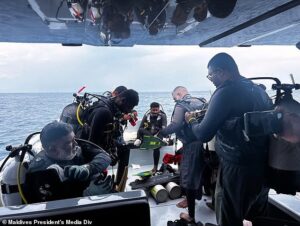
Sommacal rejects any portrayal of the experienced team as reckless thrill-seekers who simply panicked in the dark. Instead, he insists that with his wife’s thousands of dives, meticulous preparation, and state-of-the-art gear, a sudden, unforeseen event must explain why five skilled divers were found deep in the third chamber. His statements have fueled intense online debate, with many questioning whether local oversight, equipment issues, or environmental factors played a larger role than currently acknowledged.
Carlo Sommacal’s Bombshell Defense
In interviews with Italian media including La Repubblica and television outlets, Sommacal delivered a clear message: his wife was not the type to endanger lives.
“My only certainty is that my wife is among the best divers on the face of the earth,” he stated. “She’s never been a reckless person. She would never have put the life of our daughter or any other young people at risk… Something must have happened down there.”
He speculated on possible scenarios: “Maybe one of them had trouble, maybe the oxygen tanks, I have no idea.” Sommacal emphasized Monica’s disciplined approach, noting she had been diving since age 16, survived a major tsunami while diving in 2004, and always prioritized safety.
This defense directly counters suggestions that the group’s deep penetration into the Devana Kandu (“Shark Cave”) system—entrance at ~50-55 meters, bodies in the pitch-black third chamber at up to ~60 meters—was due to simple disorientation or panic. With Montefalcone’s expertise, instructor Gianluca Benedetti’s local knowledge, and the team’s collective experience, Sommacal argues the simultaneous trapping of the group points to a more complex incident.
The Chilling Context: No Simple Panic
Diving experts note that in overhead cave environments at these depths, multiple failures can cascade rapidly. Nitrogen narcosis (“the martini effect”) can impair judgment, silt-outs can cause total loss of visibility, equipment problems (regulators, gas mixes, or tanks) can escalate quickly, and strong currents in atoll channels add unpredictability. A single issue affecting one diver could draw the team deeper while attempting rescue or navigation.
No public voice recording or five-word log from the dive has surfaced in official reports. However, Montefalcone’s final written message to a colleague, sent hours before the dive, has taken on added weight: “It is fundamental to observe the underwater environment — which remains far too unknown to the general public — whether with our own eyes or through the lens of a robot.” This reflects a scientist’s passion, not recklessness.
The group’s bodies were recovered from the deepest, farthest section after days of challenging operations involving Finnish cave specialists. One Maldivian military diver died from decompression sickness during recovery, underscoring the site’s extreme hazards even for professionals.
Permit, Depth, and Accountability Questions
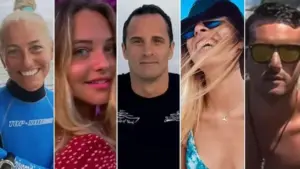
Maldivian officials maintain the permit was for soft coral research, not deep cave penetration, and stress the 30-meter recreational limit. The MV Duke of York’s license was suspended. Investigations continue into gas mixes, equipment, dive computers, and whether planned depths were disclosed.
Sommacal’s statements amplify calls for transparency: Was the boat properly equipped and permitted for technical diving? Were gas fills analyzed? Could environmental factors or supplied equipment have contributed? Italian and Maldivian authorities are cooperating, with forensic analysis ongoing. Montefalcone’s GoPro or recorded data, if recoverable and usable, could prove pivotal.
Online Reaction and Community Shock
Social media and diving forums are “exploding” with discussion. Many praise Sommacal’s raw defense of his family’s legacy while others urge waiting for the full report. The tragedy has sparked broader debate on regulating scientific/technical diving in tourism-dependent nations like the Maldives—balancing research freedom with safety in sensitive marine protected areas.
Supporters of the victims highlight Montefalcone’s contributions to seagrass and coral science amid climate change. Critics of the dive question venturing so deep in a cave with a young family member present, regardless of experience.
A Family’s Grief and Call for Truth
Carlo Sommacal lost both his wife and daughter in a single afternoon. His public statements reflect profound loss mixed with determination for answers. He has expressed willingness to “swear anything about Monica’s behavior,” maintaining she would have aborted the dive at any sign of serious risk.
As bodies are repatriated and the joint investigation proceeds, the focus remains on facts over speculation. Possible contributing factors include depth/gas management, cave-specific challenges, team dynamics, or an unforeseen emergency—rather than blanket “panic” or rule-breaking.
The Devana Kandu system, with its narrow passages, silt floors, and blackout inner chambers, demands absolute respect. Even world-class divers can encounter situations where protocols are tested to breaking point.
Monica Montefalcone dedicated her career to illuminating the “far too unknown” underwater world. Her husband’s defense ensures her legacy is not reduced to a narrative of recklessness. Whatever the official findings ultimately reveal, this tragedy underscores the ocean’s unforgiving nature and the critical need for clear communication, rigorous permitting, and humility in extreme environments.
The internet’s intense focus on Sommacal’s words reflects a universal desire for truth in the face of unimaginable loss. As more details emerge from dive logs, equipment analysis, and witness accounts, the full story of what unfolded in that final chamber may finally surface.