The evolution of a missing person investigation often hinges on the discovery of anomalies, those small, jarring fractures in a person’s established habits that signal something has gone profoundly wrong. As the search for James “Weston” Higginbotham entered its second critical day, just such an anomaly came to light, shifting the focus of both his frantic family and the lead detectives onto a deeply personal artifact left behind in his living quarters. Relatives revealed that investigators had begun intensely inquiring about a specific notebook discovered inside Weston’s hotel room, a finding that immediately raised alarm bells for those who knew him best. According to his family, this notebook was not merely a casual possession left on a desk, but an item that Weston was believed to always carry with him, making its presence in the vacant room a troubling departure from his daily routine.
In the high-stakes environment of a disappearance, the second day is a pivotal window where the initial shock begins to harden into a structured forensic operation, and every object in the missing person’s immediate environment is re-evaluated for its psychological and logistical significance. For Weston’s family, the revelation about the notebook introduced a distressing paradox that disrupted their understanding of his final known hours. The fact that an object deeply tied to his personal identity and daily routine was abandoned in a temporary residence suggests either a rushed departure, a sudden change in mindset, or an interruption by forces beyond his control. This discovery forced detectives to pivot, moving beyond the external physical search of roads and wilderness to conduct a meticulous behavioral analysis based on what Weston chose to leave behind.
To understand why a simple notebook can become the focal point of a major police investigation, one must consider the role such items play in anchoring an individual’s thoughts, plans, and secrets. Unlike digital devices, which are often protected by encryption and cloud security, a physical notebook offers an unfiltered, analog window into a person’s mind, containing everything from mundane to-do lists and business notes to deeply private reflections or future itineraries. If Weston truly viewed this notebook as an essential extension of himself, always keeping it within arm’s reach, his decision to leave it behind on the very night he vanished speaks volumes to criminal profilers. It raises the urgent question of whether he intended to return to that hotel room shortly, or if he was forced to abandon his belongings in a moment of duress that prevented him from gathering his most cherished essentials.
The physical state of the hotel room itself on that second day became a canvas for investigators trying to reconstruct Weston’s final moments of occupancy. Detectives routinely look for signs of a struggle, evidence of hasty packing, or indications that a room was staged to look a certain way, and the placement of the notebook within that space offers vital context. If the notebook was found open on a table alongside a half-empty cup of coffee or a charging phone, it would strongly imply that Weston’s departure was sudden and unexpected, perhaps prompted by an urgent phone call or an uninvited visitor. Conversely, if it was tucked away in a drawer or packed neatly into baggage that was subsequently left behind, it might suggest a more calculated, albeit mysterious, decision to detach from his usual habits before stepping out into the night.
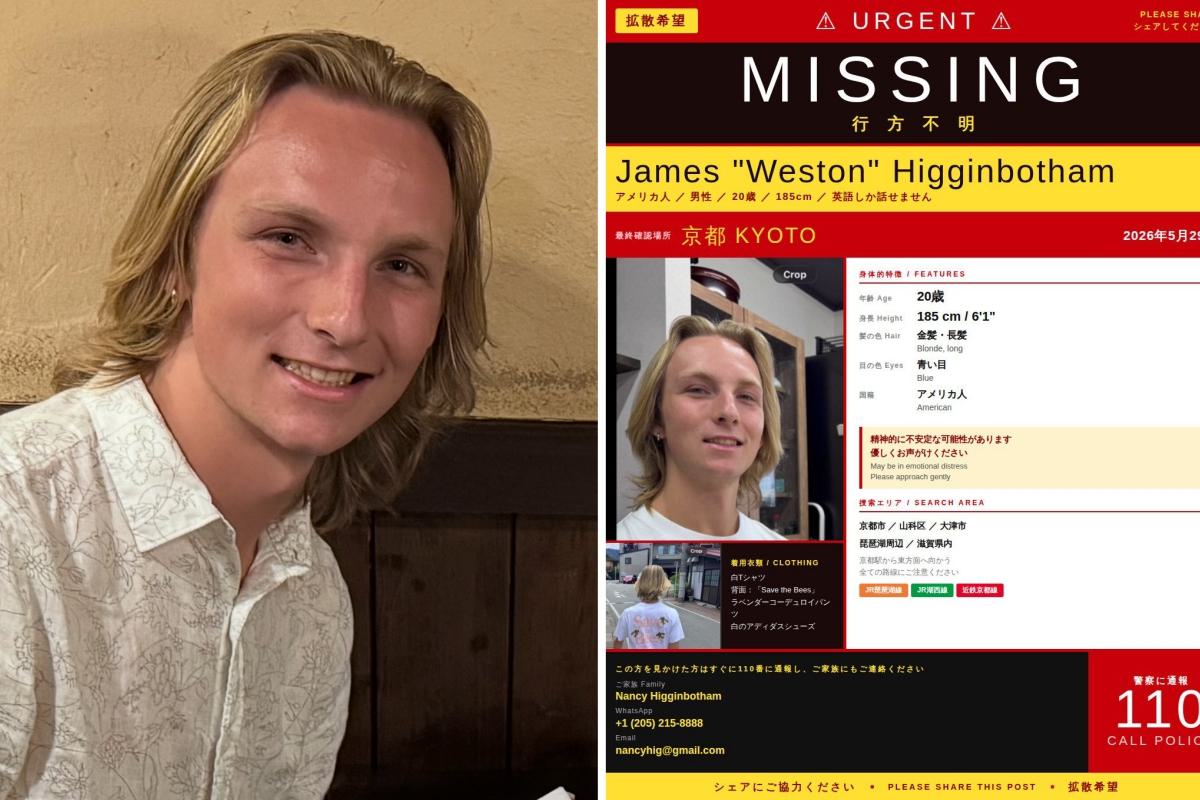
For the Higginbotham family, dealing with the implications of the abandoned notebook has added a layer of psychological torment to an already unbearable situation. Family members are forced to act as historical guides for law enforcement, digging through their memories to confirm just how consistent Weston was with this specific habit and what the notebook’s contents typically detailed. They are left to agonizingly debate whether the item holds the answers to his whereabouts, such as a hidden address, a name of someone he planned to meet, or a confession of personal struggles that he kept hidden from the world. This process of re-examining a loved one’s habits under the harsh lens of a missing person case often breeds a painful sense of second-guessing, as relatives wonder if they missed subtle cries for help or warnings signs in the days leading up to the disappearance.
From a forensic standpoint, the notebook is much more than a source of written text; it is a repository of physical evidence that requires delicate handling by crime scene technicians. Investigators must analyze the notebook for latent fingerprints, DNA transfers, and even indented writing, a technique where the impressions left on subsequent pages by a heavy-handed pen can reveal messages that were torn out or written elsewhere. If the handwriting in the final entries appears erratic, hurried, or distinct from Weston’s usual script, it could indicate a state of extreme panic or even the involvement of a second party. Every line, doodle, and date within those pages is currently being cross-referenced with Weston’s digital footprint, financial transactions, and phone logs to see if the timeline written in the notebook aligns with the reality established by modern technology.

As the second day of the search waned, the mystery of the notebook underscored the vast differences between what a person intends to do and what actually transpires in the final moments before a disappearance. In many missing person cases, the items left behind are far more telling than the items taken, serving as silent witnesses to a disrupted life and providing clues that the missing individual never intended for anyone else to see. The Higginbotham family remains locked in a state of anxious anticipation, hoping that the detectives’ intense focus on this highly personal object will yield a breakthrough, a name, or a destination that can guide search parties in the right direction. For now, the notebook remains in police custody, a heavy and silent symbol of a man who vanished into the night, leaving his thoughts behind on a hotel desk while his physical whereabouts remain a heartbreaking blank page.
News
“He asked me a strange question…” A friend of James “Weston” Higginbotham reportedly shared parts of their final HEALTH conversation with investigators, who are now trying to determine if it took place less than 30 minutes before the Auburn student disappeared
The complex architecture of a missing person investigation often relies on the final conversations a person had before stepping into the void, as these interactions provide a window into their psychological state and immediate intentions. In the ongoing search for…
🚨 5 DAYS LATER… STILL NO RECEIPT FOUND. Family members say detectives are trying to check everything James “Weston” Higginbotham took with him that night, including a small receipt from a drugstore that might help trace his last known movements
The passage of time can be both a cruel torment and a silent adversary in a missing person investigation, a reality that the family of James “Weston” Higginbotham has come to understand all too well over the last five days….

THEY DIDN’T REALIZE IT UNTIL THEN…: Following the latest update on Xavier Taylor’s health, his father revealed that his son had always wished to do one thing, but it was all stopped by a heartbreaking two-word announcement from the doctor starting with “D”
In the hushed corridors of Cooper University Hospital in Camden, New Jersey, where machines beep steadily and families hold their breath between updates, the Taylor family continues their vigil for 12-year-old Xavier Taylor. The vibrant Maple Shade youth baseball player,…
A miracle can’t end like this… can it?: Doctors have shared the heartbreaking news about Xavier Taylor, but his father admits there’s a photo taken exactly 27 seconds before the baseball hit him that no one in the family can erase
A miracle can’t end like this… can it?: Doctors have shared the heartbreaking news about Xavier Taylor, but his father admits there’s a photo taken exactly 27 seconds before the baseball hit him that no one in the family can…

EMILY IN PARIS SEASON 6 RELEASE DATE BUZZ IS HEATING UP 😳💔 — With the final chapter officially on the way, fans are already looking for the first trailer and counting down until Lily Collins returns for one last adventure
‘Emily in Paris’ Will End With Season 6: See First Photo as Production Begins Giulia Parmigiani/Netflix It’s official: Emily in Paris will be back for another season! Netflix announced on January 5, that the show will return for Season 6, and later…

THE NEXT CHAPTER OF THE DUTTON FAMILY MAY BE CLOSER THAN FANS THINK 😳🤠🔥 — A new update has viewers convinced the story isn’t over yet, with Beth and Rip once again at the center of everything. After all the chaos they survived, fans believe the next chapter could be even bigger than Yellowstone itself
Roush Review: Rip and Beth Take on Texas in ‘Dutton Ranch’ Review Emerson Miller / Paramount+ Of all wildcats in the modern Wild West, Beth Dutton (the fierce Kelly Reilly) should know better than to tempt fate. “We’re free now, baby,”…
End of content
No more pages to load