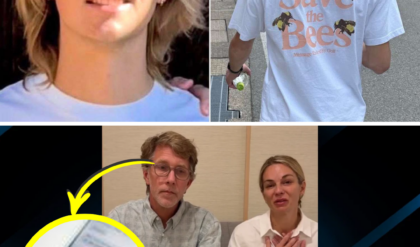
The latest revelations from the investigative report into the death of 20-year-old James “Weston” Higginbotham have left his family in stunned silence and deepened the profound grief surrounding his disappearance in the mountains outside Kyoto, Japan. What was supposed to be a joyful family vacation celebrating his younger brother’s high school graduation became a nightmare when the Auburn University biosystems engineering student from Hoover, Alabama, wandered off alone on May 29, 2026, into the forested trails near Yamashina. Volunteer rescuers found his body on June 6 in a remote, steep area, and as more sections of the report have been reviewed, Nancy Higginbotham, Weston’s mother, has shared a heartbreaking account of one particular passage that stopped everyone cold. “We read it three times because we thought it was definitely a mistake,” she said, describing how the room fell into complete silence upon encountering the details. The section, according to those familiar with the document, touched on elements far beyond a simple accident, revealing that Weston’s final actions were not merely about leaving his belongings behind but appeared connected to fulfilling a deeply personal wish that no one in the family had fully anticipated.
Weston Higginbotham was remembered as a thoughtful, environmentally passionate young man whose life revolved around sustainability, nature, and quiet determination. His studies at Auburn focused on biosystems engineering, where he championed biodiversity and critiqued technologies with heavy ecological footprints. This philosophy was evident during the family trip when he expressed discomfort with his mother’s use of AI tools like ChatGPT for planning, leading him to seek solitude in the ancient forests he loved. CCTV footage captured him heading toward the Yamashina trails as evening approached, his phone signal vanishing soon after amid heavy typhoon rains. The search that followed was arduous, with Japanese authorities, volunteers, and the family battling treacherous conditions until his remains were located. Yet the accumulating details have transformed what seemed like a tragic misadventure into a more enigmatic story.
From the outset, puzzling elements emerged. Weston never went hiking without his small pocket flashlight, a reliable item investigators specifically asked friends about because it was missing from his recovered belongings. His body was found in pitiful condition, with scratches that looked as if a fight had just taken place, evoking images of desperate struggle against the storm-lashed terrain. A rescue worker’s observation from the scene remains misunderstood and has become one of the big unanswered questions. The phone, recovered separately, offered potential insights into his final hours, while a private conversation days earlier left a friend regretting, “I wish I had asked him what he meant.” A last letter provided personal reflections, and medical records contained an unexpected short note about mental illness that raised more questions than answers, alongside testimony that friends said “doesn’t sound like Weston at all.” The partial report featured a handwritten note on the first page that captivated the family and a line on page two that drew intense attention. An indictment document prompted a family member’s viral response: “Even on the worst day, he wouldn’t have done that.”
The latest section reviewed by the family has now eclipsed these earlier shocks. Nancy Higginbotham’s description of the room falling silent captures the emotional impact of reading something so unexpected. Sources indicate the passage detailed aspects of Weston’s mindset and preparations that suggested he was intentionally moving toward fulfilling a long-held personal wish, one that went beyond simply disconnecting or leaving items behind. It was not framed as a straightforward departure or accident but pointed to a deliberate, almost ritualistic element in his final journey—an aspiration tied to his love of nature, perhaps a symbolic act of immersion or closure that aligned with his environmental principles yet stunned those who knew him best. The family read and reread the words, hoping for a misinterpretation, but the clarity of the report left them grappling with a version of events that challenged their understanding of his character and intentions.
This revelation ties together many threads while introducing new complexities. The missing flashlight, once seen as an anomaly, may now relate to his preparation for this wish, perhaps intentionally set aside or lost during a moment of profound reflection. The scratches suggestive of struggle could reflect not only physical peril from the typhoon but an internal or symbolic battle as he pursued fulfillment in the wilderness. The last letter, the private conversation, and the medical notes on mental health gain deeper context, potentially illuminating a young man wrestling with purpose, sustainability, and personal aspirations amid family dynamics and academic pressures. Investigators continue cross-referencing these with the phone data, the rescue worker’s misunderstood detail, and the report’s annotations to reconstruct a coherent timeline, emphasizing that no foul play is suspected and treating the case as a complex misadventure shaped by both external conditions and inner drives.
Weston’s life at Auburn and in Alabama communities was marked by quiet intensity and advocacy. Friends recalled his late-night discussions on ecology, his “Save the Bees” commitment, and his preference for authentic trails over digital shortcuts. The disagreement over AI was consistent with his values, making his solo hike a natural extension of seeking genuine connection with the environment. Yet the report’s section on his wish fulfillment has brought the family to silence because it suggests a level of premeditation or symbolic intent that no one had recognized. Nancy’s words reflect a mother’s desperate hope for error in the documentation, a common reaction when official records confront personal memories. The cause of death, previously revealed as tied to the harsh wilderness conditions including possible injury and exposure, now carries added layers of meaning in light of this wish.
Online, the family’s response and the mother’s quote have circulated widely, mixing with tributes and discussions about mental health, travel safety, and the unseen burdens young adults may carry. The viral statement from another family member about Weston’s character on his worst day resonates alongside Nancy’s account, highlighting the tension between love and the fragments revealed in reports. Community support in Hoover and at Auburn has been overwhelming, with memorials planned to celebrate his intellect, kindness, and environmental passion rather than fixate solely on the mysteries of his end. The silence in the room upon reading the section underscores how such documents can shatter assumptions, forcing families to reconcile the child they raised with the individual navigating profound personal quests.
As repatriation efforts continue and the full implications settle, the Higginbothams face the challenge of honoring Weston’s legacy while processing these revelations. The wish referenced in the report, whatever its precise nature, appears rooted in his lifelong connection to nature—a desire for immersion, understanding, or perhaps a final act of alignment with the ecosystems he sought to protect. It was not simply abandonment but a fulfillment that, in the context of the storm and isolation, proved tragic. Investigators’ thorough review aims to provide clarity without speculation, integrating the short mental health note, the discordant testimony, the handwritten and typed lines in the report, and all scene evidence. The family’s repeated reading of the section reflects their resilience and determination to understand fully, even when the truth brings silence and sorrow.
The forested trails near Yamashina, once inviting to Weston, now stand as a site of both beauty and unanswered questions. The mother’s poignant statement captures the universal pain of loss when details challenge cherished memories. Friends who knew his meticulous preparation and vibrant spirit echo the disbelief, insisting that elements in the report must be contextualized carefully. The last letter and private conversation may offer complementary insights into this wish, transforming what seemed like impulsive separation into a more intentional, if fateful, pursuit. Broader reflections on the case emphasize the need for mental health awareness, better communication during family travel, and respect for the wild’s power, lessons drawn from Weston’s story that extend far beyond one tragic evening.
:max_bytes(150000):strip_icc():focal(749x0:751x2)/James-Weston-Higginbotham-parents-060426-8629e006894c42349da632239123a0f3.jpg)
In the days since the report’s latest review, supporters have rallied with messages of compassion, sharing memories of Weston’s curiosity and dedication. His academic contributions and environmental advocacy endure as a positive force, inspiring calls for sustainability initiatives in his name. The silence that fell over the room upon encountering the section about his wish symbolizes the profound impact of such discoveries, a moment where words on paper confronted the reality of a life richly lived yet abruptly ended. Nancy Higginbotham’s courage in speaking publicly provides a window into the family’s journey, one marked by love, questions, and an unwavering commitment to their son’s truth.
The cause of death revelation, combined with the wish fulfillment detail, does not diminish Weston’s essence but adds depth to his narrative as a young man seeking meaning in nature. The missing flashlight, the scratches, the phone, the letter, the medical notes, and the report’s various sections all weave into a tapestry of complexity. As investigators finalize their work, the family hopes for additional context that honors the full spectrum of his experiences. The room’s silence may eventually give way to remembrance, where the wish that guided his final steps is seen not as a mistake in documentation but as a testament to his passionate spirit.
James “Weston” Higginbotham’s story, though filled with sorrow and enigma, continues to resonate as one of curiosity, principle, and human vulnerability. The mother’s words about reading the report multiple times and the ensuing silence capture the heart of the tragedy—the gap between knowing someone deeply and confronting the unknowns of their final journey. It wasn’t simply leaving everything behind; it was a pursuit of fulfillment that, amid Kyoto’s misty mountains, met the limits of the physical world. His light, symbolized by the flashlight he carried on so many trails, persists in the memories of those who loved him and in the lessons drawn from his too-short adventure. Supporters worldwide join the family in mourning while celebrating a life defined by exploration, advocacy, and quiet strength, ensuring that Weston’s wish, whatever its full form, contributes to a legacy of reflection and care for the natural world he cherished.
News
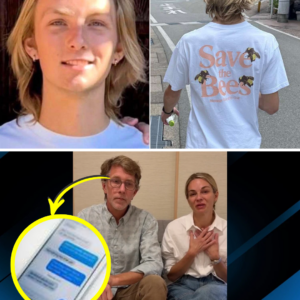
Even on the worst day, he wouldn’t have done that…: A family member of James “Weston” Higginbotham reportedly responded to a statement in the latest indictment, and that response is now circulating online as the cause of his death is revealed
The partial release of further investigative findings and what has been described as an official indictment document into the death of 20-year-old James “Weston” Higginbotham has sent ripples through his family, friends, and online communities, particularly after a family member’s…
🚨 MEDICAL RECORDS MAY HAVE RAISED MORE QUESTIONS THAN ANSWERS. Those close to James “Weston” Higginbotham say investigators recently uncovered an unexpected short note about his mental illness
The deepening investigation into the death of 20-year-old James “Weston” Higginbotham has taken a particularly intimate and unsettling direction with the review of medical records, where an unexpected short note referencing his mental illness has reportedly raised more questions than…
⚠️ PAGE 2 IS NOW GETTING ALL THE ATTENTION. As investigators continue reviewing James “Weston” Higginbotham’s case, one line from an official record is reportedly leaving people close to him with more questions than answers
The unfolding investigation into the death of 20-year-old James “Weston” Higginbotham has taken yet another perplexing turn as attention shifts sharply to the second page of the partial official report, where a single line has reportedly left family, friends, and…
That doesn’t sound like Weston at all…: A newly reviewed medical recording relating to the final days of James “Weston” Higginbotham allegedly contains testimony that his friends say doesn’t match someone they knew – and investigators are reviewing the matter
The release of additional details from the ongoing investigation into the death of 20-year-old James “Weston” Higginbotham has introduced yet another layer of profound unease for his family and friends, as a newly reviewed medical recording from his final days…
🚨 JUST RELEASED: Investigators have finally completed part of the report into James “Weston” Higginbotham’s death, but it’s one handwritten note near the bottom of the first page that his family reportedly can’t stop talking about
The partial release of the investigative report into the death of 20-year-old James “Weston” Higginbotham has provided some long-awaited structure to the circumstances surrounding his disappearance in the mountains outside Kyoto, Japan, yet it has also intensified the emotional turmoil…
A FINAL DIARY ENTRY IS BREAKING HEARTS… Family members of James “Weston” Higginbotham say investigators recently questioned him about a notebook he kept, because a short passage might help explain the emotional struggle he had been hiding
The intricate and deeply harrowing narrative surrounding the disappearance, search, and ultimate discovery of James “Weston” Higginbotham has evolved into a profound psychological and forensic study that continues to challenge the foundational methods of international law enforcement and deeply affect…
End of content
No more pages to load