:max_bytes(150000):strip_icc():focal(749x0:751x2)/James-Weston-Higginbotham-parents-060426-8629e006894c42349da632239123a0f3.jpg)
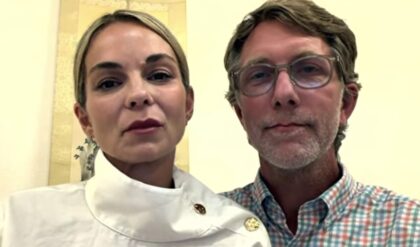
The heartbreaking case of 20-year-old James “Weston” Higginbotham has taken yet another deeply personal turn as his mother, Nancy Higginbotham, has publicly pushed back against medical conclusions labeling her son as mentally ill, insisting that the doctor’s final assessment was fundamentally wrong and that a last text message sent before he vanished provides definitive proof of his clear state of mind. What began as a celebratory family vacation in Japan to mark his younger brother’s high school graduation ended in tragedy when the Auburn University biosystems engineering student from Hoover, Alabama, disappeared on May 29, 2026, after venturing alone into the forested trails near Yamashina outside Kyoto. Volunteer rescuers located his body on June 6 in a remote, steep mountainous area amid the remnants of heavy typhoon rains, but the accumulating revelations have transformed the narrative from a simple wilderness misadventure into a complex saga filled with contradictions, family denials, and unresolved questions that continue to challenge official interpretations.
Weston Higginbotham was remembered by those closest to him as a thoughtful, resilient, and principled young man whose passion for sustainability and the natural world shaped every aspect of his life. At Auburn, he dedicated himself to biosystems engineering, advocating for biodiversity preservation and offering sharp critiques of technologies with heavy ecological costs, including his mother’s use of AI tools like ChatGPT during the family trip. This philosophical disagreement, described as relatively minor yet emotionally charged, led him to seek solitary reflection in the ancient forests around Yamashina, a decision perfectly consistent with his lifelong love of immersive hiking. CCTV footage captured him leaving Yamashina Station and heading toward the trails as daylight faded, his phone signal disappearing shortly thereafter. Yet new evidence, including a secret stop at a Kohnan hardware store just minutes before he went dark where he purchased a heavy-duty utility knife, has complicated the timeline and prompted intense scrutiny.
Nancy Higginbotham has now stepped forward with forceful clarity, rejecting any notion that her son struggled with mental illness. She insists the doctor’s final conclusion was wrong, pointing directly to the content and timing of Weston’s last text message as irrefutable evidence of his lucid, purposeful mindset in those final hours. According to sources close to the family, the message—sent to a trusted confidant shortly after the hardware store visit—reflected his characteristic thoughtfulness, expressing excitement about connecting with nature, reflecting on environmental values, and reassuring loved ones of his well-being. This text, the family argues, stands in direct opposition to medical notations suggesting distress or instability, including a short note in records that had raised more questions than answers and testimony that friends insisted “doesn’t sound like Weston at all.” The psychiatrist who treated him had previously affirmed that the personal note Weston left behind changed everything, framing his actions as a deliberate quest for meaning and fulfillment rather than any form of breakdown.
The 3cm scratch on Weston’s leg, highlighted in the autopsy report, has further fueled doubts about whether his death was purely accidental, with Nancy emphasizing her son’s meticulous nature: “He’s always careful everywhere he goes.” This injury, along with the extensive scratches across his body that appeared fresh and suggestive of a desperate struggle, the pair of strange mud-covered hiking boots noted in line 9 on page 4 of the 12-page autopsy, and the horrific items discovered in the backpack near his remains, has created a portrait that feels increasingly at odds with the prepared, environmentally conscious hiker his family and friends knew. The small pocket flashlight he never went hiking without remains missing, while his daily-worn silver watch, which a close friend noted he “never went anywhere without,” later surfaced in a pawn shop, prompting investigators to trace its movements and raising additional questions about interactions in the critical period.
The hardware store receipt, confirming the purchase of the utility knife minutes before Weston went dark, has completely derailed previous lines of inquiry and thrown the family into complete denial. His inner circle has furiously protested any implications, stating, “Even if he lost his temper, he would never do that,” rejecting suggestions that the tool indicated self-harm or impulsive behavior. Instead, they point to the last text message as proof of his intentional, reflective state, possibly tied to the personal wish fulfillment detailed in the note he left behind. This message, sent after the hardware store stop but before entering the deeper trails, has become a cornerstone of the family’s argument against the mental illness conclusion, demonstrating clarity and connection rather than detachment or crisis. Police have seized his lifetime medical records in response to the new evidence, but Nancy maintains that such actions overlook the full context of her son’s character and the transformative power of the note and final text.
Line 7 in the death report, which sparked online controversy for a comment that did not match friends’ memories of the 20-year-old Auburn student, has gained renewed attention amid these developments. The dissonance between official observations and personal recollections has amplified calls for a more nuanced review, with the psychiatrist’s earlier statement providing support for interpretations centered on purpose rather than pathology. A private health conversation less than 24 hours before the trip contained a single unexplained sentence near the end, while the last person to speak with Weston broke silence about a 9-word exchange that investigators asked to be repeated. These intimate details, combined with the last text message, paint a picture of a young man navigating meaningful questions with the same quiet intensity he brought to his studies and hikes.
The search and recovery operation tested the limits of everyone involved. Volunteers faced hazardous post-typhoon conditions and discoveries beyond routine experience, including the pitiful condition of the body and the shocking backpack contents. No foul play has been formally confirmed, though the gradual emergence of a potential suspect’s identity, alongside the hardware store purchase and the 3cm scratch raising doubts, has kept the investigation dynamic. The family continues to reject reductive narratives, with Nancy’s insistence on her son’s mental clarity and careful habits resonating widely as they process the autopsy findings, the pawned watch, the strange boots, and the utility knife receipt.
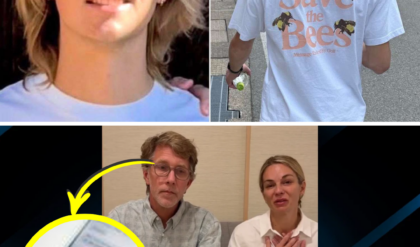
Weston’s academic and personal legacy provides essential grounding amid the controversy. At Auburn, he contributed passionately to sustainability dialogues, often drawing inspiration from trails that allowed authentic engagement with the environment. His “Save the Bees” advocacy and distinctive style reflected a gentle commitment to positive change. The disagreement over AI was philosophical, leading him toward the solitude he sought in the Yamashina forests. The last text message, as highlighted by his mother, serves as a final affirmation of this mindset, proving his lucidity and contradicting conclusions of mental illness. The note he left behind, affirmed by his psychiatrist as transformative, further supports the family’s position that Weston’s final hours were part of a purposeful quest rather than a departure from his established character.
As the Higginbotham family advances with repatriation and memorial planning, they navigate profound grief while publicly defending their son’s memory. Nancy’s statements have drawn widespread empathy, emphasizing the importance of viewing the evidence holistically rather than through isolated medical conclusions. Online communities and the true-crime world continue to dissect every detail—from the hardware store receipt and utility knife to the 3cm scratch, the pawned watch, and the last text message—seeking coherence in a case marked by contradictions. The family’s denial of mental illness and insistence on the doctor’s error have shifted public discourse toward greater nuance, highlighting the limitations of documents in capturing the full depth of an individual’s life and intentions.
The forested mountains near Yamashina, beautiful yet unforgiving, now carry the weight of these layered revelations. The last text message, sent in the narrow window after the hardware store stop, stands as a beacon of clarity amid the anomalies, proving to his mother and loved ones that Weston remained true to himself even in his final hours. Investigators continue integrating the seized medical records with all available evidence, including the 9-word exchange, the unexplained health conversation sentence, the note that changed everything, and the physical findings, aiming for a comprehensive understanding that respects the family’s perspective.
Broader reflections on the tragedy emphasize the need for mental health awareness without stigma, better support for young travelers, and careful interpretation of final communications. Weston’s story, from the AI disagreement to the solo hike, the hardware store purchase, and the discoveries on the trails, illustrates the complexities of purpose, family dynamics, and the risks of solitude in unfamiliar wilderness. The doctor’s final conclusion, challenged by Nancy and the last text message, underscores how personal context can reshape official narratives. The utility knife, the strange boots, the horrific backpack items, and the 3cm scratch all gain new meaning when viewed through the lens of a young man pursuing fulfillment with clarity rather than illness.
Supporters worldwide have offered compassion, prayers, and tributes to Weston’s intellect, kindness, and environmental passion. His legacy at Auburn and in Alabama communities endures through advocacy inspired by his life. The mother’s insistence that her son was not mentally ill, backed by the last text message, has provided the family with a powerful anchor amid the storm of speculation. As the investigation progresses with the emerging suspect and seized records, the true-crime community and the public watch closely, hoping for answers that honor the thoughtful explorer whose journey, though tragically shortened, continues to inspire reflection on resilience, authenticity, and the enduring bonds of family.
The 12-page autopsy and death report, while conclusive on physical causes, have left room for the human truths illuminated by the last text message and the note that changed everything. Nancy Higginbotham’s courageous defense of her son’s mental clarity serves as a testament to a mother’s love and knowledge, countering conclusions that felt wrong from the start. Even on the worst day, those closest to Weston affirm, he remained the careful, principled young man they remembered. The mountains claimed him amid uncertainty, but the last text message proves a final moment of connection and purpose, ensuring his light persists through the questions that remain and the legacy he leaves behind.
News
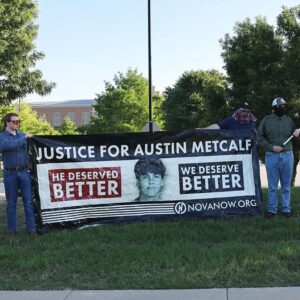
“35 YEARS.” 😳 Karmelo Anthony has been sentenced for the stabbing of Austin Metcalf at a high school track meet — but one moment inside the courtroom immediately after the verdict is what people are talking about 👀👇
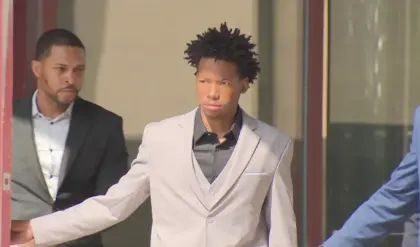
Karmelo Anthony found guilty of murder in Texas track meet stabbing Anthony admitted stabbing Memorial High School student Austin Metcalf but claimed self-defense A Collin County jury has sentenced Karmelo Anthony to 35 years in prison after he was found guilty of…
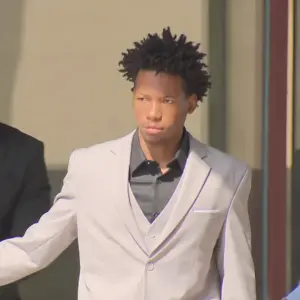
💔 THE COURTROOM FELL SILENT WHEN SHE SPOKE. In an emotional court appearance, Austin Metcalf’s mother came face-to-face with Karmelo Anthony and delivered a message no parent should ever have to say. Witnesses say the courtroom grew noticeably quiet as she spoke about the loss of her son and the reality her family now faces every day. But what is drawing the most attention online is not the verdict, the evidence, or the legal arguments… It’s the final words she chose to say directly in court. Those words are now spreading across social media, with many saying they capture the heartbreak of a mother whose life changed forever. 👇 Continue reading in the comments
In the tense silence of a Collin County courtroom in McKinney, Texas, on June 9, 2026, the final chapter of one of the most emotionally charged trials in recent memory unfolded. Karmelo Anthony, convicted earlier that day of first-degree murder…
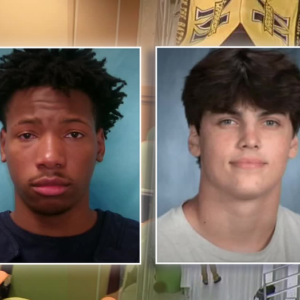
JUST IN: Karmelo Anthony has just been found guilty and sentenced to 35 years behind bars. However, it was his chilling reaction right after the judge read the final sentence that left everyone in the courtroom completely speechless
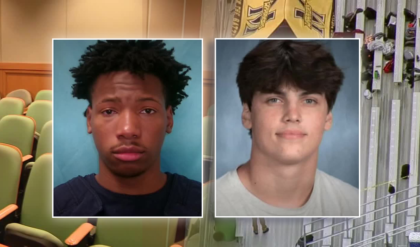
Karmelo Anthony found guilty, sentenced to 35 years in prison The Brief Jurors have found Karmelo Anthony guilty of murder for fatally stabbing 17-year-old Austin Metcalf at a 2025 track meet. Prosecutors labeled the fatal stadium stabbing a provoked, unjustified…
“I understand my son, and he doesn’t regret what he did.” Karmelo Anthony’s mother pleaded with the jury for “leniency” when deciding on her son’s sentence, but his attitude toward Austin Metcalf’s family is shocking
Karmelo Anthony’s mom begs jury deciding son’s sentence to ‘have mercy’ Karmelo Anthony’s sobbing mother, Kayla Hayes, begged a Texas jury for mercy Tuesday just moments after her 19-year-old son was convicted of murdering fellow teen Austin Metcalf. “Please have…
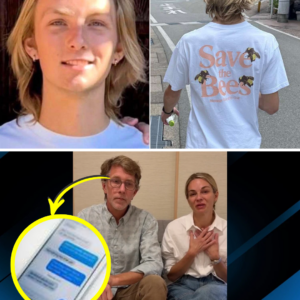
Just now: A 3cm scratch on James Weston Higginbotham’s leg is raising doubts as to whether it was an accident, with his mother insisting, “He’s always careful everywhere he goes,” and the suspect’s identity is gradually emerging
The latest details emerging from the investigation into the death of 20-year-old James “Weston” Higginbotham have intensified scrutiny and speculation, as a specific 3cm scratch on his leg noted in the autopsy report is now raising serious doubts about whether…
Line 7 in a de@th report for James “Weston” Higginbotham is causing controversy online. According to people close to the case, a comment in that section doesn’t match what friends remember about the 20-year-old Auburn student
The release of additional details from the death report on 20-year-old James “Weston” Higginbotham has ignited fresh controversy online, particularly around line 7, where a specific comment has left friends and those familiar with the Auburn University student insisting it…
End of content
No more pages to load