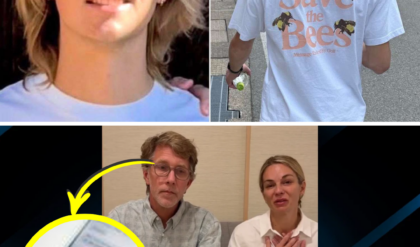
The disappearance and subsequent discovery of a young American student in the ancient capital of Kyoto, Japan, has sent shockwaves through both his university community in Alabama and international travel circles. James “Weston” Higginbotham, a twenty-year-old sustainability engineering student at Auburn University, vanished while on a family vacation, sparking an intense, days-long search across rugged terrain that ultimately ended in a profound tragedy. As his family, friends, and peers grapple with the devastating loss, the narrative surrounding his final hours has become the subject of intense scrutiny, distorted rumors, and a deep reflection on the fragile nature of youth and communication in the modern world. In the wake of his discovery, certain sensational claims regarding his psychological health and alleged final cryptic messages have circulated online, forcing a careful examination of the verified facts provided by local authorities and those who knew him best.
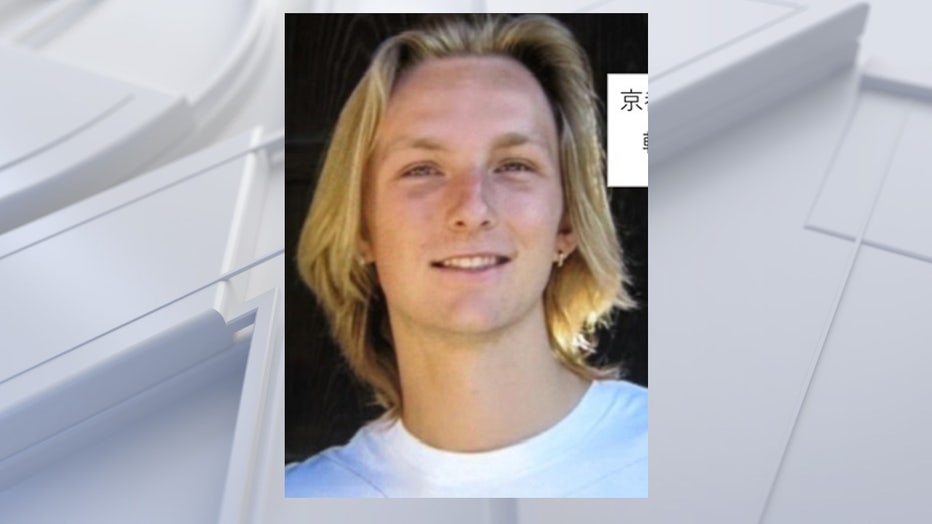
To understand the trajectory of this heartbreaking event, one must look at the setting of the disappearance. Kyoto, a city globally renowned for its historic temples, tranquil bamboo groves, and densely forested mountains, serves as a premier destination for international tourists seeking cultural immersion. The Higginbotham family had traveled to Japan to experience this serene landscape, a trip that was meant to be a memorable celebration of academic achievement and familial bonding. Weston, recognized by his professors and peers as a dedicated student with a passionate interest in ecological systems and resource management, was experiencing a culture deeply intertwined with nature. However, the serene backdrop of the city historic districts soon gave way to a logistical and emotional nightmare when the young student walked away from his family during an excursion, never to return alive.
The timeline of the disappearance began with a sharp, unexpected disagreement within the family unit during their travels. According to official statements and reports from individuals close to the situation, the tension arose from an intellectual and ethical debate regarding environmental resources. Weston, whose academic pursuits in sustainability engineering focused heavily on the ecological impact of modern infrastructure, engaged in a heated discussion with his mother concerning the massive carbon footprint and water consumption required to power advanced artificial intelligence infrastructure, specifically large language models like ChatGPT. This debate, rooted in his deep academic convictions, escalated to a point of emotional distress, leading the twenty-year-old to separate himself from his family members to seek space and clarity in the surrounding environment.
What followed his departure was a rapid sequence of events that severely hindered subsequent rescue efforts. Shortly after walking away to explore the area independently, Weston’s cellular device ceased transmitting location data, either due to a manual deactivation of location services, a dead battery, or the severe signal degradation common in the deep mountainous valleys surrounding Kyoto. The loss of this digital tether immediately created an informational vacuum for his increasingly worried family, who were left navigating a foreign city with limited means of tracking his movements. When hours turned into a full day without any communication or return to their lodging, the family contacted local Japanese authorities, initiating an emergency missing persons protocol.
The initial phase of the investigation relied heavily on the extensive network of public and private closed-circuit television cameras that monitor Kyoto transport hubs and pedestrian pathways. Homicide detectives and search coordinates painstakingly reviewed hours of digital footage, eventually mapping a partial trajectory of Weston movements after he left his family. The critical breakthrough came when a surveillance camera situated near the edge of the Yamashina district captured the twenty-year-old walking entirely alone. The footage showed him heading toward a known hiking trail that ascends into the dense, mountainous terrain that borders the eastern side of the city, providing search teams with a definitive geographic focal point.
The Yamashina area is characterized by its steep ridges, thick canopy, and a network of trails that can quickly become treacherous for travelers unfamiliar with the local topography, especially as night falls and visibility drops to near zero. Upon identifying this location, the Kyoto Prefectural Police deployed a massive logistical response, utilizing specialized mountain rescue teams, search helicopters equipped with thermal imaging technology, K-9 tracking units, and drone networks designed to peer beneath the heavy forest foliage. The search operation quickly drew the support of private volunteer organizations, local mountaineers, and members of the expatriate community, all working against the clock in hopes of finding the young engineering student safe.
Despite the deployment of these extensive resources, the search concluded in the manner everyone involved had desperately hoped to avoid. Days after his initial disappearance, search teams navigating a remote, heavily forested section of the mountain discovered Weston body deep within the wilderness. Local medical examiners and authorities conducted a preliminary assessment of the scene and subsequently issued a formal statement indicating that they found no immediate signs of foul play, suggesting that the tragedy was the result of a misadventure or an environmental accident inherent to the rugged terrain. The official cause of death has been withheld out of respect for the family privacy, leaving the community to mourn without the granular details of his final moments.
:max_bytes(150000):strip_icc():focal(749x0:751x2)/James-Weston-Higginbotham-missing-060426-51ac5a5d32ad49c9a1f0085e002d347e.jpg)
In the immediate aftermath of the discovery, internet forums and alternative media outlets began generating unverified narratives regarding Weston mental state prior to his disappearance. Sensational headlines emerged, claiming that the student suffered from severe, underlying psychological issues and had left behind a haunting three-word message that implied a state of existential despair, with phrases like “everything is over” being attributed to his final communications. However, these assertions directly contradict the official record and the testimonials provided by his family and the academic community at Auburn University. Those close to the investigation have clarified that the focus on his psychological health has been wildly exaggerated by online commentators seeking to sensationalize a straightforward, albeit complex, family tragedy.
The true context of his distress was not a chronic psychological collapse, but rather an intense, localized emotional reaction during a high-stakes debate about a topic he cared about deeply. As a sustainability student, Weston was part of a generation of academics intensely alarmed by the hidden environmental costs of rapid technological advancement. The energy demands of massive data centers and the resource strain of global digital networks were not abstract concepts to him; they were critical threats to the future of the planet. The argument with his mother was a manifestation of this intense ideological passion, a collision between older generational perspectives on technology and a young engineer acute awareness of ecological crisis.
The tragedy has prompted a solemn period of introspection at Auburn University, where Weston was regarded as a bright, promising future leader in the engineering department. Professors recalled a young man possessing a rare combination of technical aptitude and a strong ethical compass, someone who viewed engineering not merely as a career path but as a mechanism for global preservation. His classmates have organized quiet memorials on campus, choosing to focus on his academic contributions, his vibrant personality, and his dedication to environmental advocacy rather than the confusing circumstances surrounding his final hours in Japan. The university administration issued a statement expressing profound condolences to the Higginbotham family, emphasizing the collective grief felt across the entire campus community.
The logistics of managing an international tragedy have added an overwhelming layer of administrative burden to the family profound grief. Working in tandem with the United States Embassy in Tokyo and consular officials in Osaka, the family has had to navigate the complex legal and medical protocols required to repatriate Weston remains back to Alabama. This process involves meticulous coordination with Japanese medical examiners, translation of official documentation, and adherence to international transit regulations, all unfolding while the family remains stranded in the foreign city where their vacation turned into a historic loss.
The case has also sparked a wider conversation among international travel safety experts regarding the vulnerabilities of tourists exploring wilderness areas abroad. Traveling in a foreign country introduces unique hazards, including language barriers that can delay emergency reporting, unfamiliarity with local wildlife and terrain patterns, and a lack of access to familiar communication networks. Experts emphasize that when a traveler separates from a group and disables location tracking, the window for a successful rescue narrows exponentially, highlighting the absolute necessity of maintaining digital connectivity and establishing clear, pre-determined communication protocols when navigating unfamiliar environments.
As the internet rumors begin to fade under the weight of verified facts, the enduring image of James “Weston” Higginbotham remains that of a passionate, principled young man whose life was tragically cut short. The false narratives regarding a haunting three-word message or systemic psychological issues serve only to obscure the reality of a devastating accident born from a moment of intense emotional friction. The community has been urged by the family to disregard the speculative digital noise and instead honor Weston memory by focusing on the values he championed during his brief time on Earth: sustainability, environmental stewardship, and a deep commitment to protecting the natural world.
The physical landscape of Kyoto eastern mountains now stands as a somber archive of a young American life lost far from home. In the coming weeks, a private memorial service will be held in Alabama, allowing those who loved Weston to gather, share their memories, and find a semblance of closure. The questions surrounding the exact physical mechanics of his death may never be fully answered for the public, but the lesson of his passing remains clear: the passions that drive the youth can sometimes create walls of isolation, and in those moments of disconnect, the margin for error in the physical world is perilously thin.
In the final analysis, the story of Weston Higginbotham transcends the sensationalized headlines that briefly dominated online spaces, settling into the realm of a profound, quiet societal tragedy. It serves as a reminder of the immense pressures faced by a generation inheriting an ecologically compromised planet, and the critical importance of maintaining open lines of empathy and understanding across generational divides. The young engineer who went to Japan to explore the world did not succumb to a hidden psychological darkness; he was a vibrant soul who lost his way in a beautiful, indifferent wilderness, leaving behind a legacy of environmental passion that his peers vow to carry forward into the future.
News
“He never took those headphones off…” — A close friend of James “Weston” Higginbotham says investigators recently asked about the white wireless earbuds he always carried after a witness reportedly spotted one near the bridge… and then everything changed. 👇
The investigation into the tragic passing of Auburn University student James “Weston” Higginbotham in Kyoto, Japan, has entered a critical new phase as authorities focus on recovering his final physical movements through specific personal items. In recent days, Kyoto Prefectural…
“IT WAS TOO LATE WHEN THE CALL WAS MADE.” The Mother and Teenage Son Shot to Death case in Southeast Harris County is shocking the community, especially after neighbors revealed details about the time frame before 6:26 a.m
The horrific double shooting in southeast Harris County continues to reverberate through the local community, especially as the rigid timeline surrounding the deaths of the mother and her seventeen-year-old son begins to fracture. For days, the public narrative was anchored…
BREAKING: A mother was rushed to the hospital, a 17-year-old died at the scene, and a host of questions remain unanswered, but what makes this case different is that what was supposedly happening beforehand in the CCTV footage at 2:10 AM on June 9th has completely changed,…
The narrative surrounding the tragic incident in southeast Harris County has taken a dramatic and completely unexpected turn, upending the initial timeline established by investigators and introducing a profound layer of confusion to an already complex double homicide investigation. Early…
“THE 17-YEAR-OLD NEVER LEFT THAT HOUSE…” Police have just announced the FIRST SUSPECT in the case of a mother and teenage son shot to death in southeast Harris County, but the last detail released from the scene was the 911 call made at 6:26 a.m. when it was already too late…
Mother and teenage son shot to death in southeast Harris County, investigation underway, HCSO says Residents of the Riverstone Ranch subdivision in southeast Harris County woke up Tuesday morning to flashing lights, crime scene tape, and heartbreaking news. A mother…

“THEY WERE JUST KIDS.” 😢😳 An Abilene man has revealed what he saw in the moments after the devastating crash — and one detail from the roadside is still haunting him today 👀 👇 He says a single backpack was left sitting untouched in the grass as sirens filled the air
‘They were just kids,’ Abilene man recounts rescue efforts after deadly crash A 17-year-old Abilene resident was killed and four others were injured following a single-vehicle rollover crash early Sunday morning on West Lake Road. First responders were dispatched to the 6500…
DOCTORS DIDN’T EXPECT THIS 😳💔 Two teenagers in Abilene are still undergoing a lengthy recovery from a horrific accident — but an update from their hospital room has left everyone stunned. 👇 A photo taken just 14 days later is shocking the community
HOW TO HELP: Abilene teens continue recovery after surviving fatal rollover wreck Two Abilene teens are continuing to recover after surviving a rollover wreck that left them and two others seriously injured, and also killed one of their friends. Caitlyn…
End of content
No more pages to load