The investigation into the tragic passing of Auburn University student James “Weston” Higginbotham in Kyoto, Japan, has entered a critical new phase as authorities focus on recovering his final physical movements through specific personal items. In recent days, Kyoto Prefectural Police and international investigators have reached out to Weston’s inner circle back in Alabama, focusing heavily on a unique daily habit that characterized the twenty-year-old’s life. A close friend of Weston revealed that detectives questioned him extensively about a pair of white wireless headphones that the engineering student was rarely, if ever, seen without. This specific line of inquiry gained intense momentum after a local witness came forward with a pivotal sighting near an elevated footbridge in the Yamashina district, a detail that has dramatically altered the search timeline.
:max_bytes(150000):strip_icc():focal(749x0:751x2)/James-Weston-Higginbotham-missing-060426-51ac5a5d32ad49c9a1f0085e002d347e.jpg)
According to the friend, Weston used the white headphones as a constant sensory barrier, relying on them to filter out the noise of crowded environments or to immerse himself in academic podcasts and music while walking. The revelation that he “never took those headphones off” became a vital clue for investigators trying to piece together his state of awareness as he ventured alone into the unfamiliar, rugged terrain bordering eastern Kyoto. If Weston was wearing the noise-canceling devices when he separated from his family following their intense discussion about AI infrastructure and environmental resources, it is highly probable he was completely oblivious to his immediate surroundings, local warning signs, or the acoustic hazards of the mountain paths.
The critical turning point in this logistical puzzle occurred when an early-morning commuter reported seeing a single white wireless earbud resting near the edge of a pedestrian bridge spanning a deep ravine in the Yamashina area. Realizing the object matched descriptions circulated by volunteer search groups, the witness notified local authorities. Forensic teams quickly secured the item, discovering that it was still functional and possessed physical characteristics consistent with the model Weston routinely carried. This geographic marker allowed search coordinators to narrow their perimeter significantly, shifting their focus from the general hiking trails to the steeper, more treacherous slopes immediately beneath the bridge structure.
The discovery of the headphone near the bridge has led investigators to formulate a clearer hypothesis regarding the mechanics of the accident. It suggests that as Weston navigated the dimming trails, his audio immersion may have severely compromised his spatial awareness and equilibrium. In the dense canopy of the Kyoto wilderness, footing can become treacherous without warning, and the inability to hear the shifting terrain, approaching weather, or the depth of nearby drops creates a perilous environment. Detectives believe that Weston may have slipped or misstepped near the bridge’s approach, causing one of the headphones to dislodge and remain on the structure while he fell into the heavily forested ravine below where his body was ultimately recovered.
:max_bytes(150000):strip_icc():focal(749x0:751x2)/College-Student-James-Weston-Higginbotham-Disappears-on-Family-Vacation-to-Japan-060326-da9d310df4344b73b7218309fa836aff.jpg)
This physical evidence has provided the Higginbotham family and authorities with a tragic, logical explanation that completely dismisses the sensationalized internet rumors regarding foul play or a intentional disappearance. Instead of a dark, calculated mystery, the timeline points to a heartbreaking combination of emotional distraction, unfamiliar geography, and sensory isolation. As the university community at Auburn prepares for his repatriation and memorial services, this new detail serves as a somber reminder of how a routine, everyday habit can inadvertently amplify danger when a person is isolated in the unforgiving elements of the natural world.
News
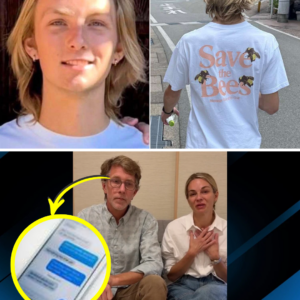
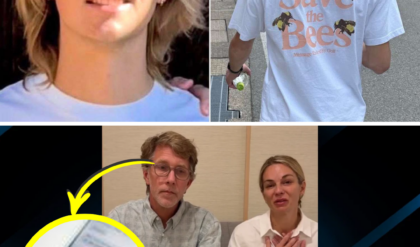
HE THOUGHT EVERYTHING WAS OVER…— Family members of Auburn student James “Weston” Higginbotham have revealed new details about his condition before he disappeared in Japan. But what continues to haunt them is a 3-word message he reportedly left behind — one that now carries a heartbreaking meaning. 👇
The disappearance and subsequent discovery of a young American student in the ancient capital of Kyoto, Japan, has sent shockwaves through both his university community in Alabama and international travel circles. James “Weston” Higginbotham, a twenty-year-old sustainability engineering student at…
“IT WAS TOO LATE WHEN THE CALL WAS MADE.” The Mother and Teenage Son Shot to Death case in Southeast Harris County is shocking the community, especially after neighbors revealed details about the time frame before 6:26 a.m
The horrific double shooting in southeast Harris County continues to reverberate through the local community, especially as the rigid timeline surrounding the deaths of the mother and her seventeen-year-old son begins to fracture. For days, the public narrative was anchored…
BREAKING: A mother was rushed to the hospital, a 17-year-old died at the scene, and a host of questions remain unanswered, but what makes this case different is that what was supposedly happening beforehand in the CCTV footage at 2:10 AM on June 9th has completely changed,…
The narrative surrounding the tragic incident in southeast Harris County has taken a dramatic and completely unexpected turn, upending the initial timeline established by investigators and introducing a profound layer of confusion to an already complex double homicide investigation. Early…
“THE 17-YEAR-OLD NEVER LEFT THAT HOUSE…” Police have just announced the FIRST SUSPECT in the case of a mother and teenage son shot to death in southeast Harris County, but the last detail released from the scene was the 911 call made at 6:26 a.m. when it was already too late…
Mother and teenage son shot to death in southeast Harris County, investigation underway, HCSO says Residents of the Riverstone Ranch subdivision in southeast Harris County woke up Tuesday morning to flashing lights, crime scene tape, and heartbreaking news. A mother…

“THEY WERE JUST KIDS.” 😢😳 An Abilene man has revealed what he saw in the moments after the devastating crash — and one detail from the roadside is still haunting him today 👀 👇 He says a single backpack was left sitting untouched in the grass as sirens filled the air
‘They were just kids,’ Abilene man recounts rescue efforts after deadly crash A 17-year-old Abilene resident was killed and four others were injured following a single-vehicle rollover crash early Sunday morning on West Lake Road. First responders were dispatched to the 6500…
DOCTORS DIDN’T EXPECT THIS 😳💔 Two teenagers in Abilene are still undergoing a lengthy recovery from a horrific accident — but an update from their hospital room has left everyone stunned. 👇 A photo taken just 14 days later is shocking the community
HOW TO HELP: Abilene teens continue recovery after surviving fatal rollover wreck Two Abilene teens are continuing to recover after surviving a rollover wreck that left them and two others seriously injured, and also killed one of their friends. Caitlyn…
End of content
No more pages to load