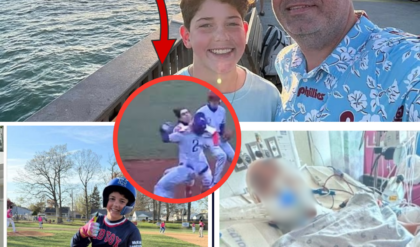
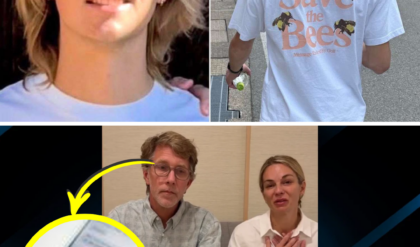
The rhythmic, sterile symphony of the pediatric intensive care unit had a way of flattening time into an agonizing blur for Mark and Sarah Taylor. For more than two weeks, the world had been reduced to a ten-by-twelve hospital room, the persistent smell of antiseptic, and the mechanical orchestra keeping their twelve-year-old son, Xavier, alive. There was the whoosh-click of the ventilator forcing oxygen into his lungs, the low hum of the intravenous pumps dispensing medication, and, above all, the constant, monotonous beeping of the vitals monitor.
Xavier had been admitted following a catastrophic accident that left him with a severe traumatic brain injury. He had spent fourteen days in a deep, unresponsive coma, a state that doctors feared might become permanent. The medical updates had grown increasingly grim, with each neurological assessment pointing toward a devastating reality: the swelling in Xavier’s brain was stubbornly refusing to subside, and his cortical activity had slowed to an ominous, near-imperceptible trickle. The family was running out of time, running out of options, and rapidly running out of hope.
On this particular morning, the mood inside the ICU room was exceptionally heavy. A panel of specialists had gathered at the foot of the bed to deliver another difficult update. They discussed the latest intracranial pressure—the pressure inside Xavier’s skull—which had been stuck at a dangerously elevated level for days. High intracranial pressure meant the brain was suffocating, starved of proper blood flow. The lead neurologist was gently explaining that if this specific number did not drop soon, they would have to face the absolute limits of medical intervention.
Sarah sat huddled in a vinyl chair, her face buried in her hands, while Mark stood tightly by Xavier’s side. Desperate to break through the clinical despair filling the room, Mark reached out and placed his palm against his son’s forehead, leaning down to whisper a familiar, private promise they used to share before Xavier’s soccer tournaments. He spoke softly, his voice thick with the exhaustion of a heartbroken father, pleading with his boy to give them any sign that he was still in there.
Then, the machines changed their tune.
It started with a sudden, erratic shift in the rhythm of the beeps. A sharp-eyed ICU nurse was the first to look up, her gaze instantly locking onto the glowing digital display above the bed. The single, critical reading everyone had been watching with absolute dread—the intracranial pressure number—suddenly flickered. For days, it had been locked in a lethal red zone. But as Mark finished speaking, that number dropped. It didn’t just drift downward; it plummeted by several points in a matter of seconds, transitioning from a alarming red to a stable, calm green.
The atmosphere inside the room shifted instantly, the heavy despair replaced by a sudden, electric tension. Please look at this, the nurse whispered, her voice cutting through the doctor’s clinical explanation as she pointed to the screen. The specialists stopped talking mid-sentence, their eyes darting to the monitor in absolute disbelief. A sudden drop in intracranial pressure without immediate surgical or medical intervention was practically unheard of in a traumatic brain injury case of this severity.
What the monitor was registering was a profound, spontaneous physiological response. The sudden normalization of the pressure indicated that Xavier’s brain had abruptly altered its own state, a massive cellular shift that coincided perfectly with the sound of his father’s voice and touch. It was as if a tightly coiled spring inside the boy’s head had suddenly released, allowing vital blood and oxygen to flood back into the damaged tissue.
Exactly seven seconds after that digital number changed, Xavier’s physical body caught up with the machinery. His chest heaved against the ventilator, and his fingers tightly clamped around his father’s hand. His eyelids, heavy and swollen for a fortnight, fluttered open. His eyes, though unfocused at first, rolled toward the side of the bed, locking onto Mark with an unmistakable flash of awareness. A soft, involuntary gasp escaped the boy’s lips, a sound that bypassed the breathing tube and echoed clearly in the stunned silence of the room.
The reaction in the ICU was a mix of raw emotion and medical bewilderment. Sarah rushed forward, crying out as she joined her husband at the bedside, both of them weeping as they held their waking son. The medical team, meanwhile, scrambled to verify the data, checking the lines and sensors to ensure it wasn’t a mechanical malfunction. But the monitor was clear, and Xavier’s open eyes were undeniable. The lead neurologist stood frozen, staring at the telemetry screens, openly admitting that he was witnessing a phenomenon that defied standard clinical logic.
In the days that followed that unforgettable morning, Xavier’s room became a focal point of cautious wonder for the entire neurological department. While he remains incredibly weak and faces a long, arduous journey of physical rehabilitation, the trajectory of his recovery has been completely transformed. The sudden drop in that single monitor reading marked the exact moment Xavier’s brain decided to fight its way back to the surface, leaving his medical team with a profound reminder that even in the world of strict science, some connections are powerful enough to rewrite the rules.
News
After hundreds of hours in the ICU, it happened in less than 3 seconds…: The latest update on Xavier Taylor has his family holding onto hope after an unexpected reaction left even veteran nurses stunned
The sterile, unchanging environment of the pediatric intensive care unit had a way of turning hours into an endless, agonizing blur for the Taylor family. For more than two weeks—amounting to hundreds of hours of relentless anxiety—their lives had been…
“Please say that again…”: The parents of 12-year-old Xavier Taylor were preparing for another difficult day in the ICU when doctors noticed a response nobody had seen before—and it happened the moment his father spoke
The sterile, oppressive air of the pediatric intensive care unit was thick with a familiar, suffocating dread as Mark and Sarah Taylor walked through the heavy glass doors. For two weeks, this had been their entire world—a world defined by…
“Did he just do that…?”: After another heartbreaking update on 12-year-old Xavier Taylor, doctors noticed a tiny movement while his father was speaking—but what happened 7 seconds later is giving the family hope they can’t explain
The flickering fluorescent lights of the pediatric intensive care unit seemed to hum in a cruel, monotonous rhythm, a stark contrast to the chaotic storm raging inside the Taylor family. For thirteen agonizing days, the world had shrunk to the…
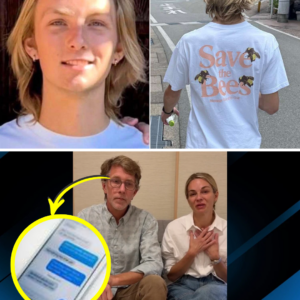
HE BELIEVED HE HAD TO FACE IT ALONE… — Family members of Auburn University student James “Weston” Higginbotham have revealed heartbreaking new details about his mental state before his disappearance. However, what continues to haunt them is a three-word phrase he reportedly repeated many times — words they no longer hear as often as before.
The devastating loss of twenty-year-old Auburn University junior James “Weston” Higginbotham has left a profound void in the hearts of his family, friends, and the tight-knit community of Hoover, Alabama. A passionate student of biosystems engineering with a deep-seated focus…
THE BOY BOUGHT ME A GIFT… — New details have emerged about James “Weston” Higginbotham before his disappearance. But what continues to weigh heavily on his family is a voicemail he is believed to have left behind — a message they didn’t fully understand until later
The tragic and untimely loss of twenty-year-old Auburn University junior James “Weston” Higginbotham has left a profound void in the hearts of his family, friends, and the wider community of Hoover, Alabama. A passionate student of biosystems engineering with a…
He said life was too short… — James “Weston” Higginbotham’s mother has shared details of his final days before his disappearance in Japan. However, what troubles them most is a handwritten letter he is believed to have left behind — a letter they now read in a completely different way
The tragic loss of twenty-year-old Auburn University sophomore James “Weston” Higginbotham has deeply impacted communities from Birmingham, Alabama, to the historic ward of Yamashina in Kyoto, Japan. Known for his charismatic smile, independent spirit, and a fierce commitment to environmental…
End of content
No more pages to load