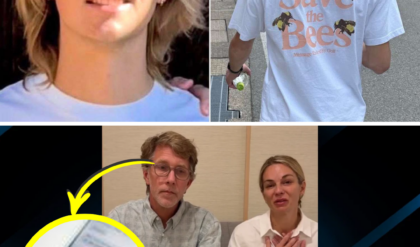
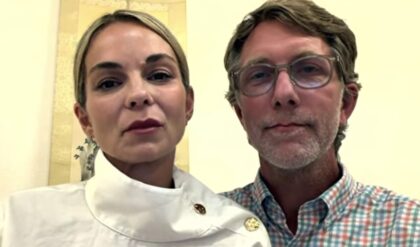
James “Weston” Higginbotham carried the quiet confidence of someone who believed the future stretched out generously before him. At twenty years old, the Auburn University biosystems engineering student had already filled his days with purpose, from rigorous athletic training to hands-on environmental projects that reflected his deep commitment to sustainability. Family members recall how he spoke with excitement about the years ahead, including ambitious ideas for life right after college. Among those visions was the prospect of starting his own business, an enterprise that would blend his engineering expertise with his passion for ecological solutions. Yet one lingering question he pondered about that path has now drawn renewed attention from those who knew him, offering what many see as a profound source of motivation in the wake of his untimely passing.

Weston vanished on May 29, 2026, during a family vacation in Kyoto, Japan. After a minor disagreement with his mother over her reliance on artificial intelligence for navigation, which conflicted with his concerns about its environmental toll, he sought solitude. He boarded a train, disembarked at Yamashina station, and was last captured on CCTV heading toward hiking trails in the Higashiyama mountains. His phone signal faded, and days of frantic searching by police, volunteers, and his family followed. On June 6, search-and-rescue teams discovered his body in a mountainous area outside the city. Japanese authorities have ruled out foul play, though the exact circumstances remain a source of ongoing reflection for his loved ones.
In the aftermath, as tributes highlighted his vibrant life, family and friends have shared glimpses into the plans he was crafting. Weston was not content with a conventional career trajectory. His studies in biosystems engineering, with a focus on ecological systems, paired with a double minor in business engineering technology, positioned him uniquely to innovate at the intersection of technology, environment, and enterprise. Those close to him say he often discussed launching a venture that could scale sustainable solutions, perhaps something involving water management, renewable resources, or community-focused environmental tech. This entrepreneurial spark was fueled by his real-world experiences and a belief that business could drive meaningful change where traditional paths sometimes fell short.
One detail that family members have highlighted in private conversations and echoes through their public remembrances is a particular uncertainty Weston voiced about timing. He wondered whether he should dive straight into building a business immediately after graduation or gain more structured experience first. This question, seemingly ordinary for any ambitious young graduate, has taken on deeper resonance now. In hindsight, it underscores the fragility of assuming there would always be more time to deliberate, to test ideas, or to pivot. Friends remember him as someone who meticulously planned adventures and projects, yet this one forward-looking doubt lingered, a reminder that even the most prepared individuals navigate unknowns.
Born on January 9, 2006, in Birmingham, Alabama, Weston grew up embracing adventure and responsibility in equal measure. As the designated family explorer, he researched hidden trails, planned camping trips with paper maps, and inspired his younger brother Grayton through shared athletic pursuits and creative interests. His travels spanned Yosemite, the Pyrenees, the Camino de Santiago, and the Swiss Alps. An avid mountain biker, skier, climber, and triathlete, he approached training with discipline, recently preparing for a half-Ironman while balancing a demanding academic schedule.
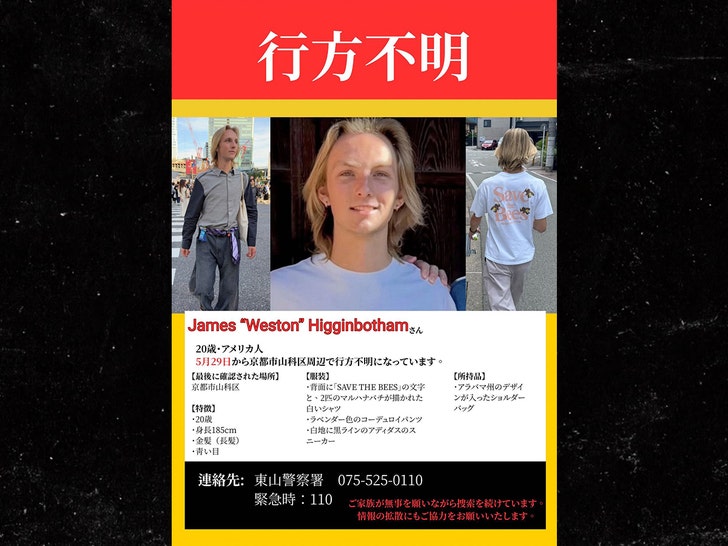
At Auburn, his involvement extended far beyond the classroom. He participated in the American Society of Agricultural and Biological Engineers, Auburn Student Aerospace Projects, and especially Engineers Without Borders. The upcoming August trip to Bolivia, where he was set to help oversee a water distribution project for a local village, represented a tangible step toward applying his skills globally. This hands-on service work aligned with his vegan lifestyle, his habit of carrying reusable utensils to minimize waste, and his broader vision for impactful solutions. It was the kind of experience that could have informed a future business, providing real insights into community needs and scalable engineering applications.
The idea of entrepreneurship seemed a natural evolution. With his business engineering technology minor, Weston possessed tools to translate technical innovations into viable ventures. Family members note that he contemplated models that could address pressing environmental challenges, perhaps developing affordable water purification systems, sustainable agriculture tech, or eco-friendly infrastructure for underserved areas. His research work at the university further honed this mindset, exposing him to practical problem-solving that blurred the lines between academia, service, and commerce. The question he pondered, about whether to launch boldly post-graduation or build credentials incrementally, reflected a thoughtful approach rather than hesitation. It was the deliberation of someone who wanted his efforts to endure.
Tragically, the mountains he sought for decompression that evening in Kyoto became the site of his final moments. The loss has prompted his family to channel sorrow into action. In lieu of traditional flowers, they established the James “Weston” Higginbotham Endowed Scholarship at Auburn University for students pursuing ecological engineering. This initiative not only honors his academic path but also carries forward the innovative spirit that might have powered his business dreams. Donations support future engineers who, like Weston, seek to merge technical prowess with environmental stewardship.
Nancy Higginbotham, Weston’s mother, has shared updates that reveal both the depth of grief and the family’s resolve. During the search, she emphasized his love for nature as his happy place, a space for reflection after everyday tensions. Post-tragedy, the family has encouraged others to honor him by spending time outdoors, enjoying plant-based meals, reducing distractions, and expressing love openly. These simple acts echo the mindful living that underpinned his bigger aspirations. The scholarship, in particular, stands as a bridge between his interrupted plans and lasting influence.
Weston’s story resonates because it captures the universal optimism of youth, the assumption of ample time to refine visions and pursue ambitions. His entrepreneurial curiosity was not abstract; it was rooted in observed needs, like those he would have addressed in Bolivia. The one thing he wondered about, that timing of when to take the leap into business, now prompts reflection among peers, mentors, and the wider community. It motivates conversations about balancing preparation with bold action, about not delaying meaningful pursuits in an uncertain world. Many young engineers and environmentalists have voiced how his example encourages them to explore startup ideas sooner, to prototype solutions while still in school, or to seek mentorship that accelerates impact.

Auburn University has expressed support for the family, recognizing Weston’s contributions to campus life. His involvement in multiple organizations showcased a holistic approach, combining athletics, academics, and service. The climbing and triathlon teams benefited from his discipline, while his research added value to departmental efforts. These experiences would have been invaluable assets in launching a venture, providing networks, skills, and credibility. The doubt he expressed about immediate entrepreneurship versus further seasoning highlights a common crossroads, one that his passing has illuminated as worthy of proactive navigation.
In obituaries and memorials, Weston emerges as a charismatic figure who lit up rooms and extended helping hands without hesitation. His brother Grayton looked up to him as a role model in sports, music, and daily camaraderie. The family dogs, Patches, Pumpkin, and Pepper, were part of his world of simple joys. These personal touches humanize the ambitious student who dreamed beyond conventional boundaries. The business plans, though unrealized, symbolize the forward momentum he embodied, a drive that friends say could inspire others facing similar questions about their own futures.
The tragedy has also sparked broader discussions on youth travel safety, mental health awareness during transitions, and the pressures of high-achieving young adults. While authorities maintain no foul play, the circumstances invite contemplation about how even experienced hikers can encounter unforeseen challenges in unfamiliar terrain. Weston’s habit of solo decompression hikes was well-known, yet the convergence of family dynamics, jet lag, and remote trails proved fateful. His story encourages proactive check-ins and preparedness, even for those who seem invincible.
As the community gathered for funeral services on June 17, 2026, at Asbury United Methodist Church in Birmingham, the focus remained on celebration alongside mourning. Visitation, the service, and graveside proceedings allowed space for stories that captured his essence. The scholarship fund continues to grow, a living testament that transforms personal loss into opportunity for others. In this way, Weston’s pondered business motivations find partial fulfillment through the students who will carry similar ideas forward.
He thought he had more time to weigh options, to build prototypes, to network and refine his vision for a sustainable enterprise. That one lingering question about timing now serves as motivation for countless others. It prompts aspiring entrepreneurs to act with urgency tempered by wisdom, to pursue passions before opportunities slip away. Weston’s legacy, woven through environmental advocacy, athletic excellence, and familial love, reminds us that impact does not require completion of every plan. It arises from the sincerity of the striving.
Family members and friends have noted how his life exemplifies seizing moments in nature, in service, and in relationships. The Bolivia project he anticipated, the scholarship established in his name, and the stories shared all extend his reach. The entrepreneurial path he contemplated, uncertain in its exact start, now motivates a new generation to innovate responsibly. In reflecting on his short but full journey, one sees a young man who lived with intention, whose unanswered questions about the future become guiding lights for those still charting their courses.

James “Weston” Higginbotham believed in a future where engineering and enterprise could heal environmental wounds and uplift communities. Though his physical presence ended too soon in the mountains of Kyoto, the spark of his ambitions endures. That one thing he wondered about, now everyone’s paying attention to, stands as a call to action: to build, to sustain, and to make the most of the time we are given. His motivation lives on, urging others to turn wonder into ventures that matter.
News
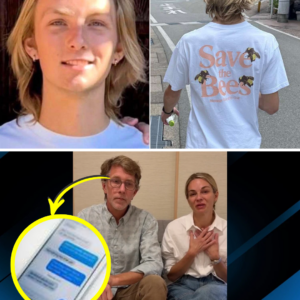
💔 HE OVERCAME THE PAIN… According to those close to James “Weston” Higginbotham, he claimed to have overcome his mental illness at the age of 21. However, the doctors’ conclusions were completely different
James “Weston” Higginbotham stepped into the vibrant streets of Kyoto with the optimism of a young man charting his course through life. At just 20 years old, the Auburn University biosystems engineering student had already accomplished much—competing on university teams,…
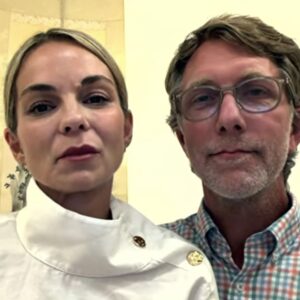
He never thought this would be his last trip… Family members of James “Weston” Higginbotham say the 20-year-old had planned his life after leaving Japan, but one detail of those plans is now causing them heartbreak
James “Weston” Higginbotham stepped off the train in Kyoto with the easy confidence of a young man who had already charted his path through the world. At twenty years old, the Auburn University engineering student was midway through a family…
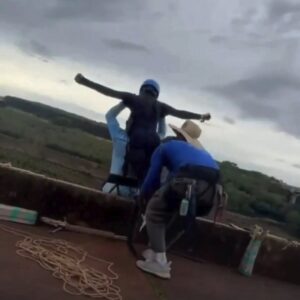
SIX ARRESTED, BUT WHAT THEY DID AFTERWARDS IS WHAT CAUSED OUTRAGE 🚨 Following the death of Maria Eduarda Rodrigues de Freitas, Brazilian police launched an urgent manhunt. Part of the investigation is now focusing on safety regulations and what is believed to have happened immediately after the tragedy began 😳👇
Following the death of Maria Eduarda Rodrigues de Freitas, Brazilian police launched an urgent manhunt. Part of the investigation is now focusing on safety regulations and what is believed to have happened immediately after the tragedy began. The tragic death…
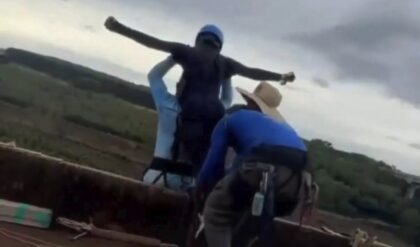
Oh, I forgot! 😳 The video captures the moment Maria Eduarda was led to the edge of the bridge by two staff members before being pushed off during the bungee jump. Just seconds later, witnesses realized the horrifying truth, as the two staff members said just four seconds after the incident occurred 💔👇
Just minutes after posting that playful status update, 21-year-old physical education teacher Maria Eduarda Rodrigues de Freitas was pushed off a nearly 40-meter-high bridge in Brazil. What outraged the public were the screams that rang out just before she fell….
“Who’s the crazy person who let me jump off this bridge to my death???” 💔 Just minutes after posting that playful status update, 21-year-old physical education teacher Maria Eduarda Rodrigues de Freitas was pushed off a nearly 40-meter-high bridge in Brazil. What outraged the public were the screams that rang out just before she fell
FALL TRAGEDY Horror moment woman, 21, is thrown to death after staff forget to attach rope to her at bridge swing THIS is the horrific moment a woman tragically plunged to her death after being thrown from a bridge swing…

“There were 11 missed calls.” Relatives repeatedly tried to contact Elena after she didn’t return home. But what puzzled investigators even more was a phone charger still plugged into the wall next to an open notebook on page 39, along with a three-word handwritten note
Relatives repeatedly tried to contact Elena after she didn’t return home. But what puzzled investigators even more was a phone charger still plugged into the wall next to an open notebook on page 39, along with a three-word handwritten note….
End of content
No more pages to load