He believed things had gone too far. Those words, heavy with the weight of conviction and quiet despair, linger in the minds of James “Weston” Higginbotham’s loved ones as they grapple with the profound loss of a young man whose life was defined by principle, passion, and an unrelenting drive to protect the world around him. At just 20 years old, Weston had been striving to move forward despite the difficulties that marked his final days, channeling his energy into his studies and personal goals even amid growing frustrations with the modern world. Yet the image his family will always remember is his last status update in a family group chat, a brief digital footprint that now stands as a poignant symbol of connection severed too soon and concerns left unaddressed.
Weston Higginbotham, born on January 9, 2006, in Birmingham, Alabama, grew up in a household that valued exploration, sustainability, and close family bonds. His parents, Nancy and Keith, and his younger brother Grayton, often embarked on outdoor adventures that fostered a deep appreciation for nature. From mountain biking trails to hiking expeditions, these experiences shaped Weston into someone who saw the natural world not just as a playground but as a responsibility. His commitment to veganism and eco-friendly habits reflected a broader ethos of minimizing harm and maximizing positive impact.

At Spain Park High School in Hoover, Alabama, Weston distinguished himself as a disciplined and driven student. He excelled academically while participating in athletics and extracurricular activities that honed his leadership skills. Those who knew him described a young man of quiet intensity, someone who approached challenges with meticulous preparation and an ethical compass that guided his decisions. This foundation carried him seamlessly into Auburn University, where he pursued a degree in Biosystems Engineering, specializing in areas that aligned with his passion for ecological solutions and sustainability.
On campus, Weston immersed himself in a vibrant community of like-minded individuals. He joined the climbing team, the triathlon team, the American Society of Agricultural and Biological Engineers, and Engineers Without Borders. His involvement went beyond mere membership. He actively contributed to projects that sought real-world applications for engineering principles aimed at environmental conservation and community support. A planned service trip to Bolivia in the summer of 2026 to assist with a water distribution project in a rural village exemplified his desire to translate academic knowledge into tangible aid for those in need. His rigorous training for Half Ironman events further underscored a lifestyle of balance between physical endurance and intellectual pursuit.
The family vacation to Japan in late May 2026 was intended as a joyful celebration of Grayton’s high school graduation. What began as an opportunity to create lasting memories across cultures quickly turned tense. During their travels, a disagreement arose between Weston and his mother Nancy over her use of ChatGPT and other AI tools for navigation and planning. For Weston, whose studies and personal values centered on sustainability, the environmental toll of artificial intelligence, particularly its significant water consumption in data centers, represented a critical issue. He viewed the reliance on such technology as emblematic of broader societal problems where convenience overshadowed long-term planetary health.
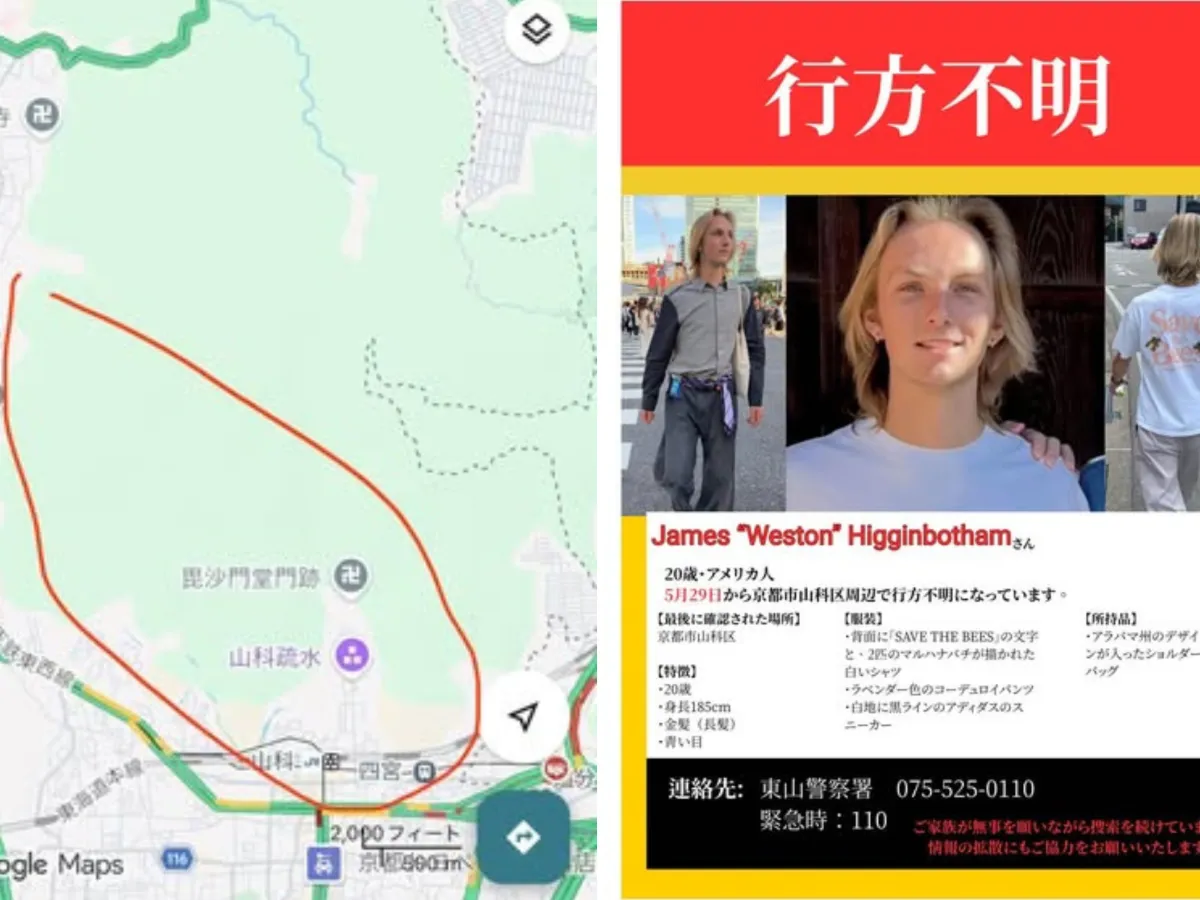
Loved ones recall that Weston believed things had gone too far in a world increasingly dependent on resource-intensive innovations without sufficient regard for their consequences. This perspective was not born of fleeting frustration but rooted in his deep engagement with ecological engineering and environmental advocacy. He had spent much of his final 60 days focused on his graduation project, pushing through academic pressures while maintaining his training regimen and family connections. Despite the difficulties, he was trying to move forward, holding onto optimism even as global and personal challenges weighed on him.
The last status update he shared in the family group chat captured this duality. It was a message reflecting his independent spirit and love for exploration, yet it also hinted at the emotional undercurrents of the trip. Family members remember it as an image of resilience amid strain, a digital note that now evokes both warmth and heartache. Shortly after, following the discussion about navigation tools, Weston chose to take some space. He set out alone, drawn as always to the solace of nature and hiking trails. CCTV footage later showed him at Yamashina Station in Kyoto on May 29, 2026. His phone’s location services were disabled soon afterward, consistent with his preference for unplugged immersion in the outdoors.
Search efforts intensified rapidly, involving Japanese authorities, volunteers, dogs, and aerial support. Nancy Higginbotham provided regular updates through social media, expressing hope and appealing for assistance while emphasizing her son’s experience as a hiker. The Alabama community rallied with prayers and support, highlighting the far-reaching impact Weston had made in his short life. Tragically, on June 6, a volunteer search-and-rescue team discovered his body in a mountainous area outside Kyoto. No foul play was suspected, and authorities withheld the cause of death at the family’s request, allowing space for private mourning.
In the wake of this loss, the family has focused on honoring Weston’s legacy rather than dwelling solely on the circumstances. Nancy’s public statements captured the unimaginable grief while celebrating the time they shared. “The grief we feel is impossible to put into words,” she wrote, underscoring the void left in their lives. Yet amid sorrow, they established the James “Weston” Higginbotham Endowed Scholarship Fund for Ecological Engineering at Auburn University. This initiative ensures that his passion for sustainability will support future generations of students dedicated to similar causes.
:max_bytes(150000):strip_icc():focal(749x0:751x2)/James-Weston-Higginbotham-061126-1-66d10f17c2b1437691c37ea9a5303340.jpg)
Weston’s obituary and tributes paint a portrait of a young man who lived with purpose. Survivors include his devoted parents, brother Grayton, extended family, and the beloved family dogs Patches, Pumpkin, and Pepper. Donations in his memory to the scholarship fund reflect the values he championed: innovation in harmony with the environment, community service, and thoughtful stewardship of resources. Friends from high school and college recalled his generosity, humor, and ability to inspire others. His anti-AI stance, particularly regarding its ecological footprint, sparked conversations even before the tragedy, resonating with broader debates about technology’s role in society.
The argument over ChatGPT, described by Nancy as a “sore subject,” illuminated Weston’s principled worldview. As a biosystems engineering student, he understood the intersections of technology, biology, and environmental impact. He worried that unchecked advancements in AI could exacerbate water scarcity and energy demands at a time when sustainable solutions were urgently needed. This belief that things had gone too far extended to his academic work and personal habits, where he consistently chose low-impact alternatives. His final days, marked by dedication to his graduation project, demonstrated a commitment to moving forward constructively despite these concerns.
The last status update in the family group remains etched in memory as a symbol of normalcy before the unimaginable. It captured his encouragement for the family’s activities while signaling his need for solitude. In the digital tapestry of family life, such messages often go unnoticed until they become final. For the Higginbothams, it represents the enduring bond they shared and the sudden silence that followed. Weston had been navigating the complexities of young adulthood, academic rigor, athletic demands, and global awareness, all while holding firm to his ideals.
Reflections on Weston’s life prompt deeper consideration of the pressures facing young people today. His story intersects with discussions on mental health, the environmental costs of technology, travel safety, and the challenges of family dynamics during significant transitions. As an accomplished triathlete and engineer-in-training, he embodied discipline and foresight, qualities that made his absence all the more felt. The trails he loved, the projects he tackled, and the communities he touched continue to echo his influence.
Auburn University has become a focal point for remembrance, with faculty and students highlighting his contributions to research and campus life. The scholarship fund stands as a living memorial, funding endeavors in ecological engineering that align with Weston’s vision of a balanced, sustainable future. Contributions and tributes have poured in from across Alabama and beyond, illustrating the ripple effect of one individual’s principled life.
Family and friends emphasize that Weston’s final weeks were filled with the same focus that defined him. He poured effort into his studies, maintained his training, and engaged with loved ones, all while processing his views on a world he felt was veering off course in certain respects. The image of his last group chat update serves as a reminder of the importance of open dialogue and support. He was trying to move forward, holding onto goals that included academic success, athletic achievements, international service, and personal growth.
In the Higginbotham home, memories of laughter, shared adventures, and Weston’s charismatic presence provide comfort amid grief. The yellow sticky note with six goals on his bedroom mirror, mentioned in earlier reflections, complements the digital legacy of his last status. Together, they represent aspirations interrupted but not erased. His family honors him by advancing causes close to his heart, from environmental advocacy to supporting education in sustainable practices.
Weston’s journey from the forests of Alabama to the mountains of Japan encapsulates a life lived intentionally. His belief that certain aspects of progress had gone too far stemmed from a place of care and knowledge, not cynicism. It challenged those around him to think critically about technology’s trade-offs. As society navigates the rapid evolution of AI and its implications, his perspective offers a valuable lens for balancing innovation with responsibility.
The funeral on June 17, 2026, at Asbury United Methodist Church brought together a community united in sorrow and celebration. Visitation, the service, and graveside rites allowed space for stories that illuminated his character. Mayor and local leaders in Hoover acknowledged his positive influence on the area. In the months since, the scholarship has begun to take shape, promising to nurture the next wave of environmental stewards.
Ultimately, James “Weston” Higginbotham’s story is one of light, conviction, and enduring impact. He believed things had gone too far in some domains, yet he dedicated himself to solutions rather than resignation. His loved ones cherish the image of his final status update as a beacon of his caring nature. Though his physical presence is gone, his principles, goals, and the scholarship in his name ensure that his voice continues to advocate for a more thoughtful, sustainable world. In remembering Weston, we are reminded of the fragility of life and the power of living with purpose, even when the path forward seems fraught with challenges. His legacy calls on all to move forward with the same determination he displayed, striving for balance in an increasingly complex era.
News
🚨 “THIS STORY ISN’T OVER.” Leah Stewart continues her recovery in hospital while investigators work to piece together exactly what happened at Coogee Beach. The problem? One of the biggest questions still doesn’t have an answer
On a bright Saturday morning in mid-June 2026, Coogee Beach—one of Sydney’s most beloved stretches of coastline, known for its lively community of swimmers, surfers, and families—became the scene of a terrifying shark attack that has left a young mother…
“DON’T HANG UP.” 😳 Those may have been among the final words heard from two hikers before they vanished into dangerous conditions 👀 👇 When rescuers recovered their phone, the screen was reportedly frozen on a call that lasted just 8 seconds
Desperate final moments of two ambitious friends swept to their deaths from notorious California beach The two friends killed after being swept into the ocean in Santa Cruz County became trapped by a freak wave and pulled underwater by the punishing tide, authorities revealed…

Just in: German heiress shot dead at her family’s luxury safari resort in South Africa, and a security guard’s testimony has taken the case in a completely different direction? What did CCTV footage capture? The suspect’s identity revealed
Millionaire German heiress shot dead at luxury South African safari lodge. Caroline von Rantzau, 26, the heiress to a million-dollar German shipping firm, DAL, was mysteriously found dead at her family’s luxury safari lodge in the Limpopo province in northern…
THE SECOND B…0…..D..Y CHANGED EVERYTHING. 😳 Less than 24 hours after Caroline von Rantzau was found on a remote South African wildlife estate, another shocking discovery sent investigators back to the scene 👀 👇 Now, everyone is asking the same question about a pair of sunglasses found beside a deserted dirt road
Shipping heiress killed on family’s luxury wildlife estate — day after friend was found dead The heiress to the million-dollar German shipping firm DAL was mysteriously shot to death at her family’s luxury South African wildlife estate — a day after…

“WAIT… WHERE’S THE ROPE?” 😳 Maria Eduarda Rodrigues de Freitas disappeared from the edge of the bridge as chaos erupted. What the police later discovered at the scene, along with the arrest of 6 suspects, was horrifying 💔👇
The horrifying and sudden death of twenty-one-year-old Maria Eduarda Rodrigues de Freitas during a high-stakes extreme sports excursion has sent shockwaves through Brazil and ignited global outrage. What was supposed to be a thrilling weekend adventure at the notorious Ponte…
6 PEOPLE JUST ARRESTED: Maria Eduarda Rodrigues de Freitas thought she was about to perform a normal bungee jump, but according to investigators, the suspect’s testimony, discovered a few minutes later, may explain everything
The rapid investigation into the horrifying death of twenty-one-year-old physical education graduate Maria Eduarda Rodrigues de Freitas has taken a dramatic step forward with the execution of six total arrests connected to the fatal rope jumping incident at the Ponte…
End of content
No more pages to load