The story circulating about Lil Wayne quietly repurchasing his modest childhood home in New Orleans and transforming it into a $3.2 million recovery and transitional support center for women and children facing homelessness, addiction, and domestic violence has gained traction on social media platforms like Facebook and Instagram in early 2026. Posts with nearly identical wording—framed as “LIL WAYNE JUST MADE A MOVE NO ONE SAW COMING!”—have spread across rap fan pages, community groups, and viral accounts.
:max_bytes(150000):strip_icc():focal(749x0:751x2)/jenelle-evans-Lil-Wayne-091325-3c597e62979444cbb0ecdd059c647d2c.jpg)
However, this appears to be an unsubstantiated viral claim rather than a verified event. Extensive searches across news outlets, official announcements, Lil Wayne’s known philanthropy, and recent reports (up to March 2026) yield no credible confirmation from reliable sources such as Billboard, Rolling Stone, TMZ, local New Orleans media (e.g., NOLA.com or WWL-TV), or statements from the rapper himself or his team. No property records, charity registrations, or foundation announcements tie to such a project under his name.
Lil Wayne (Dwayne Michael Carter Jr.) has a well-documented history of giving back to New Orleans, the city that raised him in the Hollygrove neighborhood. Growing up in a modest, single-parent household amid challenges, he has channeled his success into community support:
In 2009, he donated $200,000 to rebuild Harrell Park, his childhood playground damaged by Hurricane Katrina.
In 2012, he funded a skate park in the Lower 9th Ward, an area devastated by the 2005 hurricane, providing a positive outlet for youth.
He has participated in disaster relief efforts post-Katrina and supported local initiatives through concerts and donations.
These actions reflect his deep ties to New Orleans, where he began his career as a teenager with Cash Money Records. The Hollygrove home where he grew up has been referenced in his lyrics and media as a symbol of humble beginnings—small, weathered, and far from the luxury mansions he owns today (including a recent $15.4 million purchase in Hidden Hills, California). Yet, no reports indicate he repurchased that specific property or any former residence for redevelopment.
The viral narrative closely mirrors fabricated or misattributed stories that often circulate online, sometimes swapping celebrities (e.g., similar posts have referenced other artists or figures like Steven Tyler of Aerosmith in altered versions, mentioning “Jane’s Haven” or other names). In some reposts, the story shifts to unrelated claims, such as Lil Wayne opening a “free hospital for the homeless” called Soul Humanity Health Center or giving away earnings from projects—none of which have verifiable backing.
While the idea resonates powerfully—turning a personal touchstone of struggle into a beacon of healing for vulnerable women and children—it aligns more with inspirational hoaxes than reality. True philanthropy from Lil Wayne tends to be announced through official channels or covered by press, especially for a multimillion-dollar project with such symbolic weight.
If this were accurate, it would represent one of his most intimate acts of reciprocity: repurchasing the very space that “kept him grounded” during his early rise amid industry pressures, legal troubles, and personal battles (including his well-publicized struggles with addiction). New Orleans continues to face ongoing issues with homelessness, substance abuse, and domestic violence, exacerbated by economic disparities and past disasters. A dedicated transitional center offering counseling, housing support, addiction recovery programs, and child services could make a tangible difference in the community that nurtured him.
Until official confirmation emerges—perhaps via Lil Wayne’s social media, his Young Money label, or local nonprofit partners—the story remains in the realm of heartwarming but unverified social media lore. It speaks to the public’s desire to see celebrities use their platforms and wealth for meaningful, roots-level change, especially from someone whose narrative is so intertwined with New Orleans’ resilience.
Lil Wayne’s legacy already includes uplifting his hometown through music, youth programs, and direct aid. Should this project prove real, it would add a profoundly personal chapter—one where the boy from Hollygrove comes full circle, ensuring others don’t face the same hardships alone. For now, fans and observers await any word from Weezy F. Baby himself.
News

A STRANGE DETAIL IN THE FRONT SEAT: According to several reports cited by local media, some images from the scene show a small item lying near Declan Berry’s driver’s seat — this seemingly minor detail is drawing attention to the final moments before the accident
Two teenagers in car that crashed into river identified by police The body of Eden Bunn, 16, has been recovered from the River Nene near Wisbech but searches are continuing for 18-year-old Declan Berry. The car crashed into the River…
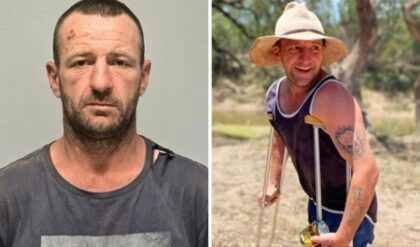
Breaking News: Police are offering a reward for information leading to Julian Ingram’s arrest, but a RUMORUS SPREADING about just ONE ADDRESS reveals what he fears
Shooting victims to be laid to rest as police offer reward for information leading to arrest of Julian Ingram Authorities believe the fugitive is still alive. Three victims of Julian Ingram’s alleged shooting spree in NSW will be laid to rest this…

THE CHAIR BY THE RIVER: Nicola Bulley’s phone was found neatly placed on a chair while a work call continued in silence — a chilling detail that has left many wondering why the device was left there
Retracing Nicola Bulley’s last known movements: Video tracks missing mother’s journey along river to bench where her phone was found after she vanished without a trace This video retraces the last known journey of missing mother-of-two Nicola Bulley who mysteriously vanished…
A WALKER SAID THE AREA WAS “EERILY QUIET” One local told reporters they passed the path shortly after 9:25 a.m.
A WALKER SAID THE AREA WAS “EERILY QUIET” One local told reporters they passed the path shortly after 9:25 a.m. They remembered seeing the dog… but no one else nearby. Investigators later described that stretch of riverbank as isolated and…

THE DOG WAS FOUND FIRST A woman walking near River Wyre around 9:33 a.m. noticed Nicola’s dog running loose
THE DOG WAS FOUND FIRST A woman walking near River Wyre around 9:33 a.m. noticed Nicola’s dog running loose. The harness was still attached… but strangely not clipped to the lead. Nearby, Nicola’s phone remained on the bench — still…

THE PHONE AT 9:20 AM: Nicola Bulley’s phone was found still connected to a work meeting on a bench beside River Wyre — but the mother of two had vanished minutes earlier, leaving investigators puzzled about what could happen in such a short moment
Nicola Bulley: Chilling reality of TikTok sleuthing laid bare as family reveal true extent of torment Ahead of a new BBC documentary about Nicola Bulley, the Mirror takes a look at the chilling reality of the amateur TikTok sleuths whose…
End of content
No more pages to load