Autopilot Override or Human Sabotage: The Air India Flight 171 Mystery Deepens
On June 12, 2025, Air India Flight 171, a Boeing 787-8 Dreamliner, crashed just 32 seconds after takeoff from Ahmedabad’s Sardar Vallabhbhai Patel International Airport, killing 260 people and leaving one sole survivor. The tragedy, the first fatal crash of a Boeing 787 since its introduction in 2011, has sparked intense global scrutiny. A preliminary report by India’s Aircraft Accident Investigation Bureau (AAIB) revealed that the aircraft’s fuel control switches were moved to the “cutoff” position seconds after takeoff, starving both engines and causing a catastrophic loss of thrust. Now, a leaked Air India training video, purportedly showing a maneuver matching the flight’s final 40 seconds, has added fuel to an already explosive debate: was this disaster caused by an autopilot override gone wrong or deliberate human sabotage? This article examines the incident, the training video, and the competing theories, drawing on available evidence and expert analysis.
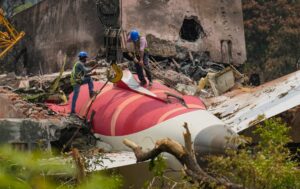
The Crash of Air India Flight 171
At 13:38 IST (08:08 UTC) on June 12, 2025, Air India Flight 171, bound for London Gatwick, took off from runway 23 in Ahmedabad under clear weather conditions. The aircraft, carrying 230 passengers and 12 crew members, reached a maximum altitude of 625 feet and an airspeed of 180 knots before disaster struck. According to the AAIB’s preliminary report, both fuel control switches transitioned from “RUN” to “CUTOFF” within one second of each other at 08:08:42 UTC, just three seconds after liftoff. This action cut fuel to the engines, leading to an immediate loss of thrust. The Ram Air Turbine (RAT) deployed seconds later, indicating a total power loss, and despite attempts to relight the engines, the aircraft crashed into the hostel block of B.J. Medical College, 1.7 kilometers from the runway, at 08:09:11 UTC. A chilling “MAYDAY” call was transmitted just six seconds before impact.
Cockpit voice recordings (CVR) captured a haunting exchange: one pilot asked, “Why did he cut off?” to which the other responded, “I didn’t.” The co-pilot, Clive Kunder, was flying the aircraft, while Captain Sumeet Sabharwal, with over 15,000 hours of experience, was monitoring. The switches were returned to “RUN” within nine seconds, with Engine 1 partially relighting but Engine 2 failing to recover thrust. The aircraft struck the ground nose-up at an 8-degree angle, with landing gear and flaps still in takeoff configuration.
The Leaked Training Video
The emergence of a leaked Air India training video has added a dramatic twist to the investigation. Allegedly obtained by an Italian newspaper and corroborated by Western sources, the video reportedly depicts a training scenario for Boeing 787 pilots, demonstrating a rare emergency maneuver involving the deliberate cutoff of fuel to both engines during takeoff to counter a specific autopilot malfunction. The maneuver, intended for extreme cases where the autopilot commands an unsafe climb rate or pitch, involves toggling the fuel control switches to “CUTOFF” to reset the flight management system, then quickly returning them to “RUN” to restore power. The video purportedly shows this sequence executed in a simulator, with the aircraft briefly losing thrust before recovering, matching the 40-second timeline of Flight 171’s final moments.

The video’s relevance lies in its eerie similarity to the crash sequence: fuel switches cut off one second apart, a brief period of power loss, and an attempt to restore fuel flow. This has led to two primary theories: an autopilot override attempt that went catastrophically wrong, or deliberate sabotage by one of the pilots. However, the video’s authenticity remains unverified, and Air India has not officially confirmed its existence. The Indian Commercial Pilots’ Association (ICPA) has condemned speculation about pilot actions, calling it “reckless” and “insensitive.”
Theory 1: Autopilot Override Gone Wrong
One theory posits that the pilots, facing an autopilot malfunction, attempted the maneuver depicted in the training video. The Boeing 787’s advanced fly-by-wire system and autopilot are highly automated, but software bugs or transient faults can occur. A notable precedent is an Airbus A330 incident described by MIT’s Professor John Thomas, where an autopilot bug caused an unexpected descent despite no pilot input. Similarly, Boeing whistleblower Ed Pierson has warned that electrical faults in the 787’s Electrical Wiring Interconnect System (EWIS) could mimic switch movements, falsely indicating pilot action.
In this scenario, Captain Sabharwal or First Officer Kunder may have believed the autopilot was commanding an unsafe maneuver, prompting them to cut fuel to reset the system, as trained. The AAIB report notes the aircraft’s low altitude (625 feet) and high drag configuration (gear and flaps down), which left no margin for error. Even if the maneuver was executed correctly, the 30-40 seconds required to spool up the engines was far longer than the 29 seconds from cutoff to crash. The CVR’s “Why did he cut off?” could reflect confusion over whether the autopilot or a pilot initiated the action, compounded by the “startle effect” and cockpit alarms. Retired FAA inspector Michael Daniel emphasized that the low altitude made recovery impossible, even if the switches were reset promptly.
Theory 2: Human Sabotage
The second theory, fueled by posts on X and media reports, suggests deliberate sabotage, with suspicion falling on Captain Sabharwal. The Wall Street Journal reported that the CVR indicates the captain turned off the fuel switches, remaining calm while the first officer panicked. The switches’ design—spring-loaded with a locking mechanism and metal guards—makes accidental activation highly unlikely. U.S. aviation expert John Nance noted that the one-second gap between switch movements suggests deliberate human action.
This theory draws parallels to cases like Germanwings Flight 9525, where a pilot intentionally crashed the aircraft. However, the ICPA and Indian investigators have rejected the “pilot suicide” narrative as baseless, citing the pilots’ extensive training and clean records. Captain Sabharwal, nearing retirement, had 8,596 hours on the 787, and no evidence suggests psychological distress. The CVR’s ambiguity—lacking voice identification—complicates attributing intent. Moreover, the rapid return of the switches to “RUN” suggests an attempt to recover, inconsistent with deliberate sabotage.
Counterarguments and Alternative Explanations

Several factors challenge both theories. The 787’s fuel control switches are designed to prevent accidental movement, and no mechanical faults were found in post-crash inspections of Air India’s 787 fleet. The RAT’s deployment just eight seconds after takeoff indicates a near-instantaneous power loss, ruling out gradual mechanical failure. Theories like bird strikes or fuel contamination, raised early in the investigation, have been largely dismissed, as no fire or explosion was observed, and weather conditions were optimal.
Boeing whistleblower Ed Pierson’s warning about EWIS faults suggests a possible electronic glitch mimicking switch movement, but the AAIB has not confirmed this. The training video, if authentic, raises questions about Air India’s protocols for such high-risk maneuvers at low altitudes. The absence of prior warnings or configuration errors (e.g., flaps or thrust settings) further narrows the focus to the cockpit’s actions or systems.
Implications and Ongoing Investigation
The Air India Flight 171 crash has profound implications for aviation safety. If an autopilot fault triggered the incident, it could prompt a reevaluation of the 787’s flight management systems. If human error or sabotage is confirmed, it will raise questions about pilot training and psychological screening. The AAIB, with support from the U.S. National Transportation Safety Board (NTSB) and the UK’s Air Accidents Investigation Branch, is analyzing the CVR and flight data recorder (FDR) to identify voices and confirm the sequence of events. A full report is expected within 12 months, per ICAO protocols.
The leaked training video, while unverified, underscores the need for transparency in airline procedures. Air India’s fleet-wide inspections found no anomalies, but the DGCA has mandated additional checks on 787 fuel systems. The sole survivor, Vishwash Kumar Ramesh, reported feeling thrust return briefly, aligning with Engine 1’s partial relight, but the low altitude doomed recovery efforts.
Conclusion

The Air India Flight 171 crash remains a perplexing tragedy, with the leaked training video intensifying the debate over autopilot override versus human sabotage. The precise match between the video’s maneuver and the crash timeline suggests either a failed emergency procedure or an unthinkable act of intent. Yet, the CVR’s ambiguity, the pilots’ attempts to recover, and the absence of mechanical faults leave more questions than answers. As investigators sift through data and wreckage, the aviation world watches closely, hoping to prevent another such disaster. The truth behind those final 40 seconds may redefine trust in automation, human judgment, or both.
News

A STRANGE DETAIL IN THE FRONT SEAT: According to several reports cited by local media, some images from the scene show a small item lying near Declan Berry’s driver’s seat — this seemingly minor detail is drawing attention to the final moments before the accident
Two teenagers in car that crashed into river identified by police The body of Eden Bunn, 16, has been recovered from the River Nene near Wisbech but searches are continuing for 18-year-old Declan Berry. The car crashed into the River…

Breaking News: Police are offering a reward for information leading to Julian Ingram’s arrest, but a RUMORUS SPREADING about just ONE ADDRESS reveals what he fears
Shooting victims to be laid to rest as police offer reward for information leading to arrest of Julian Ingram Authorities believe the fugitive is still alive. Three victims of Julian Ingram’s alleged shooting spree in NSW will be laid to rest this…

THE CHAIR BY THE RIVER: Nicola Bulley’s phone was found neatly placed on a chair while a work call continued in silence — a chilling detail that has left many wondering why the device was left there
Retracing Nicola Bulley’s last known movements: Video tracks missing mother’s journey along river to bench where her phone was found after she vanished without a trace This video retraces the last known journey of missing mother-of-two Nicola Bulley who mysteriously vanished…
A WALKER SAID THE AREA WAS “EERILY QUIET” One local told reporters they passed the path shortly after 9:25 a.m.
A WALKER SAID THE AREA WAS “EERILY QUIET” One local told reporters they passed the path shortly after 9:25 a.m. They remembered seeing the dog… but no one else nearby. Investigators later described that stretch of riverbank as isolated and…

THE DOG WAS FOUND FIRST A woman walking near River Wyre around 9:33 a.m. noticed Nicola’s dog running loose
THE DOG WAS FOUND FIRST A woman walking near River Wyre around 9:33 a.m. noticed Nicola’s dog running loose. The harness was still attached… but strangely not clipped to the lead. Nearby, Nicola’s phone remained on the bench — still…

THE PHONE AT 9:20 AM: Nicola Bulley’s phone was found still connected to a work meeting on a bench beside River Wyre — but the mother of two had vanished minutes earlier, leaving investigators puzzled about what could happen in such a short moment
Nicola Bulley: Chilling reality of TikTok sleuthing laid bare as family reveal true extent of torment Ahead of a new BBC documentary about Nicola Bulley, the Mirror takes a look at the chilling reality of the amateur TikTok sleuths whose…
End of content
No more pages to load