NETFLIX JUST DROPPED A PERIOD DRAMA THAT CUTS DEEP
Adapted from a celebrated novel, this isn’t corsets-and-ballrooms escapism — it’s a quiet, devastating slow burn. Every look means something. Every secret leaves damage. Every choice carries a cost.
Viewers are calling it unforgettable — the kind of story that lingers long after the credits fade. This isn’t comfort viewing. It’s the kind of period drama that gets under your skin and refuses to let go. More below 👇
*******
Netflix has unleashed a period drama that’s slicing straight through viewers’ defenses with surgical precision. Adapted from a remarkable novel, this isn’t the light, frothy corsets-and-ballrooms fare that dominates the genre. It’s a deliberate, devastating slow burn—intimate in its focus, restrained in its delivery, and emotionally ruthless in its honesty. Every loaded glance, every buried secret, every irreversible choice etches deeper scars, leaving audiences reeling long after the screen fades to black. Social media is ablaze with people confessing they’ve been “scarred,” “shattered,” or simply unable to shake it—this isn’t comfort viewing; it’s the kind that burrows under your skin and lingers like an ache you can’t ignore.
The film in question is Mothering Sunday (2021), the Graham Swift novel adaptation that’s experiencing a massive resurgence on Netflix in early 2026. Directed by Eva Husson, it stars Odessa Young as Jane Fairchild, a perceptive housemaid in post-World War I England, whose one fateful day off on Mothering Sunday 1924 leads to a charged, clandestine encounter with her upper-class lover, Paul Sheringham (Josh O’Connor). Their stolen moments of passion unfold against a backdrop of profound national and personal grief—the war has left families fractured, futures uncertain, and emotions tightly reined in.
What elevates this beyond typical period romance is its unflinching exploration of class, memory, regret, and the quiet ways love can endure catastrophe only to be eroded by time and society. The story flashes forward to Jane’s later life as a celebrated writer (portrayed in a poignant cameo by the late Glenda Jackson), revealing how that single afternoon’s intimacy reshapes her entire existence. It’s not about grand gestures or sweeping declarations; the devastation comes from what’s left unsaid, the paths not taken, and the relentless grip of “what if.”
Colin Firth and Olivia Colman, as the grieving Niven couple—employers to Jane—deliver supporting performances of heartbreaking subtlety. Firth’s Mr. Niven is a man hollowed out by loss, his gentleness masking profound sorrow; Colman’s Mrs. Niven is brittle elegance personified, her every restrained word and averted eye conveying oceans of unspoken pain. Their presence anchors the film’s emotional core: a portrait of a generation trying to rebuild while haunted by irreversible damage. The war’s shadow is everywhere—empty estates, missing sons, polite facades cracking under pressure—yet the drama never raises its voice. It whispers, and in that restraint lies its power.
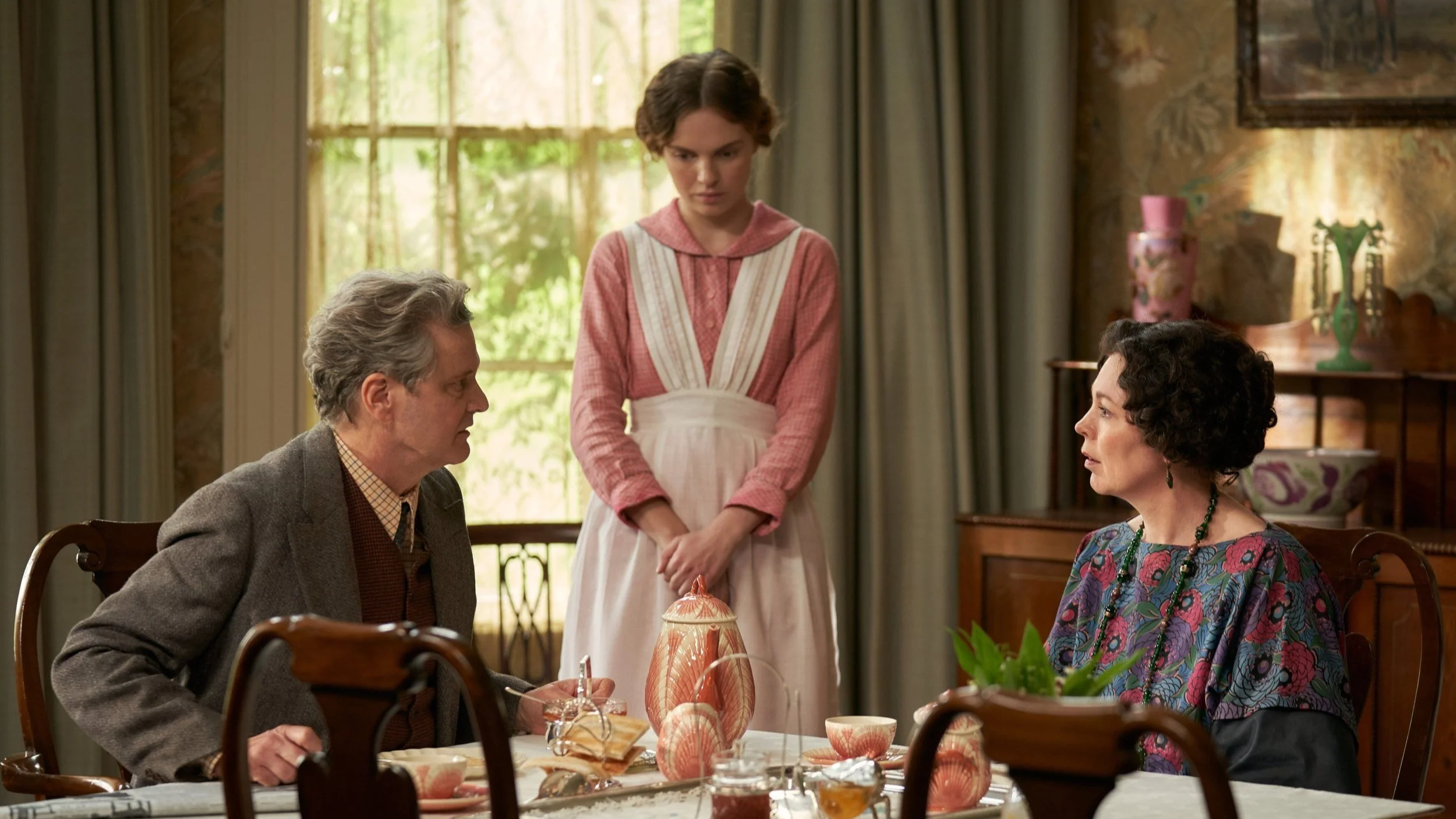
Critics and viewers alike have praised the film’s atmospheric beauty: sun-dappled English countryside that feels both idyllic and oppressive, a languid pace that allows emotions to accumulate like storm clouds, and a score that underscores rather than overwhelms. Upon its original release, it earned acclaim for its fidelity to Swift’s introspective prose and for refusing melodrama in favor of raw truth. Now, Netflix’s algorithm-fueled revival has turned it into 2026’s sleeper hit—posts describe it as “unforgettable,” “the kind of story that doesn’t end with the credits,” and “emotionally ruthless in the best way.” Fans report binge-watching in stunned silence, emerging changed, debating the characters’ choices for days.
This resurgence aligns perfectly with the current craving for thoughtful, character-driven period pieces amid flashier offerings. In an era of high-stakes spectacles, Mothering Sunday reminds us that the deepest cuts come from quiet moments: a hand hesitating before touch, a memory resurfacing unbidden, a future forever altered by one day’s decisions. It’s a meditation on how love can survive bombs and trenches yet falter against the slower erosions of class, duty, and time. Regret, here, is the true antagonist—unyielding, patient, and merciless.
If you’re ready for something that challenges as much as it moves you, stream it now. You’ll understand the obsession: this film doesn’t just tell a story—it leaves one imprinted on you, refusing to fade.
News

A STRANGE DETAIL IN THE FRONT SEAT: According to several reports cited by local media, some images from the scene show a small item lying near Declan Berry’s driver’s seat — this seemingly minor detail is drawing attention to the final moments before the accident
Two teenagers in car that crashed into river identified by police The body of Eden Bunn, 16, has been recovered from the River Nene near Wisbech but searches are continuing for 18-year-old Declan Berry. The car crashed into the River…

Breaking News: Police are offering a reward for information leading to Julian Ingram’s arrest, but a RUMORUS SPREADING about just ONE ADDRESS reveals what he fears
Shooting victims to be laid to rest as police offer reward for information leading to arrest of Julian Ingram Authorities believe the fugitive is still alive. Three victims of Julian Ingram’s alleged shooting spree in NSW will be laid to rest this…

THE CHAIR BY THE RIVER: Nicola Bulley’s phone was found neatly placed on a chair while a work call continued in silence — a chilling detail that has left many wondering why the device was left there
Retracing Nicola Bulley’s last known movements: Video tracks missing mother’s journey along river to bench where her phone was found after she vanished without a trace This video retraces the last known journey of missing mother-of-two Nicola Bulley who mysteriously vanished…
A WALKER SAID THE AREA WAS “EERILY QUIET” One local told reporters they passed the path shortly after 9:25 a.m.
A WALKER SAID THE AREA WAS “EERILY QUIET” One local told reporters they passed the path shortly after 9:25 a.m. They remembered seeing the dog… but no one else nearby. Investigators later described that stretch of riverbank as isolated and…

THE DOG WAS FOUND FIRST A woman walking near River Wyre around 9:33 a.m. noticed Nicola’s dog running loose
THE DOG WAS FOUND FIRST A woman walking near River Wyre around 9:33 a.m. noticed Nicola’s dog running loose. The harness was still attached… but strangely not clipped to the lead. Nearby, Nicola’s phone remained on the bench — still…

THE PHONE AT 9:20 AM: Nicola Bulley’s phone was found still connected to a work meeting on a bench beside River Wyre — but the mother of two had vanished minutes earlier, leaving investigators puzzled about what could happen in such a short moment
Nicola Bulley: Chilling reality of TikTok sleuthing laid bare as family reveal true extent of torment Ahead of a new BBC documentary about Nicola Bulley, the Mirror takes a look at the chilling reality of the amateur TikTok sleuths whose…
End of content
No more pages to load