The Fatal Blow: How One Moment Doomed Disney’s Snow White to an $800M Disaster—Uncover the Shocking Truth Behind This Hollywood Catastrophe!
The Fatal Blow: How One Moment Doomed Disney’s Snow White to an $800M Disaster
In the high-stakes world of Hollywood blockbusters, few missteps have been as catastrophic as Disney’s 2025 live-action Snow White. The film, starring Rachel Zegler as the iconic princess and Gal Gadot as the Evil Queen, was poised to be a cornerstone of Disney’s live-action remake strategy. Instead, it has become a cautionary tale, with viral claims asserting it cost Disney $800 million in losses, a figure tied to a pivotal moment that sealed its fate. But what was this exact moment, and how did a single decision—or series of blunders—lead to such a colossal financial and reputational disaster? Let’s unravel the saga that’s left the Mouse House reeling and sparked a firestorm across YouTube, X, and beyond.
The Snow White Dream Turns Nightmare
Disney’s Snow White, released on March 21, 2025, was a $270 million gamble to reimagine the 1937 animated classic that built the studio’s legacy. Directed by Marc Webb, the film aimed to modernize the fairy tale, casting Zegler, a Latina actress, as Snow White, and replacing the traditional dwarfs with CGI “magical creatures” after backlash from actor Peter Dinklage. The story shifted focus from romance to empowerment, with Andrew Burnap as a bandit named Jonathan replacing the Prince. Despite a $111 million marketing push, the film opened to a dismal $43 million domestically and $86.1 million globally, per The Hollywood Reporter, and has since grossed only $194.1 million worldwide against a total cost of $410 million, including marketing, resulting in a $115 million loss, per Deadline.
The claim that Snow White cost Disney $800 million to break even, popularized by World of Reel, stems from estimates that the film’s budget ballooned to $350 million when factoring in reshoots, delays, and marketing, requiring $700–$800 million in box office revenue to break even due to theaters keeping roughly 50% of ticket sales. While the $800 million loss figure is an exaggeration—actual losses are closer to $115 million—the narrative of a historic flop has taken hold, fueled by one critical moment that set the stage for disaster.
The Exact Moment: Zegler’s “Outdated” Comment Ignites Backlash
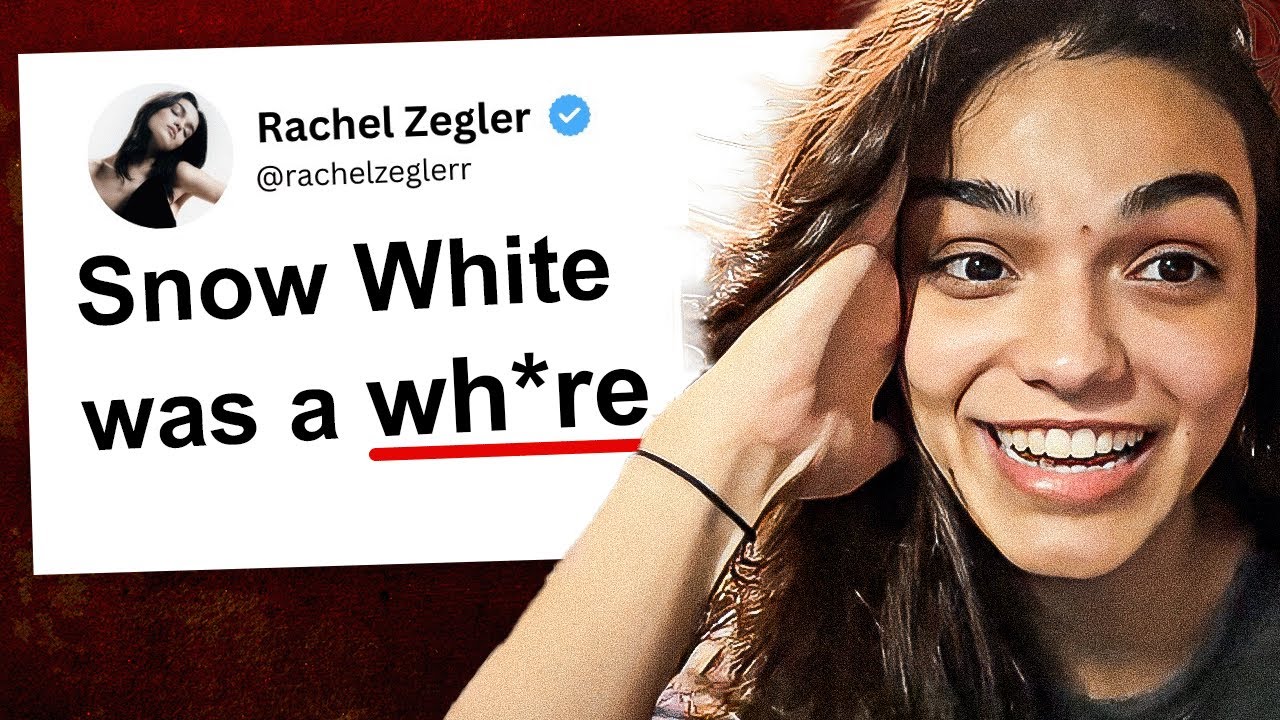
The pivotal moment that doomed Snow White occurred in August 2024, when Rachel Zegler, during a promotional interview, called the 1937 original “extremely dated” and described Prince Charming as a “stalker.” She emphasized the remake’s focus on Snow White’s leadership, saying, “She’s not going to be saved by a prince—she’s the one in charge.” These comments, meant to highlight the film’s feminist reimagining, went viral, sparking outrage among fans who cherished the classic. X posts, like one from @KiyoteBlackNow, labeled Zegler’s remarks “disrespectful,” while YouTube videos with titles like “Rachel Zegler TANKS Snow White with WOKE Rant!” amassed millions of views, amplifying the backlash.
This moment was a turning point. The teaser trailer, released the same month, became YouTube’s most disliked film teaser, garnering nearly a million dislikes due to its CGI dwarfs and perceived deviation from the original, per Wikipedia. Zegler’s subsequent social media posts, including a “free Palestine” comment that prompted producer Marc Platt to intervene, further alienated audiences, with her refusal to retract the post intensifying the cultural firestorm, per Variety. The negative buzz snowballed, with Forbes noting that by March 2025, the film had “limped across the $100 million mark,” far short of the $500–$675 million needed to break even.
The Perfect Storm of Missteps
While Zegler’s comments were the spark, a series of production and strategic errors fanned the flames. The film’s budget, initially set at $200–$210 million, soared to $269.4 million by December 2023 due to COVID delays, a set fire, 2023 labor strikes, and extensive reshoots, per Forbes. A $55.5 million UK tax reimbursement reduced net costs to $213.9 million, but marketing pushed the total investment to $410 million. Peter Dinklage’s 2022 criticism of the dwarfs as “backward” led Disney to replace them with CGI characters, a decision that cost millions and drew ire for its “creepy” visuals, as critics noted in Forbes.
Creative choices also faltered. The film’s 43% Rotten Tomatoes score reflected critics’ disdain for its “lifeless CGI” and “muddled” narrative, per NBC News. Audiences gave it a B+ CinemaScore, a rare low for Disney remakes, which typically earn A grades, per The Hollywood Reporter. The absence of iconic songs like “Someday My Prince Will Come” and the shift away from romance alienated families, while the $111 million marketing campaign failed to counter the negative narrative. Variety reported Disney scaled back the premiere to avoid further PR headaches, a sign of the studio’s growing panic.
Zegler’s polarizing presence was a double-edged sword. Her casting as a Latina Snow White drew racist backlash, with detractors arguing she didn’t fit the “skin as white as snow” description, per Refinery29. Her pro-Palestine and anti-Trump posts, including an expletive-laden tirade after the 2024 election, further divided audiences, with Daily Mail reporting Disney hired a social media consultant to curb her posts. While supporters praised her authenticity, the controversies made her a lightning rod, with Vanity Fair noting Disney’s attempt to scapegoat her turned her into an “icon” for some fans.
The $800M Myth and Financial Reality
The $800 million figure, while attention-grabbing, overstates the loss. World of Reel estimated Snow White needed $800 million to break even, assuming a $350 million total cost (production plus marketing) and the industry rule that films must gross 2–2.5 times their budget to profit, given theaters’ 50% cut. However, Deadline pegs the actual loss at $115 million, based on a $225 million global box office, $295 million in total revenues (including streaming and merchandise), and $410 million in expenses. The film’s 66% second-weekend drop to $14.2 million domestically signaled weak staying power, per Yahoo Finance.
Disney’s history of salvaging underperformers offers some hope. Business Insider noted that Mufasa: The Lion King (2024) grew from a $35.4 million opening to $718 million globally, and Elemental became a streaming hit despite a slow start. Snow White may find a second life on Disney+, but its B+ CinemaScore and 73% audience Rotten Tomatoes score suggest limited repeat viewership compared to hits like The Lion King ($1.6 billion), per NBC News. The film’s $143.1 million global haul after two weeks, per Deadline, underscores its struggle to reach even Dumbo’s $353 million, a fellow flop with a $170 million budget.
Disney’s Broader Crisis
The Snow White debacle reflects deeper issues in Disney’s live-action remake strategy. The studio’s reliance on remakes, which earned $7 billion from 2010–2019, has waned, with ScreenRant noting The Lion King (2019) as the last major hit at $1.657 billion. Recent flops like The Marvels and Indiana Jones and the Dial of Destiny highlight audience fatigue, per SlashFilm. Disney’s pause on its Tangled remake, reported by ScreenRant, signals a strategic retreat, with CEO Bob Iger admitting in 2023 that costs must be curbed, per Forbes.
The Snow White fallout has also intensified scrutiny on Zegler. Her career, once ascendant with West Side Story, faces hurdles, though her upcoming roles in Evita (June 2025) and Y2K (December 2025) suggest resilience, per Forbes. Disney’s attempt to blame her, as an unnamed producer’s harsh criticism indicated, has sparked debate, with Refinery29 arguing she’s unfairly targeted as a young Latina actress. Fans on X are split, with @SaAuCaMa15 noting the film’s $150 million gross against a $270 million budget, calling Zegler’s comments a “mess,” while others defend her authenticity.
The Moment’s Lasting Impact
The exact moment Zegler’s “outdated” comment ignited backlash wasn’t just a PR misstep—it was the catalyst for a cascade of negative sentiment that Disney couldn’t contain. The viral outrage, amplified by a disliked trailer and Zegler’s political posts, turned Snow White into a cultural battleground, overshadowing its creative intent. Collider estimated the film needed $540–$675 million to break even, a target it never approached, with its $194.1 million global gross marking it as one of Disney’s priciest flops, per Wikipedia.
This disaster has forced Disney to rethink its approach. Variety reports upcoming remakes like Lilo & Stitch and Moana face heightened scrutiny, and the studio’s 7% box office revenue lag behind 2024 underscores the urgency, per Comscore. The Snow White moment—Zegler’s ill-fated interview—proved that in today’s polarized climate, a single spark can incinerate hundreds of millions. As Business Insider suggests, Disney may recoup some losses through streaming and merchandise, but the reputational damage and $115 million loss are a grim reminder: even fairy tales can end in tragedy.
What’s Next?
For Zegler, the road ahead is fraught but not fatal. Her Evita role and Met Gala invite signal industry support, but she’ll need to navigate public perception carefully. Disney, meanwhile, faces a reckoning. With A Minecraft Movie (April 4, 2025) and Thunderbolts (May 2, 2025) looming, the studio must balance innovation with nostalgia to avoid another Snow White. The $800 million figure may be a myth, but the real cost—financial, creative, and cultural—is undeniable. Hollywood is watching, and so are audiences, waiting to see if Disney can find its happily ever after.