Craft a Permanent Shadow Blade in Baldur’s Gate 3 Patch 8 to Dominate with Psychic Fury—Unlock the Secret to This Game-Changing Spell’s Lasting Power! 👇
How to Craft a “Permanent” Shadow Blade in Baldur’s Gate 3 Patch 8: A Psychic Powerhouse
Baldur’s Gate 3’s Patch 8, released on April 15, 2025, transformed the Shadow Blade spell from a niche item-based ability into a meta-defining level 2 Illusion spell, available to Sorcerers, Warlocks, Wizards, Arcane Tricksters, and Eldritch Knights. Previously accessible only via the Shadow Blade Ring, this spell now summons a shortsword dealing 2d8 Psychic damage (upcastable to 4d8) that persists until a long rest, earning the community-coined term “permanent” for its reliability. Sources like bg3.wiki, GameRant, and PC Gamer highlight its synergy with new mechanics like the Resonance Stone and Booming Blade, making it a cornerstone of Patch 8’s most broken builds. This article details how to craft and maintain a “permanent” Shadow Blade, the best builds to maximize its potential, community reactions, and its impact on the game’s balance.
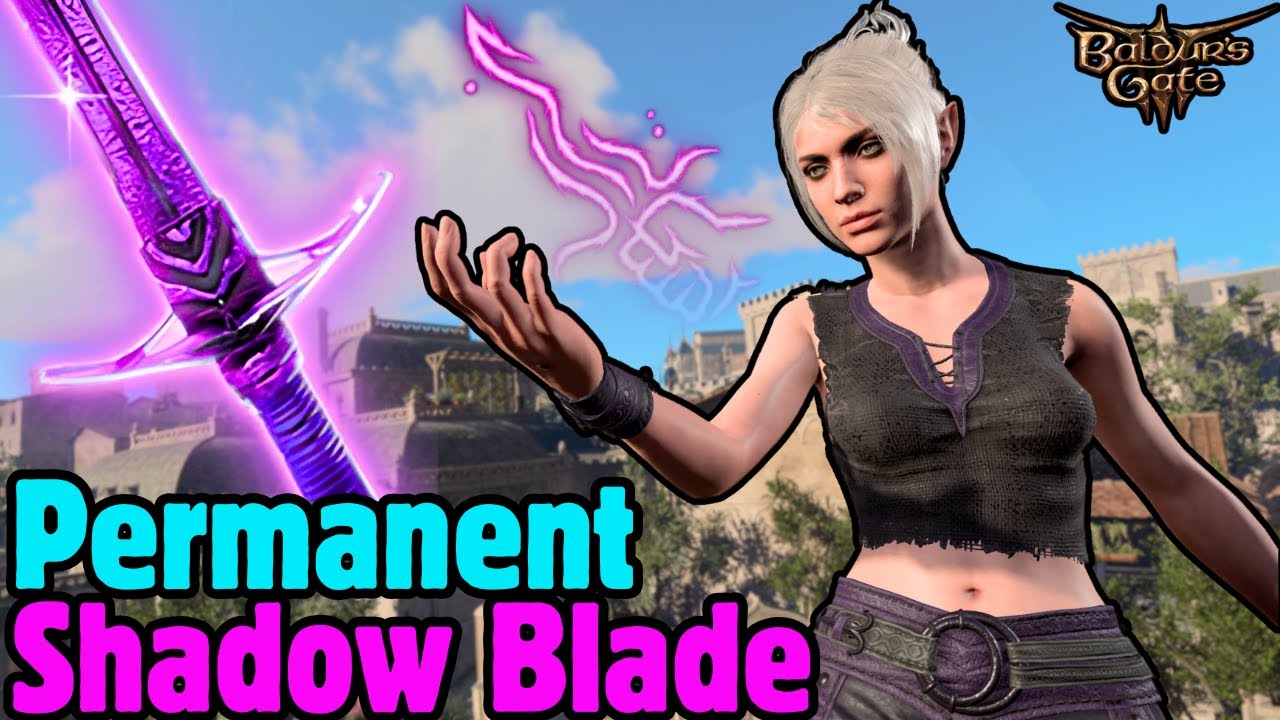
Understanding the Shadow Blade Spell
The Shadow Blade spell, as detailed by bg3.wiki, creates a shortsword in the caster’s main hand that deals 2d8 Psychic damage (plus Strength or Dexterity modifier) and grants Advantage on Attack Rolls against Lightly or Heavily Obscured targets, such as those in dim light or darkness. Key features include:
Duration: The blade lasts until the caster’s next long rest, even if unequipped, as long as it remains in their inventory, making it “permanent” compared to concentration-based spells that vanish when disrupted.
Casting: Requires a Bonus Action and a level 2 spell slot (or higher for upcasting). It does not require Concentration, unlike its pre-Patch 8 version via the Shadow Blade Ring.
Upcasting: Using a 3rd or 4th-level slot increases damage to 3d8 Psychic; a 5th or 6th-level slot boosts it to 4d8.
Proficiency: The caster gains innate proficiency with the blade, classified as a Simple weapon (not Martial), allowing Wizards and Sorcerers to wield it effectively without Shortsword proficiency.
Properties: The blade has Finesse, Light, and Dippable traits (except for fire) and cannot be disarmed, making it versatile for melee builds.
The spell is now learnable by Sorcerers, Warlocks, and Wizards at level 3, Arcane Tricksters at level 7, and Eldritch Knights at level 8. Its “permanent” nature stems from its long-rest duration, a significant upgrade from the ring’s concentration-based version, which could be lost if the caster was hit or stunned.
How to Make a “Permanent” Shadow Blade
To create and maintain a Shadow Blade that lasts until a long rest, follow these steps:
Select a Compatible Class: Choose a Sorcerer, Warlock, or Wizard at level 3 to access the spell early, or multiclass into Arcane Trickster (Rogue) or Eldritch Knight (Fighter) for later access. The Shadow Magic Sorcerer or Hexblade Warlock are optimal due to subclass synergies, per GameRant.
Learn the Spell: Add Shadow Blade to your spellbook or known spells upon leveling up. Alternatively, obtain the Shadow Blade Ring in Act 2 by completing the “Find Arabella’s Parents” quest and speaking to Arabella at camp, though the ring’s version is less reliable due to Concentration.
Cast the Spell: Use a Bonus Action to cast Shadow Blade with a level 2 (or higher) spell slot. The blade appears in your main hand and remains equipped or in your inventory until a long rest.
Maintain the Blade: Avoid long rests to keep the blade active across multiple encounters. The blade can be unequipped and re-equipped without recasting, as long as it stays in your possession. If you lose it (e.g., by dropping it), recast the spell.
Enhance with Gear and Buffs: Equip the Resonance Stone (found in Act 2’s Mind Flayer Colony) to double all Psychic damage within its aura, making Shadow Blade deal 4d8 (or up to 8d8 when upcast). Use the Strange Conduit Ring (+1d4 Psychic damage while concentrating on a spell) and Elixir of Cloud Giant Strength (Strength 27, +9 modifier) for maximum damage.
Note: The Shadow Blade’s Advantage against obscured targets is bugged and may apply to all attacks (including spells) while held, per GameRant’s testing, though bg3.wiki reports the dim light/darkness Advantage as non-functional.
Optimal Builds for Shadow Blade
To maximize the Shadow Blade’s potential, consider these builds, tailored for Patch 8’s mechanics:
1. Shadow Magic Sorcerer/Paladin (Sorcadin)
Levels: Sorcerer 6 (Shadow Magic)/Paladin 6 (Oath of Vengeance)
Why It Works: Combines Shadow Blade’s Psychic damage with Divine Smite for radiant damage, per Deltia’s Gaming. Shadow Magic’s Eyes of the Dark lets you see through your own Darkness spell, granting Advantage with Shadow Blade. Metamagic (e.g., Quickened Spell) allows casting Shadow Blade and attacking in one turn.
Key Gear: Resonance Stone, Boots of Stormy Clamour (+Reverberation stacks), Markoheshkir (staff for spellcasting). Use Elixir of Cloud Giant Strength for 27 Strength.
Mechanics: Cast Darkness on yourself, attack with Shadow Blade (4d8 Psychic with level 5 slot, doubled to 8d8 with Resonance Stone), and add Divine Smite (2d8 Radiant). Booming Blade adds 2d8 Thunder damage.
Damage Potential: Up to 100 damage per hit with max Strength and critical hits, per Deltia’s Gaming.
Downside: Requires high Strength and Charisma, slowing early-game progression.
2. Hexblade Warlock/Swashbuckler Rogue
Levels: Warlock 5 (Hexblade)/Rogue 7 (Swashbuckler)
Why It Works: Hexblade’s Curse adds bonus damage and crits on 19–20, while Charisma-based attacks simplify stats. Swashbuckler’s Sneak Attack (+4d6) and Fancy Footwork enable hit-and-run tactics, per PC Gamer.
Key Gear: Shadow Blade Ring (backup), Risky Ring (+Advantage on attacks), Balduran’s Giantslayer (critical hit synergy).
Mechanics: Cast Shadow Blade (3d8 with level 3 slot), use Booming Blade, and apply Sneak Attack. Hexblade’s Staggering Smite (4d6 Psychic) adds burst damage.
Damage Potential: 239–437+ damage per turn with critical hits and Cloak of Cunning Brume, per fextralife.
Downside: Gear-dependent and weak against Psychic-immune enemies like Steel Watchers.
3. Bladesinger Wizard
Levels: Wizard 12 (Bladesinging)
Why It Works: Bladesong boosts AC, movement, and Concentration, while Extra Attack allows two Shadow Blade attacks. Shadow Blade’s Advantage enhances spell attacks, per GameRant.
Key Gear: Phalar Aluve (radiant damage), Coruscation Ring (+Arcane Acuity), Resonance Stone.
Mechanics: Pre-buff with Mirror Image and Haste, cast Shadow Blade (4d8), and use Booming Blade for additional Thunder damage. High AC and mobility make you nearly untouchable.
Damage Potential: 60–80 damage per turn with upcast Shadow Blade and critical hits.
Downside: Low HP requires careful positioning.
Community Reaction and Balance Concerns
The Shadow Blade’s revamp has electrified the community. X posts from @pcgamer highlight its synergy with the Resonance Stone, dubbing it “Sicko Mode” for doubling Psychic damage, a combo that’s “taken the BG3 Builds subreddit by storm.” Reddit’s r/BG3builds praises its versatility, with users calling it a “game-changer” for melee spellcasters, especially when paired with Booming Blade. A YouTube guide titled “How to Make a PERMANENT SHADOW BLADE in Baldur’s Gate 3 Patch 8” (April 21, 2025) suggests entire parties could wield Shadow Blades, though details are vague.
However, balance concerns linger. PC Gamer’s stress test reports warned that Shadow Blade’s lack of Concentration and high base damage, especially with Resonance Stone, risks eclipsing other melee builds like the Bladesinger or Paladin. Some r/BaldursGate3 users argue it “optimizes the fun out” of Honour Mode by trivializing encounters, echoing debates over Booming Blade’s power. Others defend it, citing Baldur’s Gate 3’s single-player nature, where “breaking” the game is part of the fun, per IGN’s Patch 8 notes.
Larian’s decision to make Shadow Blade a standard spell, rather than nerfing its duration or damage, reflects their embrace of player creativity, as seen with other Patch 8 combos like the Monk’s 100 million damage kick. However, bugs—such as the inconsistent Advantage mechanic—may require hotfixes, per bg3.wiki.
Impact on Gameplay and Legacy
The “permanent” Shadow Blade reshapes Baldur’s Gate 3’s meta, making melee spellcasters viable in Honour Mode and encouraging hybrid builds. Its synergy with Psychic-damage amplifiers like the Resonance Stone and Strange Conduit Ring, combined with upcasting, positions it as Patch 8’s most overpowered spell, per Deltia’s Gaming. The spell’s accessibility to multiple classes broadens build variety, fulfilling Patch 8’s goal of enhancing gameplay options, per GameRant.
For the RPG genre, Shadow Blade’s success highlights Baldur’s Gate 3’s strength: rewarding experimentation within a flexible ruleset. Unlike AAA RPGs criticized for rigid designs (e.g., BioWare’s struggles, per Mark Darrah), Larian’s sandbox empowers players to craft godlike builds, as seen in community mods like “SCAG Cantrips and Shadow Blade” on Nexus Mods.
As Larian moves to projects like Excalibur, the Shadow Blade’s legacy will endure as a symbol of Patch 8’s ambition. Whether you’re a Sorcerer slashing through the Underdark or a Warlock smiting foes in Baldur’s Gate, this spell proves why Baldur’s Gate 3 remains a benchmark for RPG innovation.