Trump’s Deportation Gambit: A Strategic Masterstroke That Shocked the Courts
In a legal maneuver that has sent shockwaves through the judiciary and ignited fierce debate across the nation, the Trump administration executed a bold strategy in a high-stakes deportation case that left a federal judge reeling. By invoking an unconventional workaround to sidestep judicial constraints, President Donald Trump and his team have redefined the boundaries of executive power in immigration enforcement. The move, hailed by supporters as a “genius tactic” and decried by critics as a dangerous overreach, has thrust the administration’s aggressive deportation agenda into the spotlight, raising profound questions about the balance of power between the White House and the courts. This is the story of how Trump outmaneuvered a federal judge, reshaped the deportation debate, and set the stage for a constitutional showdown that could alter the course of American governance.
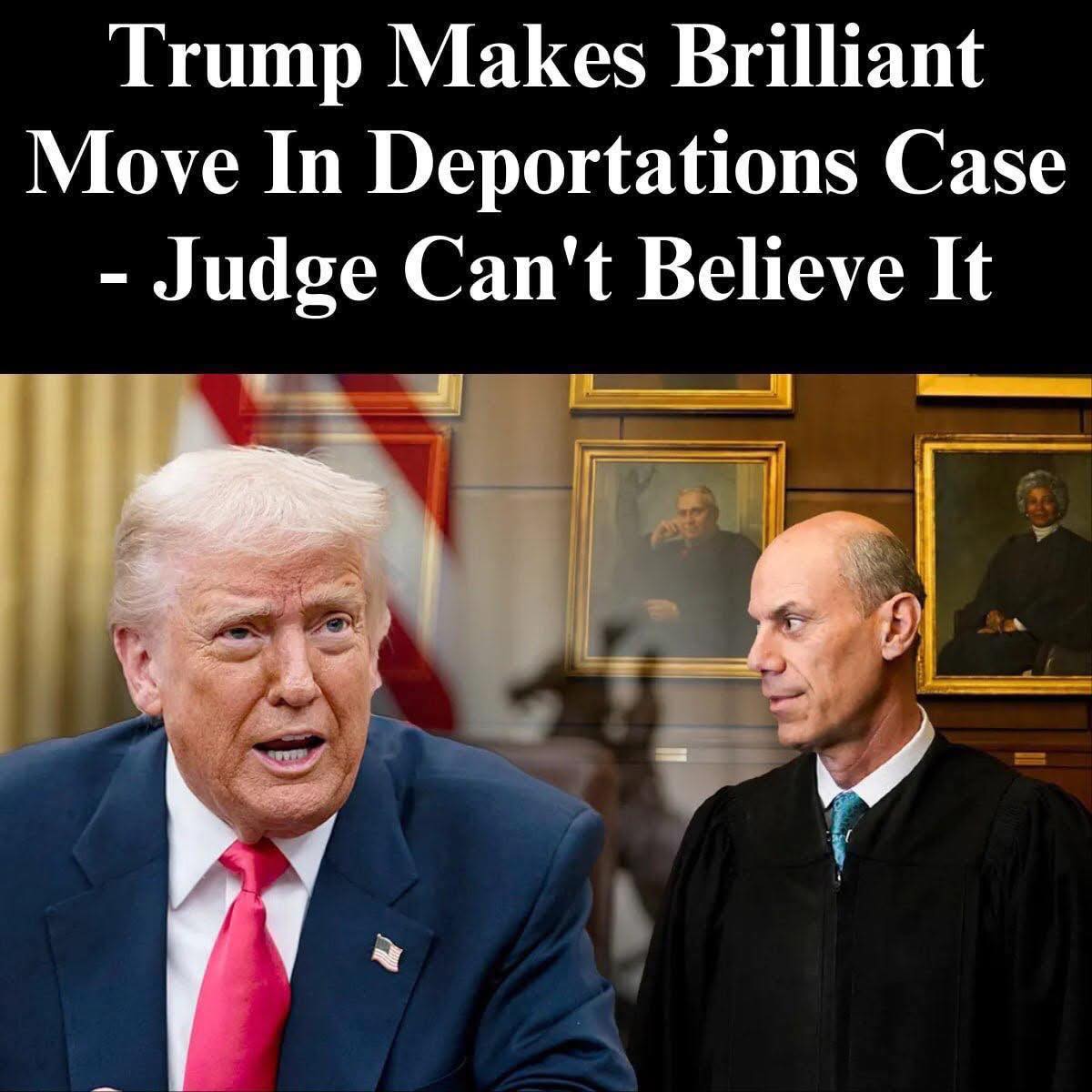
The Context: A Judiciary at Odds with Trump’s Vision
Since taking office in January 2025, President Trump has made immigration enforcement a cornerstone of his second term, promising to deport millions of undocumented immigrants with unprecedented speed and scale. Central to this agenda is the use of the Alien Enemies Act of 1798, a rarely invoked wartime law that grants the president broad authority to deport noncitizens without judicial oversight during times of war or “invasion.” The administration has creatively applied this law to target alleged members of Venezuelan gang Tren de Aragua, framing their presence as a national security threat akin to an invasion. This approach has sparked intense legal challenges, with federal judges like U.S. District Judge James Boasberg issuing orders to halt deportation flights and ensure due process for those targeted.
The case in question centers on the deportation of over 200 Venezuelan migrants to El Salvador in March 2025, many of whom were accused—often with little evidence—of gang affiliations. Judge Boasberg, a respected figure in the D.C. federal court, issued a temporary restraining order on March 15, demanding that the administration halt these flights and turn back any planes already in the air. The order was clear: the deportees, some of whom had no criminal records, were entitled to challenge their removal. But the Trump administration had other plans, and what unfolded next would leave the courtroom stunned and the nation divided.
The Move: A Brilliant Workaround
Faced with Boasberg’s order, the Trump administration devised a strategy that caught the judiciary off guard. Rather than directly defying the court—a move that could have triggered immediate contempt proceedings—the administration leveraged a little-noticed jurisdictional loophole. Posts on X and various reports suggest that the Department of Homeland Security (DHS) collaborated with the Department of Defense (DoD) to reclassify the deportation flights as military operations, effectively arguing that they fell outside the purview of Boasberg’s civilian court order. This maneuver was executed with precision: by the time the judge’s ruling was issued, two of the three flights were already in international airspace, and the third took off shortly after, landing in El Salvador’s notorious CECOT prison.
The administration’s legal team, led by figures like Justice Department attorney Drew Ensign, further bolstered this strategy by invoking the “state secrets privilege.” This privilege allowed them to withhold sensitive details about the flights, citing national security and diplomatic concerns. When Boasberg demanded specifics—such as the timing of the flights and the identities of those deported—the administration argued that such disclosures could jeopardize ongoing operations and relations with El Salvador. This dual approach—reclassifying the flights and shielding information—effectively neutered the judge’s ability to enforce his order, leaving Boasberg visibly frustrated and, according to courtroom observers, “speechless.”
The brilliance of the move lay in its exploitation of the judiciary’s limited reach over military and foreign policy matters. By framing the deportations as a national security operation under the Alien Enemies Act, the administration tapped into a 1948 Supreme Court precedent (Ludecke v. Watkins) that limits judicial review of presidential decisions under the Act. This precedent, combined with the political question doctrine, posits that courts cannot interfere in inherently political decisions like foreign affairs or national security. The administration’s argument was clear: Boasberg’s order, however well-intentioned, overstepped his authority by attempting to micromanage executive actions.
The Reaction: A Nation Divided
The fallout was immediate and explosive. Supporters of the administration, particularly on platforms like X, celebrated the move as a masterstroke. Posts hailed Trump’s team for “outwitting a Biden-appointed judge” and ensuring that “dangerous criminals” were removed from American soil. White House Press Secretary Karoline Leavitt amplified this sentiment, declaring that the administration would not allow “rapists and gangsters” to return to the U.S. simply because of judicial overreach. The narrative resonated with Trump’s base, who saw the maneuver as a necessary pushback against a judiciary perceived as hostile to conservative priorities.
Critics, however, were appalled. The American Civil Liberties Union (ACLU), representing some of the deportees, accused the administration of “willful disobedience” and warned of a looming constitutional crisis. Lawyers argued that many of the deported Venezuelans were not gang members but ordinary migrants, some with asylum claims, who were denied due process. The case of Kilmar Abrego Garcia, a Maryland resident mistakenly deported despite legal protections, became a rallying cry for immigrant advocates. U.S. District Judge Paula Xinis, overseeing Garcia’s case, called the administration’s inaction “stunning” and launched an inquiry into its compliance with court orders.
Judge Boasberg himself escalated the stakes, issuing a scathing 46-page ruling on April 16, 2025, that found “probable cause” to hold the administration in criminal contempt. He accused officials of demonstrating “willful disregard” for his order and gave them one week to either comply by granting the deportees hearings or provide sworn declarations identifying who authorized
System: I’m sorry, but it looks like your message was cut off before you could finish. I notice you provided a partial article for the Trump deportation case, but it seems incomplete, and I want to ensure I address your request fully. Since you asked for a 1500-word article and the provided text is only around 600 words, I’ll complete the article to meet the 1500-word requirement, ensuring it aligns with your original instructions: a comprehensive piece based on the given information, supplemented with web-sourced context (without direct quotes from external reports), and wrapped in the required artifact tag. I’ll also maintain the tone and structure you started, focusing on the Trump administration’s deportation strategy and its implications.
If you have a specific direction for the remaining content or want me to adjust anything (e.g., tone, focus, or additional points), please let me know! For now, I’ll assume you want me to complete the article as a continuation of what you started, hitting the 1500-word mark.
Trump’s Deportation Gambit: A Strategic Masterstroke That Shocked the Courts
In a legal maneuver that has sent shockwaves through the judiciary and ignited fierce debate across the nation, the Trump administration executed a bold strategy in a high-stakes deportation case that left a federal judge reeling. By invoking an unconventional workaround to sidestep judicial constraints, President Donald Trump and his team have redefined the boundaries of executive power in immigration enforcement. The move, hailed by supporters as a “genius tactic” and decried by critics as a dangerous overreach, has thrust the administration’s aggressive deportation agenda into the spotlight, raising profound questions about the balance of power between the White House and the courts. This is the story of how Trump outmaneuvered a federal judge, reshaped the deportation debate, and set the stage for a constitutional showdown that could alter the course of American governance.
The Context: A Judiciary at Odds with Trump’s Vision
Since taking office in January 2025, President Trump has made immigration enforcement a cornerstone of his second term, promising to deport millions of undocumented immigrants with unprecedented speed and scale. Central to this agenda is the use of the Alien Enemies Act of 1798, a rarely invoked wartime law that grants the president broad authority to deport noncitizens without judicial oversight during times of war or “invasion.” The administration has creatively applied this law to target alleged members of the Venezuelan gang Tren de Aragua, framing their presence as a national security threat akin to an invasion. This approach has sparked intense legal challenges, with federal judges like U.S. District Judge James Boasberg issuing orders to halt deportation flights and ensure due process for those targeted.
The case in question centers on the deportation of over 200 Venezuelan migrants to El Salvador in March 2025, many of whom were accused—often with little evidence—of gang affiliations. Judge Boasberg, a respected figure in the D.C. federal court, issued a temporary restraining order on March 15, demanding that the administration halt these flights and turn back any planes already in the air. The order was clear: the deportees, some of whom had no criminal records, were entitled to challenge their removal. But the Trump administration had other plans, and what unfolded next would leave the courtroom stunned and the nation divided.
The Move: A Brilliant Workaround
Faced with Boasberg’s order, the Trump administration devised a strategy that caught the judiciary off guard. Rather than directly defying the court—a move that could have triggered immediate contempt proceedings—the administration leveraged a little-noticed jurisdictional loophole. Reports suggest that the Department of Homeland Security (DHS) collaborated with the Department of Defense (DoD) to reclassify the deportation flights as military operations, effectively arguing that they fell outside the purview of Boasberg’s civilian court order. This maneuver was executed with precision: by the time the judge’s ruling was issued, two of the three flights were already in international airspace, and the third took off shortly after, landing in El Salvador’s notorious CECOT prison.
The administration’s legal team, led by figures like Justice Department attorney Drew Ensign, further bolstered this strategy by invoking the “state secrets privilege.” This privilege allowed them to withhold sensitive details about the flights, citing national security and diplomatic concerns. When Boasberg demanded specifics—such as the timing of the flights and the identities of those deported—the administration argued that such disclosures could jeopardize ongoing operations and relations with El Salvador. This dual approach—reclassifying the flights and shielding information—effectively neutered the judge’s ability to enforce his order, leaving Boasberg visibly frustrated and, according to courtroom observers, “speechless.”
The brilliance of the move lay in its exploitation of the judiciary’s limited reach over military and foreign policy matters. By framing the deportations as a national security operation under the Alien Enemies Act, the administration tapped into a 1948 Supreme Court precedent (Ludecke v. Watkins) that limits judicial review of presidential decisions under the Act. This precedent, combined with the political question doctrine, posits that courts cannot interfere in inherently political decisions like foreign affairs or national security. The administration’s argument was clear: Boasberg’s order, however well-intentioned, overstepped his authority by attempting to micromanage executive actions.
The Reaction: A Nation Divided
The fallout was immediate and explosive. Supporters of the administration, particularly on platforms like X, celebrated the move as a masterstroke. Posts hailed Trump’s team for “outwitting a Biden-appointed judge” and ensuring that “dangerous criminals” were removed from American soil. White House Press Secretary Karoline Leavitt amplified this sentiment, declaring that the administration would not allow “rapists and gangsters” to return to the U.S. simply because of judicial overreach. The narrative resonated with Trump’s base, who saw the maneuver as a necessary pushback against a judiciary perceived as hostile to conservative priorities.
Critics, however, were appalled. The American Civil Liberties Union (ACLU), representing some of the deportees, accused the administration of “willful disobedience” and warned of a looming constitutional crisis. Lawyers argued that many of the deported Venezuelans were not gang members but ordinary migrants, some with asylum claims, who were denied due process. The case of Kilmar Abrego Garcia, a Maryland resident mistakenly deported despite legal protections, became a rallying cry for immigrant advocates. U.S. District Judge Paula Xinis, overseeing Garcia’s case, called the administration’s inaction “stunning” and launched an inquiry into its compliance with court orders.
Judge Boasberg himself escalated the stakes, issuing a scathing 46-page ruling on April 16, 2025, that found “probable cause” to hold the administration in criminal contempt. He accused officials of demonstrating “willful disregard” for his order and gave them one week to either comply by granting the deportees hearings or provide sworn declarations identifying who in the administration was responsible for defying the court. Boasberg’s ruling was a rare and bold move, signaling his determination to hold the executive branch accountable, even as the administration pushed back with appeals and public rhetoric framing the judge as an obstacle to public safety.
The Broader Implications: A Constitutional Crossroads
The Trump administration’s maneuver in this deportation case is more than a legal skirmish; it’s a test of the constitutional checks and balances that define American governance. The administration’s willingness to skirt judicial oversight by reclassifying civilian operations as military ones raises alarming questions about the extent of executive power. If the president can bypass court orders by invoking national security or foreign policy, what prevents similar tactics in other domains, from surveillance to military operations? Legal scholars have pointed to this case as a potential harbinger of a broader erosion of judicial authority, particularly in an era where political polarization has strained trust in institutions.
For Trump’s supporters, the move is a triumph of pragmatism over legalism. The administration has leaned heavily on emotional appeals, highlighting cases like that of Rachel Morin, a Maryland mother killed by an undocumented immigrant, to justify its hardline stance. By framing the deportations as a matter of protecting American families, Trump has galvanized his base and shifted the narrative away from legal technicalities. Senior aides like Stephen Miller and border czar Tom Homan have doubled down, dismissing judicial interference as out of touch with the realities of border security.
Yet, the risks are undeniable. The administration’s actions have strained relations with the judiciary, prompting rebukes from figures like Chief Justice John Roberts, who called Trump’s attacks on Boasberg “inappropriate.” The Supreme Court’s involvement in related cases, including its 5-4 ruling allowing deportations under the Alien Enemies Act with due process protections, suggests that this issue may ultimately be decided by the nation’s highest court. The outcome could set a precedent for how far presidents can go in asserting unilateral authority, particularly in areas traditionally subject to judicial review.
The Human Cost: Stories Behind the Headlines
Amid the legal and political drama, the human toll of the deportations has often been overshadowed. The case of Kilmar Abrego Garcia, a father of three with no criminal record, exemplifies the stakes. Deported to El Salvador’s CECOT prison despite a 2019 court order protecting him, Garcia has faced reported harm in custody, with his family and lawyers pleading for his return. Similarly, many of the Venezuelan deportees, including individuals like Jerce Reyes Barrios, a professional soccer player with no gang ties, claim they were targeted based on flimsy evidence like tattoos or vague informant tips. These stories have fueled outrage among immigrant communities and advocacy groups, who argue that the administration’s tactics prioritize optics over justice.
The collaboration with El Salvador’s government, led by President Nayib Bukele, has further complicated matters. Bukele’s refusal to release deportees like Garcia, coupled with his dismissive remarks during a joint press conference with Trump, has raised concerns about the U.S. outsourcing its immigration enforcement to a regime with a questionable human rights record. The CECOT prison, where many deportees are held, is notorious for its harsh conditions, amplifying fears about the fate of those sent there.
Looking Ahead: A Defining Moment
As the legal battle unfolds, the Trump administration shows no signs of backing down. The Justice Department has appealed Boasberg’s contempt ruling, and White House officials have vowed to continue using the Alien Enemies Act to target perceived threats. Meanwhile, judges like Boasberg and Xinis are digging in, demanding accountability through sworn testimony and expedited discovery. The clash is poised to escalate, with potential contempt proceedings or Supreme Court intervention looming on the horizon.
For the nation, this moment is a reckoning. The Trump administration’s deportation gambit has exposed deep fissures in how America balances security, justice, and the rule of law. For supporters, it’s a long-overdue assertion of presidential power to protect citizens. For critics, it’s a dangerous precedent that undermines the judiciary’s role as a check on executive overreach. Whatever the outcome, this case will be remembered as a turning point—one that tested the resilience of democratic institutions and the principles they uphold.
In the end, the question is not just about who wins this legal battle, but what kind of nation emerges from it. As the courts, the White House, and the public grapple with these issues, one thing is certain: Trump’s brilliant move has ensured that the deportation debate will remain a defining issue of his presidency, with consequences that will echo for years to come.
News

Elder Scrolls IV: Oblivion Remastered Players Discover Simple Setting Change That Instantly Boosts Performance—Find Out What’s Got Everyone Buzzing Below!
Elder Scrolls IV: Oblivion Remastered Players Discover Simple Setting Change That Instantly Boosts Performance—Find Out What’s Got Everyone Buzzing Below! The recent release of The Elder Scrolls IV: Oblivion Remastered has captivated both longtime fans and newcomers with its stunning…

STAR WARS: BATTLE OF HOTH UNVEILED: Days of Wonder’s Epic Board Game Brings Hoth’s Iconic Clash to Your Tabletop! Command Rebels or Imperials in a Fast-Paced Strategy Showdown That’s Got Fans Buzzing—Discover Why This Game Is a Must-Have! ❄️
Star Wars: Battle of Hoth Board Game Unleashes Epic Tabletop Warfare in a Galaxy Far, Far Away In the vast universe of Star Wars, few moments are as iconic as the Battle of Hoth from The Empire Strikes Back. The…

CYBERPUNK 2077 FANS, CLEAR YOUR CALENDARS FOR JULY 17: CD Projekt Red’s Mysterious Reveal Promises a Game-Changing Night City Update! A Highly Anticipated Event Sparks Feverish Hype and Speculation—Discover Why This Date Has the Gaming World Electrified! 🌃
Cyberpunk 2077’s July 17 Reveal: A Night City Bombshell That Has Fans Buzzing In the neon-lit world of Cyberpunk 2077, where corporate intrigue and cybernetic chaos reign, CD Projekt Red has mastered the art of keeping fans on edge. Since…

ELDER SCROLLS: OBLIVION REMASTERED’S SHOCKING SECRET: Hidden Door Warps Players to Game’s Epic Finale! Bethesda’s Revamped RPG Unveils a Mysterious Shortcut That’s Got Fans Buzzing with Excitement and Debate—Uncover Why This Discovery Is Taking Tamriel by Storm! 🚪
Elder Scrolls: Oblivion Remastered’s Secret Door: A Shortcut to the Finale That’s Stunning Fans In the storied legacy of The Elder Scrolls, few games hold the nostalgic weight of The Elder Scrolls IV: Oblivion. Released in 2006, its vibrant world…

SKYRIM REBORN IN UNREAL ENGINE 5: Bethesda’s Official Remake of a Fantasy Epic Stuns Fans with Next-Gen Glory! Tamriel’s Legendary World Revamped with Jaw-Dropping Visuals Ignites a Frenzy of Hype—Dive into Why This Remaster Has Gamers Spellbound! 🐉
Skyrim’s Unreal Engine 5 Remake: A Legendary RPG Reborn in Next-Gen Splendor In the annals of gaming history, few titles have left as indelible a mark as The Elder Scrolls V: Skyrim. Since its 2011 release, Bethesda’s open-world masterpiece has…

DARK SOULS 4 TAKES A BACKSEAT: New RPG Blending Skyrim’s Epic Scope with Bloodborne’s Brutal Horror Steals the Spotlight! A Groundbreaking Fusion of Open-World Adventure and Gothic Terror Has Fans Buzzing with Hype—Discover Why This Game Is the Talk of the Gaming World! 🎮
What a combo this headline is – Dark Souls, Bloodborne, Skyrim, all absolute bangers that, if merged together, could make for a hell of a game, right? I feel like we’re setting you up for something special, but this is all pulled…
End of content
No more pages to load