“It’s Not an Error, It’s the Plan” – Air India Flight 171 Black Box Transcript Analysis
On June 12, 2025, Air India Flight 171, a Boeing 787-8 Dreamliner en route from Ahmedabad to London Gatwick, crashed just 32 seconds after takeoff, killing 241 of the 242 passengers and crew aboard and 19 people on the ground. The tragedy, the first fatal crash involving a Boeing 787, sent shockwaves through the aviation industry and sparked intense scrutiny of the events leading to the disaster. A chilling revelation from the black box transcript, reportedly containing the phrase “It’s not an error, it’s the plan,” has fueled speculation and controversy, suggesting the crash may have resulted from deliberate actions executed with precision. This article explores the black box findings, the last 12 seconds of the flight, and the broader implications of the investigation, drawing on available data and critical analysis of the unfolding narrative.
The Crash and Initial Findings
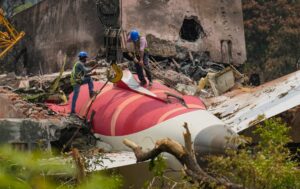
Air India Flight 171 took off from Sardar Vallabhbhai Patel International Airport at 13:38:39 IST, carrying 230 passengers and 12 crew members. The aircraft, piloted by Captain Sumeet Sabharwal and First Officer Clive Kunder, reached a maximum altitude of 625 feet before plummeting into the hostel block of B.J. Medical College, 1.7 kilometers from the runway. The impact and subsequent fire destroyed the aircraft and caused significant damage to surrounding buildings, marking one of India’s deadliest aviation disasters in recent history.
India’s Aircraft Accident Investigation Bureau (AAIB) released a preliminary report on July 8, 2025, revealing that the crash was caused by both engines losing thrust after their fuel control switches were moved from “RUN” to “CUTOFF” shortly after takeoff. This action, typically performed only after landing, starved the engines of fuel, leading to a catastrophic loss of power. The black box, comprising the Cockpit Voice Recorder (CVR) and Flight Data Recorder (FDR), provided critical insights into the final moments of the flight, but the partial release of the transcript has raised more questions than answers.
The Black Box Transcript: A Haunting Revelation
The CVR, recovered on June 15, 2025, and analyzed in Delhi under the supervision of the AAIB, captured two hours of cockpit audio, including a pivotal exchange between the pilots. According to sources familiar with the investigation, one pilot is heard asking, “Why did you cut off?” after the fuel switches were moved to the CUTOFF position, to which the other responds, “I didn’t.” Moments later, a voice—attributed to Captain Sabharwal in some reports—allegedly says, “It’s not an error, it’s the plan.” This statement, reported by outlets such as Corriere della Sera and The Wall Street Journal, has become the focal point of the investigation, suggesting the possibility of intentional action.
The FDR, retrieved within 28 hours of the crash, recorded 49 hours of flight data, confirming that the fuel switches were transitioned to CUTOFF one second apart, at an airspeed of 180 knots. The switches were then returned to the RUN position, triggering an automatic engine relight. One engine began regaining thrust, but the aircraft, at such a low altitude, could not recover in time to avoid the crash. The last 12 seconds of the flight, as captured by the CVR, are particularly telling. A “Mayday” call was issued moments before impact, and the audio reportedly captures confusion and urgency in the cockpit, with one pilot questioning the other’s actions and the cryptic “plan” statement adding a layer of mystery.
Theories and Speculation
The phrase “It’s not an error, it’s the plan” has sparked numerous theories, ranging from pilot error to deliberate sabotage. Several possibilities have emerged:
Intentional Act by a Pilot: The most controversial theory, fueled by the black box transcript, suggests that Captain Sabharwal, who reportedly entrusted the aircraft to First Officer Kunder before takeoff, may have deliberately moved the fuel switches. The Wall Street Journal reported that U.S. investigators are exploring the possibility of a criminal review, noting that such actions would typically prompt FBI involvement if the crash had occurred on U.S. soil. However, the Indian Commercial Pilots’ Association and the Airline Pilots’ Association of India (ALPA) have strongly rejected claims of pilot suicide, criticizing the investigation for premature speculation and lack of transparency.
Mechanical or Systemic Failure: Aviation expert Mary Schiavo, cited in Al Jazeera, pointed to a 2019 incident involving an All Nippon Airways Boeing 787, where a software glitch caused an engine to shut down mid-flight by moving a fuel switch to CUTOFF. A 2018 FAA advisory also highlighted a potential flaw in the fuel-control switch system on some Boeing aircraft, though Air India was not required to inspect its fleet. The deployment of the Ram Air Turbine (RAT) and the failure of the aft Enhanced Airborne Flight Recorder (EAFR) suggest a possible electrical or systemic failure, as noted by The Federal. These anomalies raise questions about whether an electronic control unit or Full Authority Digital Engine Control (FADEC) malfunction could have triggered the shutdown.
Human Error or Miscommunication: The CVR’s ambiguity—lacking clear voice identification—complicates the narrative. A Canada-based investigator suggested that one pilot may have inadvertently operated the switches and denied doing so, or that the question was posed to deflect responsibility. The fuel switches, located between the pilots’ seats and protected by a locking mechanism, are designed to prevent accidental activation. However, the rapid sequence of events and the low altitude may have exacerbated any miscommunication or error.
Investigation Challenges and Controversies
The AAIB’s handling of the investigation has drawn criticism from Western authorities and pilot unions. According to Reuters, India rejected an offer from the International Civil Aviation Organization (ICAO) to assist, raising concerns about the independence of the probe, as the AAIB operates under the Ministry of Civil Aviation. Western sources, cited by Corriere della Sera, expressed unease over the handling of the black boxes, noting that India’s labs, opened in April 2025, lack the extensive experience of U.S. or French facilities. The failure of the aft EAFR, located in the intact tail section, to yield data is particularly puzzling, given its design to withstand extreme conditions.
The preliminary report’s selective disclosure of the CVR transcript has also fueled controversy. Peter Goelz, a former NTSB managing director, emphasized the need for a full transcript with identified speakers to clarify the pilots’ actions. The absence of cockpit video recorders, a long-standing NTSB recommendation, has been highlighted as a critical gap, as visual evidence could definitively show who operated the switches.
Implications for Aviation Safety
The Air India Flight 171 crash has reignited debates over cockpit safety protocols and technology. The suggestion of intentional action underscores the need for enhanced psychological evaluations for pilots, though ALPA India has cautioned against premature blame. The potential for systemic failures, such as software glitches or electrical issues, calls for stricter oversight of aircraft systems and mandatory inspections following FAA advisories. The deployment of cockpit video recorders, as advocated by The Air Current, could provide critical evidence in future investigations, reducing reliance on ambiguous audio.
Air India, under Tata Group ownership, has faced scrutiny over its maintenance practices, though the preliminary report found no mechanical or maintenance faults. The airline has been ordered to conduct deeper checks on its 33 Boeing 787s, and CEO Campbell Wilson has vowed to use the crash as a catalyst to improve safety.
Conclusion
The black box transcript of Air India Flight 171, with its haunting phrase “It’s not an error, it’s the plan,” has deepened the mystery surrounding one of the deadliest aviation disasters in recent years. Whether the crash resulted from deliberate action, a systemic failure, or human error remains unclear, as the AAIB’s final report, expected within a year, will likely provide further clarity. The last 12 seconds of the flight, marked by confusion, a desperate Mayday call, and a failed recovery attempt, encapsulate the tragedy’s complexity. As investigators continue to probe the wreckage and data, the aviation industry and the public await answers to ensure such a catastrophe is never repeated.
Citations:,,,,,,,,
News

“His final decision could have saved eight lives.” 😭💔 Arian Hinojos, 12, was known for being a friendly boy wherever he went — but it was an extraordinary act following a tragic bicycle accident that is touching hearts across Texas 👀 👇 A mother’s heartfelt tribute is being widely shared
A Legacy of Love Amid Heartbreak: The Tragic Passing of 12-Year-Old Arian Hinojos and His Gift of Life Through Organ Donation In the close knit community of Andrews Texas a heartbreaking tragedy has unfolded that has left families friends and…

The boy kept saying someone was following him… Ja’Derrius Minnieweather’s mother finally spoke out about the 50-year-old suspect who was ARRESTED, but what’s incomprehensible is the four-line text message she received from someone else. It led to a place the police couldn’t believe
In the sweltering summer of Baton Rouge Louisiana the disappearance of 15 year old Ja’Derrius Minnieweather has evolved from a straightforward missing persons case into a web of fear suspicion and unexpected revelations that continue to baffle investigators and devastate…

💔 Ten days without a single call or text from Ja’Derrius Minnieweather… then an electronic device seized from the 50-year-old suspect’s pocket during the investigation unexpectedly changed everything
In the agonizing stretch of more than ten days without a single call or text from their beloved 15 year old son the Minnieweather family in Baton Rouge Louisiana navigated a nightmare that no parent should ever endure. Ja’Derrius Minnieweather…
🚨 15-YEAR-OLD BOY DISAPPEARS AT 2 AM: Ja’Derrius Minnieweather left a friend’s house on his red and black bicycle on June 5th and vanished without a trace… now investigators are reviewing a 50-year-old man who was arrested. His initial testimony left the room silent
In the predawn hours of June 5 2026 a 15 year old boy named Ja’Derrius Minnieweather pedaled away from a friend’s house in Baton Rouge Louisiana on his red and black bicycle never to be seen again by his loved…

💔 “If his phone runs out of battery, he’ll still borrow someone else’s phone to call home…” Ja’Derrius Minnieweather’s family grew increasingly fearful of the worst after 10 days without a single message or call… until a single three-word message unexpectedly appeared
In the quiet moments that define a family’s bond, certain truths stand as unshakeable pillars. For the loved ones of 15 year old Ja’Derrius Minnieweather, one such certainty was his unwavering commitment to staying connected. “If his phone runs out…

THE FINAL ARGUMENT ENDED WITH JUST 6 WORDS… Family members of James “Weston” Higginbotham say the last time they saw him was a minor argument, but what he said to his close friend as he left the room now carries a heart-wrenching pain
The final argument ended with just six words. Family members of James “Weston” Higginbotham recount that the last time they saw him alive was during a minor disagreement in their Kyoto hotel room, a brief moment of tension amid what…
End of content
No more pages to load