Tragic End on Dallas Parkway: The Shocking Death of Cowboys Star Marshawn Kneeland
:max_bytes(150000):strip_icc():focal(749x0:751x2)/Marshawn-Kneeland-of-the-Dallas-Cowboys-and-family-110625-5e630fe9ea564304937237d28ad013d0.jpg)
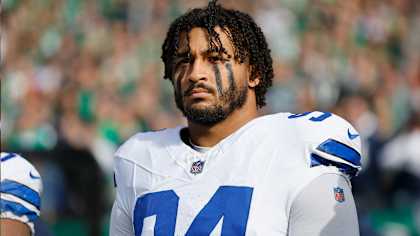
In the shadow of the Dallas Cowboys’ gleaming headquarters at The Star in Frisco, Texas, a nightmare unfolded late Wednesday night that has left the NFL world reeling. Marshawn Kneeland, the 24-year-old defensive end whose breakout performance just days earlier had fans buzzing with excitement, is dead. Authorities confirmed his passing early Thursday morning from an apparent self-inflicted gunshot wound, capping a harrowing sequence of events that began with a routine traffic stop and spiraled into a high-speed chase, a fiery crash, and a desperate foot pursuit. The incident, unfolding on the bustling Dallas Parkway, has investigators poring over surveillance footage that reveals a chilling final moments—one detail from the passenger-side camera that has detectives “stunned,” according to sources close to the probe.
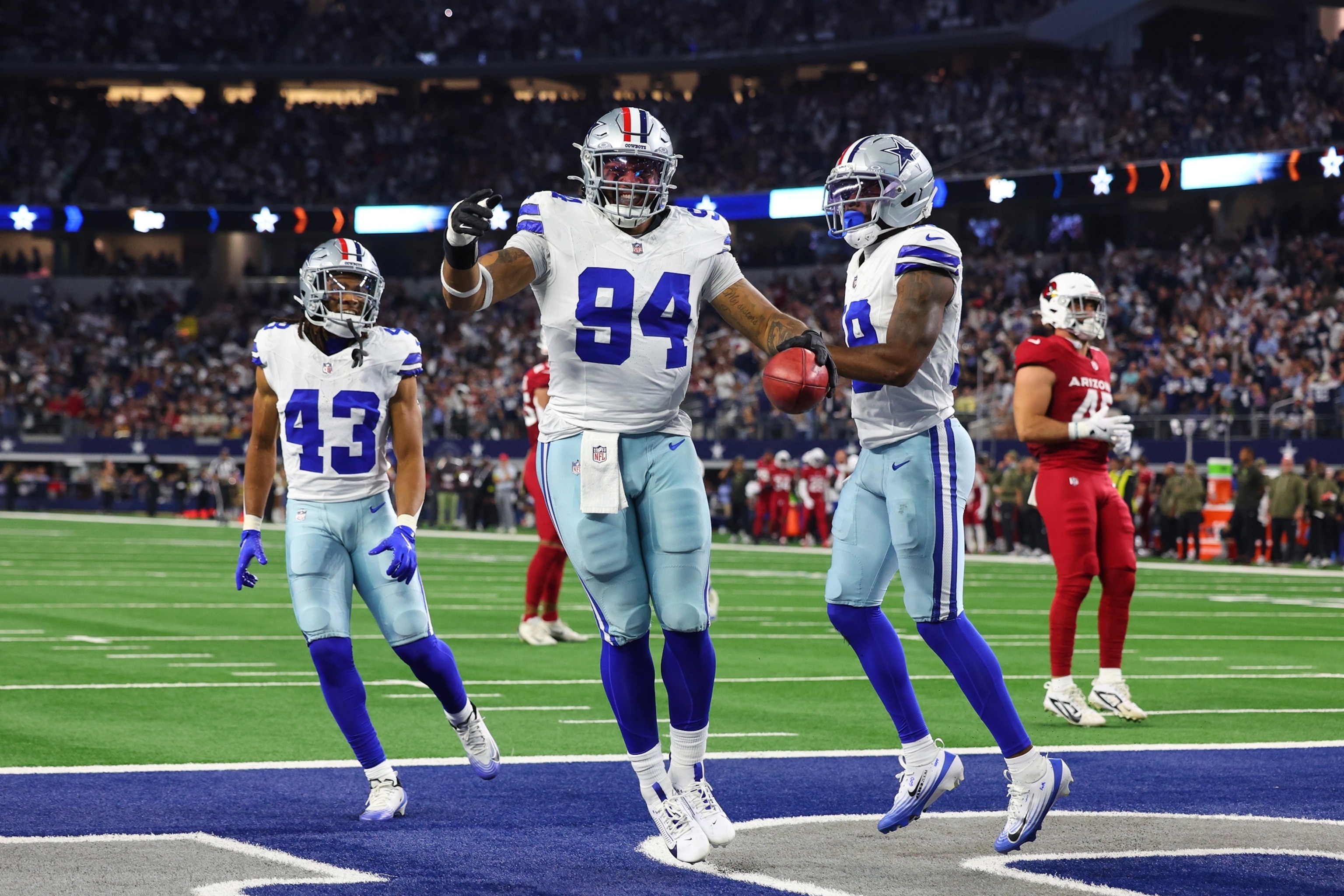
Kneeland, a second-round pick in the 2024 NFL Draft out of Western Michigan University, was no stranger to adversity. Raised in Wyoming, Michigan, he had clawed his way from a high school standout at Godwin Heights to a college disruptor, amassing 12 sacks in his senior year alone. Drafted by America’s Team, he embodied the gritty, blue-collar ethos that Cowboys owner Jerry Jones so adores. In his rookie season, Kneeland logged 14 tackles across 11 games, showing flashes of the pass-rushing prowess that drew comparisons to Hall of Famer Charles Haley. But it was his sophomore campaign that promised stardom. Through seven games in 2025, he notched 12 tackles, one sack, and—most memorably—a blocked punt recovery for his first career touchdown during Monday Night Football against the Arizona Cardinals on November 3. That electric moment at AT&T Stadium, where he scooped the ball in the end zone amid roaring approval, felt like the dawn of a new era for Dallas’ defensive line.
Yet, just 48 hours later, joy turned to unimaginable sorrow. According to a joint statement from the Texas Department of Public Safety (DPS) and Frisco Police Department, the sequence began around 10:33 p.m. on November 5. DPS troopers spotted Kneeland’s black SUV—a luxury model registered in his name— weaving erratically on the northbound lanes of the Dallas North Tollway near Keller Springs Boulevard in Plano. What started as a standard traffic violation—possibly speeding or failure to maintain lane, though details remain preliminary—escalated when Kneeland refused to pull over. Sirens blaring, troopers initiated pursuit, their lights cutting through the North Texas night as the chase barreled south toward Frisco.
Radio chatter from the scene, later obtained by media outlets, paints a frantic picture. “Suspect vehicle refusing to yield,” one dispatcher crackled. “High speeds, northbound Tollway.” Kneeland, clocked at over 100 mph in bursts, evaded initial attempts to box him in. The pursuit, involving multiple units from DPS and Frisco PD, lasted mere minutes before troopers lost visual contact amid heavy traffic. Protocol kicked in: The chase was called off for public safety, but aerial support from DPS helicopters and ground teams fanned out to locate the vehicle.
It didn’t take long. At 10:39 p.m., less than a mile from The Star—the Cowboys’ state-of-the-art practice facility—Kneeland’s SUV was discovered wrecked in the southbound lanes of Dallas Parkway near Warren Parkway. The crash site was a tableau of destruction: Smoldering rubber marks scarred the asphalt, the vehicle’s front end crumpled against a guardrail, airbags deployed like white ghosts. Shards of taillights and debris littered the roadway, forcing a hasty closure that snarled morning commutes. Eyewitnesses, including a late-night jogger and a rideshare driver, reported hearing a “massive thud” followed by screeching tires. “It looked like he slowed down, almost on purpose, then bam—right into the rail,” the jogger told local reporters, his voice trembling. “I thought someone was hurt bad, but then… nothing. No one got out.”
Surveillance footage from nearby businesses and traffic cams, now central to the investigation, corroborates this account. Grainy but clear video shows the SUV approaching the curve at Warren Parkway. Inexplicably, the vehicle decelerates sharply—brakes engaging for several seconds—before accelerating into the inevitable collision. The impact was not catastrophic; the car fishtailed but remained intact, engine still humming faintly in the aftermath. No other vehicles were involved, sparing the Parkway from a multi-car pileup that could have claimed innocent lives.
But it’s the passenger-side camera feed that has investigators reeling. Mounted on the guardrail as part of a city traffic monitoring system, the angle captures something anomalous: Just before the slowdown, a shadowy figure—believed to be Kneeland—appears to glance repeatedly at the passenger seat. Sources familiar with the footage, speaking on condition of anonymity, describe a “frantic, almost deliberate” motion toward the glove compartment or center console. “It’s like he was reaching for something specific, then the car just… hesitates,” one detective confided. “We’ve replayed it a hundred times. It’s stunned us—makes you wonder what was going through his mind in those last seconds.” Was it a phone? A note? Or, more hauntingly, the instrument of his own demise? The footage, not yet public, has fueled speculation that Kneeland may have been in acute distress, perhaps composing a final message or steeling himself for an unthinkable act.
Initial reports indicate Kneeland fled the scene on foot immediately after the crash, vanishing into the wooded office complex adjacent to the Parkway. Frisco PD, alerted by DPS, set up a perimeter spanning several blocks. K-9 units sniffed the air, drones buzzed overhead with thermal imaging, and officers combed the underbrush. Around 11 p.m., Plano Police were looped in for a welfare check at Kneeland’s apartment in nearby Plano—his girlfriend, Catalina, had received a cryptic text: “Goodbye. I’m sorry. Tell everyone I love them.” The message, sent to a group chat of close friends and family, raised immediate alarms. “He sounded so final,” one recipient later shared with WFAA News. “We called 911 right away.”
The search dragged into the early hours, a grim operation under floodlights and helicopter spotlights. At 1:20 a.m., a drone operator spotted a heat signature inside a porta-potty at a construction site in the Legacy West office park, less than half a mile from the crash. Blood trickled from the door, and radio traffic grew urgent: “Possible 10-56 [suicide]. Approach with caution.” Officers breached the structure at 1:31 a.m., finding Kneeland slumped on the floor, a single gunshot wound to the head. The weapon, a registered handgun, lay nearby. The Collin County Medical Examiner’s Office is conducting an autopsy, but preliminary findings point to suicide.
The Dallas Cowboys, still reeling from a 28-16 loss to the Cardinals, issued a heartbroken statement Thursday morning: “It is with extreme sadness that the Dallas Cowboys share that Marshawn Kneeland tragically passed away this morning. Marshawn was a beloved teammate and member of our organization. Our thoughts and prayers regarding Marshawn are with his girlfriend Catalina and his family.” Head coach Mike McCarthy, visibly shaken at a press conference, called Kneeland “a warrior with a heart of gold.” “He lit up that end zone on Monday, and now… this. We’re broken, but we’ll honor him by playing harder, loving deeper.” Teammates like Micah Parsons and DeMarcus Lawrence shared raw tributes on social media, Parsons writing, “My brother, rest easy. You were just getting started. Cowboys Nation loves you forever.”
Kneeland’s family, in a poignant release, echoed the grief: “We are devastated by this tremendous loss and are still processing the depth of our grief. As Marshawn was making his mark on the football field with the Dallas Cowboys, he held an even more special place off the field—as a devoted son, brother, uncle, cousin, nephew, grandson, and friend.” His agent, Jonathan Perzley, who had shepherded him from college obscurity to NFL promise, posted an Instagram eulogy: “I am shattered to confirm that my client and dearest friend Marshawn Kneeland passed away last night. I watched him fight his way from a hopeful kid at Western Michigan with a dream to being a respected professional for the Dallas Cowboys.”
The NFL, through Commissioner Roger Goodell, extended condolences and resources: “We are deeply saddened by the tragic news of the passing of Cowboys’ Marshawn Kneeland. Our thoughts and prayers are with his girlfriend Catalina, family, friends and his teammates.” The Players Association emphasized mental health support, noting, “His impact on those around him was immeasurable, and his loss is felt profoundly across our community. We’re working to ensure that players have the support they need.”
As details emerge, questions swirl. Why did Kneeland, described by coaches as “yes-sir, no-sir” disciplined, bolt from a simple stop? Was the pressure of NFL expectations—a 3-5 Cowboys team clinging to playoff hopes—too much? Western Michigan coach Lou Esposito, who recruited him, recalled a recent call: “We just talked the other day… I got to congratulate Marshawn on his first career touchdown. He was planning to see me this weekend.” Friends whisper of off-field strains: The isolation of a young millionaire in a new city, the relentless scrutiny of social media, perhaps unspoken personal demons.
This tragedy arrives amid a sobering trend in sports. High-profile suicides like those of Junior Seau and Aaron Hernandez underscore the hidden toll of athletic glory—concussions, identity crises, the crash from adulation to anonymity. In the NFL, where 25% of players report depression symptoms, initiatives like the league’s Total Wellness program offer counseling, yet stigma persists. “No one saw this coming,” Parsons said, tears streaming. “But maybe now, we make sure they do.”
By midday Thursday, a makeshift memorial bloomed outside The Star: Blue-starred jerseys, candles, and notes reading “Rest Easy, 94.” Fans gathered in silent vigil, the Parkway’s guardrail cordoned off as forensics teams sifted for clues. The passenger-side footage, that enigmatic glimpse into Kneeland’s final hesitation, may hold answers—or only deepen the ache. For now, it stands as a stark reminder: Even gridiron giants falter, and in the quiet slowdown before the end, vulnerability reigns.
As the Cowboys prepare for their November 17 return against the Eagles—sans their rising star—the league pauses. In Frisco’s chill November air, a young man’s promise flickers out, leaving echoes of what might have been. Marshawn Kneeland: Warrior. Teammate. Son. Gone too soon.
News
HE LOOKED LIKE HE WAITING FOR SOMETHING — A witness account from the Frontier Airlines runway tragedy is now circulating online after passengers described the movements of an unidentified man moments before the plane reached takeoff speed
The night of May 8, 2026, began as a routine departure for Frontier Airlines Flight 4345, an Airbus A321 bound from Denver International Airport to Los Angeles. On board were 224 passengers and seven crew members, most of whom were…
WHY WAS HE THERE— That’s the question passengers on a Frontier Airlines flight said they kept asking themselves after learning a man was involved in a crash during takeoff in Denver. What shocked them even more was the victim’s phone, which contained just two lines
The night of May 8, 2026, began as a routine departure for Frontier Airlines Flight 4345, an Airbus A321 bound from Denver International Airport to Los Angeles. On board were 224 passengers and seven crew members, most of whom were…
NO SIGNS THAT HE WAS TRYING TO ESCAPE— A newly revealed witness testimony from the Frontier Airlines plane crash is raising disturbing questions about the final moments before impact. Investigators reportedly believe the man was standing directly in the plane’s flight path until the very last moment
A newly revealed witness testimony has intensified the mystery surrounding the death of Anthony Pollio, the 33-year-old man struck by Frontier Airlines Flight 4345 at Denver International Airport, with accounts indicating he showed no signs of attempting to escape and…
She chose him: These three words are currently circulating on social media after sources claimed Vincent Diaz was furious about the relationship between Adrian Valdovinos and his estranged wife 💔 Meanwhile, detectives are examining a DIVORCE contract found near the bedroom door
Three words — “She chose him” — are now spreading rapidly across social media as sources close to the investigation claim they capture Vincent Diaz’s reported fury over his estranged wife’s new relationship with rising boxer Adrian “Angelo” Valdovinos. Meanwhile,…
NEW INFORMATION REVEALED: According to reports, detectives found Adrian Valdovinos’ overnight luggage and boxing equipment inside the bedroom believed to be the source of the confrontation between Vincent Diaz and the attention-grabbing 4-WORD letter
Detectives investigating the May 3, 2026, murder-suicide in Hanford, California, have uncovered poignant new details inside the bedroom where the fatal confrontation occurred. According to reports, officers found Adrian “Angelo” Valdovinos’ overnight luggage and boxing equipment neatly placed or scattered…
He kept driving past the house: That’s what one neighbor reportedly told investigators about Vincent Diaz in the days before Adrian Valdovinos was killed — while CCTV footage allegedly captured the same vehicle circling the block twice after midnight
A neighbor’s stark recollection — “He kept driving past the house” — is now part of the official investigation into the May 3, 2026, murder-suicide that claimed the life of 25-year-old rising boxer Adrian “Angelo” Valdovinos in Hanford, California. Coupled…
End of content
No more pages to load