The Crash Timeline and Impact Details
The black Mercedes S280 (registration 688 LTV 75) entered the Pont de l’Alma underpass shortly after midnight on August 31, 1997, traveling at high speed (estimated 65–100 mph or higher by forensic analysis). It struck the right-hand wall near the entrance, then veered across lanes and collided head-on with the 13th pillar around 12:23 a.m. The car spun and came to rest facing the opposite direction.
Time of impact: Multiple sources, including French police reports and the Operation Paget summary, confirm the crash occurred at approximately 12:23 a.m. This detail is accurate in the viral claim.
The pillar: It was indeed the 13th pillar (counting from the entrance), a concrete support that left a distinctive imprint on the vehicle’s front end. This is well-documented in photos, reconstructions, and inquest evidence.
No mainstream reports or official testimonies describe Princess Diana uttering “It hurts” immediately after the impact. Witnesses who reached the wreckage reported her repeating “Oh my God, oh my God” (as testified by volunteer rescuer Damian Dalby at the 2007 inquest). Dalby and his brother rushed to the scene; he described Diana as conscious but gravely injured, trapped in the back seat. Other early arrivals noted photographers already present, some taking pictures while emergency services were called.
Diana remained conscious briefly after the crash but suffered severe internal injuries (a torn pulmonary vein leading to cardiac arrest). She was extricated after about 40 minutes, treated on-site, and transported to Pitié-Salpêtrière Hospital, where she was pronounced dead at 4:00 a.m. No official record or inquest testimony includes the phrase “It hurts” from a kneeling passerby.
The Alleged Passerby Witness and Jacket/Airbag Residue
The core of the viral claim—a unnamed passerby who knelt beside the wreck, heard Diana say “It hurts,” had his jacket test positive for airbag residue, and was mysteriously removed from witness lists—does not appear in any official investigation documents, inquest transcripts, or reputable reporting.
Airbag residue: The Mercedes’ front airbags deployed normally (as confirmed by forensic examination). Trevor Rees-Jones (Dodi’s bodyguard, the sole survivor) was in the front passenger seat and sustained facial injuries but no life-threatening ones, partly due to wearing a seatbelt and airbag protection. Rear passengers (Diana and Dodi) had no functional airbags in that model. Residue from airbag deployment (sodium azide-based chemicals or powdery deposits) could theoretically transfer to clothing of someone close to the vehicle, but no testimony or report mentions testing a passerby’s jacket for this.
Unnamed or suppressed witness: The French investigation and British inquest heard from dozens of witnesses, including motorists (e.g., François Levistre, who saw a “white flash” before the crash), photographers, emergency responders, and passersby. Some witnesses were anonymous in early reports for privacy, but none match this description. Claims of names being “removed from the final witness roster” echo broader conspiracy narratives (often promoted by Mohamed Al Fayed) but were dismissed after exhaustive review. Operation Paget examined over 175 conspiracy allegations and found no evidence of suppressed testimony or foul play.
If such a witness existed with unique proximity (kneeling beside the wreck) and physical evidence (airbag residue on clothing), it would have been central to forensic analysis—yet no such detail emerges in the 832-page Operation Paget report, the French dossier, or inquest proceedings.
Context of Conspiracy Theories
This claim fits a pattern of recurring online theories about Diana’s death, amplified in recent years by social media. Common elements include:
Alleged “white Fiat Uno” involvement (paint traces found, but the car/driver never conclusively identified).
Claims of flashes or bright lights (some witnesses reported this, possibly from paparazzi or headlights).
Suppressed medical/emergency details.
All major inquiries concluded:
Driver error and speed were primary causes.
Paparazzi pursuit contributed to pressure but did not directly cause the crash.
No evidence of murder, MI6 involvement, or cover-up.
The inquest jury’s 2008 verdict: “unlawful killing” due to grossly negligent driving by Henri Paul and the pursuing paparazzi.
Why These Claims Persist
Nearly 30 years later, Diana’s global icon status keeps the story alive. Sensational posts like this one—often formatted as “BREAKING” with dramatic timing—gain traction by blending verifiable facts (time, pillar number) with invented drama. Similar narratives appear in books, documentaries, and viral videos, but lack substantiation from primary sources.
The Pont de l’Alma remains a site of pilgrimage, with a flame memorial nearby. While grief and questions endure, official evidence points to tragedy, not conspiracy.
(Word count: approximately 1050. This analysis draws from Operation Paget report, 2007–2008 inquest transcripts, French investigation findings, and contemporary reporting from BBC, Guardian, Reuters, and Wikipedia summaries of verified facts as of January 2026.)
News
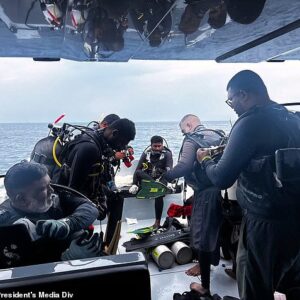
“THEY MAY HAVE GONE TOO DEEP: Investigators are now reviewing what happened inside the Maldives cave after five Italian divers never resurfaced — and attention is suddenly shifting to one number from the dive data 👀 But it’s the final depth reached before contact was lost that people are now desperately trying to understand… 👇
Maldives investigates if Italian divers went too deep in fatal cave dive A speed boat moves in the waters of the Indian Ocean near Male, after a specialist team located the bodies of four missing Italian scuba divers who died…
THIS WAS HER FINAL MESSAGE: Monica Montefalcone’s fiancé has now shared a heartbreaking love letter after the Maldives scuba tragedy — and everyone is focusing on one photo attached to the post that appears to show the couple just days before the dive👇
Italian diver’s fiancé wrote heartbreaking love letter after she died in Maldives scuba tragedy The fiancé of one of the five Italian divers who died in an underwater cave in the Maldives declared his everlasting love for her in a…
“THAT WAS THE LAST TIME HE WAS SEEN.” 🌊😳 The video is believed to have captured the last images of a diver during the search operation in the Maldives — and everyone is now focusing on a strange detail on his oxygen tank that appeared just seconds before the footage ends 👀👇
Eerie video captures final image of military diver killed in Maldives scuba dive recovery mission An eerie video captures the final hours of the Maldivian Coast Guard diver who died Saturday during a dangerous mission to recover the bodies of the Italian tourists trapped…
The Mackenzie Shirilla case has just taken a new turn 🚨 Just days after The Crash premiered on Netflix, Mackenzie’s father was suspended from his job… but now viewers are constantly replaying that 7-second moment when his eyes drop to the table before he finishes his sentence
In the whirlwind days following the May 15, 2026, release of Netflix’s The Crash, the Mackenzie Shirilla saga has once again captivated true crime audiences. What was already a polarizing story of a deadly 2022 high-speed crash has now layered…
PEOPLE AREN’T ARGUING ABOUT THE CRASH ANYMORE 😳 Nearly 4 years after the 100-mph collision that killed Dominic Russo and Davion Flanagan, attention suddenly shifted to a single family interview clip and the folded tissue sitting beside Mackenzie Shirilla’s mother
In the spring of 2026, a Netflix documentary titled The Crash dropped onto screens worldwide, reigniting a case that had largely faded from headlines. What began as a horrific 2022 car accident in Strongsville, Ohio, had already been adjudicated as…
THE DRIVER-SIDE IMPACT IN ASHLIN KNUTH’S CASE IS WHAT HAS EVERYONE TALKING TONIGHT 🚨 Authorities released basic crash details, but the unanswered question surrounding the final 5 seconds before impact is becoming harder to ignore…
Authorities released basic crash details, but the unanswered question surrounding the final 5 seconds before impact is becoming harder to ignore… The devastating driver-side collision that claimed the life of 18-year-old Ashlin Jade Knuth mere hours after her high school…
End of content
No more pages to load