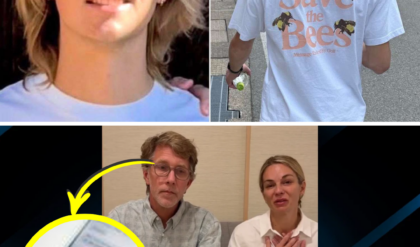
In the early evening of May 29, 2026, Nancy Higginbotham received what would become the final, fleeting connection to her 20-year-old son. James “Weston” Higginbotham, a promising Auburn University student on a family vacation in Japan, had stepped away after a minor family disagreement to clear his head. According to accounts shared by his mother and media reports, the last phone interaction was heartbreakingly brief—he spoke for just a few seconds before the line went dead. That abrupt end, combined with his mother’s growing worries about his emotional state and potential panic issues amid the stresses of travel, painted a picture of distress. What authorities and the family later pieced together from his movements, purchases, and the shoulder bag he carried only deepened the mystery and concern that something tragic may have unfolded.
:max_bytes(150000):strip_icc():focal(749x0:751x2)/College-Student-James-Weston-Higginbotham-Disappears-on-Family-Vacation-to-Japan-060326-da9d310df4344b73b7218309fa836aff.jpg)
Weston Higginbotham’s disappearance in Kyoto has captivated public attention, sparking widespread searches by Japanese authorities, volunteer efforts, and desperate pleas from his Alabama family. As of early June 2026, he remains missing, turning a celebratory trip into an international ordeal that highlights the vulnerabilities of young travelers, the strains of family dynamics abroad, and the challenges of navigating foreign emergency systems.
A Celebratory Trip Turns Tense
The Higginbotham family—Nancy, Keith, Weston, and his younger brother Grayton—traveled to Japan around May 22-25, 2026, to celebrate Grayton’s high school graduation and academic achievements. It was meant to be a bonding experience filled with cultural exploration, food, and adventure. Weston, a junior studying environmental engineering at Auburn University, was described by loved ones as an excellent student, a vegan, a passionate environmentalist, an experienced hiker and international traveler, and someone with “a heart of gold.”
Standing at 6-foot-1 (about 185 cm) with long blonde hair, blue eyes, and a distinctive style—often including silver hoop earrings—Weston embodied the image of a curious, independent young adult. He had graduated with honors from Spain Park High School in Hoover, Alabama, and was well-traveled, making him seem equipped for solo explorations.
However, like many extended family vacations, tensions arose. The family was staying in relatively tight quarters, typical for Japanese hotels. Reports indicate bickering occurred, possibly exacerbated by the stresses of travel, jet lag, and close proximity. On May 29, after arriving in Kyoto and sharing a meal, Weston expressed a need for space. He left to explore independently, boarding a train. His family messaged him, but responses were limited before communication ceased.
CCTV footage later confirmed Weston disembarking at Yamashina Station in eastern Kyoto around 8:15 p.m. His phone’s location services were turned off shortly after, around 8:29 p.m. His last known purchase was at a Kohnan hardware store in the area. Japanese police and the family believe he may have headed toward nearby wooded trails or hiking areas, given his love for the outdoors.
The Last Call and Rising Worries
:max_bytes(150000):strip_icc():focal(749x0:751x2)/James-Weston-Higginbotham-parents-060426-8629e006894c42349da632239123a0f3.jpg)
Nancy Higginbotham has publicly shared details of the family’s anguish, including the brevity of their final contact. In descriptions circulating through family statements and media, the call lasted mere seconds—Weston spoke briefly before hanging up or the connection dropping. This brevity fueled concerns that he was in emotional turmoil.
Nancy expressed worries that her son might be suffering from heightened anxiety or something akin to a panic disorder, possibly triggered by the family friction and the pressures of the trip. “He may be emotionally distressed, so this is urgent,” she wrote in Facebook posts pleading for help. She emphasized that he was not out partying or detained but likely needed time alone. Family members suggested he might have turned off his phone to avoid overwhelming messages from concerned parents.
This detail resonates with broader understandings of mental health challenges among young adults. Travel can amplify stress, and even adventurous individuals like Weston—described as a pacifist and nature lover—can experience panic or overwhelm. Speculation in online forums and comments has touched on the possibility of him seeking solitude in nature, but the hardware store visit raised unsettling questions for some, given regional associations with remote forested areas sometimes linked to distress (though no confirmation exists).
The Shoulder Bag and Clues Left Behind
Weston was last seen wearing a white “Save the Bees” t-shirt with bumblebee graphics, lavender corduroy pants with a large cuff, white Adidas sneakers with black stripes and wide laces, and carrying a distinctive shoulder bag (explicitly noted as not a backpack) featuring the outline of the state of Alabama. This bag became a key identifier in missing person alerts.
While the full contents of the bag or any items recovered haven’t been publicly detailed in official reports as leading to a discovery (searches were ongoing), its presence and the items associated with his last movements contributed to the family’s and authorities’ belief that his departure was impulsive rather than planned for a long absence. He lacked heavy camping gear, suggesting any hike was not intended as an extended wilderness trek. His phone going dark, combined with the emotional context, led many to fear the worst—a possible accident, disorientation, or mental health crisis in unfamiliar terrain.
Japanese police quickly mobilized, using CCTV, deploying dozens of officers, K-9 units, and helicopters to scour the hilly, wooded areas north of Yamashina Station. Searches have been grueling due to steep, wet terrain. The family traveled to Japan to assist and coordinate, expressing gratitude for local efforts while enduring what Nancy called “our own living hell.”
Background and Community Response
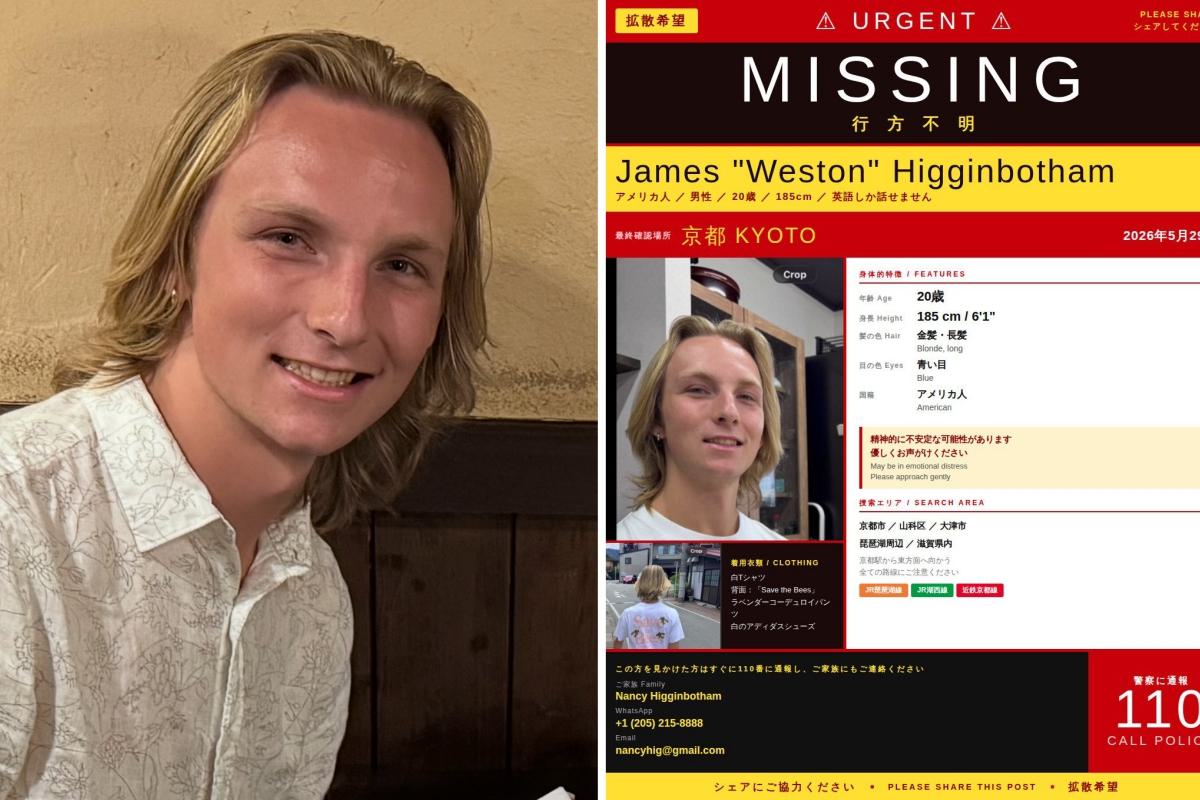
Weston’s profile as an honors student and environmental advocate made his vanishing particularly shocking to those who knew him. Friends and community members in Hoover and Auburn have rallied, sharing alerts and organizing prayer vigils. Media outlets across the U.S., including CBS, CNN, and local Alabama stations, have covered the story extensively, amplifying the family’s pleas.
His parents have stressed kindness and caution in sharing information: “If you see him, PLEASE DO NOT POST HIS EXACT LOCATION PUBLICLY.” They continue to hold hope, believing he is alive and possibly disoriented or seeking solitude.
Broader Context: Missing Persons Abroad and Mental Health
Weston’s case underscores the risks faced by tourists in foreign countries, where language barriers, unfamiliar geography, and limited immediate family support can complicate situations. Japan has robust search capabilities, but dense urban-rural interfaces like Kyoto’s outskirts pose challenges. Similar cases of young travelers going missing while hiking or after emotional episodes have occurred globally, often resolved with timely intervention—or, tragically, not.
Mental health plays a critical role. Panic disorders or acute anxiety can manifest suddenly, leading to impaired decision-making. Symptoms might include a racing heart, detachment, or a desperate need to escape, aligning with Weston’s choice to separate from the group. Families on vacation may underestimate cumulative stress.
Ongoing Search and Calls for Help
As searches entered subsequent days, efforts expanded with more personnel and technology. The family remains in Kyoto, refusing to leave without answers. Nancy and Keith have shared updates via social media, thanking supporters and Japanese citizens for their compassion.
Anyone with information is urged to contact Japanese police or Nancy Higginbotham directly via WhatsApp at +1 (205) 215-8888 or email [email protected]. Tips should prioritize official channels to avoid interfering with investigations.
A Plea for Hope and Awareness
The story of James “Weston” Higginbotham is still unfolding. It is a reminder of the fragility of life’s adventures and the unbreakable bonds of family. Weston’s passion for the environment, his adventurous spirit, and his kind nature have been echoed repeatedly by those who love him. In an age of constant connectivity, his brief final call and silenced phone symbolize a sudden rupture that no parent should endure.
As authorities, volunteers, and the Higginbothams press on, the world watches and hopes for a safe return. For now, the hills around Yamashina hold their silence, but the collective effort to bring Weston home continues unabated. In Nancy’s words, they will not lose hope.
News
“IT ALL HAPPENED IN THE SAME 72 HOURS.” 💔😳 New details reveal Alaskan Bush People star Matt Brown was dealing with both a painful breakup and a broken-down truck just before everything changed 👀 👇 Friends say the pickup was still sitting where he left it, with the keys reportedly still inside
‘Alaskan Bush People’ star Matt Brown was dealing with breakup, broken-down truck in days leading up to death: ‘Hit him at the same time’ “Alaskan Bush People” star Matt Brown was going through a lot emotionally in the days leading…
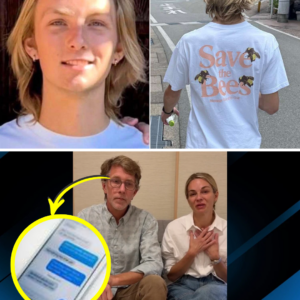
195 Give my son back…: A family in Alabama is pleading for the return of their son, who went missing during a family trip to Japan, but the results of a psychiatric evaluation have left them terrified
Alabama family pleads for return of son missing on family trip in Japan Nancy Higginbotham wasn’t worried when her 20-year-old son got on a train by himself during their family vacation in Japan. James, who goes by Weston, is an…

MURDER CASE DISALLOWED! CHARGES AGAINST HEROIC FATHER AARON SPENCER HAVE BEEN CANCELLED!!! But even more surprising is his final confession
Judge dismisses murder case against Arkansas sheriff candidate Aaron Spencer Aaron Spencer won the Republican primary for Lonoke County Sheriff while awaiting trial on a murder charge. CNN A judge on Thursday dismissed a second-degree murder charge against Aaron Spencer, the…

BREAKING: NEW DEVELOPMENTS EMERGE IN THE HENRY NOWAK CASE
BREAKING: NEW DEVELOPMENTS EMERGE IN THE HENRY NOWAK CASE The investigation surrounding Henry Nowak has taken another significant turn after authorities announced additional charges. The latest legal development is being described as a major shift in the case, with many…

UNBEARABL — HENRY NOWAK’S FATHER SPEAKS OUT AFTER THE SENTENCING
UNBEARABL — HENRY NOWAK’S FATHER SPEAKS OUT AFTER THE SENTENCING In an emotional public statement, Henry Nowak’s father has strongly criticized the way authorities handled his son’s final hours, describing the experience as “unbearable.” As the person responsible was sentenced,…

“THE DNA DIDN’T MATCH HIM.” 😳🚢 A major twist has emerged in the Anna Kepner case after investigators revealed DNA from an unknown teenage male was found during the cruise ship investigation 👀 👇 But it’s the single unidentified fingerprint that reportedly still doesn’t belong to anyone in the case that is now raising even more questions
New questions raised over Anna Kepner’s Carnival cruise murder after DNA from unknown male minor found Anna Kepner, 18, allegedly had sex with an unknown male juvenile aboard a Carnival cruise ship shortly before her shocking death, federal prosecutors revealed….
End of content
No more pages to load