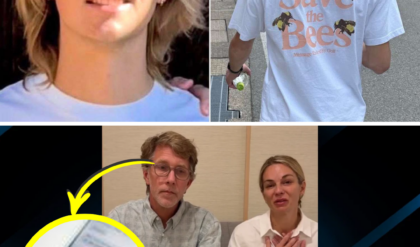
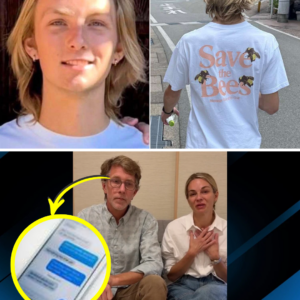
The narrative surrounding the disappearance of James “Weston” Higginbotham has grown increasingly complex as investigators look past his immediate steps in Japan to understand his state of mind before leaving the United States. In the latest turn of the investigation, detectives have extended their inquiries into the young Auburn University student’s academic life back in Alabama. Reports indicate that investigators recently interviewed one of Weston’s university instructors regarding a private conversation they shared just forty-eight hours before he departed for the family vacation. The educator revealed that the discussion centered significantly on Weston’s personal health and well-being, an interaction that left a lasting impression on her. The specific phrase shared during that meeting—where the biosystems engineering junior reportedly expressed a heavy sentiment about not experiencing any physical or mental improvement—has now become a focal point for professionals trying to understand his emotional vulnerability leading up to his disappearance.
This retrospective angle introduces an essential layer of behavioral context to a timeline that previously focused almost entirely on his final hours in the Yamashina district of Kyoto. For days, the primary understanding of Weston’s actions revolved around an impulsive walkaway following a minor family disagreement over artificial intelligence and travel logistics at a local temple. However, the revelation that he was actively discussing ongoing health concerns with a trusted academic mentor just two days prior suggests that his mindset may have been weighed down by pre-existing personal challenges long before he boarded the flight to Asia. Detectives are now attempting to determine if this internal struggle compounded the disorientation and stress he experienced when he later separated from his family and entered the rugged, storm-battered mountain trails alone.
For the educator who stepped forward, the memory of that conversation has become a heavy psychological burden, completely recontextualizing her final memory of a bright and dedicated student. Academic mentors often find themselves in unique positions of trust, observing the subtle shifts in a student’s demeanor, fatigue levels, or participation that might escape the notice of peers or distant family members. By sharing his vulnerability and stating that he did not feel he was getting any better, Weston provided a rare glimpse into a quiet battle that he had otherwise kept private from his general social circles. The teacher’s ongoing distress underscores the profound frustration felt by many in the wake of the tragedy, as those who interacted with him wrestle with the painful realization that his words carried a far deeper significance than anyone could have recognized at the time.
From an investigative standpoint, this data point forces a closer examination of Weston’s complete medical and behavioral background, shifting resources toward profiling his health history in the months preceding the trip. Law enforcement officials are trying to ascertain whether the young man was dealing with an undiagnosed physical ailment, severe chronic exhaustion, or a mental health challenge that was actively eroding his resilience. Understanding his health baseline helps behavioral analysts decipher his subsequent actions in Japan, such as his decision to turn off his phone’s location-sharing features and march deep into an unforgiving wilderness during active typhoon conditions. If his cognitive processing or physical stamina was already compromised by an underlying condition, his ability to navigate a foreign environment, find shelter, or survive the torrential rains would have been drastically reduced from the outset.
The emergence of this pre-trip conversation has also deeply affected the Auburn University community, where students and faculty are still actively processing the tragic news of his recovery by a volunteer rescue team. The knowledge that Weston was quietly dealing with a difficult health situation just days before his junior year ended has cast a somber shadow over the campus, prompting deeper reflections on the unseen pressures faced by young adults in demanding engineering programs. Student organizations and university leaders have continued to extend their support to the Higginbotham family, emphasizing that Weston will be remembered not just for the mystery surrounding his final steps, but for his deep character, his environmental passions, and the quiet dignity with which he carried his personal struggles.
News
Just now: Police have finally announced the cause of death for James “Weston” Higginbotham, but the seventh line, which is leaving his family in disbelief, reads, “Even if he lost his temper, he would never do that,….”. Medical records are under investigation…
The sudden loss of 20-year-old Auburn University student James “Weston” Higginbotham in the mountainous outskirts of Kyoto, Japan, has deeply shaken his loved ones and the university community. The junior biosystems engineering student from Hoover, Alabama, tragically vanished on May…
He needs to see a doctor immediately…: A friend of James “Weston” Higginbotham said their last conversation lasted less than 10 minutes, James’s mind was becoming increasingly confused, and the symptoms of depression were unforgettable
The tragic conclusion to the search for 20-year-old Auburn University student James “Weston” Higginbotham has left a community in deep mourning, while simultaneously opening a painful window into the hidden struggles he may have been facing. The junior biosystems engineering…
“He asked me if people could hide what they were feeling…” A close friend of James “Weston” Higginbotham says investigators recently spoke with them about a deeply personal conversation that happened less than 24 hours before the Auburn student disappeared
The devastating loss of 20-year-old Auburn University student James “Weston” Higginbotham has left a profound void in his community and a family completely broken by grief. The junior biosystems engineering student from Hoover, Alabama, tragically vanished on May 29 while…
That’s the last thing he showed me…: A close friend of James “Weston” Higginbotham has finally revealed what was on James’s phone that he showed him, regarding a future project, and he believes it was a criminal case
Unraveling the Mystery: A Close Friend’s Revelation About James “Weston” Higginbotham’s Final Phone Contents Sparks Questions in Tragic Japan Disappearance The heartbreaking story of James “Weston” Higginbotham, a 20-year-old Auburn University student from Hoover, Alabama, who vanished during a family…
I wish I had asked him what he meant…: A friend of James “Weston” Higginbotham said investigators recently reviewed a very private conversation they had just days before he disappeared. Even more noteworthy was the last letter he left behind
The ongoing investigation into the death of 20-year-old James “Weston” Higginbotham continues to reveal intimate and unsettling details that have deepened the sorrow surrounding his disappearance in the mountains outside Kyoto, Japan. What began as a family vacation to celebrate…
🚨 THE FIRST THING HIS PARENTS ASKED WASN’T THE CAUSE OF DE@TH. According to those close to the family, they wanted to know about Weston’s mental health at the time and whether the doctor’s conclusion was shocking them
The heartbreaking recovery of 20-year-old James “Weston” Higginbotham’s body in the mountainous terrain outside Kyoto, Japan, has left his family navigating not only profound loss but also deep questions about his state of mind in his final hours. What was…
End of content
No more pages to load