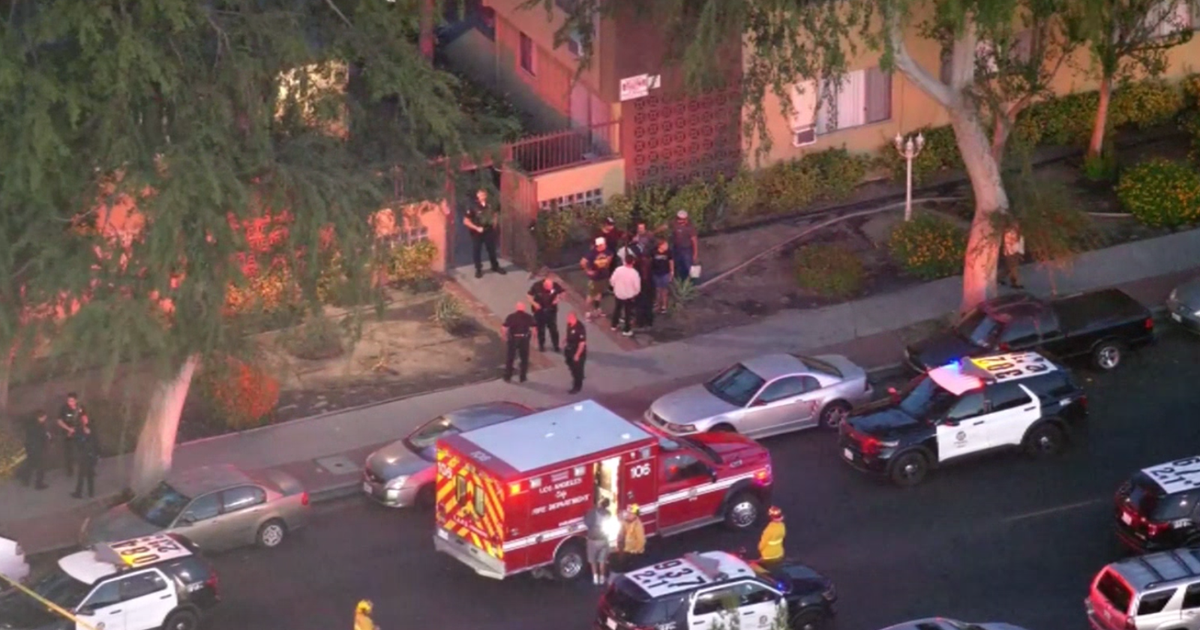
The narrative surrounding the heartbreaking double-murder-suicide of ten-year-old twins Joseph and Greysen Chavez in Canoga Park has shifted from a focus on legal disputes to an intimate look at a severe mental health crisis. In the immediate aftermath of the tragedy on Owensmouth Avenue, the family’s community was trapped in absolute bewilderment. Relatives repeatedly emphasized that Gabriel Chavez had been sitting comfortably with the rest of the gathering just minutes before stepping into a back bedroom with his twin sons. The terrifying speed of the transition from a peaceful family birthday party to an active shooter scene defied any easy explanation.
While initial investigative leads heavily prioritized the unfiled divorce paperwork and the digital footprints left on a glowing mobile phone screen, a new revelation has fundamentally altered the direction of the homicide inquiry. A close friend of the Chavez family has stepped forward to shed light on a profound history of unaddressed mental health issues that had been consistently overlooked by extended family and neighbors. For years, the father’s increasingly erratic behavior, severe mood swings, and deep periods of social withdrawal were dismissed as simple work stress or personality quirks, a miscalculation that left a volatile psychological undercurrent completely unchecked.
This new context did not fully emerge until the surviving mother, navigating a state of absolute shock and grief, provided a comprehensive confession to detectives regarding the true state of her husband’s psychological decline. Her detailed account of life behind closed doors has shattered the remaining illusions of suburban normalcy, revealing that the contentious custody battles and the arguments over her financial independence were actually occurring against a backdrop of severe, accelerating psychological instability.
The Mask of Normalcy and the Wife’s Confession

According to the close family friend, Gabriel Chavez had spent years meticulously maintaining a mask of complete normalcy for the outside world. He was viewed by neighbors as a quiet, dedicated father who regularly attended community events and spent time with his sons in the adjacent public park. However, the mother’s confession to the Los Angeles Police Department paint a drastically different picture of their private life. She revealed that beneath the calm exterior, her husband was experiencing a profound, undiagnosed psychological crisis that made daily interactions inside the home increasingly unpredictable and tense.
In her statements to investigators, the mother recounted a pattern of behavior that had escalated dramatically over the six months preceding the June tragedy. She described instances where the father would spend days in complete silence, refusing to interact with the household, followed by sudden periods of intense paranoia and controlling behavior. He became increasingly obsessed with monitoring the family’s digital devices, convinced that external forces were working to dismantle his household. The mother admitted that she had initially hidden these struggles from her own parents and friends, hoping that she could manage his condition privately and protect her children from the stigma of a mental health crisis.
The turning point occurred when the mother realized that her husband’s refusal to seek professional medical intervention was actively jeopardizing the safety and emotional well-being of Joseph and Greysen. Her decision to seek legal separation and independent employment was not an act of malice, but a desperate, protective measure to remove her sons from an increasingly unstable environment. Her confession has forced investigators to re-examine the unfiled divorce agreement not as a standard marital dispute, but as a direct reaction to a severe, unmanaged medical emergency.
The Overlooked Indicators of Psychological Decline
The revelation of the father’s mental health issues has prompted an intense, painful period of introspection for those who interacted with him in the weeks leading up to the shooting. Forensic psychologists often note that individuals suffering from severe, hidden depression or paranoia frequently leave behind subtle clues that are only recognized in retrospect. The family friend recalled specific instances where the father’s speech seemed unusually pressured or where he would make cryptic comments about the necessity of keeping the family together at all costs, statements that were misread at the time as simple expressions of parental devotion.
Investigators are now focusing heavily on the medical and pharmacy records of Gabriel Chavez to determine if he had ever received a formal diagnosis or if he had abruptly discontinued any prescribed psychological medications. A sudden cessation of specific psychiatric treatments can induce severe, acute psychosis, entirely disabling an individual’s impulse control and driving them toward catastrophic violence. If the final phone call completed just before 7:15 PM involved a confrontation regarding his refusal to seek medical help, it would explain why that specific moment became the flashpoint for his final, devastating decision.
This medical context completely reframes the timeline of the Sunday evening gathering. While the rest of the family was focused on the warmth of the birthday celebration, the father was likely navigating an intense, internal psychological storm. The closed bedroom door was the tragic conclusion of a hidden battle with mental illness that had been allowed to fester in secret until it manifested as an act of absolute destruction against the two innocent lives he was supposed to protect.
A Community Confronting Hidden Scars
@lpelon773 Canoga Park Twins Greysen Chavez and Joseph Chavez #canogapark #twins #greysenchavez #josephchavez #univision
As the details of the mother’s confession and the father’s underlying psychological decline filter out to the public, the atmosphere around Canoga Park has transformed from simple shock to a complex mixture of sorrow and awareness. The sidewalk memorial outside the Owensmouth Avenue apartment complex continues to attract visitors, but the conversations among neighbors have shifted toward the critical importance of mental health intervention. The tragedy has forced a difficult, necessary discussion within the community about the absolute invisibility of severe psychological distress behind suburban facades.
Local mental health advocacy groups have utilized the case as a somber example of why families need better access to crisis resources and why the stigma surrounding psychiatric conditions must be dismantled. School administrators, continuing to provide grief counseling for the classmates of Joseph and Greysen, have integrated these themes into their support strategies, emphasizing to young students that seeking help for emotional distress is a vital sign of strength rather than a weakness.
The surviving family members, particularly the mother who narrowly survived the gunfire through the bedroom door, are left to carry an unimaginable burden of grief compounded by the weight of what-ifs. The memory of that summer evening remains a painful testament to the speed with which a hidden medical crisis can shatter a world, leaving an entire neighborhood to mourn two bright young boys whose futures were lost to a darkness that nobody saw until it was entirely too late.
News
🚨 HE WAS SUPPOSED TO BE TAKING FAMILY PHOTOS IN KYOTO… NOT BE FOUND 8 DAYS LATER IN THE MOUNTAINS. The death of James “Weston” Higginbotham is leaving friends struggling to understand how a family vacation turned into a search spanning miles of rugged terrain
The ancient capital of Kyoto is famous for its quiet bamboo groves, historic wooden temples, and peaceful shrines. Millions of travelers come every year to experience this calm atmosphere and capture lasting family memories. For the Higginbotham family from Hoover,…
“I WISH I HAD NOTICED THAT SIGN SOONER…” A family acquaintance of Joseph Chavez and Greysen Chavez has just revealed what caused their heated argument the most, but the most intriguing detail lies in their last phone call before 7:15 PM…
The investigation into the heartbreaking double-murder-suicide of ten-year-old twins Joseph and Greysen Chavez in Canoga Park has entered a deeply analytical phase. For days, the primary obstacle facing the Los Angeles Police Department was the absolute absence of typical warning…
BREAKING: The Joseph Chavez and Greysen Chavez case is prompting many to ask the same question about the parents’ marriage, especially after a detail related to the divorce agreement was mentioned…
The investigative focus surrounding the tragic double-murder-suicide of ten-year-old twins Joseph and Greysen Chavez in Canoga Park has shifted dramatically. In the immediate aftermath of the shooting inside the Owensmouth Avenue apartment, community members and law enforcement officials were trapped…
WHAT MADE A FATHER LOOK AT JOSEPH CHAVEZ AND GREYSEN CHAVEZ AND MAKE THAT DECISION…?” 72 hours after the Canoga Park tragedy, many are still searching for answers about the final moments before the tragedy, but the detail that reignited the investigation was the phone screen still lit on the bedside table…
The Illusion of a Perfect Sunday Evening The light inside the apartment on Owensmouth Avenue was warm, filled with the specific, chaotic energy that defines a large family gathering. It was the first week of June, a time when the…
“HE WAS STILL SITTING WITH EVERYONE JUST A FEW MINUTES AGO…” The families of Joseph Chavez and Greysen Chavez say the gathering began as usual, but now all attention is focused on the brief moment before the bedroom door closed and an unexplained message…
@lpelon773 Canoga Park Twins Greysen Chavez and Joseph Chavez #canogapark #twins #greysenchavez #josephchavez #univision ♬ Boundless Worship – Josué Novais Piano Worship The Illusion of a Perfect Sunday Evening The light inside the apartment on Owensmouth Avenue was warm, filled…
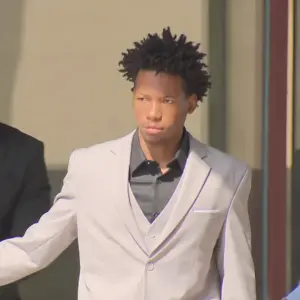
“WE RAISED HIM BETTER THAN THIS…” Karmelo Anthony’s mother declares her son innocent, Austin Metcalf is the one at fault — but a statement about how she raised him is now causing controversy on social media… 👉 Read more in the comments
Karmelo Anthony’s mom begs jury deciding son’s sentence to ‘have mercy’ Karmelo Anthony’s sobbing mother, Kayla Hayes, begged a Texas jury for mercy Tuesday just moments after her 19-year-old son was convicted of murdering fellow teen Austin Metcalf. “Please have…
End of content
No more pages to load