The Hidden Dangers of the Ancient Capital
The ancient capital of Kyoto is famous for its quiet bamboo groves, historic wooden temples, and peaceful shrines. Millions of travelers come every year to experience this calm atmosphere and capture lasting family memories. For the Higginbotham family from Hoover, Alabama, a trip to Japan in late May 2026 was meant to be a joyful celebration. They were marking the high school graduation of their youngest son. Instead, this dream vacation turned into an unimaginable heartbreaking tragedy.
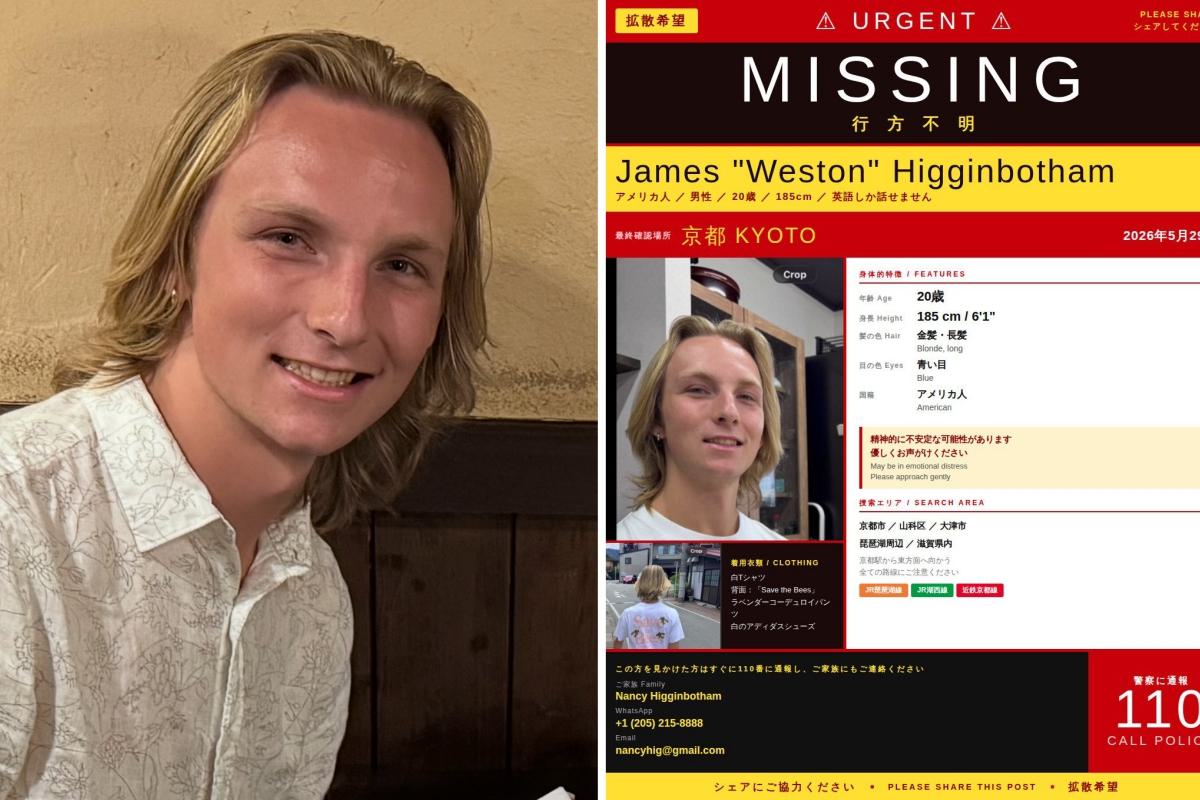
James Weston Higginbotham, a twenty-year-old engineering student at Auburn University, disappeared into the dense forests bordering the city. He went missing on May 29 and was found dead eight days later by a volunteer rescue team in the mountains of Yamashina Ward. This sudden loss left his family, friends, and the university community back home struggling to understand how a normal vacation could turn into a massive search across miles of rugged terrain.
The shock among his close circle in Hoover is not just about the tragic outcome, but how an environment like Kyoto’s urban-fringe forests could claim someone with his level of skill. For those who knew Weston best, the news that he was found in the deep mountains of Yamashina Ward feels fundamentally wrong. He was not a reckless tourist who wandered off a designated viewing platform; he was an experienced outdoorsman who had navigated rugged trails around the world. The hardest thing for his friends to accept isn’t that he was found after eight days, but precisely where he was found, a place that seems entirely incompatible with his survival skills and his careful nature.
A Passion for the Planet and the Wilds
:max_bytes(150000):strip_icc():focal(749x0:751x2)/James-Weston-Higginbotham-parents-060426-8629e006894c42349da632239123a0f3.jpg)
Weston, as his loved ones called him, was not an ordinary tourist looking for typical sightseeing opportunities. Friends and professors at Auburn University described him as a deeply thoughtful, highly intellectual, and principled young man. He was studying sustainable engineering, a specific academic path that matched his strong personal commitment to protecting the environment. Over the previous year, Weston had fully embraced a vegan lifestyle and dedicated much of his time to studying ecological conservation, biodiversity, and global resource consumption. He did not just read about sustainability in textbooks; he lived it every single day, constantly challenging himself and others to think about their ecological footprint.
Beside his academic passions, Weston loved adventure and the great outdoors. He was an experienced hiker who loved the physical and mental challenges of exploring nature alone. His mother, Nancy Higginbotham, remembered his independent spirit vividly, recalling a time when Weston called her at three in the morning while hiking completely solo in the Pyrenees mountains just to share the beauty of the sunrise. He was a skilled navigator who felt entirely at home in the wild, which makes the outcome of his time in Kyoto even harder for his family and friends to comprehend. He knew how to read maps, how to handle rough weather, and how to survive in isolated conditions, which is why the location of his discovery remains a massive mystery to those who trusted his outdoor survival instincts.
An Unexpected Disagreement and Separation
The timeline of Weston’s disappearance began on Friday, May 29, 2026. The family had arrived in Kyoto’s Yamashina Ward earlier that day, looking forward to exploring the historic sites together. Before going out to explore, an unexpected argument broke out between Weston and his mother. The disagreement was about something many families might overlook or consider minor: the use of artificial intelligence technology. Weston, deeply concerned about the heavy environmental resources, massive water usage, and carbon emissions needed to power large AI systems, strongly objected to his mother using ChatGPT to help plan their travel itinerary.
Nancy Higginbotham later spoke openly about this painful moment, expressing the deep, agonizing regret that comes with hindsight. She explained that they usually avoided using the technology and completely agreed with his environmental principles, calling it a senseless argument to have on a family trip. Following the dispute, Weston decided to take some time to cool down, clear his mind, and explore Kyoto on his own while the rest of his family visited a local temple. His mother assumed he simply needed a few hours alone to get some space, a normal choice for an independent young man who liked his autonomy and frequently handled his emotions by walking.
The Final Footsteps Captured on Camera
Local police reports and surveillance footage helped piece together Weston’s movements after he separated from his family. Around six in the evening, he departed from the busy Kyoto Station by himself. Security cameras tracked him boarding a train and visiting several shops in the city, showing a young man navigating the urban transit system normally and calmly. He did not appear distressed or disoriented in these initial videos, behaving like any other independent traveler enjoying an evening out.
However, a worrying shift occurred later that night as darkness fell over the city. The Higginbotham family had been tracking Weston’s location using the Life360 mobile application, a standard routine for them while traveling abroad to ensure everyone stayed connected. At 8:29 p.m., Weston’s phone lost its network connection, and its location services were abruptly turned off. His family noted that turning off his location or allowing his phone to die without warning was completely out of character for him, sparking their initial wave of deep worry.
The last visual trace of Weston came from a closed-circuit television camera near the Yamashina district around eight o’clock. The footage showed him walking alone on a road that led directly toward a complex network of hiking trails. These trails cut through the dense, steeply rising forests that ring the eastern edge of Kyoto. Investigators later found some of his personal belongings near the start of the mountain path, confirming he had entered the woods intentionally, likely intending to take a short night hike to clear his head before returning to the family lodging.
A Complicated Search in the Forest Terrain
When Weston failed to return to the hotel by morning, his family knew something was terribly wrong. They filed an official missing person report with the Kyoto Prefectural Police the morning of May 30. Local authorities recognized the danger quickly. Although Weston was an experienced hiker back in the United States and Europe, he did not speak Japanese and was entirely unfamiliar with the local mountain geography. The mountains surrounding Kyoto may sit right next to a major city, but they are deceptively rugged, covered in thick brush, and easily confusing for an outsider.
The search grew into a large operation involving over one hundred police officers, specialized K-9 units, and rescue helicopters scanning the canopy. Unfortunately, nature made the search incredibly difficult. Shortly after Weston disappeared, a severe tropical storm brought heavy rain, dense fog, and strong winds to central Japan. The downpour turned the steep mountain paths into muddy, slippery hazards and severely reduced visibility for the air and ground teams. The thick trees blocked the helicopter cameras from seeing the ground, and the heavy rain washed away any footprints or scent trails that the search dogs could follow.
By the beginning of June, the official three-day emergency search ended without finding the young student. Japanese police officials noted it was highly probable Weston had entered the area intentionally, but they remained deeply concerned for his survival given the harsh weather conditions, the drop in temperature at night, and the lack of proper shelter or supplies.
The Geographical Reality of Kyoto’s Mountains
:max_bytes(150000):strip_icc():focal(749x0:751x2)/james-weston-Higginbotham-060826-f6928a514d254d558e294a7e2a780b46.jpg)
The mountains flanking Kyoto are not a singular, easily identifiable peak but a continuous wall of jagged hills covered in dense bamboo and thick cedar forests. Because the city sits in a flat valley basin, the transition from urban concrete to thick wilderness is incredibly abrupt. A person can step off a paved sidewalk and be entirely surrounded by a thick canopy within fifteen minutes. This unique geographic setup creates a dangerous trap for tourists.
For an international hiker, this immediate proximity to town creates a false sense of security. The constant sound of city traffic or train whistles in the distance can make the terrain feel safer than it actually is, leading hikers to venture further without standard survival gear, heavy outerwear, or offline navigation tools. When the severe tropical storm hit Kyoto just after Weston entered the forest, those steep clay paths would have turned into incredibly slick mudslides, while the thick tree canopy completely blocked out whatever natural light was left, making orientation nearly impossible.
Friends back home emphasize that Weston was smart enough to know when to turn around, which makes them believe something unexpected must have happened, such as a sudden fall, an injury, or becoming completely trapped by the rapidly deteriorating weather conditions. They struggle to picture him getting lost in a place so close to civilization, yet they recognize how unforgiving the Japanese wilderness can be during a major storm.
The Search Extended by Family and Volunteers
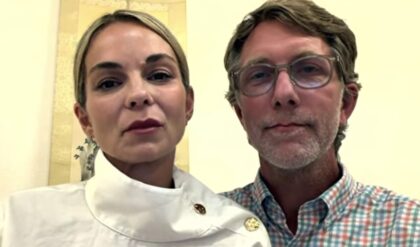
Refusing to give up hope when the official search scaled down, Keith and Nancy Higginbotham turned to social media, local community groups, and international news outlets to spread their son’s face across Japan. They released emotional video appeals, asking locals, commuters, and tourists in Kyoto to check dashcam footage and look out for Weston. His father emphasized that every shared post was a chance for someone in Japan to recognize him and provide a vital clue that could save his life.
When the official police search slowed down due to protocol, the family took matters into their own hands. On Saturday, June 6, they organized their own private search efforts. They hired a professional private search and rescue team and gathered local Japanese volunteers, expatriates, and fellow hikers to search the parts of the Yamashina forest that the police had not fully covered. The global community watched online as the family posted updates from the edge of the dense woods, holding onto the desperate hope that Weston was simply lost, sheltering from the storm, and waiting for help to arrive.
A Heartbreaking Discovery in Yamashina
The agonizing search ended in complete tragedy on the afternoon of Saturday, June 6, 2026. Around 2:35 p.m. local time, a volunteer search-and-rescue group navigating the deep brush found Weston’s body in a remote, mountainous section of Yamashina Ward. Kyoto Prefectural Police arrived at the scene to recover the body and confirmed his identity the following day after notifying the family.
Nancy Higginbotham shared the devastating news in a public social media post, expressing a level of grief that she said was impossible to put into words. She thanked the countless people across the United States, Japan, and the world who prayed for them, shared their posts, and helped keep the search alive, noting that this global kindness helped them survive their darkest days.
Kyoto police investigators stated that there was no indication of foul play or external violence, suggesting the death was a tragic accident caused by the dangerous mountain terrain and severe weather conditions. In line with standard privacy practices in Japan, authorities chose not to release the exact medical cause of death or specific details about the location to the public, leaving friends to wonder about the exact circumstances of his final hours.
A Legacy of Conviction and Memory
The news of Weston’s death brought a massive wave of grief to his hometown of Hoover, Alabama, and the Auburn University campus. Auburn University President Christopher Roberts issued a formal statement expressing his deep condolences, noting that the university had lost a highly valued, bright, and promising member of its academic community. Back in Hoover, Mayor Nick Derzis remembered Weston as a young man of remarkable character, intelligence, and kindness whose loss deeply pained the entire neighborhood.
While his friends back home try to reconcile the image of the brilliant student they knew with the harsh reality of the Japanese mountains, they are choosing to focus heavily on the principles that guided his life. Weston was a young man who did not compromise on his values, whether it was his diet, his lifestyle, or his defense of nature. His deep concern over the environmental impact of modern technology was not a passing phase; it was a core part of his identity.
For the friends and family Weston left behind, the tragedy is a stark reminder of how quickly life can change. A simple family vacation meant for celebration ended in a remote forest half a world away. Those who knew Weston choose to remember him not by his final hours in the dark woods, but by his passion for the earth, his love for natural beauty, and his independent spirit. He was a young man who genuinely wanted to change the world for the better, whose journey was cut short in the mountains he loved to explore. His community vows to keep his passion for sustainability alive, ensuring that his beliefs continue to inspire others even after his untimely passing.
News

🚨 HE WAS SUPPOSED TO BE TAKING FAMILY PHOTOS IN KYOTO… NOT BE FOUND 8 DAYS LATER IN THE MOUNTAINS. The death of James “Weston” Higginbotham is leaving friends struggling to understand how a family vacation turned into a search spanning miles of rugged terrain
The ancient capital of Kyoto is famous for its quiet bamboo groves, historic wooden temples, and peaceful shrines. Millions of travelers come every year to experience this calm atmosphere and capture lasting family memories. For the Higginbotham family from Hoover,…

“He had mental health issues…” A close friend of the Joseph Chavez family and Greysen Chavez has just revealed the husband’s health problems that everyone had overlooked, until the wife confessed, at which point things took a completely new turn
The narrative surrounding the heartbreaking double-murder-suicide of ten-year-old twins Joseph and Greysen Chavez in Canoga Park has shifted from a focus on legal disputes to an intimate look at a severe mental health crisis. In the immediate aftermath of the…
“I WISH I HAD NOTICED THAT SIGN SOONER…” A family acquaintance of Joseph Chavez and Greysen Chavez has just revealed what caused their heated argument the most, but the most intriguing detail lies in their last phone call before 7:15 PM…
The investigation into the heartbreaking double-murder-suicide of ten-year-old twins Joseph and Greysen Chavez in Canoga Park has entered a deeply analytical phase. For days, the primary obstacle facing the Los Angeles Police Department was the absolute absence of typical warning…
BREAKING: The Joseph Chavez and Greysen Chavez case is prompting many to ask the same question about the parents’ marriage, especially after a detail related to the divorce agreement was mentioned…
The investigative focus surrounding the tragic double-murder-suicide of ten-year-old twins Joseph and Greysen Chavez in Canoga Park has shifted dramatically. In the immediate aftermath of the shooting inside the Owensmouth Avenue apartment, community members and law enforcement officials were trapped…
WHAT MADE A FATHER LOOK AT JOSEPH CHAVEZ AND GREYSEN CHAVEZ AND MAKE THAT DECISION…?” 72 hours after the Canoga Park tragedy, many are still searching for answers about the final moments before the tragedy, but the detail that reignited the investigation was the phone screen still lit on the bedside table…
The Illusion of a Perfect Sunday Evening The light inside the apartment on Owensmouth Avenue was warm, filled with the specific, chaotic energy that defines a large family gathering. It was the first week of June, a time when the…
“HE WAS STILL SITTING WITH EVERYONE JUST A FEW MINUTES AGO…” The families of Joseph Chavez and Greysen Chavez say the gathering began as usual, but now all attention is focused on the brief moment before the bedroom door closed and an unexplained message…
@lpelon773 Canoga Park Twins Greysen Chavez and Joseph Chavez #canogapark #twins #greysenchavez #josephchavez #univision ♬ Boundless Worship – Josué Novais Piano Worship The Illusion of a Perfect Sunday Evening The light inside the apartment on Owensmouth Avenue was warm, filled…
End of content
No more pages to load