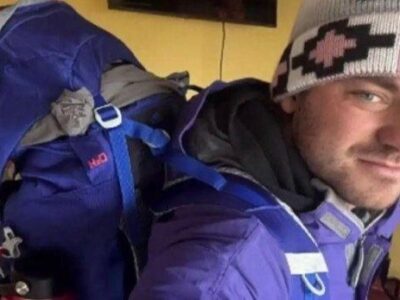
JUST IN: Search crews continue looking for missing traveler Ian Treger after he vanished in Peru. Investigators still have not revealed the location of his final phone signal, which reportedly occurred less than 11 minutes after he left his Airbnb
The mysterious disappearance of twenty-nine-year-old American traveler and educator Ian Thomas Treger in the rugged Cusco region of Peru has sparked a massive, multi-agency investigation. Treger, a native of Rockbridge County, Virginia, and a distinguished 2020 alumnus of Washington and Lee University, has not been seen or heard from since May 13, 2026. As days stretch into weeks, the international search effort has intensified, drawing together the resources of the Peruvian National Police, the United States Embassy, specialized military units, and a deeply determined family infrastructure. The case highlights the immense logistical and geographical barriers inherent to missing persons investigations within the high-altitude Andean backcountry, while simultaneously exposing the vulnerabilities faced by independent global travelers navigating isolated wilderness routes.

The baseline timeline established by investigators indicates that Treger was operating in the Wanchaq District, a prominent urban and administrative sector within the Cusco Province, immediately prior to his disappearance. Known to his peers as an experienced outdoorsman and an itinerant teacher who had been traveling across South America, Treger was highly adept at managing the physical demands of long-distance trekking. Because he routinely embarked on extensive, multi-day excursions where cellular connectivity was completely nonexistent, his family did not initially anticipate daily check-ins or regular digital communication. It was only in late May, following a prolonged and uncharacteristic period of total silence that far exceeded his typical travel windows, that his loved ones realized a crisis had occurred. Following urgent inquiries, the Peruvian news agency Andina publicly published an official missing persons alert on June 11, 2026, triggering a formal regional mobilization.
A primary obstacle confronting search-and-rescue crews is the deep structural uncertainty regarding Treger’s exact physical trajectory upon leaving his temporary urban base. Before setting out into the field, Treger had informed his family that his primary objective was to undertake a grueling, multi-day trek to the Choquequirao Archaeological Park. Choquequirao, frequently referred to as the sister city of Machu Picchu, is an exceptionally remote Incan site accessible only by a demanding foot journey that plunges deep into the Apurímac River canyon before ascending steep, vertical switchbacks. The sheer physical isolation of the route means that independent hikers must carry substantial self-sustained survival gear, making any sudden injury or navigational error down the treacherous canyon slopes an immediate threat to survival.
:max_bytes(150000):strip_icc():focal(749x0:751x2)/ian-treger-missing-peru-062026-b1b1c24e52ef4004a08f972e11e24ed4.jpg)
However, subsequent intelligence gathered by local guides and forensic investigators suggests that Treger’s backcountry plans may have shifted abruptly prior to his departure, a common occurrence among independent travelers adapting to changing regional weather conditions or local transit schedules. Alternative investigative theories indicate it is highly probable that Treger altered his destination to explore the Ausangate Loop, a world-renowned alpine circuit that circumvents the sacred, snow-capped Mount Ausangate. To initiate this specific trek, travelers typically board regional public buses from Cusco to the high-altitude village of Ocongate. The Ausangate route presents an entirely different set of environmental hazards compared to Choquequirao, forcing hikers to navigate extreme elevations exceeding 16,000 feet above sea level, where sub-zero temperatures, sudden blizzards, and severe altitude sickness pose constant dangers.
Compounding the geographical complexity, some investigators believe Treger may have chosen to target Vinicunca, widely known as the Rainbow Mountain, an intensely popular but highly exposed geological formation located in the same regional grid. The existence of multiple, drastically divergent potential routes has forced search coordinators to distribute their limited resources across thousands of square miles of unforgiving mountain terrain. Because local Peruvian rescue squads and specialized alpine units require a definitive “point last seen” to deploy field assets effectively, the lack of certainty regarding whether Treger boarded a bus toward Ocongate or traveled toward the Apurímac canyon has severely limited the deployment of tactical ground teams.
In response to the growing operational impasse, Treger’s mother, Michelle Ludwig, flew directly to Peru to personally oversee and coordinate the expanding rescue operations from the ground in Cusco. Working in tandem with local detectives, U.S. Embassy officials, and specialized regional guides, the family has initiated an exhaustive forensic audit of local infrastructure. This includes physically contacting and reviewing guest registries at dozens of hostels, hotels, rural homestays, and restaurants scattered along both the Choquequirao and Ausangate trailheads. By cross-referencing transit records and interviewing local transport operators who manage the regional bus routes out of Cusco, the family hopes to isolate a verified eyewitness account that can pinpoint Treger’s exact entry point into the wilderness.
The financial burden of sustaining an international search operation of this magnitude in a remote foreign country is extraordinarily high. To mitigate these mounting costs, Treger’s family launched a formal GoFundMe crowdfunding campaign to secure the capital necessary to employ private, highly specialized search-and-rescue teams, independent drone operators, and local alpine guides who possess intimate knowledge of the hidden passes and microclimates of the Cusco Andes. The deployment of private assets is seen as a critical supplement to the official governmental investigation, allowing for targeted, rapid-response exploration of high-probability danger zones, such as deep ravines and unmapped trail offshoots that standard search grids might overlook.
Simultaneously, the investigation has expanded into the digital realm back in the United States. Recognizing that digital footprints often hold the key to uncovering a missing person’s final intentions, the office of United States Senator Mark Warner has stepped in to provide high-level inter-agency assistance. Federal representatives are currently coordinating efforts to secure and analyze Treger’s personal laptop computer once it is safely transported back to domestic soil. Forensic digital analysts aim to dissect his recent internet search history, mapping application caches, personal emails, and cloud-synchronized data to find any overlooked messages or route planning files that could definitively clarify which Andean trail he chose to walk on May 13.
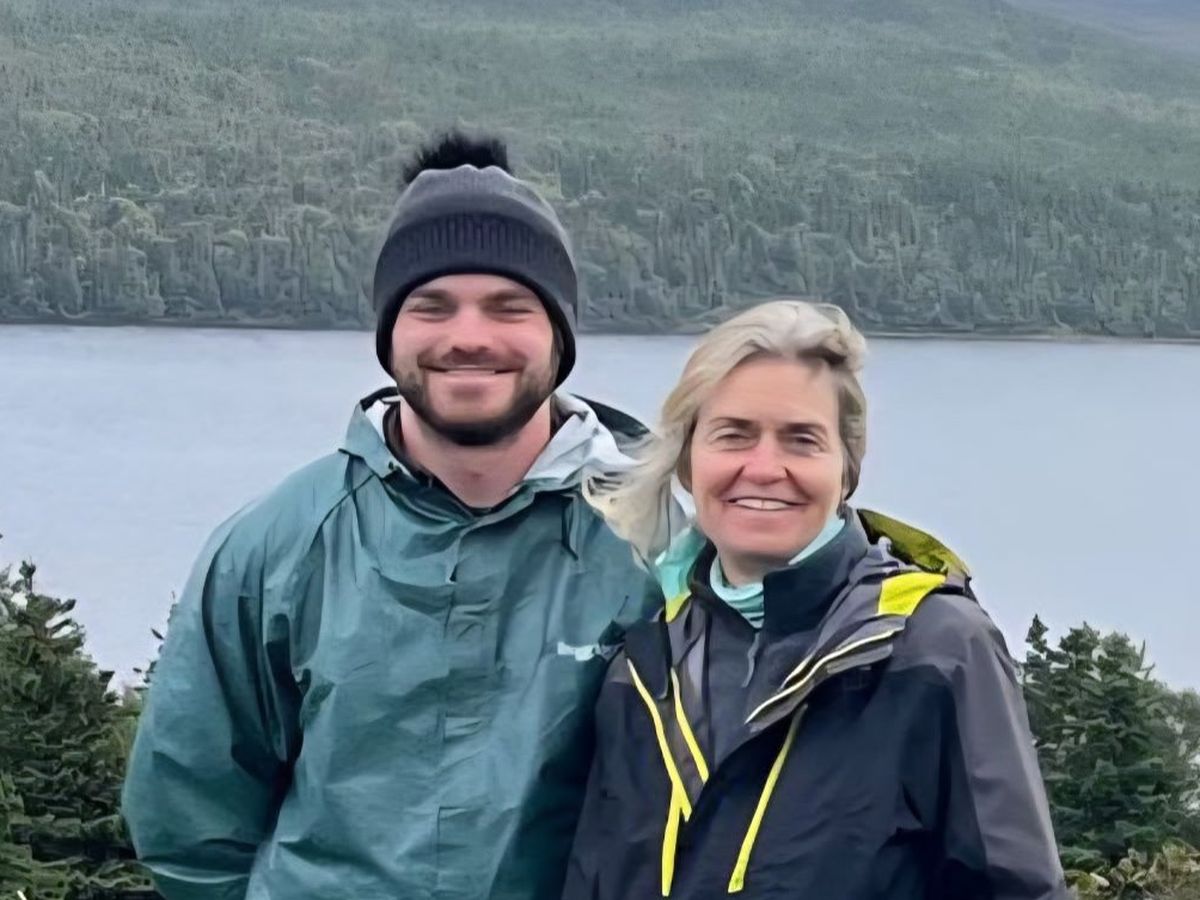
The emotional impact on the close-knit community of Rockbridge County, Virginia, where Treger was raised and attended Effinger Elementary School, has been profound. Friends, former classmates, and neighbors have rallied to support the family’s fundraising efforts, describing Treger as a vibrant, deeply compassionate individual possessed of a brilliant smile, bright blue eyes, and an insatiable passion for global exploration. His background as a seasoned traveler has given loved ones a measure of hope, as they know he possesses the fundamental wilderness survival skills needed to navigate difficult situations. However, the complete lack of any verified sign or electronic signal since the middle of May introduces a heavy element of anxiety that deepens with each passing day.
As the multi-national search operation enters its next phase, authorities are making an urgent appeal to the international traveling community, independent backpackers, and seasonal tour operators who were active in the Cusco region during the mid-May window. Because the Choquequirao and Ausangate trails are frequented by global hikers who document their journeys via social media and personal travel blogs, investigators are urging anyone who visited these sectors around May 13 to carefully review their personal photographs, background footage, and trail logs for any sign of a five-foot-ten-inch white male with blond hair, blue eyes, and two distinctive small fish tattoos on his right calf. A single accidental background detail captured in a fellow hiker’s photograph could provide the exact geographic breakthrough needed to guide rescue teams to his location.
The ongoing disappearance of Ian Treger serves as a stark, sobering reminder of the inherent risks associated with solo wilderness exploration in the world’s most formidable mountain ranges. The very qualities that draw adventurous spirits to the high Andes—the absolute isolation, the rugged, unaltered landscapes, and the escape from modern digital connectivity—are the exact factors that make rescue operations exceedingly difficult when something goes wrong. Until a definitive physical trace is discovered or a breakthrough is achieved through the technical analysis of his digital records, the collaborative efforts of the Peruvian police, the United States government, and an unyielding family network will continue to push forward, refusing to abandon the search for the missing Virginia educator deep within the heart of Peru.